Best Time to Climb Island Peak
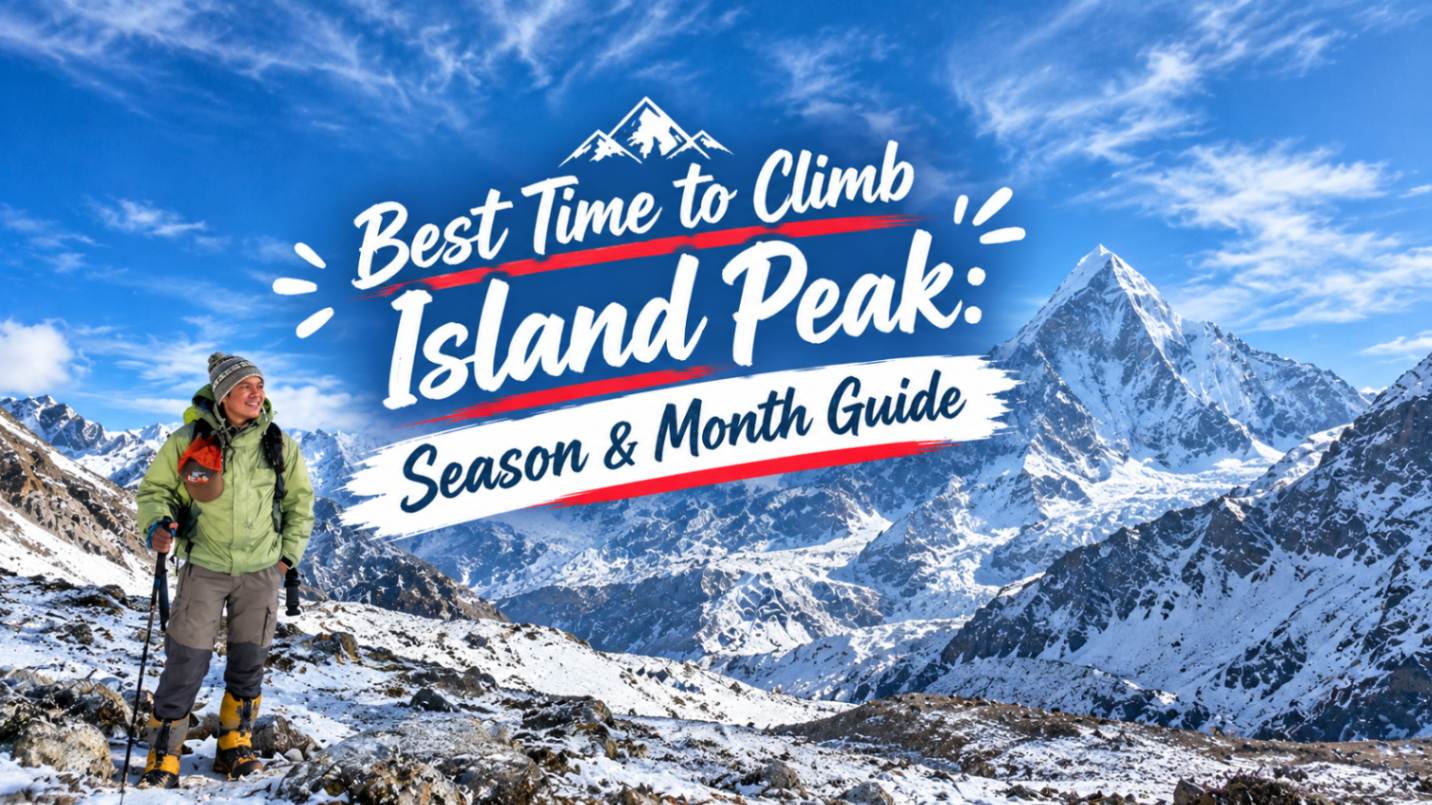
The best time to climb Island Peak is during spring (March to May) or autumn (September to November), when the Khumbu region sees its most stable weather, clearest skies, and safest conditions on the summit headwall.
Outside these two windows, winter brings extreme cold and deep snow, while the summer monsoon brings rain, cloud, and a real risk of flight delays to Lukla.
This guide breaks down exactly how each season and month affects your climb, from temperature at Base Camp to how weather changes the permit fee you pay, using the route and logistics we run for our own Island Peak climbs in the Everest region.
Best Time to Climb Island Peak: Quick Answer
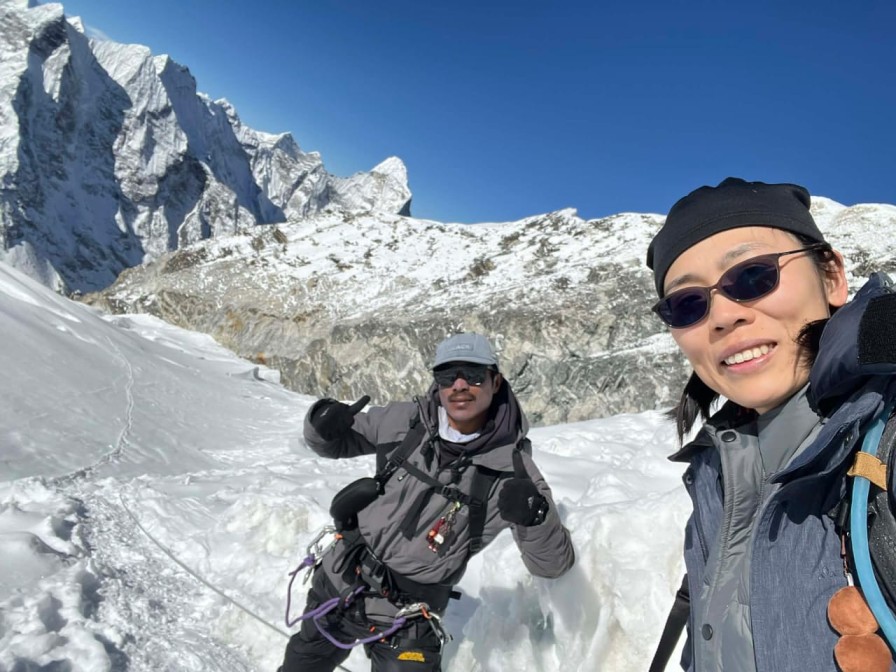
If you only read one section, here it is: choose October or November if clear mountain views matter most to you, and choose April or May if you’d rather climb in slightly milder daytime temperatures with blooming rhododendron on the lower trail.
Both windows offer a strong summit success rate on Island Peak (6,189 m). Avoid December to February unless you’re an experienced cold-weather climber, and avoid June to August entirely, since monsoon rain and cloud make the route both harder and less safe.
Island Peak Climbing Seasons Explained
Nepal’s climbing calendar splits into four seasons, and each one changes Island Peak’s difficulty, visibility, and overall safety in a different way.
Spring (March to May): Warmer Days, Reliable Conditions
Spring is a strong all-round choice for Island Peak. Daytime temperatures are milder than autumn, winter snow has largely melted from the lower trail, and rhododendron forest between Lukla and Namche Bazaar adds real colour to the approach.
Conditions on the glacier and headwall are generally predictable, which makes this season a sensible choice for climbers attempting their first 6,000-metre peak.
Autumn (September to November): The Clearest Skies of the Year
Autumn follows the monsoon, and the result is some of the sharpest, clearest air anywhere in the Everest region. Visibility is excellent, snow conditions on the headwall tend to be firm and consistent, and this remains the busiest, most popular season for climbing Island Peak.
October in particular delivers reliably strong weather windows for a summit push.
Winter (December to February): Cold, Quiet, and Demanding
Winter brings genuinely harsh conditions: overnight temperatures at Island Peak Base Camp regularly fall well below -15°C, strong winds are common on the upper mountain, and deep snow can make the approach slower and more physically demanding.
We only recommend this season to climbers with prior high-altitude and cold-weather experience.
Monsoon (June to August): Not Recommended
Monsoon rainfall makes the lower trail muddy and increases landslide risk on the approach through the Khumbu, while persistent cloud cover removes most of the visibility that makes climbing safe.
Lukla flights are also far more likely to be delayed or cancelled during these months, which can eat into your fixed itinerary before you even reach Chhukung.
Best Months to Climb Island Peak
Within spring and autumn, a few specific months consistently perform better than the rest of the season.
-
April and Early May
This window offers the most reliable combination of mild daytime temperatures, longer daylight hours, and generally settled weather on the summit push, making it a popular choice for first-time climbers.
-
October and November
October is the busiest month on the mountain for good reason: skies are typically at their clearest right after the monsoon clears, and snow on the headwall is often firm and well-consolidated. November extends many of the same benefits with noticeably quieter trails and Base Camp, at the cost of colder nights.
Island Peak Weather and Temperature by Altitude
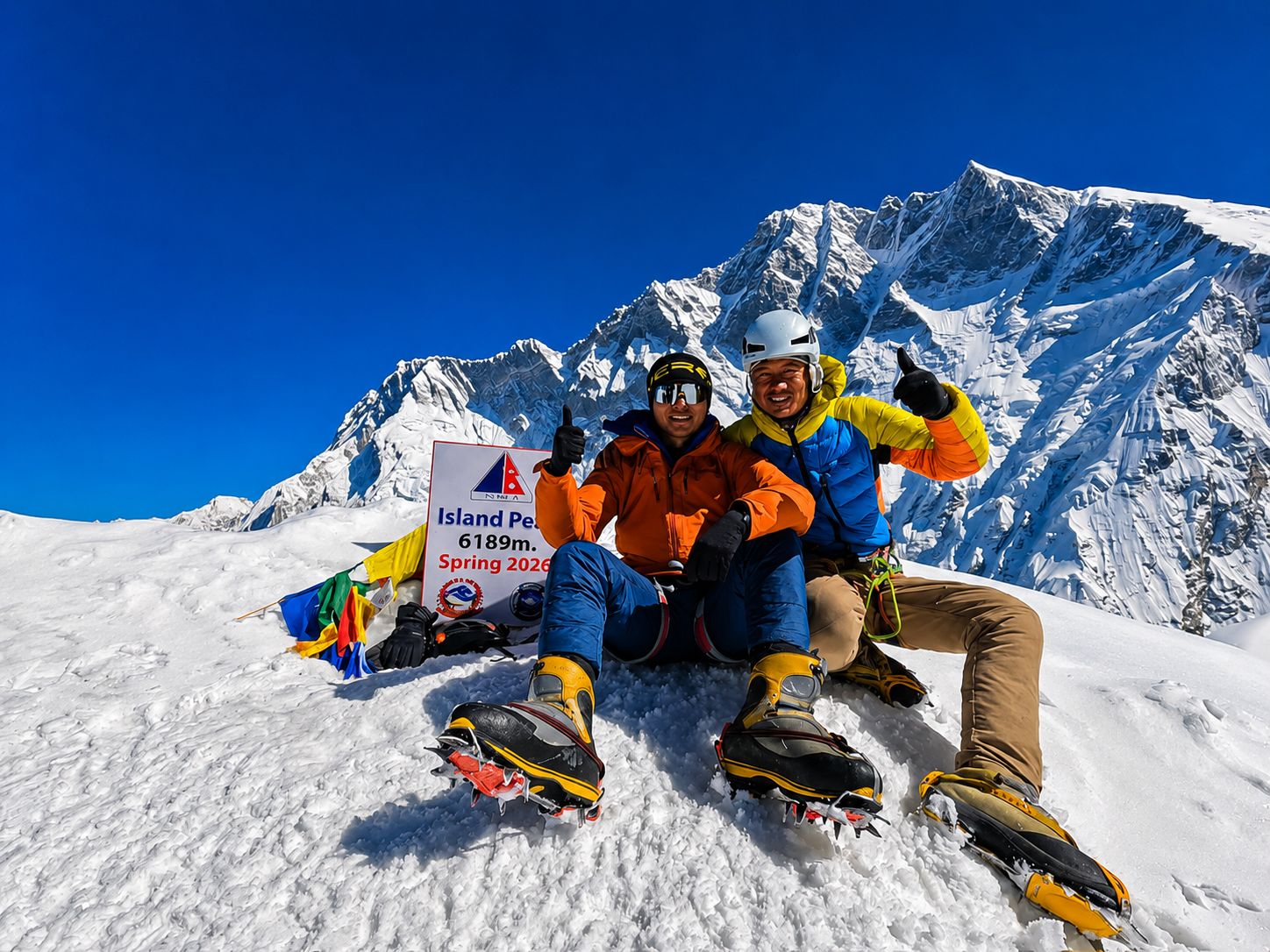
Temperature on Island Peak changes dramatically between the trailhead and the summit, and understanding this by location is more useful than a single seasonal average.
| Location | Altitude | Daytime Temperature (Spring/Autumn) | Nighttime Temperature (Spring/Autumn) |
|---|---|---|---|
| Chhukung | 4,730 m | 5°C to 12°C | -5°C to 0°C |
| Island Peak Base Camp | Approx. 5,100 m | 0°C to 8°C | -10°C to -5°C |
| Summit (6,189 m) | 6,189 m | -5°C to 0°C | -15°C to -20°C (pre-dawn push) |
Since the summit push typically begins around midnight to reach the top by mid-morning, climbers experience the coldest temperatures on the entire route during the hours before sunrise, regardless of season.
Proper down clothing and a sleeping bag rated well below Base Camp’s overnight low are essential even in the “warmer” spring and autumn windows.
How Season Affects Your Permit Cost
This is a detail most climbing guides skip over, but it genuinely affects your budget. The Nepal Mountaineering Association prices its Island Peak climbing permit by season rather than at a flat rate: it typically costs around USD 350 per climber in spring, dropping to roughly USD 175 in autumn and the off-season months.
In other words, timing your climb for autumn does not just affect the weather; it can noticeably lower your permit cost compared with a spring departure.
How Season Affects the Headwall and Summit Push
Island Peak’s final obstacle, a roughly 150-metre fixed-rope headwall climbed using jumars, behaves differently depending on the season.
In spring and autumn, snow on the headwall is generally firm and consistent, which makes crampon placement more predictable and the ascent more straightforward for less experienced climbers.
In winter, fresh, unconsolidated snow can make the same stretch slower and more strenuous, while high winds add a further layer of difficulty near the exposed summit ridge. This is one of the clearest practical reasons spring and autumn remain the preferred seasons, beyond simply “better views.”
How Weather Affects Lukla Flights and the Trek
Island Peak climbing does not start at Chhukung. For most climbers, the journey begins with a flight to Lukla, followed by several days of trekking through the Khumbu Valley. Weather can affect both parts of this journey, particularly during the monsoon and winter months.
Monsoon: The Highest Risk of Flight Disruptions
From June to August, monsoon clouds, rain, and poor visibility can make flights between Kathmandu and Lukla less predictable. Delays and cancellations can occur when weather conditions around the airport or along the flight route are unsuitable. Rain can also make the lower trekking trails wetter and increase the possibility of landslides in vulnerable areas.
For climbers on a fixed Island Peak itinerary, a delayed flight can mean losing valuable trekking or acclimatisation time. This is one reason the monsoon is generally not preferred for Island Peak climbing.
Winter: Cold and Weather-Related Delays
Winter brings much colder conditions to the Everest region, particularly from December through February. Snow, low temperatures, and changing mountain weather can occasionally affect flights and trekking conditions. Even when flights operate normally, cold conditions and snow at higher elevations can make the approach to Island Peak more demanding.
The main concern during winter is therefore not only reaching Lukla, but also allowing enough time and preparation for the colder conditions higher on the route.
Spring and Autumn: More Stable Travel Conditions
Spring and autumn generally provide the most favourable combination of trekking and climbing conditions. March to May and September to November usually offer better visibility and more settled weather than the monsoon period, making travel to Lukla and the trek toward Chhukung more predictable.
However, mountain weather can change quickly at any time of year, so even during the main climbing seasons, flight delays are still possible.
Why You Should Keep Buffer Days
A buffer day is especially important when your itinerary includes both Everest Base Camp trekking and an Island Peak summit attempt. A flight delay into Lukla, a change in weather, or a slower-than-planned trekking day can affect the schedule further up the route.
Keeping at least one or two extra days in your overall itinerary gives you more flexibility if your Lukla flight is delayed or if weather forces a change in plans. It can also provide useful flexibility for the return journey after the climb.
For this reason, choosing the right climbing season is not only about summit conditions. It also affects how smoothly you can reach the Everest region, complete your acclimatisation days, and arrive at Island Peak with enough time for the climb.
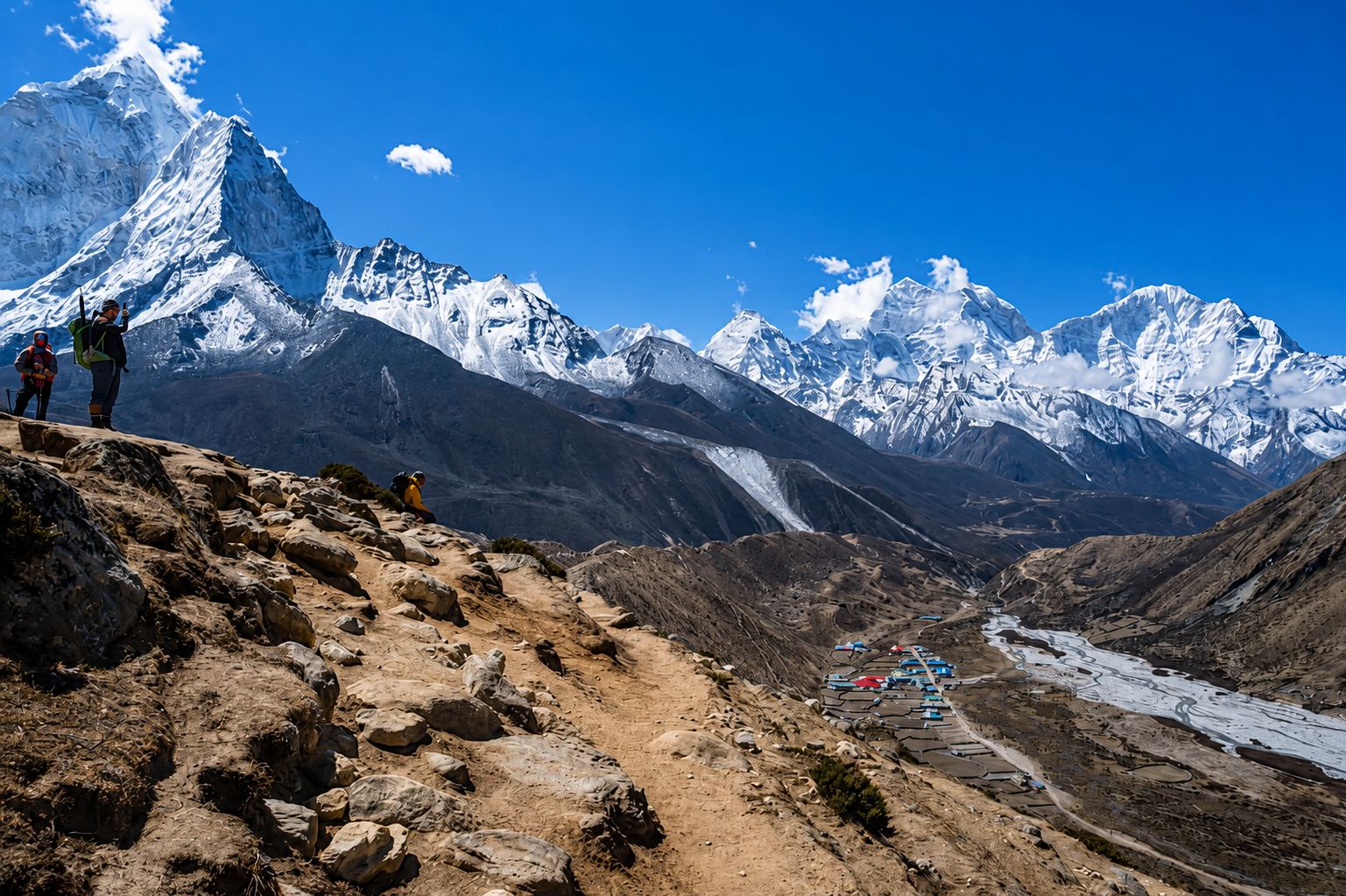
Best Time for Everest Base Camp with Island Peak Climbing
Climbers combining a trek to Everest Base Camp with an Island Peak summit attempt should follow the same seasonal guidance: spring or autumn.
Both seasons give the trekking days through Namche Bazaar, Tengboche, and Dingboche stable weather for proper acclimatisation before the climb begins at Chhukung, which meaningfully improves summit success on the technical stretch that follows.
Our Everest Base Camp Trek with Island Peak Climbing itinerary is built around this exact logic, sequencing the trek and climb so your body has time to adjust before the harder technical days.
Worst Time to Climb Island Peak
Monsoon (June to August) and deep winter (December to February) are both best avoided unless you have a specific reason and the right experience. Monsoon combines poor visibility with a genuine safety risk from wet, unstable terrain on the lower trail.
Winter adds extreme cold and unpredictable snow loading on the headwall, both of which raise the risk of a climb being called off partway through.
What to Pack for Island Peak by Season
Packing for Island Peak is different from packing for a normal Everest-region trek. The approach to Chhukung involves regular trekking gear, but the summit attempt includes glacier travel, crampons, fixed ropes, steep snow, and a pre-dawn push at 6,189 m.
Your clothing therefore needs to handle both relatively comfortable trekking days and very cold, exposed climbing conditions. Technical equipment should also be checked with your climbing operator before departure, as some items may be provided or available for rental.
Spring: March to May
Spring gradually becomes warmer as the season progresses, but conditions on the summit can still be extremely cold before sunrise.
Use a layered clothing system so you can adjust easily between the warmer lower trail and the colder upper mountain.
For the summit attempt, bring a warm down jacket, insulated gloves, a warm hat or balaclava, moisture-wicking base layers, waterproof shell layers, and a properly rated sleeping bag.
Sunglasses or glacier glasses and strong sun protection are particularly important because snow and ice at high altitude reflect intense sunlight.
Your technical climbing kit should include crampons, mountaineering boots, climbing harness, helmet, carabiners, and an ascender/jumar, along with an ice axe where required by your climbing team.
Island Peak’s standard route involves glacier terrain and fixed ropes near the headwall, so this equipment is not optional trekking gear.
Autumn: September to November
Autumn is generally drier and clearer after the monsoon, but temperatures become progressively colder as November approaches.
September can still have some lingering post-monsoon conditions, while October often brings clearer weather and November brings noticeably colder mornings and nights.
Pack much the same technical equipment as you would for spring, but give extra attention to insulation for the later autumn months.
A quality down jacket, warm gloves, thermal base layers, windproof outer layers, and a warm sleeping bag become increasingly important as temperatures drop.
For the summit push, a headlamp with spare batteries is essential because climbers normally leave camp during the night or very early morning.
Keep batteries protected from extreme cold where possible, as cold temperatures can reduce battery performance.
Winter: December to February
Winter requires the most cold-weather preparation. Lower trekking sections can be manageable during clear days, but temperatures drop sharply at night and conditions on the upper mountain can become considerably more demanding.
Your clothing system should include a high-quality down jacket, warm insulating layers, thermal base layers, insulated gloves or mitts, a balaclava or warm hat, and a windproof and waterproof outer shell.
Foot protection is especially important: cold-weather mountaineering boots and suitable socks are needed to keep feet warm during the long summit push.
The technical equipment remains essential, including crampons, harness, helmet, ascender/jumar, carabiners, mountaineering boots and ice axe where required.
Winter climbing should not be approached simply as a colder version of the normal trek; snow, wind and freezing temperatures can make the technical sections more demanding. Experienced climbers have also reported strong winds and severe cold on Island Peak’s summit, reinforcing the need for proper cold-weather equipment.
Monsoon: June to August
Monsoon is generally not the preferred season for Island Peak because rain and cloud affect the approach, visibility, and travel logistics.
You still need proper technical climbing equipment if attempting the mountain during this period, but your trekking clothing needs to focus more heavily on moisture management.
A waterproof jacket and trousers, quick-drying base layers, waterproof pack protection, and spare dry clothing are useful for the lower approach.
Once you reach the higher elevations, however, cold conditions remain possible, so waterproof gear should not replace proper insulation.
Because conditions can change rapidly on the mountain, the technical equipment for the summit should remain the same: crampons, mountaineering boots, harness, helmet, ascender/jumar, carabiners, headlamp, and other equipment specified by your climbing team.
Technical Gear: What You Should Not Forget
Regardless of the season, Island Peak requires equipment for more than ordinary trekking. The exact equipment list can vary according to current route conditions and your climbing operator, but the core technical kit commonly includes:
- Crampons – for secure movement on snow and ice.
- Mountaineering boots – compatible with your crampons and suitable for cold, high-altitude conditions.
- Climbing harness – used when moving on fixed ropes.
- Helmet – protection on technical sections and around rock or ice.
- Ascender/Jumar – used for ascending fixed ropes on the steep headwall.
- Carabiners – for connecting safely to the climbing system.
- Ice axe – used where required for snow travel and security.
- Headlamp with spare batteries – essential for the pre-dawn summit push.
- Down jacket and insulated layers – essential protection during the coldest hours of the climb.
- Warm gloves and hand protection – particularly important during the summit push.
A good strategy is to pack around the summit day rather than the warmest trekking day. You can remove layers as you descend or during the lower approach, but you cannot add equipment that you left behind when temperatures drop and the route becomes technical.

Which Season Suits You?
There’s no single “correct” season for every climber; it depends on what you’re optimising for.
- First-time high-altitude climbers: choose spring, for milder temperatures and generally forgiving conditions.
- Climbers who want the clearest possible mountain views: choose October, when visibility is typically at its sharpest.
- Climbers who want quieter trails and Base Camp: choose November or late spring, once the busiest weeks have passed.
- Experienced climbers seeking a bigger challenge: winter offers a genuinely harder test, provided you’re properly equipped and prepared.
Conclusion
Spring and autumn remain the two seasons worth building your Island Peak climb around, and within them, April to early May and October to November consistently deliver the most reliable combination of weather, headwall conditions, and summit success.
As one of the best trekking and climbing companies in Nepal, Igloo Himalaya Treks runs Island Peak climbs across both seasons, and our guides can help you choose the right departure date based on your experience level and what you want out of the climb.
If you are ready to start planning, visit our Island Peak Climbing page to see current departure dates, or get in touch and we’ll help build the right itinerary around your schedule.
Recommended Reads
- Climbing in Nepal: The Complete Guide to 4 Best Trekking Peaks
- Everest Base Camp vs Gokyo Lakes
- Everest Base Camp Trek Cost 2026: Complete Budget Breakdown
- Everest Base Camp Trek Food: What Do You Really Eat on the Trail?
FAQ
What is the best month to climb Island Peak?
October is generally considered the single best month, offering the clearest skies and firmest headwall conditions of the year, closely followed by April and early May.
Can you climb Island Peak in winter?
Yes, but winter is only recommended for experienced, well-equipped climbers, since overnight temperatures at Base Camp can fall well below -15°C and the headwall carries a higher risk of unconsolidated snow.
Is Island Peak climbable during the monsoon?
It isn’t recommended. Monsoon rain reduces visibility, increases landslide risk on the approach trail, and frequently delays or cancels flights to Lukla.
How cold does it get on the Island Peak summit push?
Temperatures during the pre-dawn summit push commonly fall between -15°C and -20°C, even in spring and autumn, since climbers typically begin around midnight to reach the top by mid-morning.
Does the season affect the Island Peak permit cost?
Yes, the Nepal Mountaineering Association’s permit fee is priced by season, running around USD 350 in spring and roughly USD 175 in autumn and the off-season months.
What is the best season to combine Everest Base Camp with Island Peak?
Spring and autumn both work well, since stable weather during the trekking days allows for proper acclimatisation before the technical climbing days at Chhukung and Island Peak Base Camp.
How should I prepare for high altitude on Island Peak?
Allow enough time for gradual acclimatisation rather than trying to gain altitude too quickly. Island Peak reaches 6,189 m, so altitude awareness is an important part of preparation. The Nepal Tourism Board’s mountain safety guide provides official information on altitude sickness, acclimatisation, and mountain safety.


