
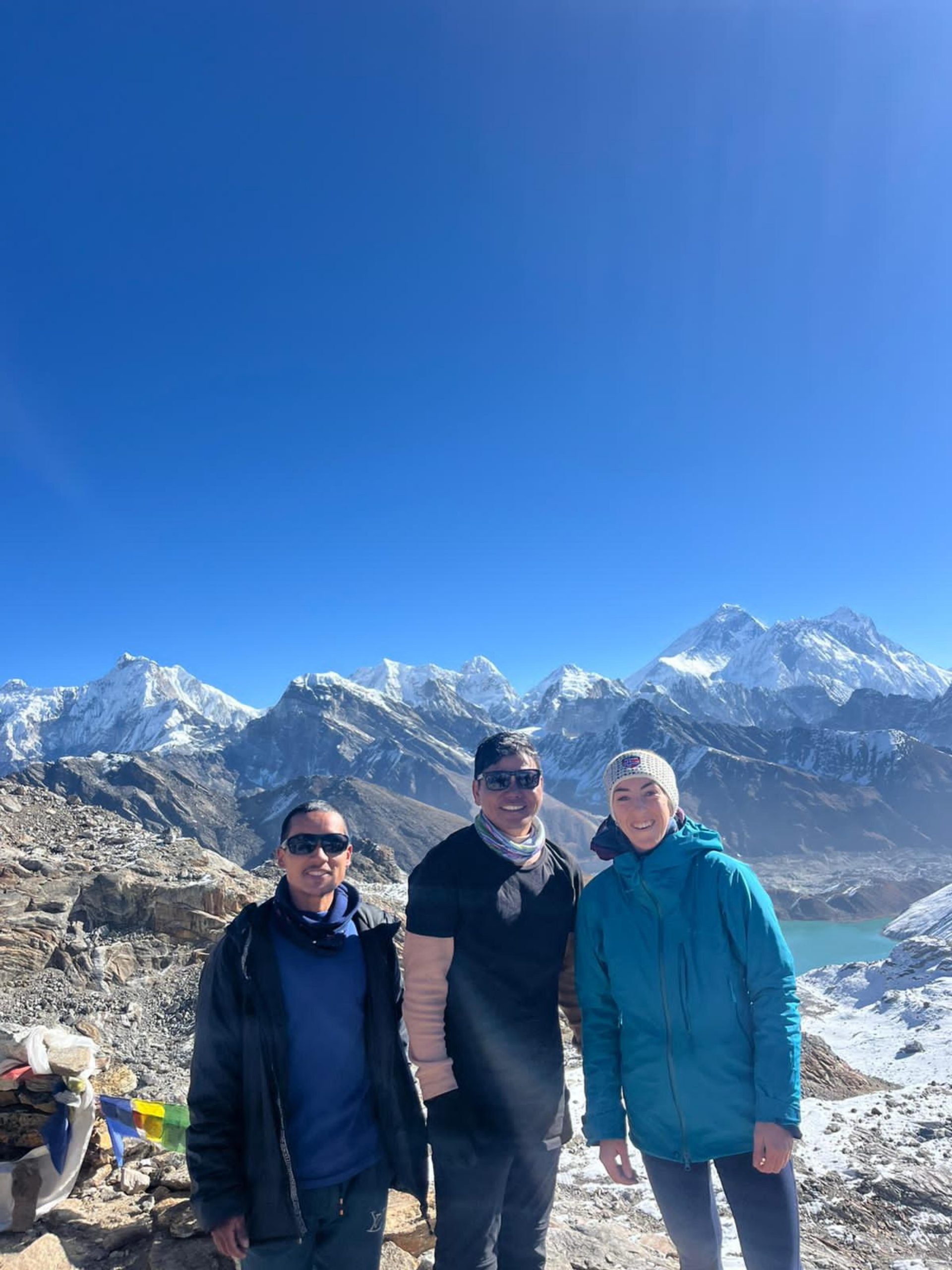
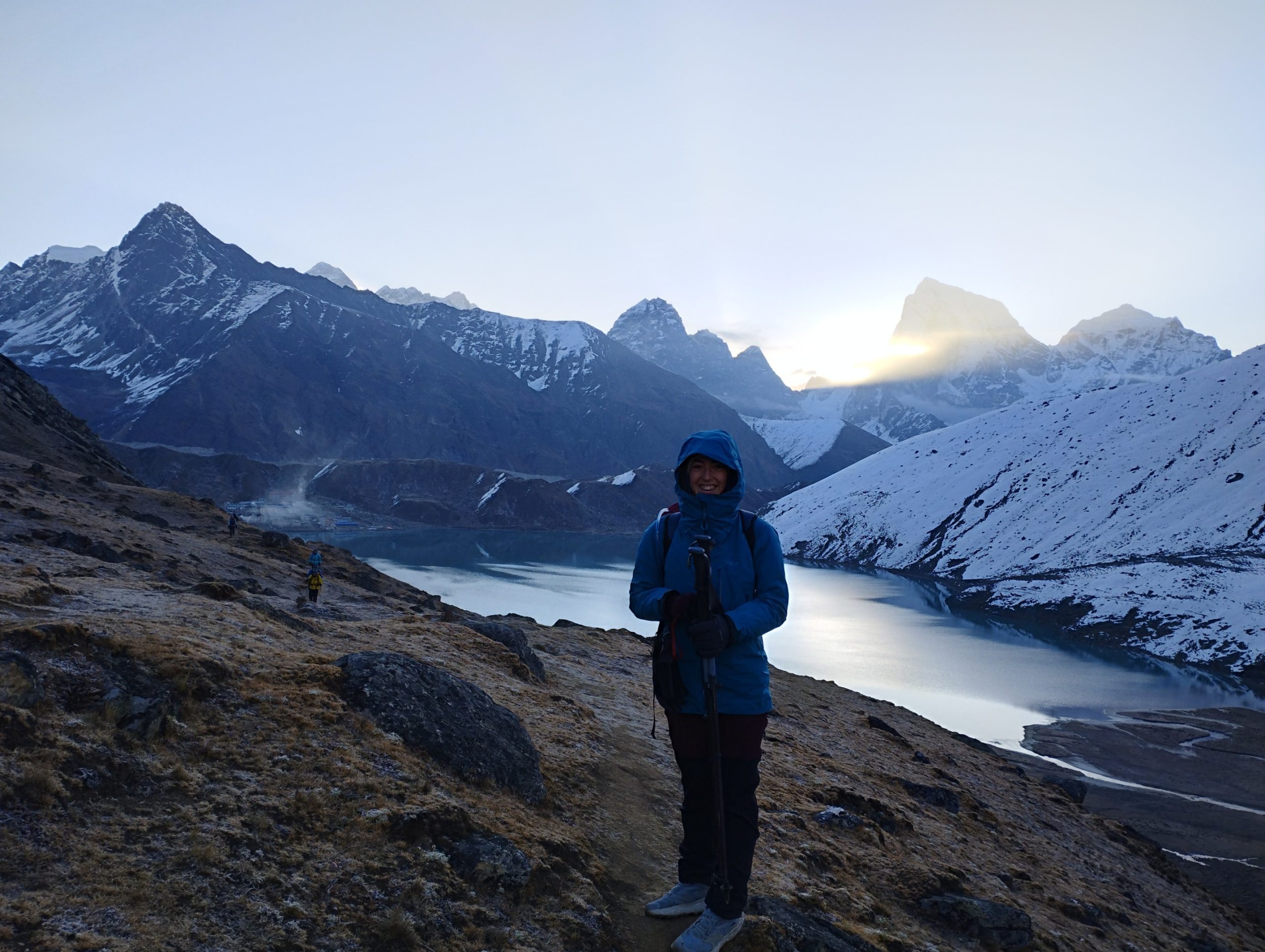
-
Kathmandu
-
3-star hotel -Tea House - Lodge
-
Private Vehicle - Airplane
-
Kathmandu-Breakfast, Mountain-Breakfast - Lunch - Dinner
-
5545 m. 18298.5ft
Overview of Everest Cho La and Renjo La Pass Trek
This Everest Cho La and Renjo La Pass Trek is a demanding way to experience the Everest region beyond the standard Base Camp route. You reach Everest Base Camp and Kala Patthar, then cross two high Himalayan passes, Cho La at 5,420m and Renjo La at around 5,360m, before entering the quieter Gokyo and Thame valleys.
The route brings together many sides of the Khumbu. You will walk through forests and Sherpa villages around Namche and Tengboche, enter the high alpine landscape of Dingboche and Lobuche, cross glacial terrain around Cho La, spend time beside the turquoise Gokyo Lakes, and follow the old trading route through Thame.
It is a bit harder alternative to the classic Everest Base Camp trek, but that is what makes this Everest Cho La and Renjo La Pass Trek special.
You get Everest Base Camp, two high passes, Gokyo, Gokyo Ri, remote valleys, Sherpa culture, and a much bigger view of the Everest region in one journey.
Our Route
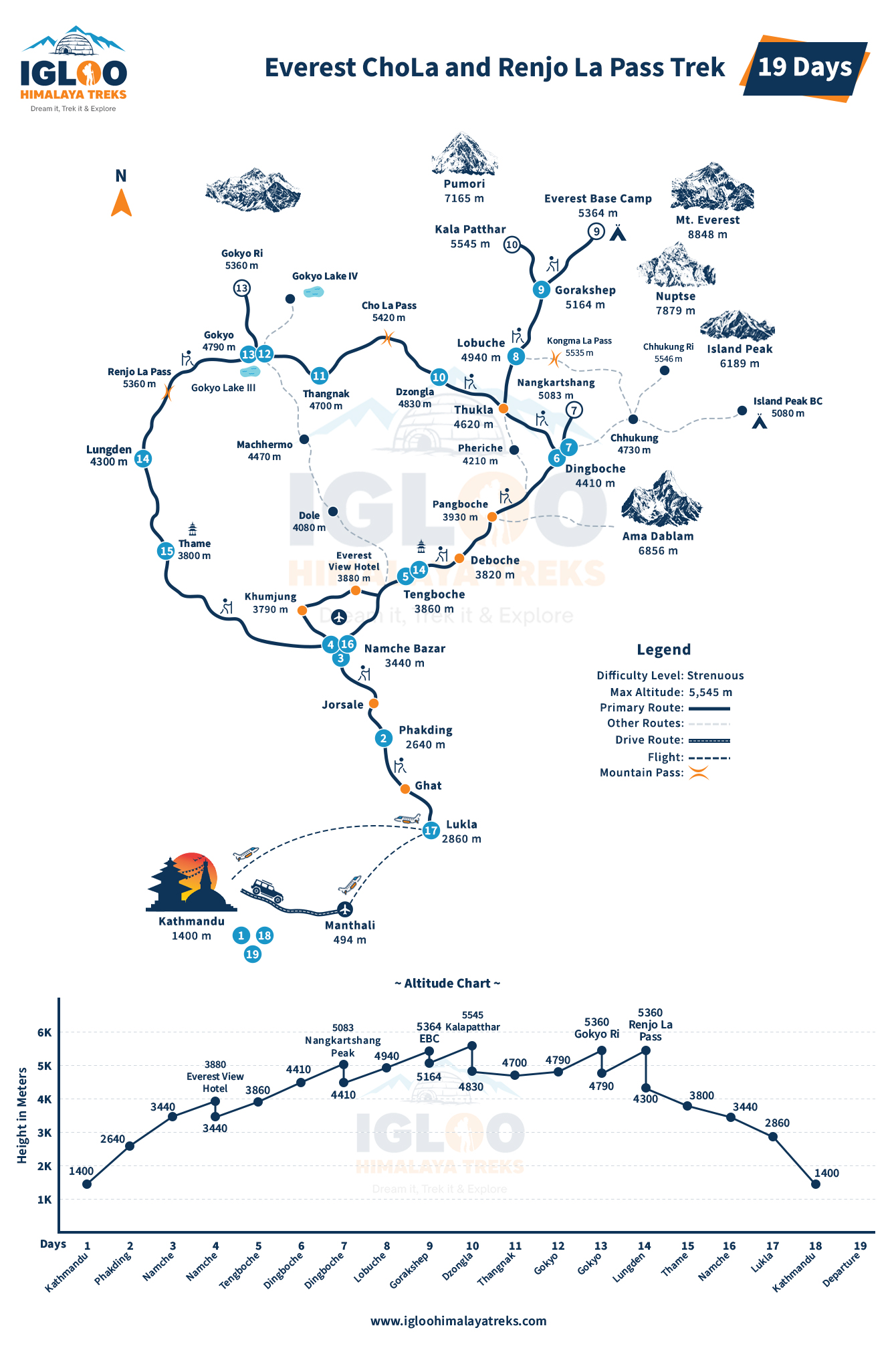
Kathmandu → Lukla → Phakding → Namche → Tengboche → Dingboche → Lobuche → Everest Base Camp → Kala Patthar → Dzongla → Cho La → Thangnak → Gokyo → Gokyo Ri → Renjo La → Lungden → Thame → Namche → Lukla → Kathmandu
Highlights of Everest Cho La and Renjo La Pass Trek
- Stand at Everest Base Camp (5,364m), right beneath the world’s highest mountain.
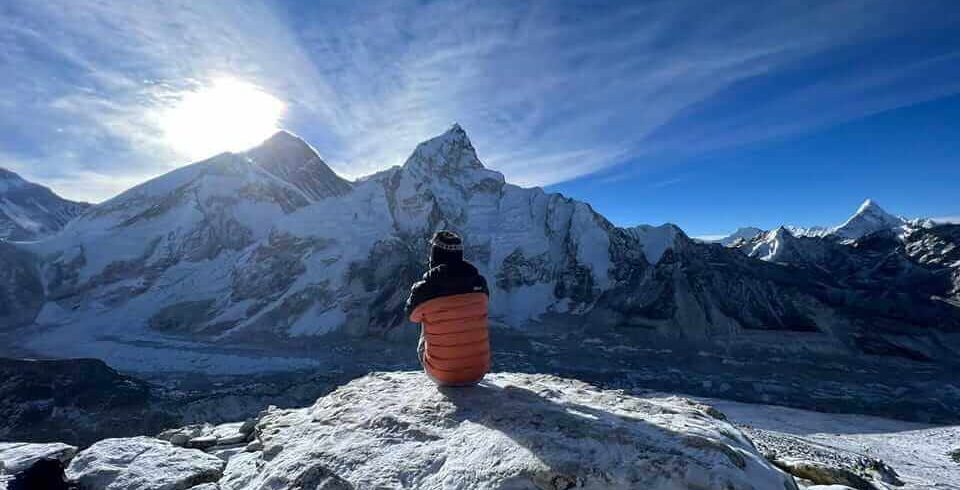
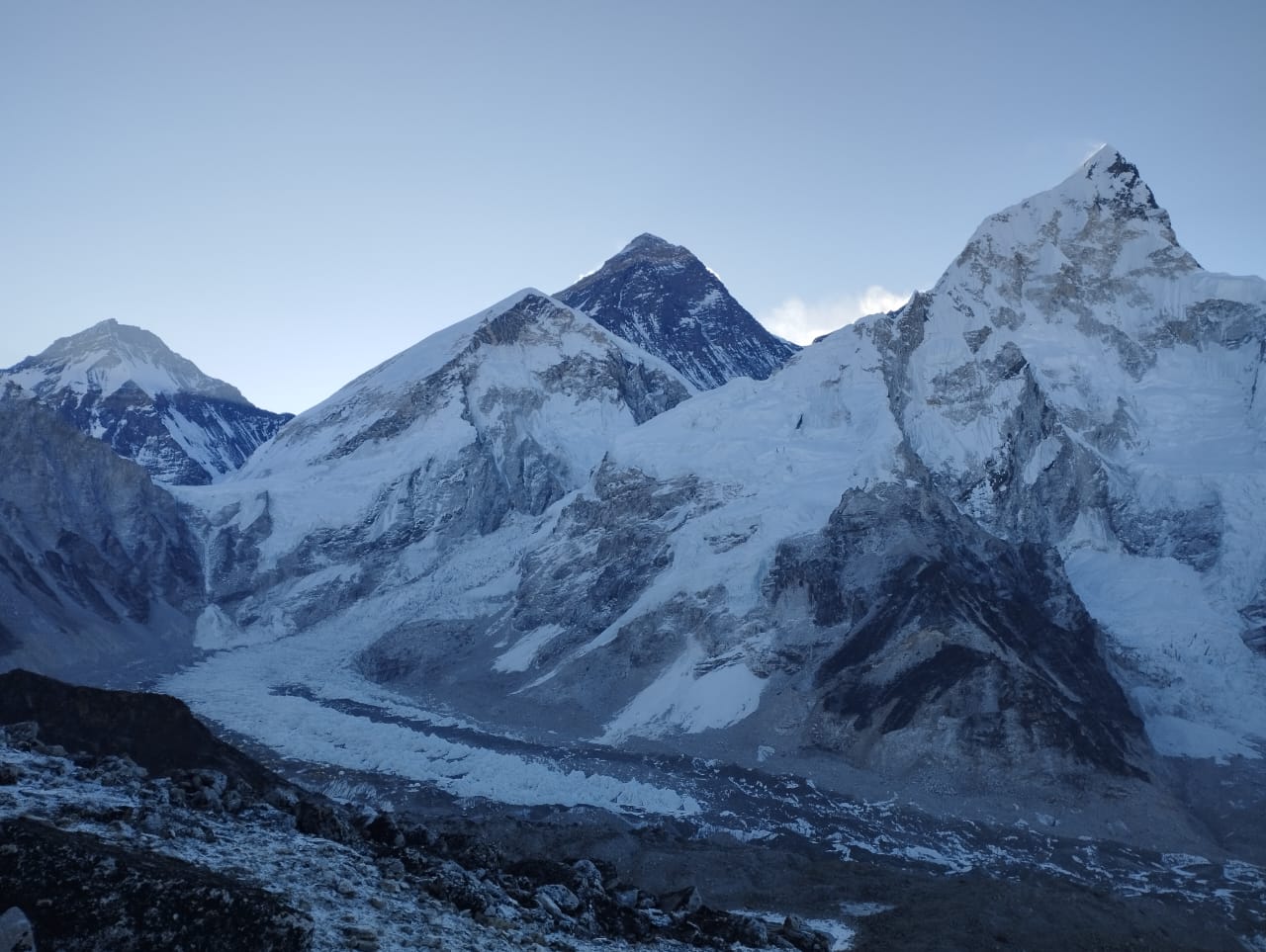
- Reach Kala Patthar (5,545m) before sunrise for a close-up panorama of Everest, Nuptse and Pumori.
- Cross the rugged Cho La Pass (5,420m), with snow, ice and high Himalayan scenery depending on the season.
- Walk beside the striking Gokyo Lakes, set among some of the highest peaks in the Everest region.
- Hike Gokyo Ri for sweeping views of Everest, Lhotse, Makalu and Cho Oyu.
- Take on the second major crossing, Renjo La (around 5,360m), and look across the mountains and valleys of the Everest region.
- Leave the busier main trail behind as you descend through Lungden and Thame, one of the quieter parts of the route.
- Walk through traditional Sherpa villages, Buddhist monasteries, chortens and prayer walls while experiencing everyday mountain life.
- Watch the landscape change from rhododendron forests and green valleys to rocky trails, glacial terrain and high mountain passes.
- Complete Everest Base Camp, Kala Patthar, Gokyo Valley, Cho La and Renjo La in one demanding circuit, with a different route for the return journey.
Everest Cho La and Renjo La Pass Trek Itinerary
| Day | Route | Altitude | Distance | Walking/Activity |
| 1 | Kathmandu Arrival | 1,400 m | — | — |
| 2 | Lukla → Phakding | 2,610 m | 7–8 km | 3–4 hr |
| 3 | Phakding → Namche Bazaar | 3,440 m | 10–11 km | 5–6 hr |
| 4 | Namche Acclimatization Hike | 3,880 m | 4–5 km | 3–4 hr |
| 5 | Namche → Tengboche | 3,860 m | 9–10 km | 5–6 hr |
| 6 | Tengboche → Dingboche | 4,410 m | 10–12 km | 5–6 hr |
| 7 | Dingboche Acclimatization Hike | 4,600 m | 4–5 km | 3–4 hr |
| 8 | Dingboche → Lobuche | 4,910 m | 8–9 km | 5–6 hr |
| 9 | Lobuche → Everest Base Camp → Gorak Shep | 5,364 m | 12–15 km | 7–8 hr |
| 10 | Kala Patthar → Dzongla | 5,545 m | 12–14 km | 7–8 hr |
| 11 | Dzongla → Cho La → Thangnak | 5,420 m | 9–10 km | 7–9 hr |
| 12 | Thangnak → Gokyo | 4,790 m | 4–5 km | 3–4 hr |
| 13 | Gokyo → Gokyo Ri → Gokyo | 5,360 m | 4–6 km | 3–5 hr |
| 14 | Gokyo → Renjo La → Lungden | 5,360 m | 12–14 km | 7–8 hr |
| 15 | Lungden → Thame | 4,620 m | 9–10 km | 4–5 hr |
| 16 | Thame → Namche Bazaar | 3,440 m | 10–11 km | 4–5 hr |
| 17 | Namche → Lukla | 2,860 m | 17–19 km | 6–8 hr |
| 18 | Lukla → Kathmandu | 1,400 m | — | Flight |
| 19 | Final Departure | 1,400 m | — | Airport transfer |
Your trek begins in Kathmandu, where our team from Igloo Himalaya Treks will welcome you at Tribhuvan International Airport and transfer you to your hotel.
After settling in, you can rest or explore the nearby streets of Thamel.
In the evening, you will meet your guide for a trek briefing, where we will go through the route, daily plan, equipment, and other important details regarding the trek.
Highest Altitude: 1,400 m
Overnight: 3-Star Hotel in Kathmandu
Meals: Breakfast
An early flight takes you from Kathmandu towards Lukla, the main gateway to the Everest region.
After landing at Lukla, you can meet the trekking crew, organise your bags and begin the first walk of the journey. The trail gradually descends through pine and rhododendron forests, passing small Sherpa settlements and following the Dudh Koshi River.
You can cross several suspension bridges and see prayer wheels, mani stones and traditional mountain houses along the way. After a few hours on the trail, you reach Phakding, where you can settle into your first mountain lodge and enjoy a relaxed evening.
It is a relatively short opening day, giving you a chance to settle into the rhythm of trekking in the Khumbu.
Distance: 7–8 km
Walking: 3–4 hours
Highest Altitude: 2,610m
Overnight: Teahouse in Phakding
Meals: Breakfast, Lunch and Dinner
Today takes you deeper into the Everest region as you follow the Dudh Koshi Valley towards Namche Bazaar.
After passing through Monjo, you enter Sagarmatha National Park and continue across several suspension bridges. The trail gradually becomes steeper as you approach the final section towards Namche.
Along the way, you can enjoy the changing scenery as the forested valley gives way to larger mountain views. If the weather is clear, your first distant views of Everest, Lhotse and Ama Dablam appear as you get closer to Namche.
After the final uphill section, you arrive at Namche Bazaar, the main trading centre of the Khumbu.
Distance: 10–11 km
Walking: 5–6 hours
Highest Altitude: 3,440m
Overnight: Teahouse in Namche
Meals: Breakfast, Lunch and Dinner
Today is set aside for acclimatization before you continue towards higher elevations.
You can take a morning hike towards the Everest View Hotel, situated at around 3,880m. From the viewpoint, you can see Everest, Lhotse, Ama Dablam, Thamserku and other peaks across the Khumbu.
After returning to Namche, you can explore the colourful streets of the village, visit the Sherpa Culture Museum, browse local shops or relax at one of the cafés.
This gives you a useful combination of higher-altitude walking and lower-altitude sleeping, helping your body adjust before the trail continues upwards.
Distance: 4–5 km
Walking: 3–4 hours
Highest Altitude: 3,880m
Overnight: Teahouse in Namche
Meals: Breakfast, Lunch and Dinner
The trail leaves Namche along a beautiful hillside route with open views of the Khumbu mountains.
You can enjoy long views towards Everest, Lhotse, Nuptse and Ama Dablam as the trail gradually winds through the landscape. The route then descends towards the Dudh Koshi before climbing through rhododendron and pine forests towards Tengboche.
Tengboche is home to the famous Tengboche Monastery, one of the most important Buddhist monasteries in the Everest region. If the monastery is open and the timing is suitable, you can visit and experience the peaceful atmosphere of this mountain settlement.
The views of Ama Dablam from Tengboche are particularly impressive in clear weather.
Distance: 9–10 km
Walking: 5–6 hours
Highest Altitude: 3,860m
Overnight: Teahouse in Tengboche
After breakfast, the trail descends through Debuche before crossing the Imja Khola and continuing towards Pangboche.
The landscape gradually changes as you gain altitude. The dense forests become thinner, the valley opens up and the surrounding mountains begin to dominate the scenery.
You can enjoy views of Ama Dablam, Island Peak and the surrounding peaks as the trail continues towards Dingboche.
By afternoon, you reach Dingboche, one of the main stopping points before the higher Everest Base Camp section. You can settle into the lodge, explore the village and enjoy the views across the Imja Valley.
Distance: 10–12 km
Walking: 5–6 hours
Highest Altitude: 5,100 m
Overnight: Teahouse in Dingboche
Meals: Breakfast, Lunch and Dinner
Today is another important acclimatisation day before heading towards the higher sections of the trek.
You can take a short hike towards Nagarjun Hill, gaining additional altitude while enjoying views of Ama Dablam, Island Peak, Lhotse and the surrounding Himalayan valleys.
If you are feeling good and the conditions are suitable, you can also explore the trails around the upper part of Dingboche for a little longer before returning to the village.
After the hike, you can enjoy a relaxed afternoon, explore Dingboche, rest at the lodge and spend time with your trekking team.
It is a quieter day, but you still get to experience the high mountain environment while giving your body valuable time to adjust.
Distance: 4–5 km
Walking: 3–4 hours
Highest Altitude: Around 5,100 m
Overnight: Teahouse in Dingboche
Meals: Breakfast, Lunch and Dinner
Today the trail enters a much more rugged and open landscape as you leave Dingboche behind.
The route passes through alpine terrain towards Thukla, where the trail begins a steeper ascent to the Thukla Pass. Along this section, you can see memorials dedicated to climbers and mountaineers who lost their lives in the Himalayas.
From the pass, the trail continues along the moraine towards Lobuche.
The surrounding landscape becomes increasingly rocky and barren as you approach 5,000 metres. You can feel the altitude more clearly here, so a steady pace and regular rest stops are important.
By afternoon, you can settle into your lodge in Lobuche and prepare for the next day's journey towards Everest Base Camp.
Distance: 8–9 km
Walking: 5–6 hours
Highest Altitude: 4,910m
Overnight: Teahouse in Lobuche
Meals: Breakfast, Lunch and Dinner
Today is one of the biggest days of the trek as you make your way to Everest Base Camp.
The trail from Lobuche follows the rocky moraine towards Gorak Shep before continuing towards Base Camp. The terrain becomes rougher as you approach the Khumbu Glacier, with rocky ridges, glacial moraine and high mountain views surrounding the trail.
At Everest Base Camp, you can spend time taking photographs and enjoying the surroundings at the foot of the world's highest mountain.
After visiting Base Camp, you retrace the trail towards Gorak Shep, where you can rest for the evening.
This is a long day at high altitude, so walking steadily and taking enough breaks is more important than trying to move quickly.
Distance: 12–15 km
Walking: 7–8 hours
Highest Altitude: 5,364m
Overnight: Teahouse in Gorak Shep
Meals: Breakfast, Lunch and Dinner
An early morning start takes you towards Kala Patthar, the highest point of this trek at 5,545m.
The climb is steep, especially in the cold morning air, but reaching the top gives you an exceptional view of Everest, Nuptse, Pumori and the surrounding peaks.
You can spend some time at the viewpoint taking in the mountain panorama before descending towards Gorak Shep for breakfast.
From there, the route turns towards Dzongla, leaving much of the busy Everest Base Camp trail behind. The trail becomes quieter as you move towards the Cho La section.
By the time you reach Dzongla, you can rest at the lodge and prepare for the first major pass crossing of the trek.
Distance: 12–14 km
Walking: 7–8 hours
Highest Altitude: 5,545m
Overnight: Teahouse in Dzongla
Meals: Breakfast, Lunch and Dinner
Today you take on Cho La Pass at 5,420m, one of the most demanding sections of the entire journey.
An early start is important. The trail gradually becomes steeper as you approach the pass, with rocky terrain and glacial sections. Snow and ice can also be present depending on the season and current conditions.
If the weather and trail conditions are suitable, you can cross the pass with your guide and take time to enjoy the mountain scenery from the top.
After crossing Cho La, the trail descends towards the Gokyo Valley and continues to Thangnak.
This is a demanding day, so there is no need to rush. A steady pace, proper breaks and close attention to the trail are the way to approach the pass.
Distance: 9–10 km
Walking: 7–9 hours
Highest Altitude: 5,420m
Overnight: Teahouse in Thangnak
Meals: Breakfast, Lunch and Dinner
After the demanding Cho La crossing, today's walk is shorter and gives you time to enjoy the Gokyo Valley.
The trail follows the high valley alongside the Ngozumpa Glacier, one of the major glaciers of the Everest region. The surroundings become increasingly open as you approach the Gokyo Lakes.
You can take your time along the trail and enjoy the changing views of the mountains and glacier.
After reaching Gokyo, you can explore the lakeside area, walk around the village or simply rest after the previous day's pass crossing.
The turquoise lakes surrounded by high Himalayan peaks make Gokyo feel very different from the Everest Base Camp side of the route.
Distance: 4–5 km
Walking: 3–4 hours
Highest Altitude: 4,790m
Overnight: Teahouse in Gokyo
Meals: Breakfast, Lunch and Dinner
Today you can experience one of the most famous viewpoints in the Gokyo Valley with an early morning hike to Gokyo Ri.
The trail climbs steadily above Gokyo, and the higher you go, the wider the mountain panorama becomes. From the top, you can see Everest, Lhotse, Makalu, Cho Oyu, the Gokyo Lakes and the surrounding glaciers.
If the weather is clear, the early morning light can make the mountains particularly striking.
After spending time at the viewpoint, you can descend back to Gokyo and enjoy a relaxed afternoon beside the lakes.
Distance: 4–6 km
Walking: 3–5 hours
Highest Altitude: Around 5,360m
Overnight: Teahouse in Gokyo
Meals: Breakfast, Lunch and Dinner
Today you cross the second major pass of the trek, Renjo La.
The trail gradually rises from Gokyo towards the pass, with the terrain becoming steeper and more rugged as you gain altitude. The final section involves a steady ascent before reaching the top of Renjo La.
If the weather is clear, you can enjoy wide views across the Gokyo Valley and surrounding Himalayan peaks from the pass.
After crossing Renjo La, the trail descends into the quieter Bhote Koshi Valley and continues towards Lungden.
Reaching Lungden marks an important point in the journey: both high passes are now behind you.
Distance: 12–14 km
Walking: 7–8 hours
Highest Altitude: Around 5,360m
Overnight: Teahouse in Lungden
Meals: Breakfast, Lunch and Dinner
After the two high-pass days, the trail begins a gradual descent towards Thame.
The route follows the upper Bhote Koshi Valley through a quieter part of the Khumbu. You can see traditional stone houses, mani walls, cultivated fields and the way local communities have adapted to life in this high mountain valley.
Thame is a historic Sherpa settlement and is also known for its connection with Himalayan mountaineering.
If you arrive with enough time and energy, you can explore the village or visit Thame Monastery and experience the quieter side of the Everest region.
Distance: 9–10 km
Walking: 4–5 hours
Highest Altitude: 3,800m
Overnight: Teahouse in Thame
Meals: Breakfast, Lunch and Dinner
The trail continues down from Thame towards Namche Bazaar.
You pass through traditional settlements and forested sections as the altitude gradually decreases. After several days in the high mountains, the lower elevation and greener surroundings make today's walk feel noticeably different.
As you approach Namche, you reconnect with the main Everest Base Camp trail.
Back in Namche, you can enjoy a hot shower, charge your devices, visit the shops or relax with your trekking team and reflect on the two high passes you have already crossed.
Distance: 10–11 km
Walking: 4–5 hours
Highest Altitude: 3,440m
Overnight: Teahouse in Namche
Meals: Breakfast, Lunch and Dinner
Today is your final full day on the trekking trail.
The route follows the Dudh Koshi Valley downhill, passing through Monjo, Phakding and other familiar villages before continuing towards Lukla.
You can enjoy the forested trail, suspension bridges and mountain villages one last time before reaching Lukla.
Once you arrive, you can settle into your lodge, relax and enjoy a final evening in the mountains with your guide and porters.
It is a good time to look back on everything you have completed—from Everest Base Camp and Kala Patthar to Cho La, Gokyo, Gokyo Ri and Renjo La.
Distance: 17–19 km
Walking: 6–8 hours
Highest Altitude: 2,860m
Overnight: Teahouse in Lukla
Meals: Breakfast, Lunch and Dinner
After breakfast, we will head to Lukla Airport for your flight back to Kathmandu. Once we arrive in Kathmandu, our representative will meet you at the airport and take you to your hotel.
The rest of the day is yours to relax after completing the trek. You can enjoy a hot shower, explore Thamel, do some last-minute shopping, or simply have a comfortable evening before your departure the next day.
Highest Altitude: 1,400m
Overnight: 3-Star Hotel in Kathmandu
Meals: Breakfast
Today marks the end of your Everest Cho La and Renjo La Pass Trek.
According to your flight schedule, our representative will transfer you to Tribhuvan International Airport for your journey home.
Before leaving Nepal, take a moment to think about what you have achieved on this trek: walking above 5,000 metres, reaching Everest Base Camp and Kala Patthar, crossing Cho La and Renjo La, visiting the Gokyo Valley, and travelling through the remote trails of Thame.
You will leave Nepal with memories not only of the Everest region, high mountain passes and Himalayan landscapes, but also of the people who shared the journey with you, from your guide and porters to the mountain lodges and villages along the way.
Thank you for trekking with Igloo Himalaya Treks. We hope the memories of your time in the Himalayas stay with you long after you return home, and we look forward to welcoming you on another journey in Nepal.
Cost Inclusion and Exclusion
Cost inclusion
- All ground transportation in private vehicles, including airport pick-up and drop-off for a hassle-free experience.
- Two nights of accommodation with breakfast at a 3-star category hotel in Kathmandu for a comfortable stay.
- Lodge-to-lodge twin-sharing accommodation during the trek, including private bathrooms and hot showers at Phakding, Namche, and Lukla.
- Full board meals throughout the trek (breakfast, lunch, and dinner) prepared fresh by local lodges.
- Complimentary tea or coffee is served with each meal to keep you warm and energized.
- Seasonal fruits and Snickers chocolate served with dinner each day during the trek.
- A farewell dinner at the end of your trek in Kathmandu to celebrate your journey.
- One experienced, English-speaking trekking guide to ensure safety, navigation, and cultural insight.
- Trained porters (1 porter for every 2 trekkers) to carry your luggage, with their meals, accommodation, insurance, and wages covered.
- Round-trip domestic flights from Kathmandu to Lukla and back, including all departure taxes.
- During peak season, flights operate from Manthali (Ramechhap)Airport to Lukla .
- Use of an Igloo Himalaya Treks duffle bag for the duration of your trek.
- Down jacket and sleeping bag provided for the trek (must be returned after completion).
- Trekking map and printed trip achievement certificate as a memorable keepsake.
- First aid medical kit is carried by the guide to assist with basic health needs.
- All necessary trek permits, including the Sagarmatha National Park Entry Permit and Pasang Lhamu Rural Municipality Ticket.
- All government taxes and official administrative service charges are fully covered.
Cost exclusion
- Lunch and dinner in Kathmandu are not included in the package.
- International airfare to and from Nepal, including airport departure taxes.
- Nepal entry visa fee upon arrival at Tribhuvan International Airport:
- USD 30 for 15 days
- USD 50 for 30 days
- USD 125 for 90 days
- Travel insurance is mandatory and must include emergency evacuation and high-altitude coverage.
- All beverages (bottled water, boiled water, soft drinks, alcoholic drinks, etc.) during the trek are not included.
- Tips and gratuities for trekking staff and drivers (a customary practice in Nepal).
- Personal trekking gear and equipment, which must be brought or rented independently.
- Personal expenses such as Wi-Fi, battery charging, laundry, snacks, souvenirs, or phone calls during the trek.
Map
What Makes the Everest Cho La and Renjo La Trek Different?
The standard Everest Base Camp trek takes you deep into the Khumbu and brings you to Base Camp before returning through the same general valley. This route keeps going.
After visiting Everest Base Camp and Kala Patthar, the trail turns toward Cho La and crosses into the Gokyo Valley. You then spend time around the Gokyo Lakes and climb Gokyo Ri before taking on Renjo La and descending toward Lungden and Thame.
That change of direction is what gives this trek its character.
You get to see the famous side of Everest, but you also reach quieter valleys and trails that are not part of the normal standard Base Camp route.
The two passes make the trek physically harder, while the different valleys keep the scenery and experience changing throughout the journey.
Accommodation for the Everest Cho La and Renjo La Pass Trek
Accommodation is provided in a 3-star hotel in Kathmandu and comfortable teahouses and mountain lodges during the trek.
Most trekking nights are in twin-sharing rooms. Facilities become simpler as you gain altitude, particularly around Lobuche, Gorak Shep, Dzongla, Thangnak and other high-altitude settlements.
Hot showers, Wi-Fi, charging and other extra services may be available at some lodges for an additional cost.
Your accommodation is arranged in advance, so you can arrive at each overnight stop, settle into your room and rest without having to search for a place to stay after a long day of walking.
If you have a specific accommodation preference, you can discuss it with Igloo Himalaya Treks before departure.
Food and Meals in Everest Cho La and Renjo La Pass Trek
The trek is operated on a full-board meal plan, with breakfast, lunch and dinner provided during the trekking days.
Mountain lodges offer a mix of Nepali, Tibetan and international-style dishes. Common choices include dal bhat, noodles, pasta, fried rice, soups, momos, potatoes, eggs, bread and local dishes.
As you move higher, keeping meals simple and eating enough becomes important. Our team also provides seasonal fruit and a Snickers chocolate with dinner during the trek.
Tea or coffee is available with meals according to the package arrangements.
If you have a food allergy, dietary requirement or specific preference, let Igloo Himalaya Treks know before the trek so we can discuss what can realistically be arranged along the route.
How Difficult Is the Everest Cho La and Renjo La Pass Trek?
The Everest Cho La and Renjo La Pass Trek is a very challenging high-altitude trek. It is harder than the standard Everest Base Camp route because you cross two passes above 5,000 metres while also reaching Everest Base Camp, Kala Patthar and Gokyo Ri.
The most demanding sections are generally Cho La and Renjo La. Depending on the season and weather, you may encounter steep rocky sections, snow, ice and difficult footing.
You will generally walk for around 5–7 hours a day, although this changes considerably by section. Shorter days such as Thangnak to Gokyo allow recovery, while EBC, Cho La and Renjo La days can take around 7–9 hours or more depending on trail conditions and your pace.
Previous high-altitude trekking experience is strongly recommended.
You also do not need to be an athlete to complete the trek. Good preparation, steady pacing, proper acclimatization and the right support make a major difference.
That is where an experienced local guide matters. Your guide understands the route, monitors the group, manages the pace and can help make sensible decisions when altitude or weather becomes a concern.
Altitude and Acclimatization in Everest Cho La and Renjo La Pass Trek
Altitude is one of the main challenges of this trek.
The route gradually takes you from Lukla to Namche, Tengboche, Dingboche, Lobuche and eventually above 5,000 metres. Dedicated acclimatization days in Namche and Dingboche give your body time to adjust before the higher sections.
Short acclimatization hikes are also useful because they allow you to gain some altitude during the day while returning to sleep at a lower elevation.
Your guide will monitor how you are feeling throughout the trek. If you experience symptoms such as headache, nausea, unusual tiredness, dizziness or difficulty breathing, tell your guide immediately.
Your health is more important than completing the itinerary on a particular day. If you need more time to rest, slow down or adjust the plan because of altitude, our team will work with you to make the safest possible decision.
Why Trek with Igloo Himalaya Treks?
A two-pass Everest trek can look straightforward on a map. You walk from one village to the next, cross Cho La, reach Gokyo, cross Renjo La and descend toward Thame.
In practice, the route involves high altitude, changing weather, unfamiliar trails and several long trekking days.
You need to know where to stay, when to start, which route to follow, how long a section should take, and when conditions are suitable for crossing a high pass. These decisions become more important when you are above 5,000 metres.
You can trek independently, but being new to the area is different from simply knowing how to walk in the mountains.
With Igloo Himalaya Treks, you have an experienced local guide who knows the route and can adjust the plan when conditions require it. We also arrange your accommodation, permits, domestic flights, meals, porter support and essential trekking logistics.
You still have to walk the trail yourself. But you do not have to figure everything out yourself.
That is what a professional trekking team is there for.
Best Time for the Trek
The best seasons for the Everest Cho La and Renjo La Pass Trek are spring and autumn.
Spring – March to May
Spring brings warmer days, clearer mountain views and increasingly comfortable trekking conditions. Rhododendrons also bloom at lower elevations, adding colour to the forest sections around the beginning of the route.
March can still be cold at higher elevations, while April and May generally become warmer.
Autumn – September to November
Autumn is one of the most popular seasons for trekking in the Everest region.
The monsoon has usually cleared the atmosphere, bringing clearer skies and good mountain visibility. October is particularly popular, while November brings colder nights at higher elevations.
Winter and Monsoon
Winter brings very cold temperatures, snow and potentially difficult pass conditions. Heavy snow can affect high-pass crossings.
The monsoon months bring rain, clouds and wetter trails at lower elevations. Conditions can also affect flights to and from Lukla.
For Cho La and Renjo La, stable weather matters more than simply choosing a calendar month, because both passes are high and exposed.
Trail and Mountain Landscape
One of the best things about this trek is how much the landscape changes.
The journey begins around Lukla and Phakding, where the trail follows the Dudh Koshi through forests and greener valleys. Around Namche and Tengboche, you walk through rhododendron and pine forests with views of Ama Dablam, Everest and other Khumbu peaks.
As you reach Dingboche and Lobuche, the vegetation becomes sparse and the landscape turns rocky and open.
Above 5,000 metres, the trail becomes a high mountain environment of rock, snow, ice, glaciers and exposed ridges. Cho La takes you across the divide into the Gokyo Valley, while the turquoise Gokyo Lakes create a completely different setting.
After crossing Renjo La, the landscape gradually changes again as you descend toward Lungden and Thame, where traditional Sherpa settlements and old mountain routes become more prominent.
Packing List
For this trek, pack for both relatively mild lower-elevation conditions and very cold high-altitude weather.
Clothing
- Moisture-wicking base layers
- Fleece or warm mid-layer
- Down jacket
- Waterproof and windproof jacket
- Trekking trousers
- Warm thermal trousers
- Waterproof trousers
- Warm hat and sun hat
- Gloves
- Warm socks
Footwear
- Comfortable waterproof trekking boots
- Lightweight camp shoes or sandals
- Spare socks
Trekking Gear
- Backpack/daypack
- Duffel bag
- Sleeping bag
- Trekking poles
- Sunglasses with good UV protection
- Headlamp
- Water bottles or hydration system
- Water purification tablets or filter
- Sunscreen and lip balm
Personal and Medical Items
- Personal medications
- Basic first-aid supplies
- Rehydration salts
- Personal hygiene items
- Hand sanitizer
- Camera/phone and power bank
You do not need to carry everything yourself. A porter will carry your main trekking luggage according to the group’s porter arrangement, while you carry a daypack with the items you need during the day’s walk.
If you are unsure about any trekking gear, consult Igloo Himalaya Treks before departure. We can guide you on what you actually need for the route.
Safety and Emergency Support
Safety becomes especially important on a trek that crosses two passes above 5,000 metres.
Our guides monitor the group’s condition throughout the trek and help manage the walking pace, rest stops and daily plan.
Weather can change quickly in the high mountains. If conditions make a pass unsafe, the itinerary may need to change. A safe decision is always more important than following the original schedule exactly.
Our team can assist with arranging emergency evacuation when medically necessary and operationally possible. Rescue and evacuation costs are the responsibility of the traveler and/or their travel insurance, subject to the policy’s terms and conditions.
Travel insurance with high-altitude trekking and emergency evacuation coverage is strongly recommended and should be arranged before departure.
Is the Everest Cho La and Renjo La Trek Worth It?
Yes, absolutely, the Everest Cho La and Renjo La Trek is worth it if you want more than the standard Everest Base Camp experience.
You get Everest Base Camp, but the journey does not stop there. You cross Cho La, explore the Gokyo Valley, climb Gokyo Ri, cross Renjo La, and descend through Lungden and the historic Sherpa village of Thame.
That gives you a much bigger experience of the Everest region.
The trek is demanding. Some days are long, the passes are high, and your legs will definitely know that you are trekking in the Himalayas.
But that is part of the fun.
You earn the views by walking for them. You cross a high pass, descend into a different valley and wake up the next morning somewhere that feels completely different from the day before.
Nepal has many great trekking routes, and this one stands out because it brings together Everest Base Camp, two high passes, Gokyo Lakes, Gokyo Ri, Sherpa villages and remote mountain trails in one journey.
If you want a trek that is adventurous, physically demanding and full of variety, the Everest Cho La and Renjo La Pass Trek is very much worth it.
Trek Information from Igloo Himalaya Treks
This itinerary is prepared by the trekking team at Igloo Himalaya Treks based on our experience organizing trekking journeys in Nepal.
Route conditions, flight operations, weather and accommodation availability can change between seasons. Our team reviews the practical arrangements before departure and adjusts the itinerary when necessary.
Reviewed and written by : Surya Lama (Founder / CEO / Managing Director / Guide)
The standard Everest Base Camp trek takes you deep into the Khumbu and brings you to Base Camp before returning through the same general valley. This route keeps going.
After visiting Everest Base Camp and Kala Patthar, the trail turns toward Cho La and crosses into the Gokyo Valley. You then spend time around the Gokyo Lakes and climb Gokyo Ri before taking on Renjo La and descending toward Lungden and Thame.
That change of direction is what gives this trek its character.
You get to see the famous side of Everest, but you also reach quieter valleys and trails that are not part of the normal standard Base Camp route.
The two passes make the trek physically harder, while the different valleys keep the scenery and experience changing throughout the journey.
Accommodation for the Everest Cho La and Renjo La Pass Trek
Accommodation is provided in a 3-star hotel in Kathmandu and comfortable teahouses and mountain lodges during the trek.
Most trekking nights are in twin-sharing rooms. Facilities become simpler as you gain altitude, particularly around Lobuche, Gorak Shep, Dzongla, Thangnak and other high-altitude settlements.
Hot showers, Wi-Fi, charging and other extra services may be available at some lodges for an additional cost.
Your accommodation is arranged in advance, so you can arrive at each overnight stop, settle into your room and rest without having to search for a place to stay after a long day of walking.
If you have a specific accommodation preference, you can discuss it with Igloo Himalaya Treks before departure.
Food and Meals in Everest Cho La and Renjo La Pass Trek
The trek is operated on a full-board meal plan, with breakfast, lunch and dinner provided during the trekking days.
Mountain lodges offer a mix of Nepali, Tibetan and international-style dishes. Common choices include dal bhat, noodles, pasta, fried rice, soups, momos, potatoes, eggs, bread and local dishes.
As you move higher, keeping meals simple and eating enough becomes important. Our team also provides seasonal fruit and a Snickers chocolate with dinner during the trek.
Tea or coffee is available with meals according to the package arrangements.
If you have a food allergy, dietary requirement or specific preference, let Igloo Himalaya Treks know before the trek so we can discuss what can realistically be arranged along the route.
How Difficult Is the Everest Cho La and Renjo La Pass Trek?
The Everest Cho La and Renjo La Pass Trek is a very challenging high-altitude trek. It is harder than the standard Everest Base Camp route because you cross two passes above 5,000 metres while also reaching Everest Base Camp, Kala Patthar and Gokyo Ri.
The most demanding sections are generally Cho La and Renjo La. Depending on the season and weather, you may encounter steep rocky sections, snow, ice and difficult footing.
You will generally walk for around 5–7 hours a day, although this changes considerably by section. Shorter days such as Thangnak to Gokyo allow recovery, while EBC, Cho La and Renjo La days can take around 7–9 hours or more depending on trail conditions and your pace.
Previous high-altitude trekking experience is strongly recommended.
You also do not need to be an athlete to complete the trek. Good preparation, steady pacing, proper acclimatization and the right support make a major difference.
That is where an experienced local guide matters. Your guide understands the route, monitors the group, manages the pace and can help make sensible decisions when altitude or weather becomes a concern.
Altitude and Acclimatization in Everest Cho La and Renjo La Pass Trek
Altitude is one of the main challenges of this trek.
The route gradually takes you from Lukla to Namche, Tengboche, Dingboche, Lobuche and eventually above 5,000 metres. Dedicated acclimatization days in Namche and Dingboche give your body time to adjust before the higher sections.
Short acclimatization hikes are also useful because they allow you to gain some altitude during the day while returning to sleep at a lower elevation.
Your guide will monitor how you are feeling throughout the trek. If you experience symptoms such as headache, nausea, unusual tiredness, dizziness or difficulty breathing, tell your guide immediately.
Your health is more important than completing the itinerary on a particular day. If you need more time to rest, slow down or adjust the plan because of altitude, our team will work with you to make the safest possible decision.
Why Trek with Igloo Himalaya Treks?
A two-pass Everest trek can look straightforward on a map. You walk from one village to the next, cross Cho La, reach Gokyo, cross Renjo La and descend toward Thame.
In practice, the route involves high altitude, changing weather, unfamiliar trails and several long trekking days.
You need to know where to stay, when to start, which route to follow, how long a section should take, and when conditions are suitable for crossing a high pass. These decisions become more important when you are above 5,000 metres.
You can trek independently, but being new to the area is different from simply knowing how to walk in the mountains.
With Igloo Himalaya Treks, you have an experienced local guide who knows the route and can adjust the plan when conditions require it. We also arrange your accommodation, permits, domestic flights, meals, porter support and essential trekking logistics.
You still have to walk the trail yourself. But you do not have to figure everything out yourself.
That is what a professional trekking team is there for.
Best Time for the Trek
The best seasons for the Everest Cho La and Renjo La Pass Trek are spring and autumn.
Spring – March to May
Spring brings warmer days, clearer mountain views and increasingly comfortable trekking conditions. Rhododendrons also bloom at lower elevations, adding colour to the forest sections around the beginning of the route.
March can still be cold at higher elevations, while April and May generally become warmer.
Autumn – September to November
Autumn is one of the most popular seasons for trekking in the Everest region.
The monsoon has usually cleared the atmosphere, bringing clearer skies and good mountain visibility. October is particularly popular, while November brings colder nights at higher elevations.
Winter and Monsoon
Winter brings very cold temperatures, snow and potentially difficult pass conditions. Heavy snow can affect high-pass crossings.
The monsoon months bring rain, clouds and wetter trails at lower elevations. Conditions can also affect flights to and from Lukla.
For Cho La and Renjo La, stable weather matters more than simply choosing a calendar month, because both passes are high and exposed.
Trail and Mountain Landscape
One of the best things about this trek is how much the landscape changes.
The journey begins around Lukla and Phakding, where the trail follows the Dudh Koshi through forests and greener valleys. Around Namche and Tengboche, you walk through rhododendron and pine forests with views of Ama Dablam, Everest and other Khumbu peaks.
As you reach Dingboche and Lobuche, the vegetation becomes sparse and the landscape turns rocky and open.
Above 5,000 metres, the trail becomes a high mountain environment of rock, snow, ice, glaciers and exposed ridges. Cho La takes you across the divide into the Gokyo Valley, while the turquoise Gokyo Lakes create a completely different setting.
After crossing Renjo La, the landscape gradually changes again as you descend toward Lungden and Thame, where traditional Sherpa settlements and old mountain routes become more prominent.
Packing List
For this trek, pack for both relatively mild lower-elevation conditions and very cold high-altitude weather.
Clothing
- Moisture-wicking base layers
- Fleece or warm mid-layer
- Down jacket
- Waterproof and windproof jacket
- Trekking trousers
- Warm thermal trousers
- Waterproof trousers
- Warm hat and sun hat
- Gloves
- Warm socks
Footwear
- Comfortable waterproof trekking boots
- Lightweight camp shoes or sandals
- Spare socks
Trekking Gear
- Backpack/daypack
- Duffel bag
- Sleeping bag
- Trekking poles
- Sunglasses with good UV protection
- Headlamp
- Water bottles or hydration system
- Water purification tablets or filter
- Sunscreen and lip balm
Personal and Medical Items
- Personal medications
- Basic first-aid supplies
- Rehydration salts
- Personal hygiene items
- Hand sanitizer
- Camera/phone and power bank
You do not need to carry everything yourself. A porter will carry your main trekking luggage according to the group’s porter arrangement, while you carry a daypack with the items you need during the day’s walk.
If you are unsure about any trekking gear, consult Igloo Himalaya Treks before departure. We can guide you on what you actually need for the route.
Safety and Emergency Support
Safety becomes especially important on a trek that crosses two passes above 5,000 metres.
Our guides monitor the group’s condition throughout the trek and help manage the walking pace, rest stops and daily plan.
Weather can change quickly in the high mountains. If conditions make a pass unsafe, the itinerary may need to change. A safe decision is always more important than following the original schedule exactly.
Our team can assist with arranging emergency evacuation when medically necessary and operationally possible. Rescue and evacuation costs are the responsibility of the traveler and/or their travel insurance, subject to the policy’s terms and conditions.
Travel insurance with high-altitude trekking and emergency evacuation coverage is strongly recommended and should be arranged before departure.
Is the Everest Cho La and Renjo La Trek Worth It?
Yes, absolutely, the Everest Cho La and Renjo La Trek is worth it if you want more than the standard Everest Base Camp experience.
You get Everest Base Camp, but the journey does not stop there. You cross Cho La, explore the Gokyo Valley, climb Gokyo Ri, cross Renjo La, and descend through Lungden and the historic Sherpa village of Thame.
That gives you a much bigger experience of the Everest region.
The trek is demanding. Some days are long, the passes are high, and your legs will definitely know that you are trekking in the Himalayas.
But that is part of the fun.
You earn the views by walking for them. You cross a high pass, descend into a different valley and wake up the next morning somewhere that feels completely different from the day before.
Nepal has many great trekking routes, and this one stands out because it brings together Everest Base Camp, two high passes, Gokyo Lakes, Gokyo Ri, Sherpa villages and remote mountain trails in one journey.
If you want a trek that is adventurous, physically demanding and full of variety, the Everest Cho La and Renjo La Pass Trek is very much worth it.
Trek Information from Igloo Himalaya Treks
This itinerary is prepared by the trekking team at Igloo Himalaya Treks based on our experience organizing trekking journeys in Nepal.
Route conditions, flight operations, weather and accommodation availability can change between seasons. Our team reviews the practical arrangements before departure and adjusts the itinerary when necessary.
Reviewed and written by : Surya Lama (Founder / CEO / Managing Director / Guide)