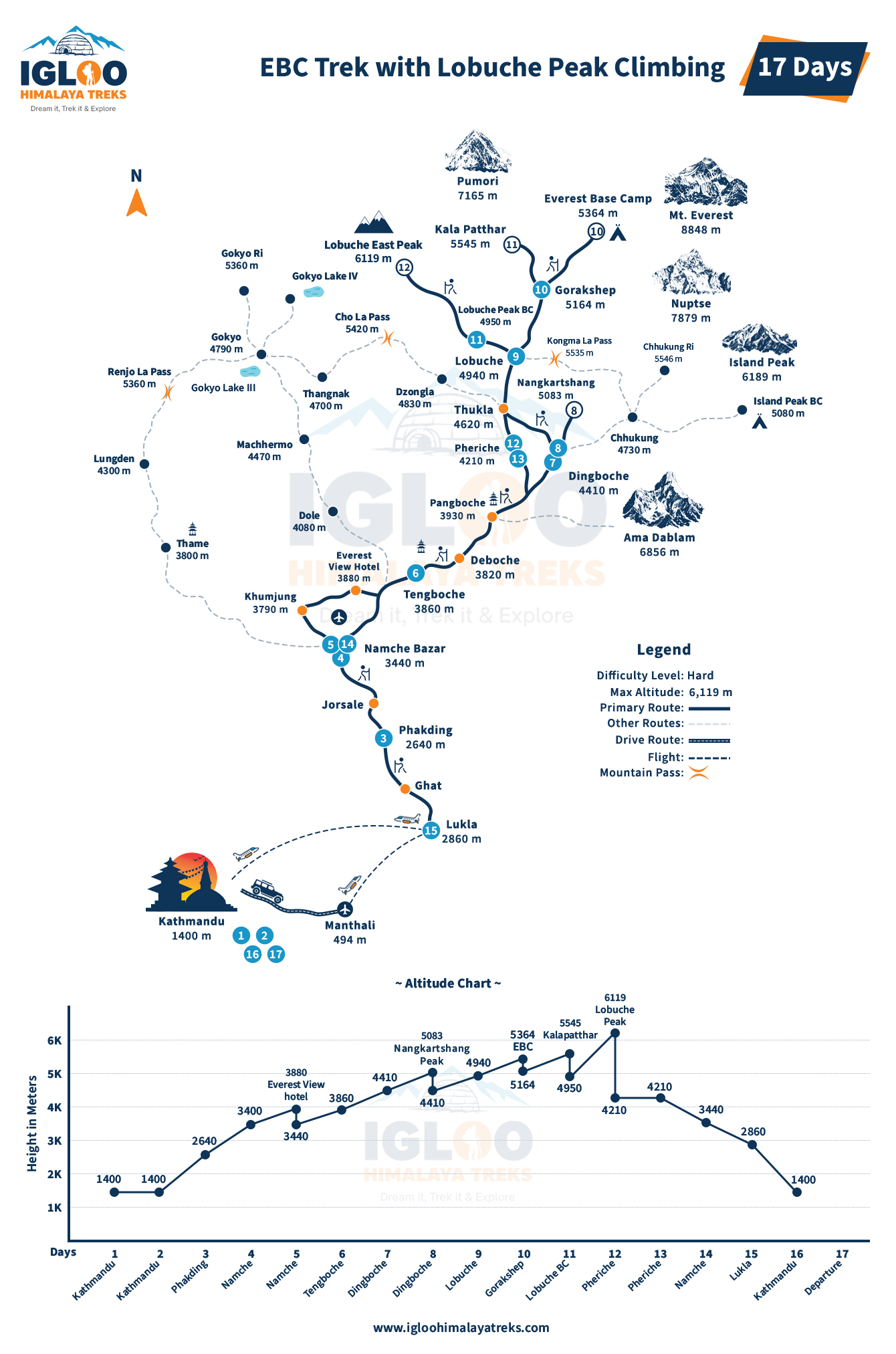


The Lobuche Peak Climbing trek is an adventurous journey in the heart of the Everest region, combining high-altitude trekking with an exciting mountaineering experience.
Explore our 18 Day Lobuche Peak climbing trek package below.
-
3-star hotel -Tea House - Lodge - Tent
-
6130 m.
-
Private Vehicle - Airplane
-
Kathmandu-Breakfast, Mountain-Breakfast - Lunch - Dinner
Overview
Lobuche Peak Climbing with Everest Base Camp is more than just a trek in Nepal. It is a complete Himalayan adventure that takes you from the lively streets of Kathmandu into the heart of the Khumbu, through Sherpa villages, ancient monasteries, high mountain valleys, Everest Base Camp, Kala Patthar, and finally to the summit of Lobuche East Peak at 6,119 meters.
For many adventure lovers, standing on the summit of a Himalayan peak is a lifelong dream. Lobuche East offers that opportunity while combining the experience with one of the world’s most famous trekking routes. The journey gives you time to walk gradually into the Everest region, experience Sherpa culture, and acclimatize before attempting the summit.
With Igloo Himalaya Treks, you travel with a local Nepal-based team that understands the mountains, changing weather conditions, trekking routes, and the importance of proper acclimatization. Our goal is not simply to help you reach the summit. We want you to experience the Himalayas safely, comfortably, and with memories that will stay with you long after you return home.
Why Choose Lobuche Peak Climbing with Everest Base camp?
Lobuche East is one of the most popular trekking peaks in Nepal. It is an excellent choice for trekkers who want to move beyond ordinary high-altitude trekking and experience real Himalayan climbing.
The journey combines several unforgettable experiences:
- Trekking through the famous Everest region
- Exploring Namche Bazaar and traditional Sherpa villages
- Visiting Tengboche and experiencing Himalayan Buddhist culture
- Reaching Everest Base Camp
- Watching sunrise from Kala Patthar
- Learning basic mountaineering skills
- Using climbing equipment such as crampons, harnesses, ropes, and ice axes
- Summiting Lobuche East Peak at 6,119 meters
- Enjoying panoramic views of Everest, Lhotse, Nuptse, Ama Dablam, Makalu, and many other Himalayan peaks
This combination makes Lobuche Peak Climbing ideal for adventurous trekkers looking for their first major Himalayan climbing experience.
Everest Base Camp and Kala Patthar Experience
One of the biggest advantages of this adventure is the opportunity to experience the legendary Everest Base Camp region before attempting Lobuche Peak.
Reaching Everest Base Camp is an emotional moment for many trekkers. Surrounded by the Khumbu Glacier and some of the highest mountains on Earth, it is easy to understand why this region attracts adventurers from around the world.
The journey also includes Kala Patthar, one of the best viewpoints in the Everest region. From here, you can enjoy spectacular views of Mount Everest, Nuptse, Pumori, and the surrounding Himalayan landscape.
These experiences make the Lobuche Peak Climbing trip much more than a summit expedition. It is a complete Everest adventure.
How Difficult Is Lobuche Peak Climbing?
Lobuche Peak Climbing is a challenging high-altitude adventure. It requires good physical fitness, strong determination, and proper preparation.
The trekking section involves several days of walking, often between 4 and 8 hours per day, depending on the route and acclimatization schedule. As you move above 4,000 meters, the thinner air can make even normal walking feel more demanding.
The summit day is the most challenging part of the journey. Climbers usually begin very early, often during the night or before sunrise. The route may involve snow, ice, steep sections, fixed ropes, and technical climbing equipment.
You do not need to be a professional mountaineer, but previous high-altitude trekking experience is highly beneficial. A positive attitude, good endurance, and proper preparation can make a significant difference.
At Igloo Himalaya Treks, our climbing team provides guidance and basic climbing instruction before the summit attempt so that you can become familiar with the equipment and techniques required for the climb.
Is Lobuche Peak Suitable for Beginners?
Lobuche East can be suitable for strong and well-prepared trekkers who are ready for a serious challenge. However, it should not be underestimated.
The climbing section is more demanding than a normal trek. You may need to use crampons, harnesses, ropes, and other mountaineering equipment.
If you are a beginner, we recommend preparing well before arriving in Nepal. Regular hiking, stair climbing, cardio training, strength exercises, and endurance training can help prepare your body for long trekking days and high altitude.
Our experienced climbing guides provide support and instruction, but your physical preparation and determination remain an important part of a successful experience.
Acclimatization During Lobuche Peak Climbing
Proper acclimatization is one of the most important parts of a successful Lobuche Peak Climbing trip.
The itinerary should be designed to allow your body to gradually adjust to the increasing altitude. Acclimatization days in places such as Namche Bazaar and Dingboche provide an opportunity to hike higher and sleep lower, helping your body adapt naturally.
Altitude affects every person differently. Being physically fit does not guarantee that you will not experience altitude-related problems. That is why our approach focuses on gradual ascent, monitoring your condition, maintaining hydration, and allowing flexibility when necessary.
Your safety is always more important than reaching the summit.
Lobuche Peak Summit Day
Summit day is the moment you have been preparing for throughout the journey.
The day usually begins in the darkness, when the mountains are quiet and the stars shine above the Himalayan landscape. After preparing your equipment, you begin the climb with your guide and climbing team.
As the route climbs higher, the challenge increases. The cold, altitude, snow, and physical effort test your endurance and concentration. Each step requires patience and determination.
Then comes the moment every climber dreams about: reaching the summit of Lobuche East.
Standing at 6,119 meters, surrounded by the giant peaks of the Himalayas, is an experience difficult to describe in words. Everest, Lhotse, Nuptse, Ama Dablam, Makalu, and countless other mountains create an unforgettable panorama.
But the summit is only halfway. A careful descent is equally important, and our team continues to support you until you safely return to a lower altitude.
Best Time for Lobuche Peak Climbing
The best seasons for Lobuche Peak Climbing are generally spring and autumn.
Spring Season: March to May
Spring offers warmer temperatures, longer days, and excellent conditions for trekking and climbing. The forests lower on the trail can be particularly beautiful, while higher elevations remain covered by dramatic snow and ice.
Autumn Season: September to November
Autumn is one of the most popular trekking and climbing seasons in Nepal. After the monsoon, the mountains are often clear, the weather is generally stable, and visibility can be excellent.
Winter climbing is possible for experienced and well-prepared climbers, but temperatures can be extremely cold and snow conditions may make the expedition more challenging.
During the monsoon season, rain, cloud, and changing mountain conditions can affect both trekking and climbing plans.
Training and Preparation for Lobuche Peak
Good preparation should begin several weeks or months before your trip.
Focus on improving:
Cardiovascular Fitness
Running, cycling, swimming, and long uphill walks can help improve endurance.
Leg Strength
Squats, lunges, stair climbing, and hiking with a backpack can prepare your legs for long trekking days.
Hiking Endurance
Try to complete regular hikes on uneven terrain. Gradually increase the distance and elevation gain.
Mental Preparation
High-altitude climbing requires patience. Weather can change, flights may be delayed, and summit plans can sometimes change for safety reasons. A flexible and positive mindset is extremely valuable in the mountains.
What Equipment Is Used for Lobuche Peak Climbing?
The trekking section requires standard high-altitude trekking equipment, while the climbing section requires additional mountaineering gear.
Depending on the climbing conditions, equipment may include:
- Mountaineering boots
- Crampons
- Harness
- Helmet
- Ice axe
- Climbing rope
- Carabiners
- Ascender or jumar
- Warm summit gloves
- Down jacket
- Thermal layers
- Sunglasses or goggles
- Headlamp
Our team will provide clear information about the equipment required before your Lobuche Peak Climbing trip begins.
Why Climb Lobuche Peak with Igloo Himalaya Treks?
Choosing the right local company is an important part of planning a Himalayan climbing adventure.
Igloo Himalaya Treks is based in Nepal and works with local guides and experienced mountain staff who understand the Everest region. From your arrival in Kathmandu until the end of your journey, our team aims to provide organized service, local knowledge, and personal support.
Local Knowledge
Our team understands the trekking routes, Sherpa villages, accommodation options, mountain weather, and practical challenges of traveling in the Himalayas.
Experienced Guides and Climbing Support
Lobuche Peak requires proper guidance and preparation. Our team supports you during the trekking and climbing phases of the adventure.
Focus on Acclimatization
We believe that a successful trip is not about rushing. A well-planned itinerary gives your body time to adapt to the altitude and improves the overall trekking experience.
Small and Personal Service
We aim to provide personal attention rather than treating every traveler as just another booking.
Complete Everest Adventure
This journey combines the Everest region, Everest Base Camp, Kala Patthar, Sherpa culture, high-altitude trekking, and the summit of Lobuche East into one unforgettable Himalayan experience.
Is Lobuche Peak Climbing Worth It?
For trekkers who dream of standing on a Himalayan summit, Lobuche Peak is absolutely worth considering.
It is physically demanding. The altitude is serious. Summit day can be long and challenging. Weather conditions can change quickly.
But these challenges are part of what makes the achievement meaningful.
You begin your journey in Kathmandu, fly into the small mountain airport at Lukla, walk through Sherpa villages, cross rivers and suspension bridges, reach the Everest Base Camp region, stand at Kala Patthar, learn climbing skills, and finally attempt a 6,119-meter Himalayan summit.
Lobuche Peak Climbing is not simply about reaching the top of a mountain. It is about challenging yourself, experiencing a different way of life, and discovering what you can achieve when you take one step at a time.
Highlights
- Summit Lobuche East Peak at 6,119 meters, one of Nepal's popular trekking peaks.
- Experience the legendary Everest Base Camp Trek and stand beneath the world's highest mountain.
- Enjoy a spectacular sunrise and panoramic Himalayan views from Kala Patthar.
- Fly from Kathmandu to Lukla, the gateway to the Everest region.
- Explore Namche Bazaar, the cultural and commercial center of the Khumbu.
- Visit the famous Tengboche Monastery, surrounded by spectacular Himalayan scenery.
- Walk through traditional Sherpa villages and experience the unique culture and hospitality of the Khumbu.
- Trek through the dramatic landscapes of the Khumbu Glacier and high Himalayan valleys.
- Enjoy magnificent views of Mount Everest, Lhotse, Nuptse, Ama Dablam, Pumori, Makalu, and other Himalayan peaks.
- Experience a genuine Himalayan climbing adventure using crampons, ropes, harnesses, ice axe, and other climbing equipment.
- Receive climbing guidance and preparation from an experienced local climbing team.
- Follow a carefully planned itinerary with acclimatization days before the summit attempt.
- Combine high-altitude trekking, Sherpa culture, Everest Base Camp, and Himalayan peak climbing in one unforgettable adventure.
- Travel with Igloo Himalaya Treks, a local Nepal-based trekking and climbing company with knowledge of the Everest region.