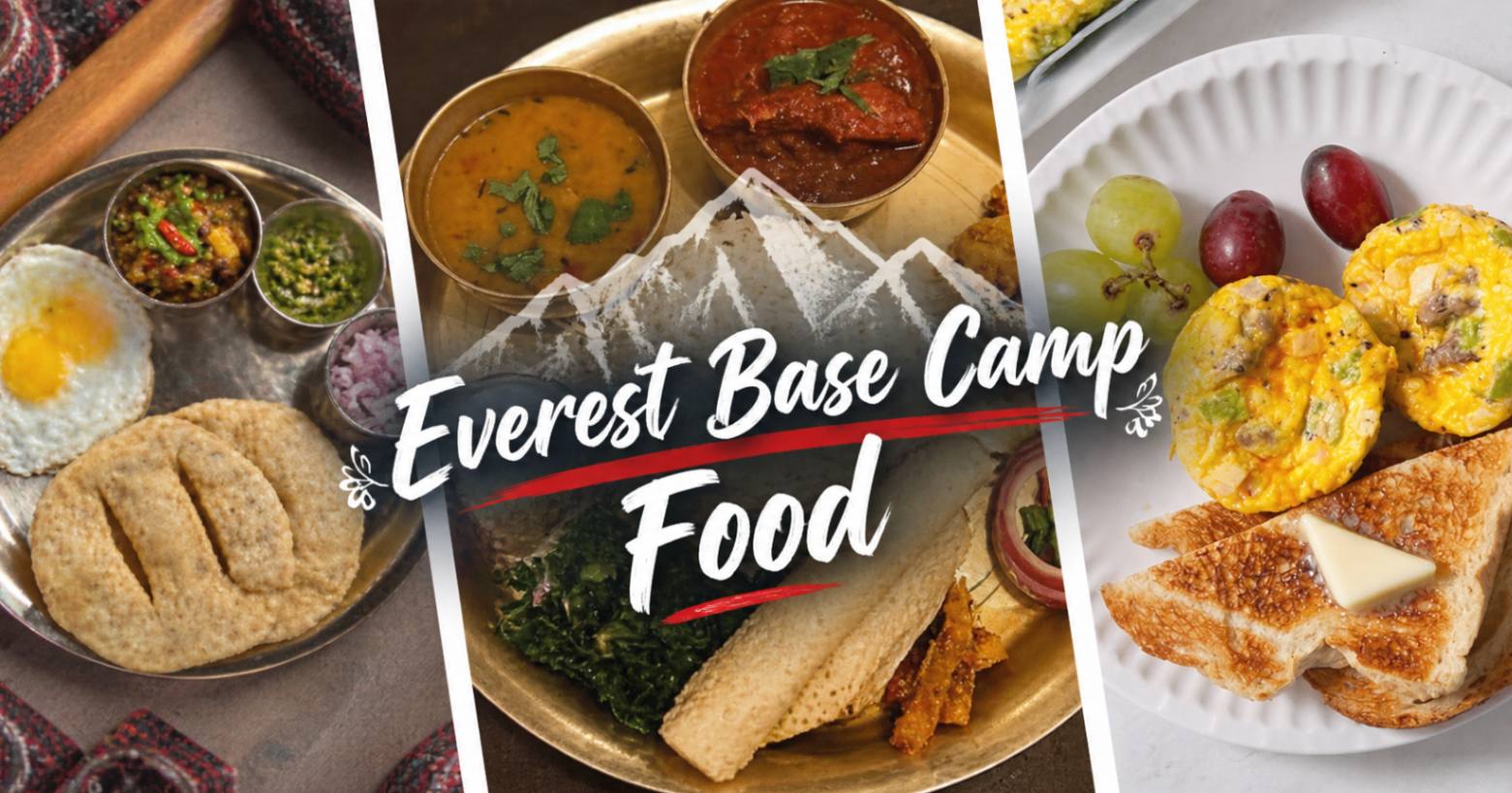
Everest Base Camp Trek Food: What Do You Really Eat on the Trail?
You do not need to carry 14 days of food to Everest Base Camp. But you do need to know what you will actually be eating when the trail climbs from Lukla to more than 5,000 meters, because the menu at the start of your trek looks nothing like the menu at the end of it.
At lower elevations, you will find real variety: bakeries, pizza, even fresh salad in some places. By mid-altitude, that shifts toward a mix of traditional Nepali and Tibetan dishes alongside simplified Western staples.
Above Dingboche, menus narrow further, and by the time you reach Gorak Shep, you’re looking at fewer choices, higher prices, and food built for warmth and calories rather than variety.
This guide looks at Everest Base Camp trek food not just as a list of dishes, but as something that changes day by day as you climb; what you can realistically order at each stop, what our guides tend to choose for themselves, and how food actually affects your daily trekking budget.
The Short Answer: What Do You Actually Eat on EBC?
If you want the answer before the detail, here is what a typical day of eating looks like on the Everest Base Camp trail.
-
Typical Breakfast
Porridge, eggs (boiled, fried, or as an omelet), toast, Tibetan bread, pancakes, muesli, and boiled or fried potatoes are the standard breakfast lineup at nearly every teahouse on the route.
-
Typical Lunch
Dal bhat, fried rice, chow mein, thukpa (Tibetan noodle soup), momos, pasta, and vegetable or garlic soup cover most of what’s on offer for lunch.
-
Typical Dinner
Dinner menus overlap heavily with lunch: dal bhat, Sherpa stew, noodle dishes, rice, pasta, mixed vegetables, and soup.
-
Snacks
Chocolate, nuts, biscuits, dried fruit, and energy bars are what most trekkers carry between meals, either bought in Kathmandu or picked up at teahouse shops along the way.
But here is the part most Everest Base Camp food guides skip over: the menu you see in Namche is not and will not be the menu you will be seeing at Gorak Shep.
What actually changes, where, and why is the more useful question.
The EBC Food Journey: How Your Menu Changes as You Climb
Instead of one long list of dishes, it helps to think of Everest Base Camp trek food as a progression: the menu narrows step by step as you gain altitude, and understanding that pattern helps you plan both your appetite and your budget.
Here is how the trail’s food changes from Lukla to Gorak Shep.
-
Lukla: Where Variety Starts
Lukla already has a surprising range for a village this remote, including small cafés, a bakery or two, and menus that mix local dishes with familiar Western meals like pancakes and toast, since it’s still connected to Kathmandu by daily flights.
-
Namche Bazaar: The Food Variety Peak
Namche (3,440 m) is where the menu variety actually peaks, not narrows. As the main trading hub of the Khumbu, it has real bakeries, brewed coffee, pizza and pasta, momos, dal bhat, and a noticeably wider snack selection than anywhere further up the trail. Fresh produce is also more available here than at any settlement above it.
-
Tengboche: The Transition Point
Past Tengboche (3,870 m), the experience starts shifting from “restaurant with a view” toward something more mountain-oriented. The famous monastery and its bakery still offer good options, but this is roughly where menus begin quietly shrinking.
-
Dingboche and Pheriche: Simplicity Becomes Useful
By Dingboche and Pheriche (4,360–4,240 m), the menu leans into soups, rice, noodles, dal bhat, potatoes, and eggs, with noticeably fewer fresh vegetable options than lower down the trail.
-
Lobuche: Food Becomes Functional
At Lobuche (4,940 m), you’re not really eating for culinary variety anymore. You’re eating to get through another cold, demanding day, and the menu reflects that: heartier, simpler, and repetitive by design rather than by accident.
-
Gorak Shep: The Highest Dining Stop
Gorak Shep (5,164 m) is the last teahouse settlement before Everest Base Camp itself, and it’s where the food experience becomes most limited: a short, basic menu, the highest prices on the entire trail, and hot drinks that matter more here than at any other stop. Meal timing also matters more at this altitude, since kitchens are smaller and slower.
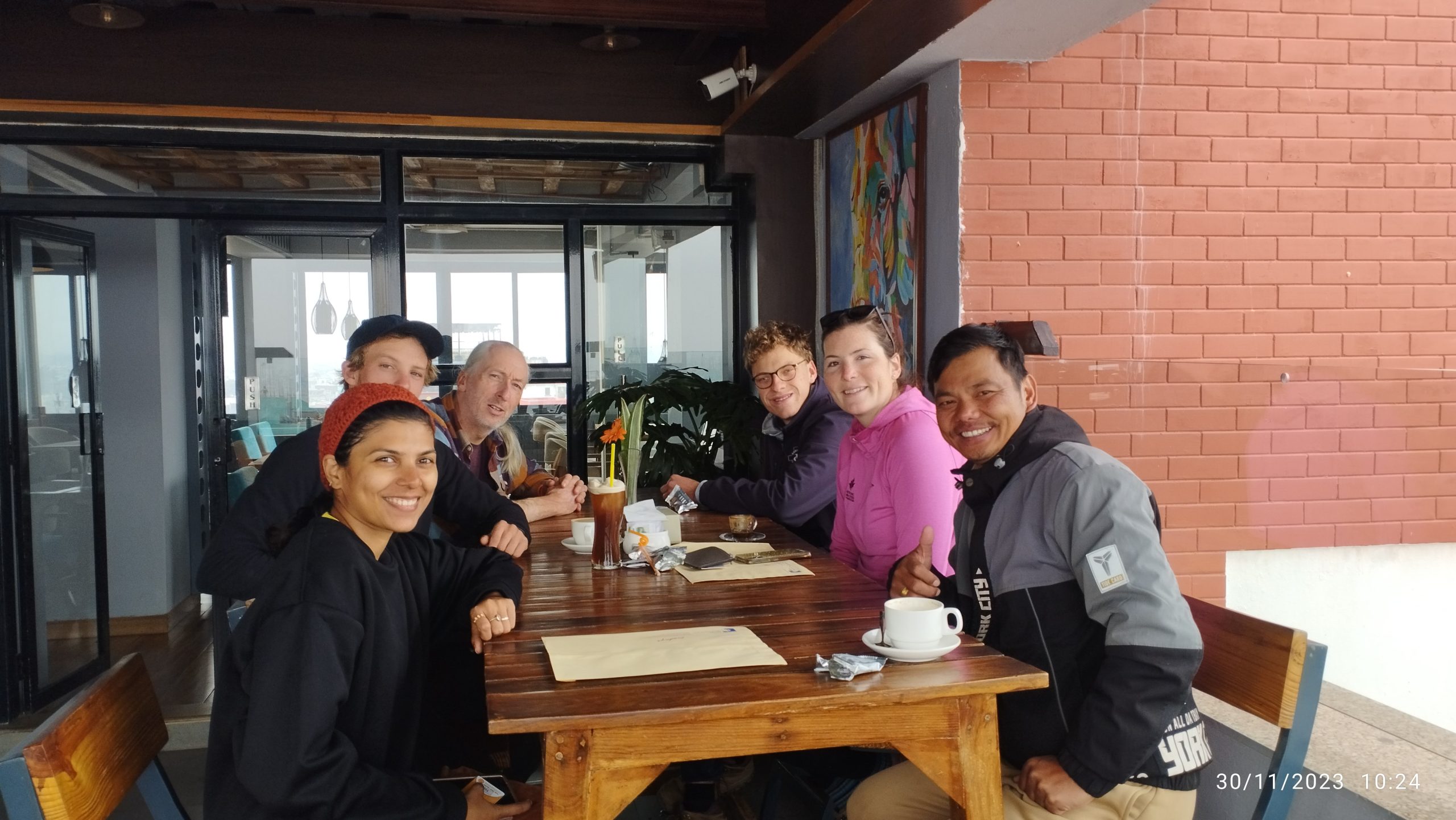
What an Igloo Himalaya Treks Guide Would Actually Order at Different Stops
Rather than generic nutrition advice, here’s a practical look at what an experienced Everest region guide tends to order at each stage of the trek, based on years of leading groups along this exact route.
| Stop | Breakfast | Lunch | Dinner |
|---|---|---|---|
| Lukla | Eggs + toast | Dal bhat | Momos |
| Namche Bazaar | Porridge + eggs | Thukpa | Dal bhat |
| Tengboche | Tibetan bread | Noodles | Dal bhat |
| Dingboche | Porridge | Soup + rice | Dal bhat |
| Lobuche | Eggs + toast | Thukpa | Dal bhat |
| Gorak Shep | Porridge | Soup | Rice and lentils |
Notice how often dal bhat shows up on that list past Namche. This is not a lack of imagination; it is a practical choice guides make repeatedly, and it is worth listening to.
As one of our guides puts it: “At higher altitude, I usually tell trekkers not to overthink the menu. Choose something warm, familiar, and easy for you to eat.”
The Teahouse Menu Nobody Explains: Same Dish, Different Experience
Here is something most food guides gloss over: “dal bhat” doesn’t mean the same plate at every teahouse. Portion size, the vegetables used in the curry, the type of pickle served, and even how the lentils are prepared can vary noticeably from one lodge to the next, even on the same day’s walk.
The same is true for momos, thukpa, pasta, and pizza. A momo at a busy Namche teahouse, made fresh for dozens of guests a night, is a different experience from a momo at a quiet lodge in Lobuche with only a handful of trekkers passing through.
What Actually Causes the Difference
A few practical factors explain this variation: altitude and ingredient availability, how far the teahouse is from the nearest road or airstrip, the size of the kitchen and how many staff are cooking, how many trekkers the lodge serves on a given night, and the season, since summer and autumn bring more fresh produce up the trail than winter does.
Dal Bhat vs Western Food on EBC: Which Should You Choose?
It is tempting to reduce this to “dal bhat is healthy, Western food is not, ” but that is too simple and not entirely true.
The better way to decide is based on what you actually want at that moment on the trail.
| If you want… | Consider… |
|---|---|
| A filling traditional meal | Dal bhat |
| Something warm | Thukpa |
| A quick lunch | Noodles |
| Familiar Western food | Pasta |
| Something easy to share | Momos |
| Breakfast before walking | Eggs with toast or porridge |
| Something light | Soup |
Dal bhat’s popularity on this trail is not just a cultural habit. The combination of rice, lentils, vegetables, and pickle, usually with free refills at most teahouses, makes it genuinely practical fuel for a long walking day, not just a default order.
That does not mean you need to eat it every single meal; it just explains why so many trekkers end up choosing it more often than they expected to.
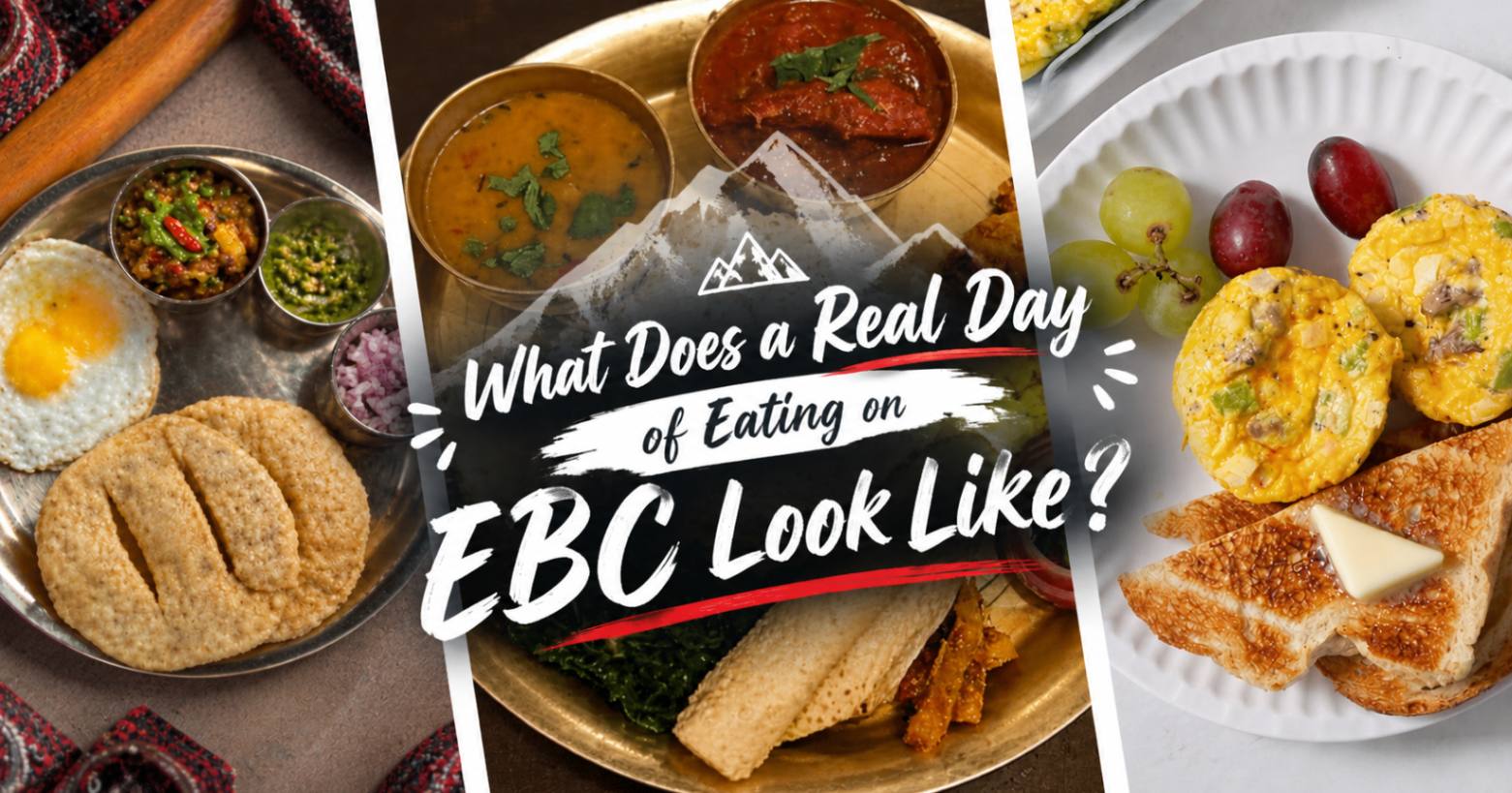
What Does a Real Day of Eating on EBC Look Like?
Numbers and menus only tell part of the story. Here is a real what a typical trekking day actually looks like from a food perspective.
6:30 AM — Breakfast. Most trekkers order something warm and carb-heavy: porridge, eggs, or Tibetan bread with honey, eaten before the morning cold has fully lifted.
8:00 AM — Start trekking. A daypack usually holds a water bottle, a couple of energy bars, and maybe a handful of nuts or dried fruit for the trail.
10:30 AM — Trail snack. Chocolate, nuts, or dried fruit, eaten on a short break rather than a full stop.
12:30 PM — Lunch stop. Depending on the day, this might be a bowl of thukpa to warm up, or a plate of dal bhat if there’s a longer climb still ahead.
3:30 PM — Arrive at the lodge. A hot drink, usually ginger tea or masala chiya, is often the first thing ordered on arrival, more for the warmth than the caffeine.
6:30 PM — Dinner. A realistic order at this point is dal bhat again, or a bowl of Sherpa stew if the day was especially cold.
8:00 PM — Dining room. This is where the day genuinely winds down. Teahouse dining rooms are not just places to eat; they are the social center of each stop, where trekkers from different groups warm up around a stove, swap stories about the day’s walk, and get ready for an early night before the next stage.
Why Does Food Get More Expensive as You Climb?
The short explanation is “transportation,” but the full picture is more specific than that.
Food supplies generally move in stages: from Kathmandu to Lukla by plane, then from Lukla upward by porter and yak train as the trail climbs past Namche Bazaar.
Above roughly 4,000 meters, fresh vegetables become harder to source at all, and some lodges near Lobuche and Gorak Shep rely on a mix of stockpiled dry goods and occasional helicopter resupply for certain items.
Every extra dollar on your bill above Namche represents real physical effort: a porter or yak carrying that exact plate of food, step by step, higher into the mountains than a road or airstrip can reach.
That is the honest reason a plate of dal bhat costs noticeably more at Gorak Shep than it does in Phakding.
EBC Food Cost: What Should You Budget Per Day?
Since a full EBC cost breakdown deserves its own dedicated guide, here is a simplified look at how food costs shift as you climb. Expect to spend roughly NPR 2,500–3,500 per day at lower elevations and around NPR 3,500–5,000 or more at higher elevations, depending on what you eat, how many hot drinks you have, and whether you buy snacks or bottled/boiled water. Current 2026 trekking sources report similar ranges, although individual teahouse prices can vary.
| Expense | Lower Trail (Phakding–Namche) | Higher Trail (Dingboche–Gorak Shep) |
| Breakfast | NPR 300–600 | NPR 500-700 |
| Lunch | NPR 400–700 | NPR 600–800 |
| Dinner | NPR 500–800 | NPR 600-800 |
| Hot drinks | NPR 80–200 | NPR 150–450 |
| Snacks | NPR 150–400 | NPR 250–600 |
| Estimated daily food budget | NPR 2,500–3,500 | NPR 1,700-2,000 |
For example, a plate of dal bhat may cost around NPR 500–600 in the lower part of the route but can reach roughly NPR 800–1,200 at higher elevations, while hot drinks and snacks also become more expensive as supplies travel farther into the Khumbu.
These figures should be treated as planning ranges rather than fixed prices. Teahouse menus are not completely standardized, and prices can differ between lodges, seasons, and individual dishes. The further you travel from Lukla and the higher you climb, the more you should allow for food and drink expenses.
Budget tip: If your trekking package already includes breakfast, lunch, and dinner, your personal food budget will be much lower. In that case, you mainly need extra cash for hot drinks, snacks, bottled or boiled water, charging, Wi-Fi, showers, and other personal expenses.
What Should You Eat When You Don’t Feel Hungry at Altitude?
A more useful question than “what’s healthy at altitude” is this: what do you eat when you’re tired, cold, your appetite has dropped, but you still have another day of trekking ahead?
In that situation, easier options tend to work better than forcing down a large meal: soup, porridge, rice, noodles, potatoes, toast, or a simple plate of dal bhat without pushing for a big portion.
Do not force yourself to eat an enormous meal just because a guide tells you to “eat more.” Choose foods you can actually tolerate, and prioritize staying hydrated over hitting a specific calorie target.
It is also worth being clear about something food can not do: it does not prevent or treat altitude sickness.
Garlic soup and ginger tea are genuinely comforting and help with hydration, but neither is a substitute for proper acclimatization, and no meal choice replaces that.
Vegetarian, Vegan, and Gluten-Free: What Changes?
“Vegetarians have plenty of options” is true but not the full picture. Each dietary need looks a little different on this trail.
-
Vegetarian
This is generally the easiest category to manage. Dal bhat, veg momos, vegetable fried rice, thukpa, and most soups are vegetarian by default or easily made so.
-
Vegan
Vegan trekkers need to ask a few specific questions: whether ghee (clarified butter) is used in the dal bhat or Tibetan bread, whether milk tea is made with dairy by default (it usually is, so ask for black tea), and whether a soup or sauce contains yak butter, which shows up more often than most trekkers expect.
-
Gluten-Free
This is the category that deserves the most caution. Rice, dal, potatoes, and some soups are naturally gluten-free, but cross-contact in a small teahouse kitchen with one shared cooking surface is a real possibility. Ask the kitchen directly rather than assuming, and don’t expect every lodge to be equipped to safely manage a medical-grade gluten restriction, especially above Namche.
A small reminder: This is one area where going with an experienced trekking agency can make things easier. Your dietary needs can be discussed with the teahouses in advance, so suitable meals can be planned before you arrive.
At higher altitudes, simply asking for special food on the spot can be difficult because options and ingredients are more limited.
Contact us for a better trekking experience: Igloo Himalaya Treks
The Hidden Part of EBC Food: Water, Hot Drinks, and Hydration
“Drink plenty of water” doesn’t capture what hydration actually looks like on this trail. In practice, it is a mix of boiled water from the teahouse kitchen, water treated with purification tablets or a filter, plain hot water, black or milk tea, ginger and lemon drinks, and the water content in soup.
Hot drinks are not just about hydration here; they are part of the daily rhythm of the trek.
A cup of ginger tea on arrival at a lodge, or masala chiya passed around the dinner table, is as much a social moment as a practical one.
What Food Should You Carry From Kathmandu?
Rather than telling trekkers to pack a suitcase of food for 14 days, it is more useful to separate what is actually worth carrying from what is not.
Worth carrying: your favorite snacks, anything specific to a dietary restriction, small chocolate bars, nuts, dried fruit, and energy bars.
Usually unnecessary: large quantities of packaged meals, heavy canned food, or bulky snacks that are already sold at teahouses along the route. Given luggage weight limits on the Lukla flight, carrying more than a small stash of personal favorites tends to be more trouble than it’s worth.
7 EBC Food Lessons From the Trail
A few practical takeaways worth keeping in mind before you go:
- Your favorite meal at 3,000 meters may not appeal to you at 5,000 meters, and that’s normal.
- Menu variety decreases steadily as you climb, not suddenly.
- Dal bhat is not just a cliché; there is a real practical reason trekkers keep ordering it.
- Hot drinks become part of the daily routine, not just a way to stay hydrated.
- Do not build your entire food plan around Western meals being available everywhere.
- Your appetite can and often does change at altitude, and that is worth planning around rather than fighting.
- Carry the snacks you genuinely enjoy eating, not just what looks efficient on a packing list.
Conclusion
Everest Base Camp trek food is not a fixed menu you can memorize before you go; it is a moving target that changes with every few hundred meters of altitude. Knowing what to expect at Namche versus Gorak Shep, understanding why dal bhat becomes the default order past Dingboche, and packing a small stash of snacks you actually enjoy will do more for your trek than any generic “eat healthy” advice.
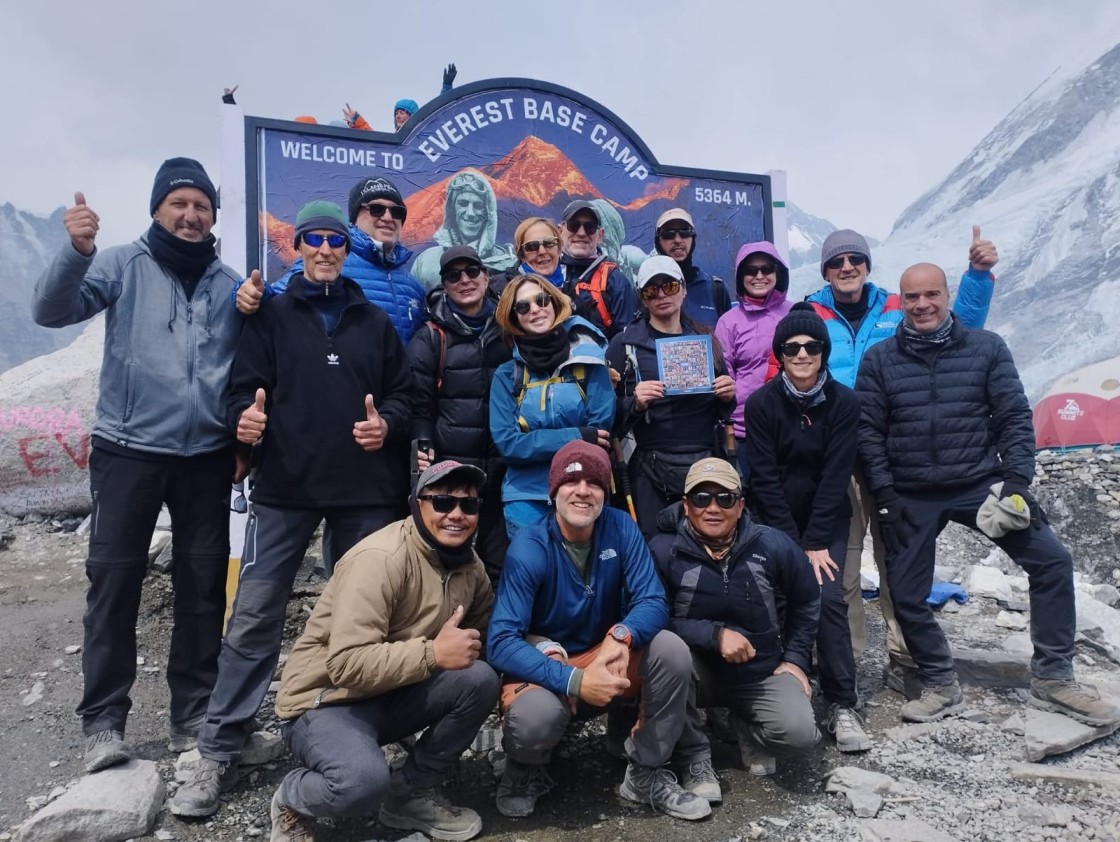
If you are planning your Everest Base Camp trek and want a team that briefs you properly on what to expect on the trail, including food, Igloo Himalaya Treks can help.
As one of the best trekking companies in Nepal, our guides walk this exact route regularly and know which teahouses serve the freshest meals at each stop.
Visit our Everest Base Camp Trek page to see the full itinerary, or check our Everest Base Camp Trek cost guide for a full budget breakdown that includes food costs.
FAQs
What is the most common food on the Everest Base Camp trek?
Dal bhat is the most common food on the Everest Base Camp trek, ordered by most trekkers for both lunch and dinner because it’s filling, widely available, and usually comes with free refills.
Does the food get worse as you get higher on the EBC trek?
The food doesn’t necessarily get worse, but menus do get shorter and simpler above Dingboche, with fewer fresh vegetables and more reliance on rice, potatoes, noodles, and soup.
What do guides usually recommend eating on the EBC trek?
Guides generally recommend sticking to something warm and familiar rather than overthinking the menu, especially at higher altitude, since appetite often drops and simple food is easier to finish.
Is dal bhat available throughout the Everest Base Camp route?
Yes, dal bhat is available at every teahouse along the route, from Lukla to Gorak Shep, and remains one of the few dishes with consistent quality across the entire trail.
How much should I budget for food and drinks on the EBC trek?
Food and drink costs rise steadily with altitude, and trekkers should expect meals and hot drinks at Dingboche, Lobuche, and Gorak Shep to cost noticeably more than the same dishes in Phakding or Namche Bazaar.
Can I find vegetarian, vegan, or gluten-free food on the EBC trek?
Vegetarian food is widely available throughout the trek, vegan options are manageable with a few specific questions about ghee and dairy, and gluten-free trekkers should ask the kitchen directly rather than assume a dish is safe, especially above Namche.
Are food allergies a concern during the Everest Base Camp Trek?
Yes. Trekkers with food allergies or strict dietary requirements should inform their trekking agency and teahouse staff in advance. Food allergens can sometimes be present unintentionally through shared preparation areas or ingredients. For general information on food allergens and food safety, see the FAO food allergen guidance.


