What Is Nepal Known For?
Introduction/Overview
When people hear Nepal, Mount Everest is often the first thing that comes to mind. But Nepal is known for much more than the world’s highest mountain.
Nepal is famous for the Himalayas, trekking and mountaineering, Sherpa culture, ancient temples, Buddhist heritage, Lumbini the birthplace of Gautama Buddha, colorful festivals, diverse communities, unique food, wildlife and traditional ways of life.
What makes Nepal especially interesting is how many of these experiences exist within a relatively small country, from the lowland Terai to the high Himalayan peaks.
You can spend a morning exploring centuries-old temples in Kathmandu, travel south to see one-horned rhinoceroses in Chitwan, visit the birthplace of Buddha in Lumbini, or head north into the Himalayas toward Everest, Annapurna, Manaslu and other great peaks.
So, what is Nepal known for? The short answer is: Nepal is known for its mountains and adventure, but also for its living culture, spirituality, food, wildlife and remarkable geographic diversity.
In this guide, we will look at the things Nepal is best known for and what makes each one special.
What Is Nepal Best Known For?
Nepal is internationally recognized for a remarkable combination of nature, adventure and culture.
Some of the things Nepal is best known for include:
- Mount Everest and the Himalayan mountains
- Trekking and mountaineering
- The birthplace of Gautama Buddha at Lumbini
- Hindu and Buddhist religious heritage
- Ancient temples, stupas and historic cities
- Sherpa and other diverse ethnic cultures
- Traditional festivals such as Dashain and Tihar
- Wildlife, national parks and jungle safaris
- Nepali food such as momos and dal bhat
- The world’s only non-rectangular national flag
- The Kumari tradition
- Himalayan hospitality and the famous spirit of Namaste
But these are not simply attractions on a checklist.
Many of them are still part of everyday life in Nepal, which is what makes traveling through the country different from visiting a place where culture is mainly preserved for tourists.
Mount Everest and the Himalayas
For many people around the world, Nepal is almost synonymous with the Himalayas.
The northern part of the country contains some of the highest mountains on Earth, including Mount Everest.
The Himalayas are not only a backdrop for Nepal. They shape its geography, climate, rivers, communities, tourism, and way of life.
Mount Everest, the World’s Highest Mountain
Mount Everest rises to 8,848.86 meters (29,031.7 feet) above sea level, making it the highest mountain on Earth. In Nepal, it is known as Sagarmatha, while the mountain is known as Chomolungma in Tibetan.
Everest is one of Nepal’s strongest international symbols. But the mountain means different things to different people.
For mountaineers, it represents one of the world’s greatest climbing challenges.
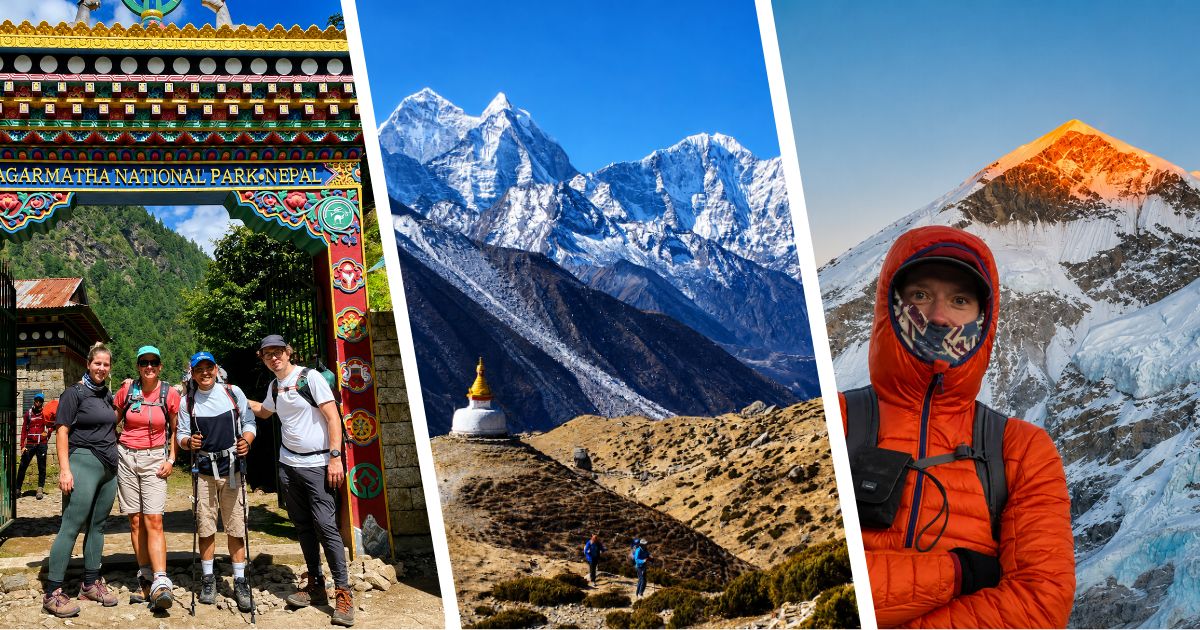
For trekkers, it is the centerpiece of the famous Everest Base Camp Trek. For the Sherpa communities of the Khumbu, it is part of a landscape that has cultural and spiritual importance.
The Everest region is also much more than the summit itself. The journey through Lukla, Namche Bazaar, Tengboche, Dingboche, Lobuche and Gorak Shep introduces travelers to mountain villages, Buddhist monasteries, glaciers and high-altitude landscapes.
For those who want to understand what the Everest region is actually like beyond the summit, our guide on what you will experience during the Everest Base Camp Trek goes deeper into the journey.
Eight of the World’s 14 Eight-Thousanders
Nepal is also known for having an extraordinary concentration of the world’s highest mountains.
Eight of the world’s 14 mountains above 8,000 meters are in Nepal:
- Mount Everest – 8,848 m
- Kanchenjunga – 8,586 m
- Lhotse – 8,516 m
- Makalu – 8,463 m
- Cho Oyu – 8,201 m
- Dhaulagiri – 8,167 m
- Manaslu – 8,163 m
- Annapurna I – 8,091 m
Quick fact: Nepal’s mountain landscape is not limited to these eight giants. The country also contains hundreds of other significant Himalayan peaks, high passes, glaciers and alpine valleys.
Dramatic Himalayan Landscapes
One reason the Himalayas are so closely connected with Nepal is the variety of landscapes found within them.
The higher regions contain snow-covered peaks, glaciers, deep valleys, rocky passes and alpine landscapes, while lower elevations are covered with forests, rivers, farmland and traditional settlements.
The change can be dramatic. A traveler can begin a journey in a warm valley surrounded by green hills and, after several days of travel or trekking, find themselves in a cold landscape where trees become scarce and snow-covered mountains dominate the horizon.
Nepal’s geography is divided broadly into the Himalayan, Hill, and Terai regions, creating an unusually wide range of landscapes within a relatively narrow north-to-south distance.
Trekking and Mountaineering in Nepal
If mountains made Nepal famous, trekking made those mountains accessible to travelers from around the world.
You do not have to be a professional climber to experience the Himalayas. Nepal offers everything from short mountain hikes to long, high-altitude trekking routes and serious mountaineering expeditions.
This variety is one of the main reasons Nepal remains one of the world’s best-known trekking destinations.
If you are looking for a broader guide, our complete guide to trekking in Nepal covers major trekking regions, routes, difficulty levels and planning information.
Famous Treks in Nepal
Some of Nepal’s most recognized trekking routes include:
- Everest Base Camp Trek
- Annapurna Circuit Trek
- Annapurna Base Camp Trek
- Manaslu Circuit Trek
- Langtang Valley Trek
Each offers a different experience.
Everest is famous for its connection with the world’s highest mountain and Sherpa culture. Annapurna is known for its changing landscapes and dramatic mountain scenery.
Manaslu offers a quieter and more remote experience, while Langtang combines mountain scenery with accessible Himalayan culture and villages.
That variety means there is no single definition of a “Nepal trek.”
A trek can be a short introduction to the mountains, a challenging high-pass adventure, a cultural journey or a long expedition through remote valleys.
Mountaineering and Peak Climbing
Nepal is also one of the world’s great mountaineering destinations.
The country is home to eight 8,000-meter peaks, and Mount Everest remains the most famous climbing objective. But mountaineering in Nepal goes far beyond Everest expeditions.
For travelers who want to move from trekking into climbing, peaks such as Island Peak and Mera Peak offer a different level of Himalayan adventure.
The important distinction is that trekking and mountaineering are not the same experience. A normal trek does not require technical climbing, while peak climbing involves additional skills, equipment, preparation and, depending on the mountain, permits and climbing support.
Sherpas and Nepal’s Mountaineering Legacy
Nepal’s mountaineering story cannot be separated from its mountain communities.
The Sherpa people, particularly those of the Everest region, have played a major role in Himalayan mountaineering.
But it is important to remember that Sherpa is the name of an ethnic community, not simply a word for a mountain porter.
Sherpa communities have their own language, traditions, Buddhist practices and history.
In the Khumbu, travelers see this culture through monasteries, prayer flags, mani stones, village life and local hospitality.
The Sherpa contribution to Himalayan climbing is also part of Nepal’s wider mountaineering history, including the historic 1953 Everest ascent by Tenzing Norgay and Edmund Hillary.
Lumbini, the Birthplace of Gautama Buddha
Nepal is famous not only for the highest mountain in the world, but also for being the birthplace of one of the world’s most important spiritual figures.
Lumbini, in the southern Terai plains of Nepal, is recognized as the birthplace of Siddhartha Gautama, the Buddha.
UNESCO describes Lumbini as one of the most important and sacred places associated with Buddhism and lists it as a World Heritage Site.
Why Lumbini Is Important
Lumbini offers a very different experience from the Himalayan trekking regions.
Instead of high mountain trails, visitors find sacred gardens, monasteries, archaeological remains and pilgrimage sites.
According to UNESCO, the evidence connected with the birthplace of Buddha includes the Ashoka Pillar and archaeological remains within the Maya Devi Temple area.
For Buddhist visitors, Lumbini is a pilgrimage destination. For other travelers, it provides an opportunity to understand one of the world’s major religions through the place where its central figure was born.
Maya Devi Temple and Sacred Sites
The Maya Devi Temple is the central sacred site at Lumbini. The area contains archaeological remains connected with the birthplace of Buddha, while the nearby Ashoka Pillar provides important historical evidence.
The Sacred Garden and surrounding monasteries make Lumbini more than a single monument. It is a larger spiritual and cultural landscape.
Nepal’s Buddhist Heritage
Lumbini is only one part of Nepal’s Buddhist heritage.
Across the country, especially in the Kathmandu Valley and Himalayan regions, you can see stupas, monasteries, prayer wheels, mani walls and Buddhist artwork.
Boudhanath and Swayambhunath are among the best-known Buddhist landmarks in Kathmandu, while Himalayan communities have maintained Tibetan Buddhist traditions for generations.
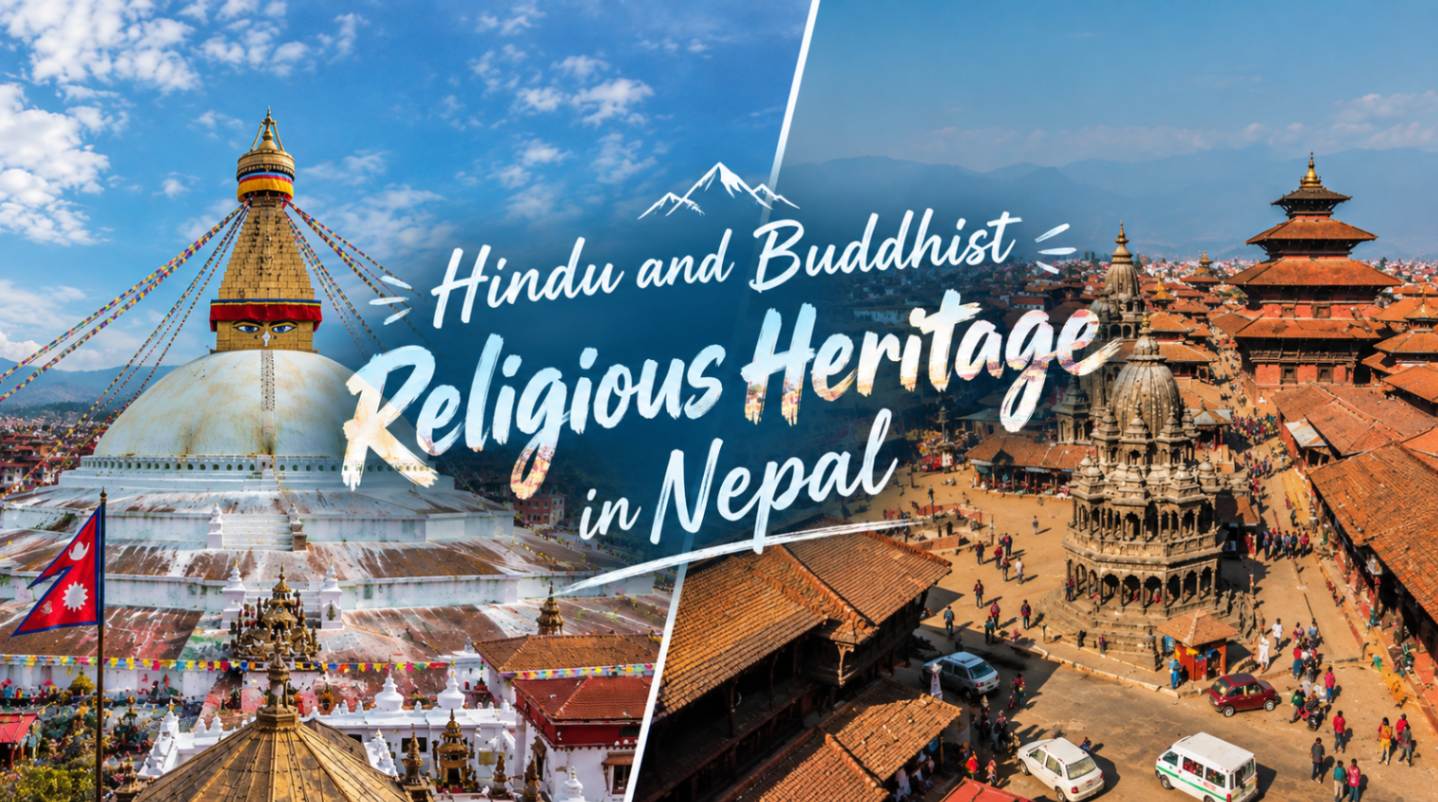
Hindu and Buddhist Religious Heritage in Nepal
One of the most distinctive things about Nepal is the way Hindu and Buddhist traditions exist side by side.
Religion in Nepal is not limited to buildings that tourists visit. It can be seen in daily rituals, festivals, family traditions, architecture, prayer flags, temples and pilgrimage journeys.
Pashupatinath Temple
The Pashupatinath Temple in Kathmandu is one of the most important Hindu pilgrimage sites in Nepal.
Located beside the sacred Bagmati River, the temple is dedicated to Lord Shiva and attracts pilgrims from Nepal and India, especially during major festivals such as Maha Shivaratri.
For visitors, it is important to remember that Pashupatinath is a living religious site rather than simply a historical attraction.
Some areas have access restrictions for non-Hindus, and visitors are expected to respect local rules.
Boudhanath and Swayambhunath
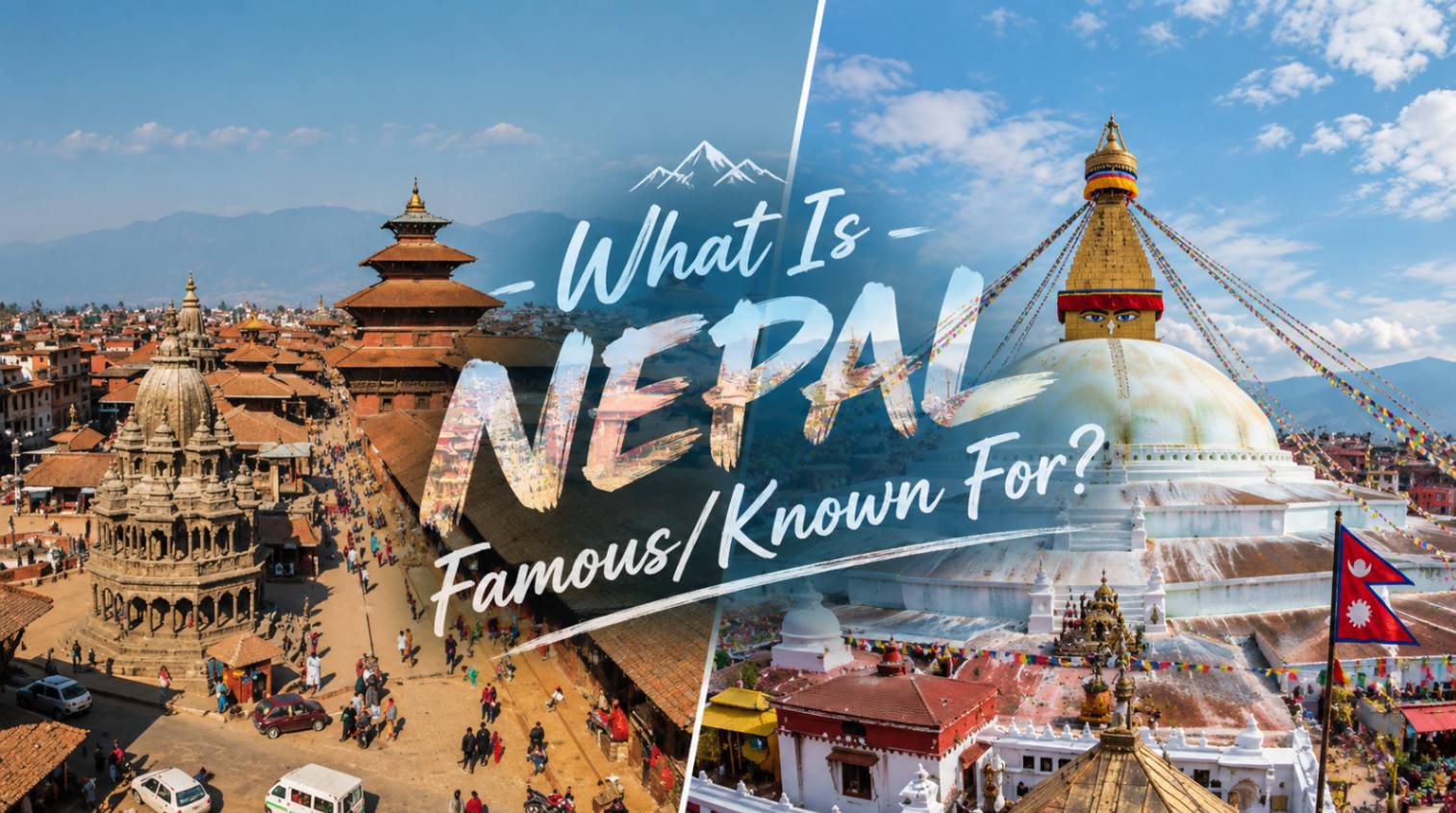
Boudhanath is one of the most recognizable Buddhist sites in Kathmandu. It is large white stupa, prayer wheels and surrounding monasteries make it an important center of Tibetan Buddhist culture.
Swayambhunath, often called the Monkey Temple, sits on a hill overlooking Kathmandu Valley. It is a Buddhist stupa complex where Buddhist and Hindu traditions can also be seen together. Nepal Tourism Board describes it as an important example of religious harmony in Nepal.
Together, these places show that Nepal’s religious heritage is not only about ancient monuments. It is still actively practiced.
Muktinath and Sacred Himalayan Pilgrimage
High in Mustang, Muktinath is an important pilgrimage destination for both Hindus and Buddhists.
The site is particularly interesting because it brings two religious traditions together in a high-altitude Himalayan setting. Nepal Tourism Board lists Muktinath among the country’s important pilgrimage sites and notes its significance to both Hindu and Buddhist communities.
Nepal’s Rich Culture, Ethnic Diversity, and Traditions
Nepal is often described as a small country, but culturally it is far from simple.
Different landscapes, histories and communities have shaped different ways of speaking, eating, dressing, celebrating and practicing religion.
Diverse Ethnic Communities
Nepal is home to many ethnic communities, including Sherpa, Newar, Tamang, Gurung, Magar, Tharu and many others.
Their traditions are not identical.
A Newar cultural experience in the Kathmandu Valley can look very different from a Sherpa village in the Khumbu or a Tharu community in the Terai.
This diversity is one reason traveling across Nepal can feel like visiting several different cultural regions within one country.
Languages and Cultural Diversity
Nepali is the official language, but many other languages are spoken across the country.
Geography has played a major role in this diversity. Mountain valleys, hills and southern plains historically developed communities with their own languages, customs and traditions.
This is also why Nepal cannot be reduced to a single “Nepali culture.” There is a shared national identity, but it contains many regional and community identities.
Traditional Art, Architecture, and Handicrafts
Nepal is also known for traditional craftsmanship.
The Kathmandu Valley is particularly famous for Newari wood carving, metalwork, temples, courtyards and traditional architecture. Buddhist communities have also preserved thangka painting, while traditional textiles such as Dhaka and products such as pashmina remain associated with Nepal.
These crafts are not simply souvenirs. Many developed from religious practices, local skills and generations of craftsmanship.
Fact: Kathmandu Valley alone contains a remarkable concentration of historic religious and architectural sites. UNESCO recognizes the Kathmandu Valley as a World Heritage property, while Nepal has four properties currently inscribed on the World Heritage List: Kathmandu Valley, Lumbini, Chitwan National Park and Sagarmatha National Park.
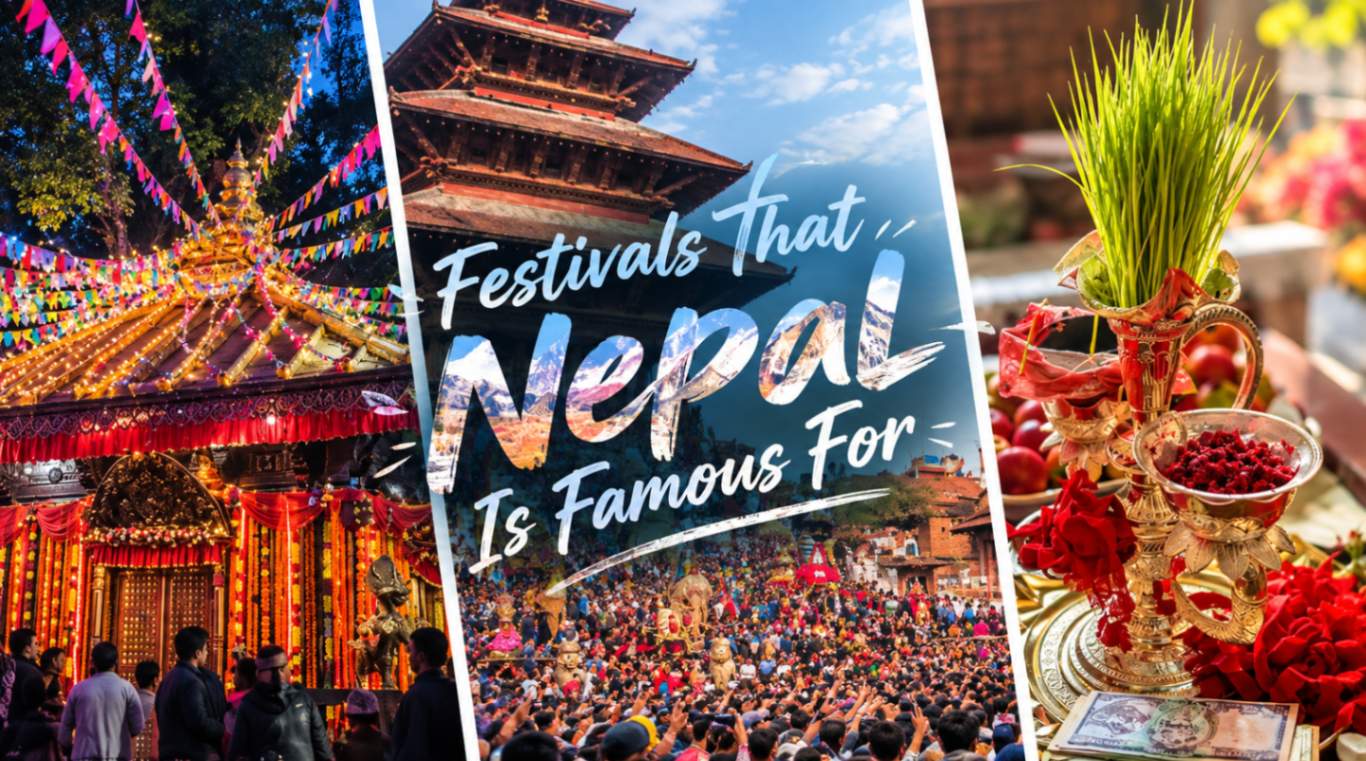
Festivals That Nepal Is Famous For
If you want to understand Nepal, festivals are one of the best places to start.
Festivals bring together religion, family, food, music, traditional clothing and community life. Many are still celebrated actively rather than simply performed for visitors.
Dashain
Dashain is Nepal’s longest major Hindu festival and one of the country’s most important annual celebrations.
Families come together, elders give blessings and tika, people wear new clothes, and homes become places for family gatherings and feasts.
Nepal Tourism Board describes Dashain as a major time for family reunions, blessings, gifts and religious ceremonies.
Tihar
Tihar, often called the Festival of Lights, is another major Nepali festival.
It lasts five days and includes different forms of worship and celebration. Crows, dogs and cows are honored on different days, while Laxmi Puja is dedicated to the goddess of wealth. The festival ends with Bhai Tika, when brothers and sisters celebrate their relationship.
The sight of houses illuminated with lamps and lights is one of the most beautiful parts of Tihar.
Holi, Teej, and Indra Jatra
Nepal celebrates many other festivals throughout the year.
Holi is famous for its colors and joyful public celebrations.
Teej has particular importance for Hindu women and is marked by fasting, prayers, songs and dancing.
Indra Jatra, especially important in Kathmandu, combines processions, traditional performances, chariot festivals and Newar cultural traditions.
These festivals show another side of Nepal: a country where public spaces can become part of cultural and religious life.
Losar and Himalayan Festivals
In Nepal’s Himalayan communities, Losar and other Buddhist festivals are important cultural occasions.
Different communities celebrate Losar in their own ways, with prayers, family gatherings, traditional foods, music and cultural activities.
This is another example of why there is no single festival calendar that fully represents Nepal. Different communities add their own traditions to the country’s cultural identity.
Nepal’s Unique Traditions and National Symbols
Some things Nepal is known for are not mountains or monuments at all. They are small details that immediately make the country recognizable.
The World’s Only Non-Rectangular National Flag
Nepal’s national flag is one of the country’s most distinctive symbols.
It is made of two connected triangular shapes rather than a rectangular flag, making it unique among national flags. The flag contains a moon and sun, with a crimson-red background and dark-blue border.
The design is officially defined in Nepal’s Constitution and national flag regulations.
It is a simple object, but it is one of the easiest ways to recognize Nepal anywhere in the world.
Quick Fact: Nepal’s flag is the only current national flag that is not quadrilateral in shape.
The Kumari, Nepal’s Living Goddess
The Kumari tradition is one of the most distinctive cultural traditions of the Kathmandu Valley.
A Kumari is a young girl who is traditionally selected according to specific religious and cultural practices and is regarded as a living goddess within the Newar tradition.
The tradition is especially associated with Kathmandu Durbar Square and the Kumari Ghar.
For visitors, it is important to approach the tradition respectfully. The Kumari is not a tourist attraction in the usual sense; she is part of a living religious and cultural practice.
Namaste and Nepali Hospitality
The word “Namaste” is widely used as a greeting in Nepal.
But Nepal’s reputation for hospitality goes beyond the word itself.
Visitors experience it in many different settings—from a family-run guesthouse in the hills to a teahouse in the Everest region or a local home in a rural village.
The style of hospitality changes from place to place, but the idea of welcoming guests remains an important part of Nepali culture.
Dhaka Topi and Traditional Dress
The Dhaka topi is one of the most recognizable pieces of traditional Nepali clothing.
Made using patterned Dhaka fabric, the topi has become closely associated with Nepali identity and is often worn during festivals, ceremonies, and formal occasions.
Traditional dress varies considerably across Nepal, however. Different ethnic and regional communities have their own clothing, fabrics, jewelry and styles.
Nepali Food Nepal Is Known For
You cannot fully understand Nepal without talking about its food.
Nepali cuisine has been shaped by the country’s geography and its connections with neighboring regions.
Indian and Tibetan influences are visible, but Nepal has developed its own distinctive dishes and cooking traditions.
Momo
If there is one Nepali food that has become famous far beyond Nepal, it is momo.
These dumplings can be steamed or fried and filled with vegetables, chicken, buffalo meat or other ingredients depending on the restaurant and region.
Momos are eaten everywhere—from small local restaurants to cafés and restaurants in Kathmandu.
Their popularity has also spread internationally, making them one of the easiest introductions to Nepali food.
Dal Bhat
Dal bhat is one of the foundations of everyday Nepali food.
A typical plate combines rice, lentil soup, vegetables, curry and achar, although the exact preparation varies between households and regions.
For trekkers, dal bhat is especially popular because it is filling, familiar and well suited to long days of walking.
Other Famous Nepali Foods
Nepal’s food culture is much broader than momo and dal bhat.
Depending on the region, you can try:
- Newari cuisine
- Thakali food
- Sel roti
- Thukpa
- Chatamari
- Dhido
- Gundruk
- Tibetan-influenced dishes
- Regional curries, pickles and breads
Newari cuisine in particular is known for its wide variety of dishes and traditional preparation.
Food Fact: Nepali food changes noticeably from the Himalayas to the Terai. Mountain communities have stronger Tibetan influences, the Kathmandu Valley has a rich Newari food tradition, and southern Nepal has many dishes influenced by the food cultures of the Terai.
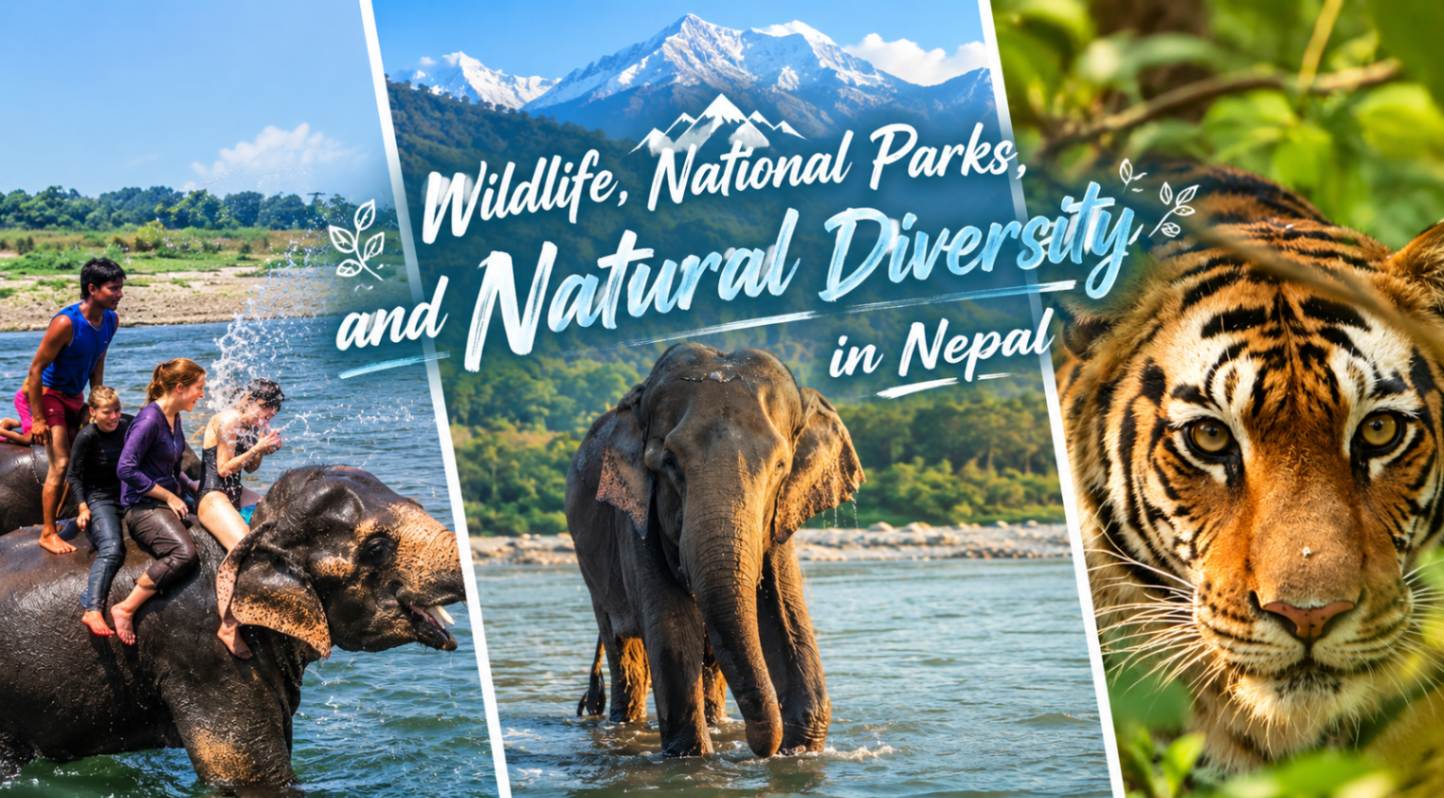
Wildlife, National Parks, and Natural Diversity in Nepal
It is easy to imagine Nepal as nothing but snow-covered mountains.
That would be a mistake.
The country stretches from the high Himalayas to the warm plains of the Terai, creating habitats for an impressive range of wildlife.
Bengal Tigers and One-Horned Rhinoceroses
Chitwan National Park is one of Nepal’s most famous wildlife destinations.
Located in the southern Terai, the park is home to the one-horned rhinoceros and is one of the remaining strongholds of the Bengal tiger. UNESCO recognizes Chitwan as a World Heritage Site because of its rich natural ecosystems and wildlife.
Visitors can experience the region through jungle safaris, canoe rides, nature walks and other wildlife activities.
Bardia National Park is another important destination for wildlife experiences, particularly for travelers looking for a quieter and less developed safari environment.
Rare Himalayan Wildlife
The higher elevations offer a completely different wildlife experience.
Nepal is home to animals such as:
- Snow leopard
- Red panda
- Himalayan tahr
- Himalayan monal
- Musk deer
- Blue sheep
Some of these animals are extremely difficult to see in the wild.
Sagarmatha National Park, for example, protects a dramatic Himalayan environment where rare species including snow leopard and red panda are found.
Nepal’s Remarkable Geographic Diversity
Perhaps the most impressive natural fact about Nepal is how quickly the landscape changes.
The country’s lowest areas lie in the Terai, while the northern Himalayas rise to Mount Everest at 8,848.86 meters.
Between them are forests, rivers, hills, valleys, lakes, farmland and mountain settlements. Nepal Tourism Board describes the country through three broad geographic regions: Terai, Hill and Himalayan.
That geographic range explains why Nepal can offer both jungle safari and high-altitude trekking within the same country.
What Makes Nepal Different From Other Himalayan Countries?
Nepal is not the only country with Himalayan mountains, Buddhist culture or high-altitude trekking. What makes Nepal stand out is the combination.
You can experience eight of the world’s 14 highest mountains, trek through famous Himalayan routes, visit Hindu temples, explore Buddhist stupas, travel to the birthplace of Buddha, experience traditional festivals, eat regional food and go on a wildlife safari—all within one country.
Nepal also has an unusual elevation range. The landscape changes from the low Terai plains to the highest point on Earth within a relatively short north-south distance.
And perhaps most importantly, many of these traditions are still living traditions.
You are not only looking at an old temple—you may see people worshipping there.
You are not only visiting an old festival—you may find an entire neighborhood celebrating it.
You are not only looking at a mountain culture in a museum—you may stay in a family-run teahouse in a mountain village.
That is a large part of what makes Nepal different.
Why Do People Visit Nepal?
People come to Nepal for different reasons, and that is exactly what makes the country so versatile as a travel destination.
For Himalayan Adventures
For adventure travelers, Nepal offers trekking, mountaineering, peak climbing, rafting, hiking and mountain flights.
The experience can be as demanding as an 8,000-meter expedition or as simple as a short Himalayan viewpoint trek.
For Culture and Heritage
Travelers interested in culture can explore Kathmandu Valley, ancient temples, Buddhist stupas, historic squares, traditional neighborhoods and local communities.
Nepal currently has four properties inscribed on the UNESCO World Heritage List, including Kathmandu Valley, Lumbini, Chitwan National Park and Sagarmatha National Park.
For travelers interested in Kathmandu’s heritage, our guide to Nepal trekking and travel experiences can also help connect the cultural side of Nepal with its mountain experiences.
For Spiritual Experiences
Nepal attracts pilgrims as well as ordinary travelers looking for a quieter experience.
Lumbini, Pashupatinath, Boudhanath, Swayambhunath and Muktinath each offer very different spiritual experiences. Nepal Tourism Board lists these among the country’s major pilgrimage destinations.
For Wildlife and Nature
Travelers who are not interested in high-altitude trekking can explore Nepal’s forests, wetlands and national parks.
A trip can combine Kathmandu heritage, a Terai safari and a Himalayan journey, giving visitors three very different views of Nepal.
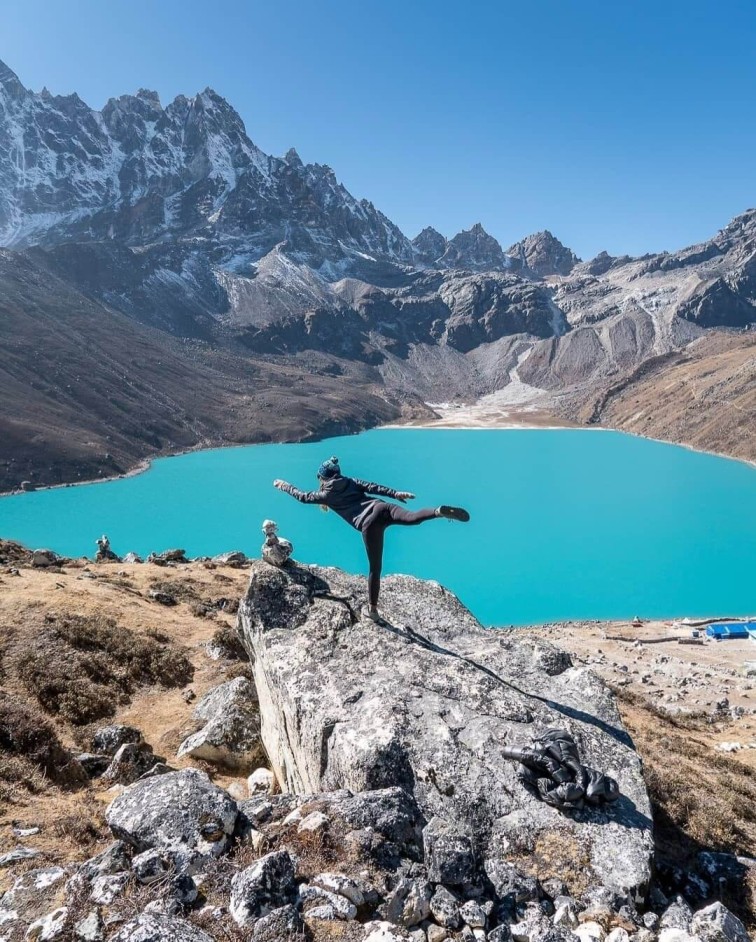
Conclusion: What Is Nepal Known For?
So, what is Nepal known for?
Nepal is known first for the Himalayas and Mount Everest, but that is only the beginning. It is also known for world-class trekking and mountaineering, Sherpa and other diverse cultures, Hindu and Buddhist heritage, Lumbini—the birthplace of Buddha, ancient temples and stupas, colorful festivals, unique traditions, Nepali food and remarkable wildlife.
What makes Nepal truly special is the way all of these things come together.
Nepal is not known for just one thing. It is known for the experience of moving between many different worlds mountains and plains, adventure and spirituality, ancient traditions and everyday life all within one country.
If you are planning to experience Nepal for yourself, Igloo Himalaya Treks can help you explore it in the way that suits you, whether your interest is trekking in the Himalayas, cultural travel, wildlife, or a customized Nepal adventure. At Igloo Himalaya Treks we got you covered for every single trek, travel, or even a short hike.
Recommended Reading From Igloo Himalaya Treks
If you want to explore Nepal beyond this overview, these guides can take you deeper into specific parts of the country:
- Trekking in Nepal: Complete Guide to the Best Treks, Routes, Cost & Itineraries
- What You Will Experience During the Everest Base Camp Trek
- Mount Everest: World’s Highest Mountain
- Everest Base Camp Trek 2027: Complete Guide, Cost & Itinerary
Frequently Asked Questions About What Nepal Is Known For
What is Nepal most famous for?
Nepal is most famous for Mount Everest and the Himalayas, but it is also widely known for trekking, mountaineering, Sherpa culture, Hindu and Buddhist heritage, Lumbini, wildlife, festivals and Nepali food.
Why is Nepal famous around the world?
Nepal is famous because it combines some of the world’s highest mountains with rich cultural and religious traditions. Mount Everest, eight 8,000-meter peaks, Lumbini, ancient temples, trekking routes and diverse wildlife all contribute to its international reputation.
Is Nepal famous only for Mount Everest?
No. Everest is Nepal’s most recognizable landmark, but Nepal is also famous for its trekking routes, Buddhist and Hindu heritage, festivals, wildlife, food, traditional communities and historic cities.
What food is Nepal famous for?
Nepal is especially famous for momos and dal bhat. Other popular foods include Newari dishes, Thakali food, sel roti, thukpa, chatamari and dhido.
What is Nepal famous for culturally?
Nepal is famous for its diverse ethnic communities, Hindu and Buddhist traditions, festivals such as Dashain and Tihar, Newari architecture, Sherpa culture, traditional handicrafts and the Kumari tradition.
Why is Nepal important to Buddhism?
Nepal is important to Buddhism because Lumbini is recognized as the birthplace of Siddhartha Gautama, the Buddha. Nepal is also home to important Buddhist sites such as Boudhanath and Swayambhunath.
What are the most famous things to see in Nepal?
Some of Nepal’s best-known places include Mount Everest and the Everest region, Kathmandu Valley, Pashupatinath, Boudhanath, Swayambhunath, Lumbini, Chitwan National Park, Pokhara and the Annapurna region.
What makes Nepal unique from other countries?
Nepal is unique because it combines extreme geographic diversity with living cultural and religious traditions. The country contains eight of the world’s 14 peaks above 8,000 meters, while also offering tropical lowlands, ancient cities, pilgrimage sites and diverse wildlife.
Is Nepal known for trekking?
Yes. Nepal is one of the world’s best-known trekking destinations, with famous routes including Everest Base Camp, Annapurna Circuit, Annapurna Base Camp, Manaslu Circuit and Langtang Valley.
How many UNESCO World Heritage Sites are in Nepal?
Nepal currently has four UNESCO World Heritage properties: Kathmandu Valley, Sagarmatha National Park, Chitwan National Park, and Lumbini, the Birthplace of the Lord Buddha. You can explore the official UNESCO information about Nepal’s heritage sites here: UNESCO — Nepal World Heritage Sites
What is Nepal known for besides Mount Everest?
Besides Mount Everest, Nepal is known for Himalayan trekking and mountaineering, ancient Hindu and Buddhist heritage, Lumbini—the birthplace of Gautama Buddha, diverse cultures and festivals, traditional Nepali food, and rich wildlife. From the Himalayas to the Terai, Nepal offers a remarkable mix of adventure, culture, spirituality, and nature. For more ideas, explore our complete guide to trekking in Nepal
What are 5 interesting facts about Nepal?
Five interesting facts about Nepal are:
- Mount Everest, at 8,848.86 meters, is the world’s highest mountain.
- Eight of the world’s 14 mountains above 8,000 meters are in Nepal.
- Lumbini is recognized as the birthplace of Gautama Buddha.
- Nepal has the world’s only non-rectangular national flag.
- Nepal’s landscape stretches from the low Terai plains to the summit of Mount Everest.
Recommended Reading From Igloo Himalaya Treks
If you want to explore Nepal beyond this overview, these guides can take you deeper into specific parts of the country:


