Top 10 Festivals in Nepal You Must Experience
Introduction/Overview
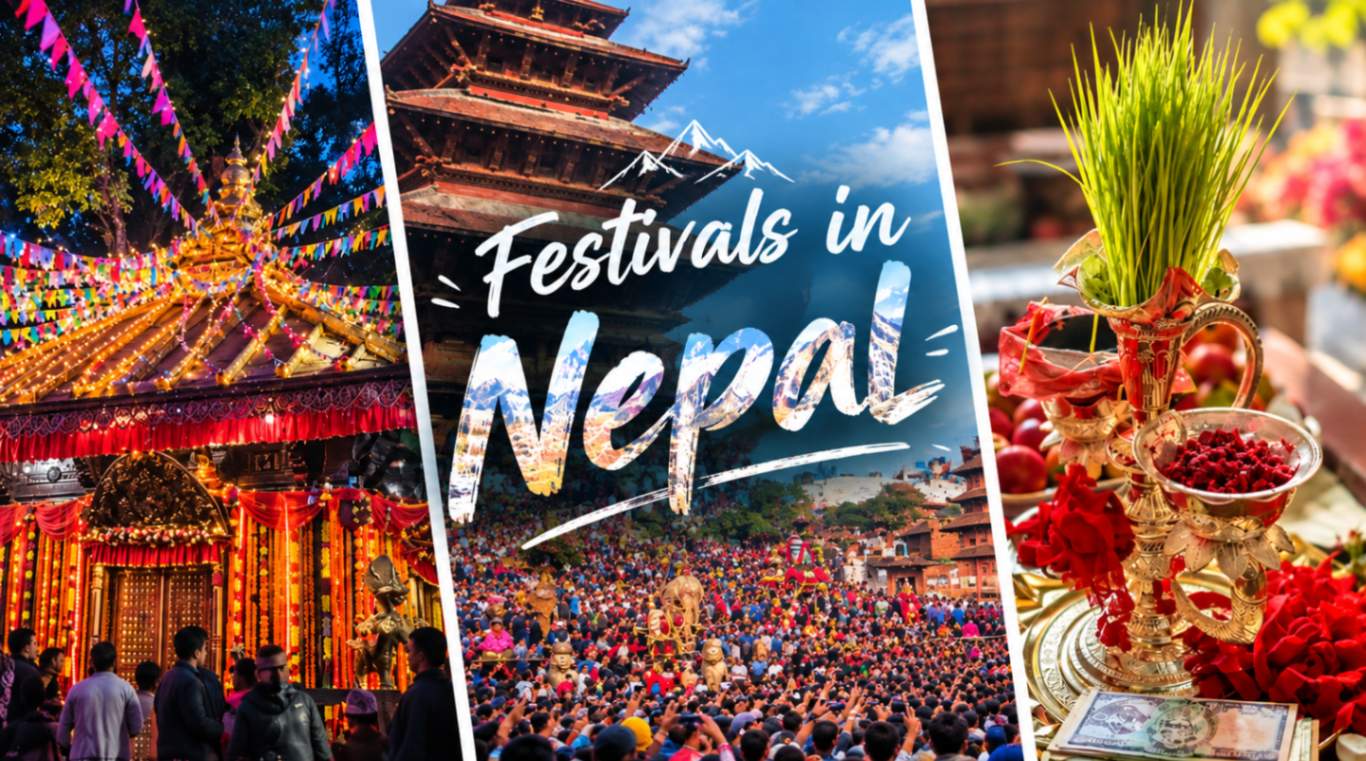
Nepal often gets framed purely as a trekking destination, but its festivals are just as central to understanding the country. With over 100 ethnic groups and a mix of Hindu, Buddhist, and indigenous traditions living side by side, celebration is woven into daily life here in a way few countries can match.
No two festivals in Nepal look quite the same. Some are Hindu, tied to specific gods and temples. Others are Buddhist, centred on monasteries and stupas. Many are ethnic and regional, celebrated by the Newar, Tharu, Magar, Gurung, or Tamang communities in their own distinct way, often on their own calendar entirely. That diversity is what makes Nepal’s festival calendar worth planning a trip around, not just its mountains.
This guide covers ten festivals every traveller to Nepal should know about: Dashain, Tihar, Holi, Indra Jatra, Teej, Losar, Buddha Jayanti, Maha Shivaratri, Gai Jatra, and Maghe Sankranti.
For each one, we will cover what it actually is, when and where to see it, and what a visitor can expect.
Dashain
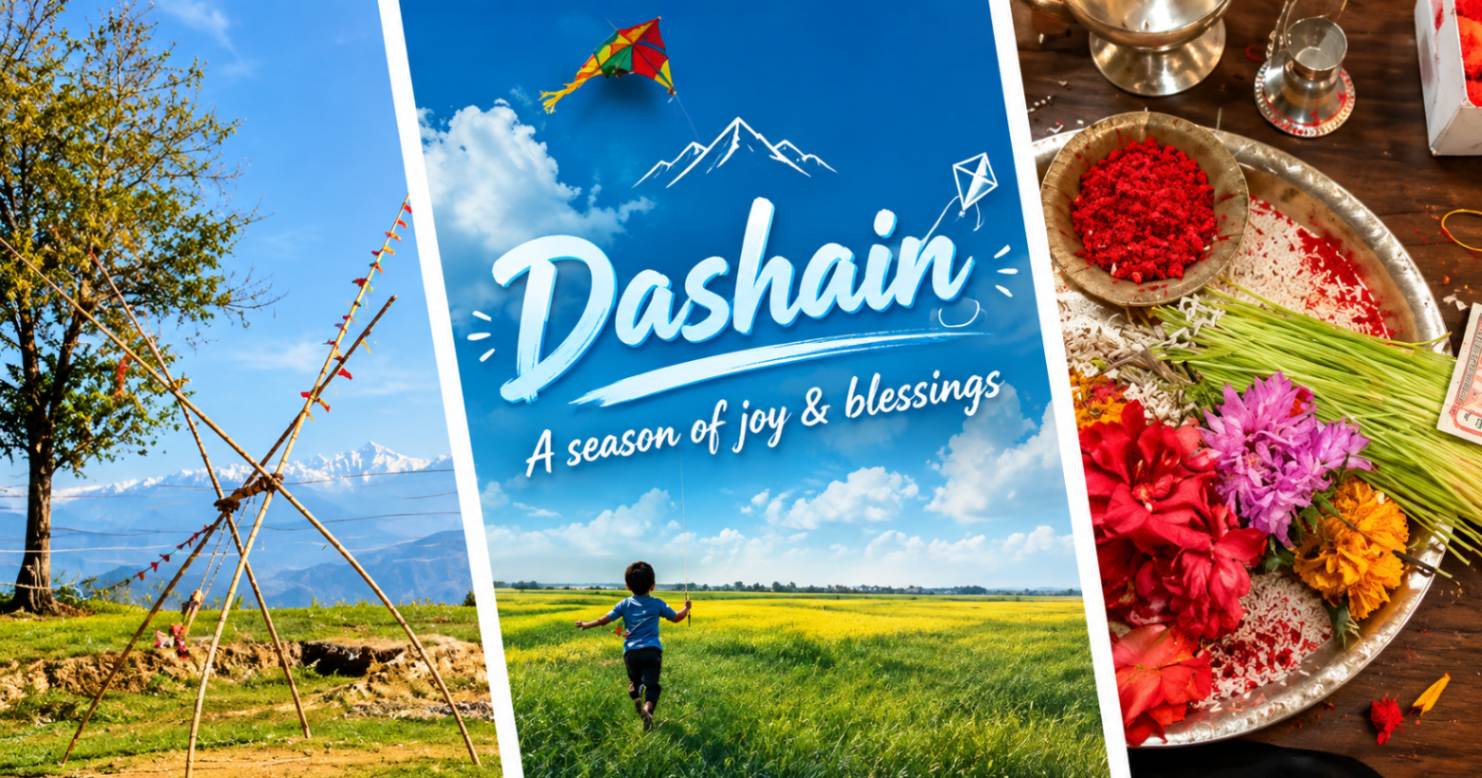
Dashain is Nepal’s longest and most significant festival, a 15-day celebration marking the goddess Durga’s victory over the demon Mahishasura, the triumph of good over evil.
It is celebrated nationwide, with the biggest gatherings in Kathmandu Valley, particularly at Taleju Temple, which opens to the public only during this period.
In 2026, Dashain runs from around October 11 to 25, though the most important days fall toward the end of that window: Ghatasthapana marks the start, Maha Ashtami and Maha Navami bring animal sacrifices at temples across the valley, and Vijaya Dashami, the tenth day, is when elders bless younger family members with tika, a mix of rice, yogurt, and vermillion pressed onto the forehead, along with jamara, blessed barley shoots.
For travellers, Dashain is a genuine window into Nepali family life. Streets fill with people travelling home, kites dance overhead in open fields and rooftops, and giant bamboo swings (ping) go up in villages and city neighbourhoods alike.
It’s worth knowing that many shops, government offices, and permit counters close for several days around Tika, so if you are combining a trek with the festival, build in flexibility around that stretch.
Tihar
Tihar, often called the festival of lights, follows Dashain by a few weeks and runs for five days, each one dedicated to a different figure: crows (Kaag Tihar), dogs (Kukur Tihar), cows (Gai Tihar), oxen and Govardhan Puja or Mha Puja depending on the community, and finally Bhai Tika, when sisters bless their brothers for long life.
In 2026, Tihar falls around November 8 to 11. The third day, Laxmi Puja, is the visual highlight: homes are strung with oil lamps and fairy lights, and families draw colourful rangoli patterns at their doorstep to welcome the goddess of wealth.
In the evenings, groups of children and young people go door to door singing Deusi and Bhailo, traditional songs performed in exchange for small gifts or money, a custom that turns entire neighbourhoods into an impromptu, joyful sing-along.
For visitors, Tihar is one of the most photogenic festivals in Nepal, lamplit streets, glowing temples, and genuine warmth from families happy to explain what each day means.
Newar communities in the Kathmandu Valley also mark their New Year during Tihar, with Mha Puja, worship of the self, adding another layer worth watching for in Patan or Bhaktapur specifically.
Holi
Holi, the festival of colours, marks the arrival of spring and is celebrated with the kind of joyful chaos its name suggests: coloured powder, water balloons, music, and dancing that spills out into the streets.
Holi typically falls in February or March, with the hill regions (including Kathmandu) celebrating a day before the Terai region does.
Kathmandu’s Basantapur Durbar Square and the Thamel tourist district see the biggest crowds, with informal color fights breaking out everywhere from open squares to hotel courtyards.
If you’re visiting during Holi, wear clothes you don’t mind ruining, expect to get covered in colour whether you intend to join in or not, and keep phones and cameras in a waterproof bag.
It is genuinely good-natured chaos, not something to avoid, but it helps to know what you’re walking into.
Indra Jatra
Indra Jatra is Kathmandu’s own festival, honouring Indra, the Hindu god of rain and thunder, with a week-long mix of masked dances, chariot processions, and one of the only public appearances of the Kumari, Nepal’s living goddess.
In 2026, Indra Jatra runs from around September 19 to 27, centred entirely on Kathmandu Durbar Square.
The Kumari, a young girl worshipped as a living incarnation of the goddess Taleju, is pulled through the old city in a wooden chariot, drawing crowds that fill every side street around the square.
Alongside her, masked Lakhe dancers move through the crowd in fierce, elaborate costumes, and traditional Newar dances play out on makeshift stages throughout the week.
This is one of the best festivals in Nepal for a visitor with limited time, since it’s compact, entirely based in Kathmandu, and doesn’t require travel to a remote region to experience. Arrive early if you want a clear view of the chariot procession, since Durbar Square fills up fast on the main days.
Teej
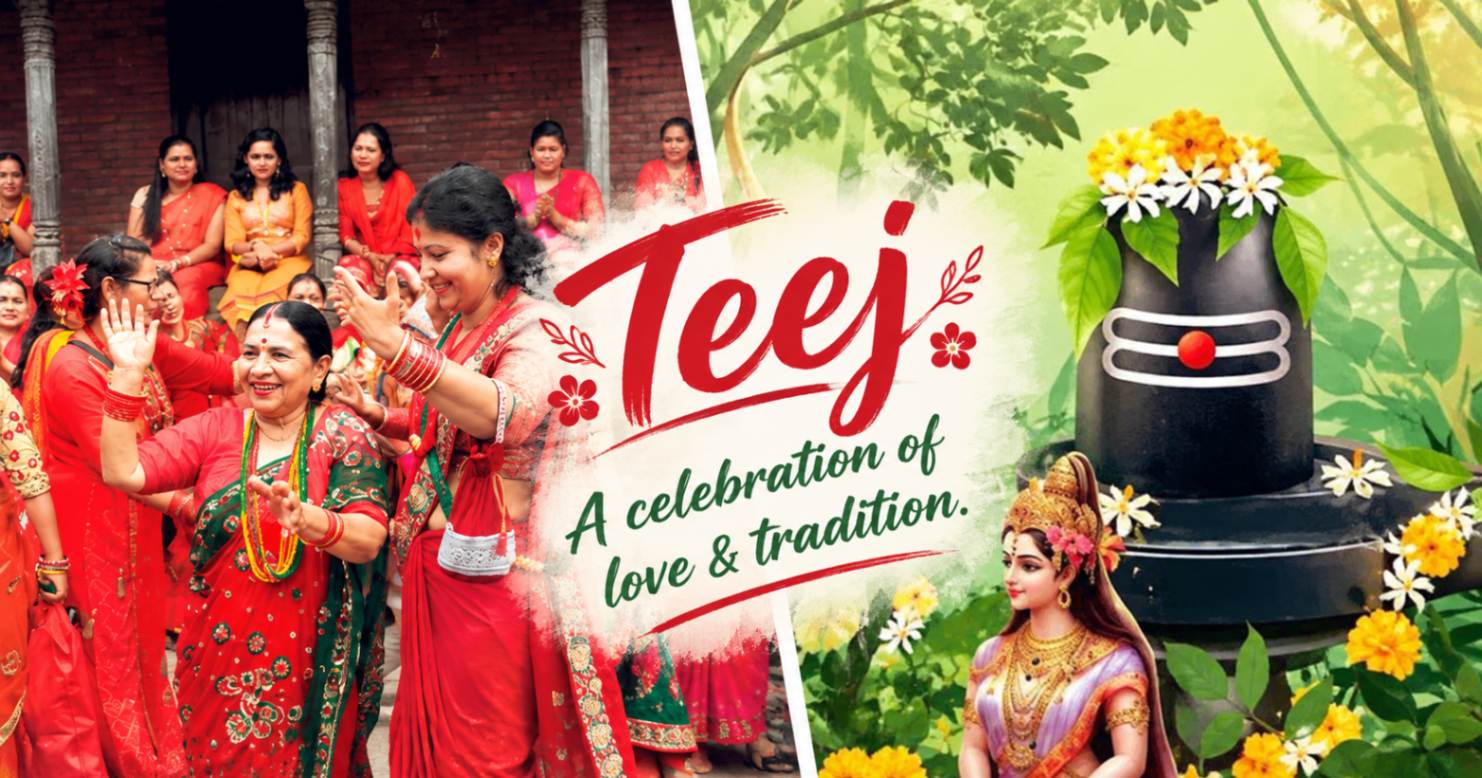
Teej, sometimes called Haritalika Teej, is a three-day festival built around fasting, dancing, and devotion, celebrated overwhelmingly by women.
Married women fast and pray for their husbands’ long life and marital happiness, while unmarried women fast hoping for a good match, all while dressed in vivid red saris and gold jewellery.
In 2026, Teej falls around September 14. Kathmandu’s Pashupatinath Temple is the centre of the celebration, where thousands of women gather to sing traditional songs, dance, and offer prayers to Lord Shiva and his consort Parvati.
For visitors, Teej offers a rare, vivid look at women’s cultural and religious life in Nepal, something not always visible during quieter parts of the year.
It is worth watching respectfully from a distance rather than inserting yourself into what is, at its core, a deeply personal and communal ritual for the women taking part.
Losar
Losar is the Tibetan and Himalayan New Year, and in Nepal it is actually three separate celebrations, not one. Tamu Losar, celebrated by the Gurung community, falls in late December.
Sonam Losar, for the Tamang community, falls around late January or February. Gyalpo Losar, observed by Sherpa and Tibetan communities, lands around February or March.
Each version follows a similar rhythm: monasteries hold masked dances and prayer ceremonies, families gather for feasts, and homes are cleaned and decorated to welcome the new year with a clean slate.
In Kathmandu, Boudhanath Stupa becomes the focal point during Gyalpo Losar specifically, restrung with fresh prayer flags and drawing one of the city’s largest public gatherings of the year.
Trekkers in the Everest, Manaslu, or Upper Mustang regions may catch Losar celebrations directly in Sherpa or Tibetan-influenced villages along the trail, monastery ceremonies at places like Tengboche or Samagaun offer a far more intimate version of the festival than anything in Kathmandu.
Buddha Jayanti
Buddha Jayanti, also called Buddha Purnima or Vesak, marks the birth, enlightenment, and death of Gautama Buddha, all believed to have occurred on the same full moon day.
It is the most sacred day in the Buddhist calendar and a national public holiday in Nepal. In 2026, Buddha Jayanti falls on May 1, the full moon day of the Nepali month of Baisakh.
Lumbini, Buddha’s birthplace in southern Nepal, hosts the most significant ceremonies, while in Kathmandu Valley, Swayambhunath and Boudhanath fill with pilgrims lighting butter lamps and walking clockwise around the stupas in ritual circumambulation.
For travellers, Buddha Jayanti offers real access to living Buddhist practice, chanting, meditation, and quiet devotion, rather than a performance staged for visitors.
Combining a Lumbini visit with the festival, or timing an Everest or Manaslu region trek to pass through a monastery village during this window, adds a genuine spiritual dimension to the trip.
Maha Shivaratri
Maha Shivaratri, the “Great Night of Shiva,” is one of the most intense nights on Nepal’s religious calendar, observed with fasting, night-long vigils, and continuous prayer dedicated to Lord Shiva.
In 2026, Maha Shivaratri falls on February 15. Pashupatinath Temple, a UNESCO World Heritage site in Kathmandu and Nepal’s most important Hindu temple, becomes the epicentre of the celebration.
Thousands of pilgrims arrive, alongside sadhus, ash-covered Hindu ascetics who travel from across Nepal and India specifically for this night, some settling in the temple grounds for days beforehand.
The real spectacle happens after dark: bonfires burn throughout the temple complex, devotees chant through the night to stay awake in a practice called jagaran, and the evening arati along the Bagmati River draws enormous crowds with fire, chanting, and drums.
Visitors are welcome to observe from the temple’s outer areas, though the inner sanctum remains restricted to Hindus.
Gai Jatra
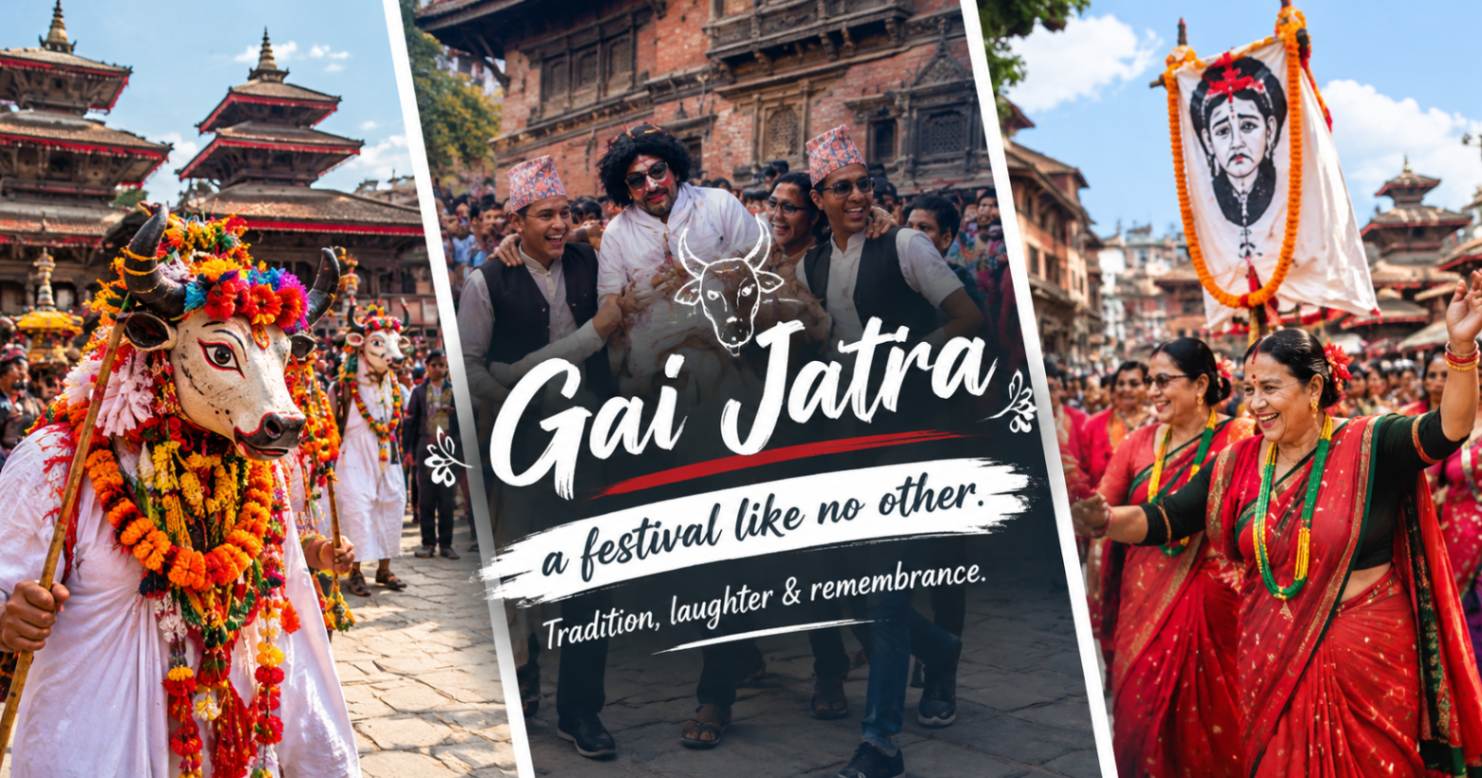
Gai Jatra, the “Cow Festival,” is one of Nepal’s most distinctive celebrations, a Newar tradition that blends grief and comedy in a way found almost nowhere else.
Families who have lost a loved one in the past year lead a cow, or a child dressed as one, through the streets, since cows are believed in Hindu tradition to guide departed souls safely into the afterlife.
Tradition credits the festival’s Kathmandu origins to King Pratap Malla, who reportedly started the procession centuries ago to comfort his grieving queen after their son’s death, though some historical accounts suggest a similar observance, Sa: Paru, may have existed earlier in Bhaktapur.
Whatever its exact origin, the festival grew into something bigger than mourning alone: alongside the procession, streets fill with satire, comedy, and political mockery, a rare social release valve built directly into a day of remembrance.
In 2026, Gai Jatra falls around August 29, celebrated across Kathmandu, Patan, and Bhaktapur, with Bhaktapur’s version running the longest, sometimes stretching over a week with its own elaborate Taha-Macha parade. For visitors, it’s a striking mix of costumes, humour, and genuine emotion, unlike any other festival on this list.
Maghe Sankranti
Maghe Sankranti marks the sun’s transition into Capricorn and the slow turn toward longer, warmer days, making it one of the only major Nepali festivals set by the solar calendar rather than the lunar one, which keeps its date fixed to mid-January nearly every year.
In 2026, Maghe Sankranti falls on January 14. Families gather to eat warming, energy-dense foods: til ko laddu (sesame and molasses sweets), chaku (a dense molasses candy), ghee, and roasted yams and sweet potatoes, all traditionally believed to help the body handle the coldest stretch of winter.
Ritual bathing in holy rivers, including the Bagmati in Kathmandu and Devghat in Chitwan, is common across Hindu communities on this day.
The festival carries extra weight for specific ethnic groups: the Tharu community celebrates it as Maghi, their New Year, with feasts and community gatherings, while the Magar community marks it as one of their most important annual festivals.
For travellers in the Everest or Langtang regions during January, it’s also worth knowing this festival often coincides with quieter trekking trails, since many Nepali families are gathered at home rather than working.
Tips for Experiencing Festivals in Nepal
- Check festival dates before you plan. Most Nepali festivals follow the lunar Bikram Sambat calendar, so dates shift every year. Confirm against a current calendar closer to your travel dates rather than relying on last year’s schedule.
- Respect local customs and religious practices. Many of these festivals are living religious observances, not performances staged for tourists. Watch and participate where invited, but stay mindful of the line between the two.
- Dress appropriately, especially at temples and during more solemn observances like Teej or Maha Shivaratri. Modest clothing is always the safer choice at religious sites.
- Ask before photographing people or ceremonies. A quick, friendly question goes a long way, particularly during personal moments like Gai Jatra’s mourning processions or Teej’s prayers.
- Expect crowds and plan transportation accordingly. Festivals like Dashain and Tihar effectively pause the country, roads get busy, shops close, and permit offices may shut for several days. Build buffer time into any itinerary that overlaps with a major festival.
Conclusion
Nepal’s festivals are as varied as the country itself, Hindu and Buddhist, solemn and riotous, ancient and still evolving. From the family reunions of Dashain to the lamplit streets of Tihar, the sacred fires of Maha Shivaratri to the color-soaked chaos of Holi, each one offers a genuinely different window into how Nepal actually lives, not just how it looks from a mountain trail.
Also, if you want to experience any of these festivals during your trip to Nepal, feel free to contact us at Igloo Himalaya Treks, one of the best trekking companies in Nepal.
We can tailor your trip around the festivals you want to experience, with proper guidance and years of experience to make your journey smooth, meaningful, and memorable. Let us help you make your dream journey in Nepal come true.
Other suggested blogs
- What Is Nepal Known For? Mountains, Culture, Food & More
- What Is It Like to Go on the Everest Base Camp Trek Without Flight?
Reviewed and Written by : Surya Lama (Founder / CEO / Managing Director of igloo himalaya and a proffesional Guide with 20 years plus experience.)
FAQ
What is the biggest festival in Nepal?
Dashain is Nepal’s biggest festival, a 15-day national celebration that brings families together from across the country and effectively pauses normal business for its most important days.
What is the best festival to experience in Nepal?
It depends on what you’re after. Indra Jatra and Tihar are the most visually striking for first-time visitors, while Dashain offers the deepest look at Nepali family life. Maha Shivaratri and Gai Jatra are best for travellers interested in Nepal’s more distinctive religious and cultural traditions.
What month are most festivals celebrated in Nepal?
September through November sees the heaviest concentration of major festivals, Teej, Indra Jatra, Dashain, and Tihar all fall within this stretch, which also happens to be Nepal’s best trekking season.
Can tourists participate in festivals in Nepal?
Yes, in most cases. Festivals like Holi actively welcome participation, and events like Indra Jatra and Tihar are easy to observe and enjoy as a visitor. More solemn or personal observances, such as Teej or the inner rituals of Maha Shivaratri, are better experienced respectfully from the outside.
What should tourists wear during festivals in Nepal?
Modest, comfortable clothing is the safest choice at most religious sites and festivals. The exception is Holi, where old clothes you don’t mind staining with colour are the practical choice.
What are the best festivals to experience during a trip to Nepal?
Nepal has many unique festivals throughout the year, including Dashain, Tihar, Holi, Teej, Indra Jatra, and Gai Jatra. Festival dates change each year, so it is best to check the latest calendar when planning your trip. For official tourism information and cultural events, you can also visit the Nepal Tourism Board.
What is the most colorful festival in Nepal?
Holi, the festival of colors, is one of the most colorful and lively festivals in Nepal. People celebrate with colored powder, water, music, dancing, and gatherings with friends and family.
When is the best time to experience festivals in Nepal?
The best time depends on the festival you want to experience. September to November is particularly exciting, with major celebrations such as Teej, Indra Jatra, Dashain, and Tihar taking place around this period.
Can I plan a Nepal trek around a festival?
Yes. You can plan your Nepal trekking itinerary around major festivals to experience both the Himalayas and local culture. With a customized itinerary, you can time your trek to include festival celebrations in Kathmandu or traditional communities along the trekking route.


