
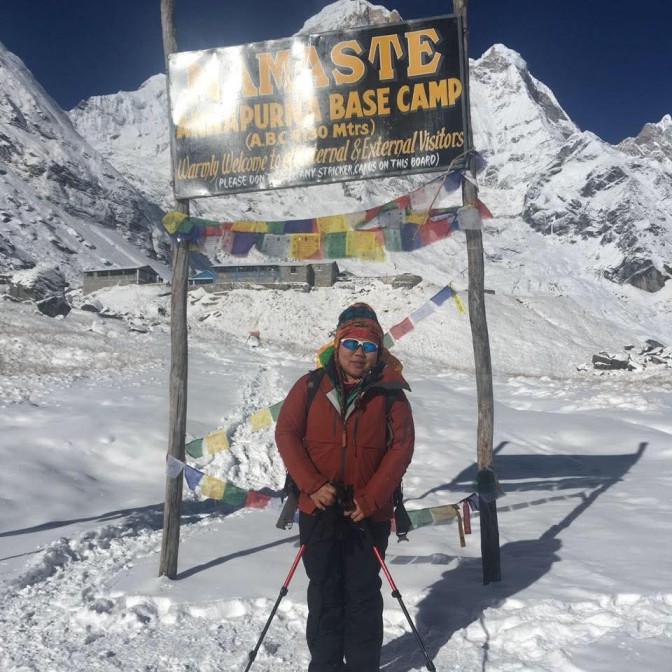
The Annapurna Base Camp Trek in winter is one of the most beautiful ways to experience the Annapurna Region of Nepal.
While autumn and spring are traditionally considered the most popular trekking seasons, winter offers something completely different. The trails become quieter, the mountain villages feel peaceful, the air is crisp, and the higher sections of the Annapurna Sanctuary can transform into a dramatic landscape of snow, ice, frozen waterfalls and towering Himalayan peaks. But winter trekking is not simply the normal Annapurna Base Camp Trek with a few extra layers of clothing.
December, January and February bring colder temperatures, shorter daylight hours, icy sections, possible snowfall and changing trail conditions. At higher elevations, conditions can change quickly. For this reason, a successful winter trek requires proper preparation, flexible planning and experienced local support.
If you are wondering whether you can trek to Annapurna Base Camp in winter, whether January is too cold, what the trail is like after Deurali, what you should pack, how difficult the trek becomes, or whether it is safe, this guide explains everything you need to know before starting your journey.
At Igloo Himalaya Treks, we believe that good trekking advice should be honest. Winter can be spectacular, but it deserves respect. Our approach is to prepare trekkers for the actual conditions rather than simply promising an easy adventure.
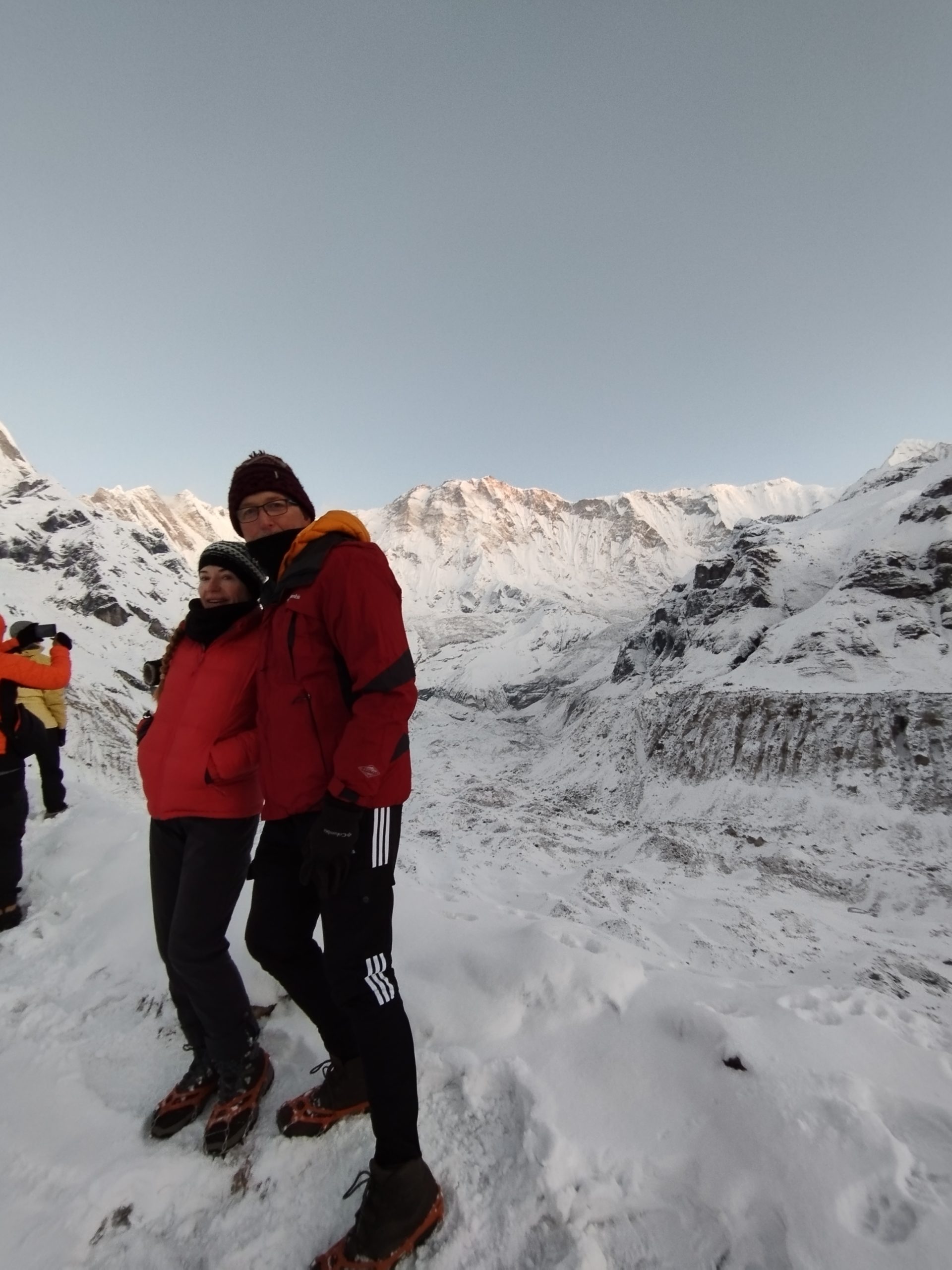
Annapurna Base Camp Trek in Winter at a Glance
Destination: Annapurna Base Camp
Maximum elevation: 4,130 meters / 13,550 feet
Region: Annapurna, Nepal
Winter months: December, January and February
Main gateway: Pokhara
Typical trekking duration: Around 7–12 trekking days depending on the route and itinerary
Difficulty: Moderate to challenging in winter
Highest overnight areas: Around Machhapuchhre Base Camp / Annapurna Base Camp
Main winter challenge: Cold, snow and ice at higher elevations
Best winter month for many trekkers: December and late February can offer a useful balance of winter atmosphere and improving conditions, but actual conditions vary every year.
Best for: Trekkers who enjoy quiet trails, cold-weather adventure and snowy Himalayan scenery
Guide: Strongly recommended and required under current rules for applicable Annapurna routes
Major highlights: Annapurna Sanctuary, Machhapuchhre, Annapurna South, Hiunchuli, Annapurna I, Gurung villages, rhododendron forests and mountain landscapes
The Nepal Tourism Board currently lists the Poon Hill–ABC route among Annapurna-region trekking routes subject to the guide and TIMS provisions. Always confirm the latest requirements before departure because government rules and fees can change.
What Makes the Annapurna Base Camp Trek Special in Winter?
Imagine walking through a quiet Himalayan forest in the early morning.
The air is cold. Your footsteps make a soft sound against frozen ground. The villages are quieter than during the busy trekking seasons. As you climb higher, patches of snow begin to appear along the trail.
Then the forest opens.
Ahead of you stands Machhapuchhre, its distinctive fishtail summit rising above the surrounding ridges.
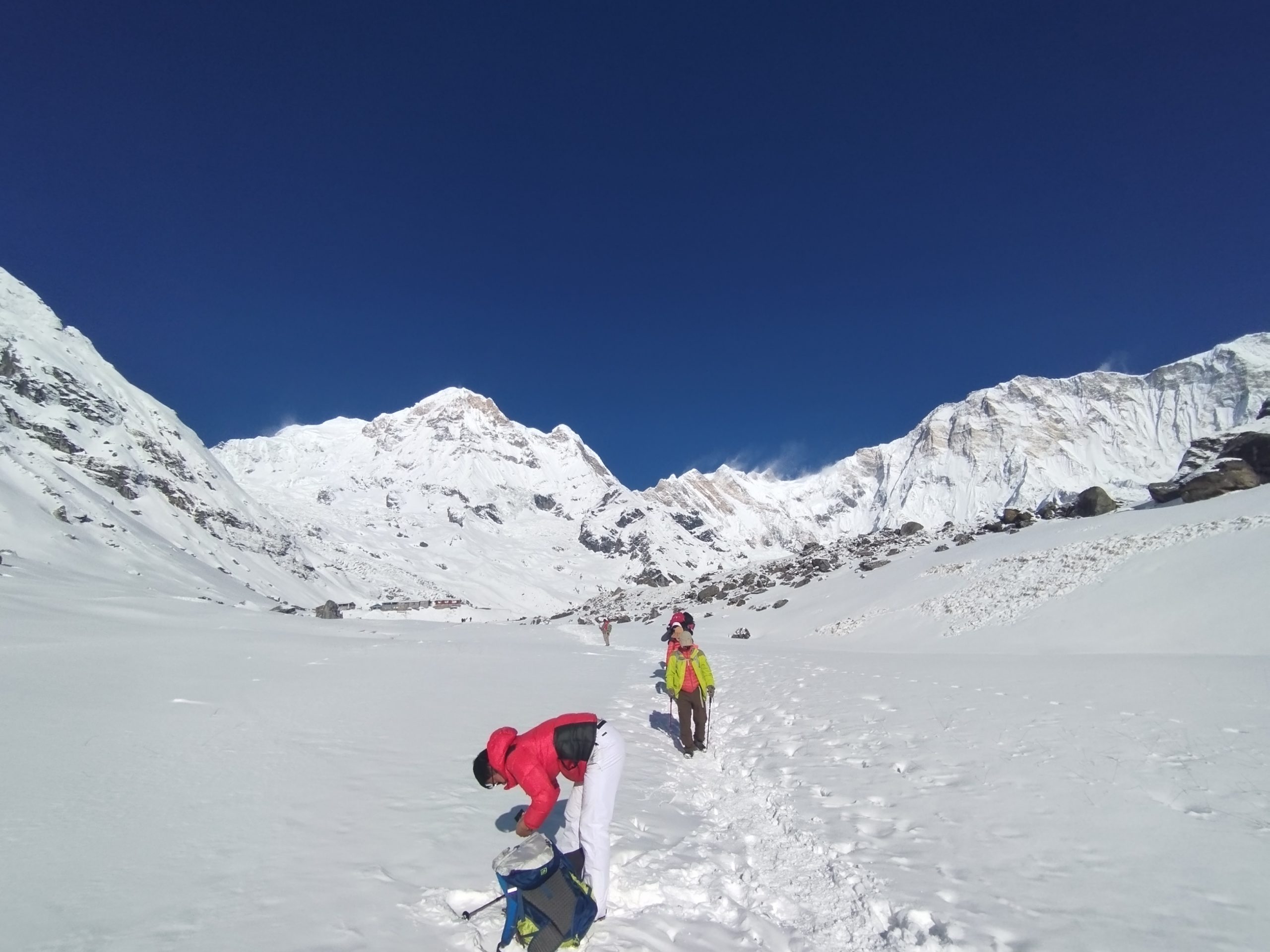
As you continue toward the Annapurna Sanctuary, the landscape becomes increasingly alpine. Snow may cover sections of the trail, waterfalls can freeze, and the mountains seem to rise directly from the valley around you.
This is what makes winter ABC different.
You are not only trekking toward a destination. You are experiencing the Annapurna Sanctuary during its coldest and quietest season.
The winter environment also creates a stronger sense of adventure. A trail that is straightforward in October may become icy in January. A short trekking day can require more concentration when snow covers the stones. The reward is that the mountains can feel incredibly close and the trails considerably quieter.
For travelers who prefer peaceful mountain experiences rather than busy trekking routes, winter can be extremely rewarding.
Where Is Annapurna Base Camp?
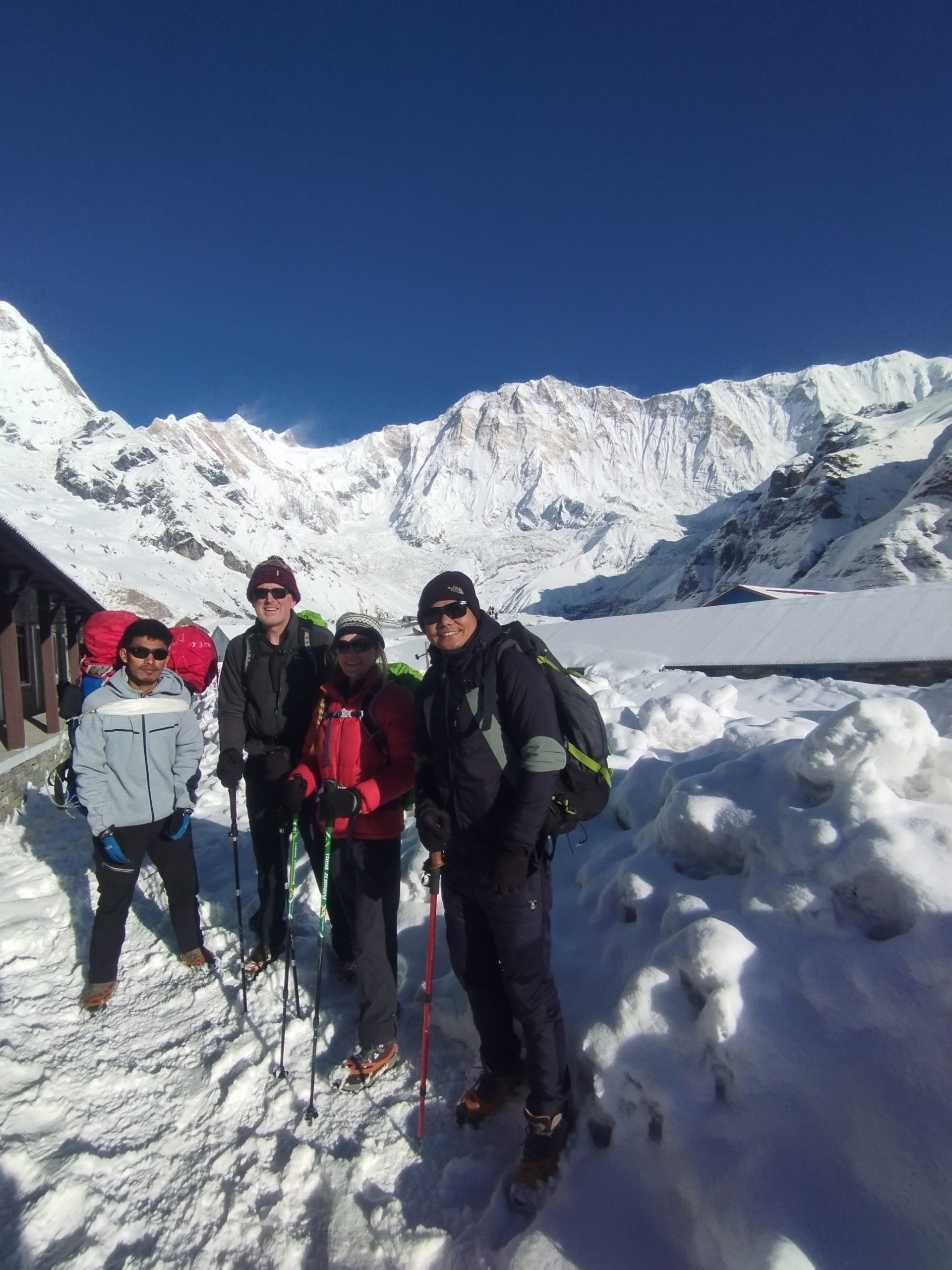
Annapurna Base Camp lies inside the Annapurna Sanctuary in central Nepal.
The sanctuary is surrounded by some of the most impressive mountains in the Annapurna range. The trekking route generally approaches the sanctuary through villages and forests before entering the increasingly rugged landscape above Deurali.
Annapurna Base Camp itself sits at approximately 4,130 meters (13,550 feet).
The journey is particularly interesting because the landscape changes dramatically as you gain elevation.
You may begin among subtropical vegetation and terraced hillsides. Higher up, the forests become dominated by rhododendron and other Himalayan vegetation. Eventually, the landscape becomes alpine, with fewer trees and much more exposed mountain terrain.
The Nepal Tourism Board describes the Annapurna Conservation Area as a major destination for trekking and mountaineering and notes its rich biodiversity, including rhododendrons, orchids and a wide variety of wildlife and birds.
Winter adds another layer to this landscape.
The same forests can look completely different under frost and snow.
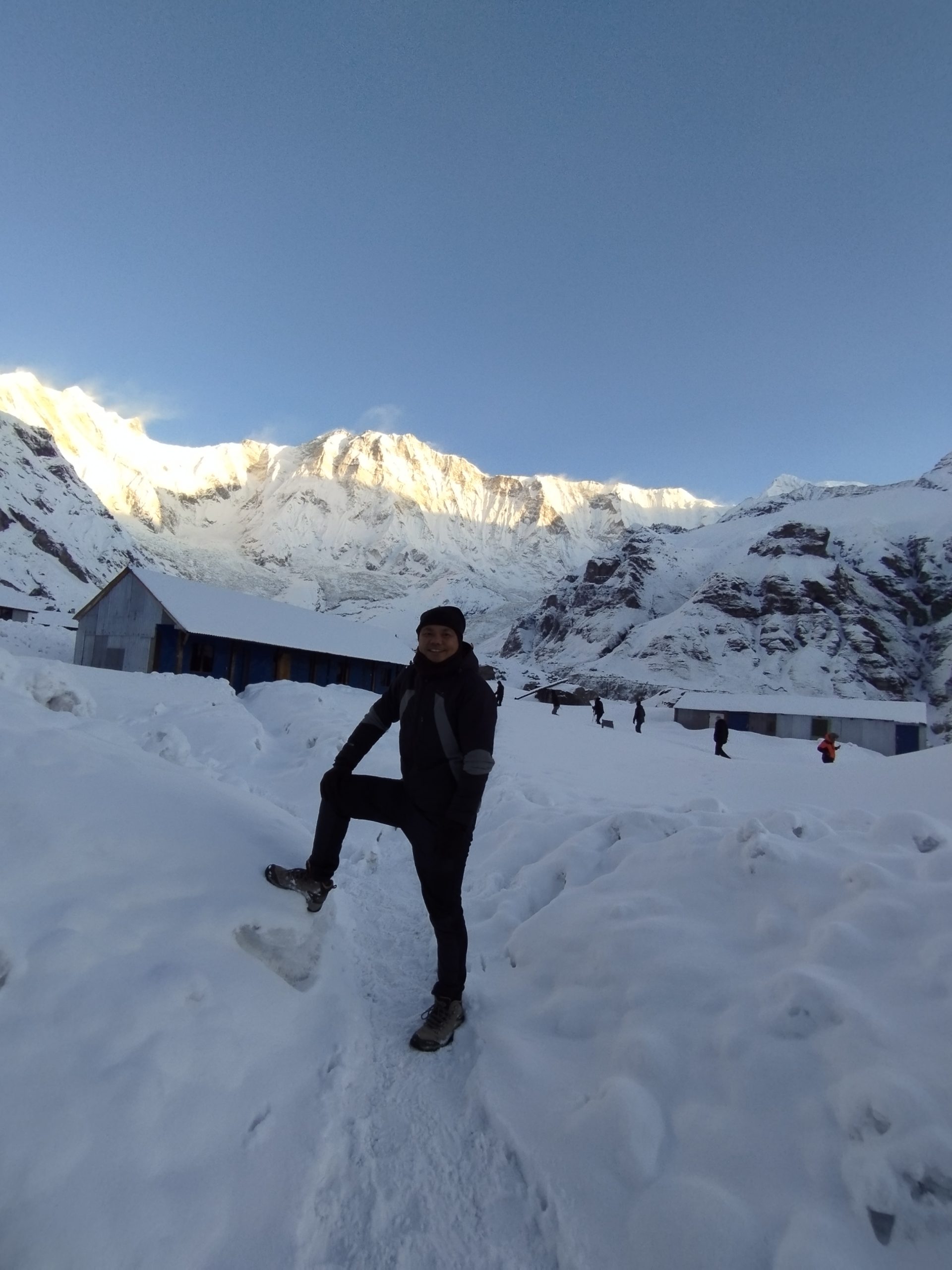
Can You Trek to Annapurna Base Camp in Winter?
Yes, Annapurna Base Camp can be trekked in winter.
However, the correct answer is not simply “yes.”
Winter trekking requires you to understand that conditions are more variable than during the main trekking seasons.
December, January and February can bring:
• Cold mornings
• Freezing nights
• Snow at higher elevations
• Icy trail sections
• Frozen streams and waterfalls
• Shorter daylight hours
• Slippery stone steps
• Possible temporary trail difficulties
• Changing weather
• Reduced accommodation availability in some higher areas
The exact amount of snow is different every year.
A dry winter can provide relatively manageable conditions, while a significant snowfall event can dramatically change the route.
This is why an experienced local guide is particularly valuable in winter.
A guide does more than show you the trail. A good guide helps assess the condition of the route, weather, snow, walking pace, accommodation situation and appropriate turnaround decisions.
At Igloo Himalaya Treks, we believe reaching base camp should never be more important than returning safely.
Is Annapurna Base Camp Open in Winter?
There is an important difference between saying “the trek is possible in winter” and saying “every section of the trail will always be open.”
The first is generally true.
The second cannot responsibly be guaranteed.
Winter conditions can change after snowfall. Higher sections around Deurali, Machhapuchhre Base Camp and Annapurna Base Camp can become snowy and icy. Some accommodation providers may also operate differently during the coldest periods.
Current trekking information also highlights the possibility of significant snow and ice in the Deurali–MBC section during winter.
Therefore, before starting the higher section, your trekking team should assess:
1. Recent snowfall
2. Current trail conditions
3. Weather forecast
4. Visibility
5. Snow stability
6. Accommodation availability
7. Group fitness
8. Daylight hours
9. Appropriate equipment
10. Whether the planned overnight stops remain practical
This flexibility is one of the reasons why booking with an experienced local trekking company is valuable.
Annapurna Base Camp Winter Weather
Winter in the Annapurna region is generally colder and drier than the summer monsoon season.
However, temperature changes dramatically with altitude.
A sunny afternoon in a lower village can feel comfortable, while the temperature at Annapurna Base Camp after sunset can fall far below freezing.
Rather than relying on one exact temperature figure, trekkers should understand the pattern.
Lower Elevations
At lower elevations,
daytime conditions can still feel pleasant when the sun is out.
You may be trekking through forests and villages where temperatures are considerably warmer than at base camp.
The challenge often becomes nighttime cold rather than daytime walking.
Middle Elevations
As you approach areas such as Bamboo, Himalaya and Deurali, temperatures become noticeably colder.
Shaded sections can remain icy.
Early-morning walking requires additional care because overnight freezing can make stone steps slippery.
Higher Elevations
Above Deurali, winter conditions become much more serious.
Snow and ice become increasingly possible.
At Machhapuchhre Base Camp and Annapurna Base Camp, nighttime temperatures can become extremely cold.
Some published winter guides report temperatures at ABC falling well below freezing, particularly in January. Exact conditions vary by year and weather system, so these numbers should be treated as approximate rather than guaranteed forecasts.
The practical lesson is simple:
Prepare for serious cold at ABC even if the weather looks comfortable when you leave Pokhara.
Annapurna Base Camp in December
December is the beginning of winter.
For many trekkers, this can be one of the most attractive winter periods because the coldest part of winter has not necessarily arrived, while the higher mountains can already have a beautiful winter appearance.
The lower and middle sections may remain relatively comfortable during sunny daytime hours.
As you move toward Deurali and MBC, temperatures decrease and snow becomes increasingly possible.
Why Trek ABC in December?
December can offer:
• Quieter trails
• Crisp mountain views
• Cold but often beautiful mornings
• Possibility of snow at higher elevations
• Fewer crowds than autumn
• A genuine winter atmosphere
However, you should not assume December will always be dry or snow-free.
Weather systems can bring snowfall to the higher sanctuary.
A flexible itinerary is therefore useful.
Annapurna Base Camp in January
January is generally considered the coldest part of the winter season.
If your dream is to experience a true snowy Himalayan environment, January can be fascinating.
But it is also the month when cold-weather preparation becomes especially important.
Higher sections can be icy and snowy.
The trail around Deurali, MBC and ABC may require additional care depending on recent snowfall.
January trekkers should be prepared for:
• Freezing nights
• Snow-covered sections
• Icy stones
• Cold winds
• Shorter daylight
• Very cold accommodation
• Greater need for appropriate winter equipment
Recent route information specifically highlights icy conditions and snow in the higher sections during January.
If you are considering January, do not pack as though you are doing a normal autumn trek.
Pack for winter.
Annapurna Base Camp in February
February marks the final part of winter.
Temperatures gradually begin to improve toward the end of the month, although higher elevations can remain extremely cold.
Snow is still possible, especially above Deurali.
For some trekkers, late February can provide an attractive combination:
winter scenery + fewer trekkers + gradually improving conditions.
But February is not automatically snow-free.
Mountain weather does not follow a calendar exactly.
A snowfall event can still transform the trail.
Therefore, the same rule applies:
Check current conditions before committing to the higher sanctuary
December vs January vs February: Which Is Better?
There is no single perfect winter month for everyone.
December
Best for trekkers who want:
• Early winter atmosphere
• Cold but potentially more manageable conditions
• Snow possibilities at higher elevations
• Quieter trails
January
Best for trekkers who want:
• Deep winter atmosphere
• Maximum chance of cold and snow
• Very quiet trails
• A more serious winter adventure
But January demands stronger preparation.
February
Best for trekkers who want:
• Winter landscapes
• Fewer crowds
• Gradually improving temperatures
• A transition toward spring
For many travelers, December or late February can be a comfortable compromise, while January is better suited to people specifically looking for a true winter experience.
Still, actual weather varies from year to year.
Annapurna Base Camp Winter Trek Route
A Short Annapurna Base Camp (ABC) route usually follows a sequence similar to:
Pokhara → trailhead → Chhomrong → Bamboo → Himalaya → Deurali → Machhapuchhre Base Camp → Annapurna Base Camp → descent → Jhinu Danda → Pokhara
A Ghorepani Poon Hill Annapurna Base Camp (ABC) route:
Pokhara → Ulleri → Ghorepani → Tadapani → Chhomrong → Bamboo → Himalaya → Deurali → Machhapuchhre Base Camp → Annapurna Base Camp → descent → Jhinu Danda → Pokhara
The exact starting and ending points depend on road conditions, the chosen itinerary and current local access.
A winter itinerary should not be designed purely around kilometers.
This is particularly important at higher elevations.
A six-hour trekking day in dry autumn conditions may feel very different from six hours of walking through snow.
Winter itineraries should therefore include reasonable walking times and some flexibility.
Pokhara: The Gateway to Annapurna Base Camp
Most ABC trekkers begin their journey from Pokhara.
Pokhara is more than a transport point.
It is where you can prepare for the trek, check your equipment, meet your guide and enjoy the last comfortable night before heading into the mountains.
On a clear winter morning, the Annapurna range can already dominate the horizon from the city.
Before departure, trekkers should use Pokhara to confirm:
• Weather
• Transport
• Permits
• Guide arrangements
• Accommodation
• Equipment
• Insurance
• Emergency contacts
This preparation can make a major difference once you enter the mountains.
Ghorepani – A Beautiful Mountain Village
Ghorepani is one of the most popular villages on the Annapurna trekking route, surrounded by beautiful rhododendron forests and spectacular Himalayan views. Located at around 2,860 meters, it is an important overnight stop for trekkers heading toward Poon Hill and Annapurna Base Camp.
The village is especially beautiful in the early morning when the surrounding mountains appear above the forest. From Ghorepani, trekkers can also enjoy the famous Poon Hill sunrise, with panoramic views of the Annapurna and Dhaulagiri ranges.
For trekkers continuing toward ABC, Ghorepani is more than just a resting point—it is where the journey begins to feel truly Himalayan.
Chhomrong
Chhomrong is one of the important settlements on the ABC route.
The village sits on the mountainside and provides impressive views toward the Annapurna region.
It is also a major point in the route because the trail becomes increasingly mountainous from here.
Winter mornings around Chhomrong can be cold, but conditions are usually much more manageable than at ABC.
This is where many trekkers begin to notice that the environment is changing.
The higher you go, the more important pacing and hydration become.
Bamboo
The trail continues through forested terrain toward Bamboo.
The landscape around this section can be beautiful in winter.
Frost may appear on shaded surfaces, while sunlight can create dramatic contrasts through the forest.
The temperature drops noticeably once the sun disappears.
One mistake some trekkers make is assuming that because they feel comfortable while walking, they will also be comfortable at night.
That is not always the case.
Your sleeping system and warm layers become increasingly important as you move higher.
Himalaya
Himalaya is another important overnight area on the route.
The elevation is now high enough that winter conditions need to be taken seriously.
Cold mornings can make the first part of the trek particularly challenging.
Take your time.
Eat breakfast.
Drink water.
Dress appropriately.
Avoid rushing simply because you want to reach the next village early.
Winter trekking rewards patience.
Deurali: A Major Winter Turning Point
Deurali is one of the most important locations to consider when planning an ABC winter trek.
From this area onward, the environment becomes increasingly alpine.
Snow and ice can become much more significant.
The route also enters terrain where winter conditions can affect walking speed and route safety.
Current winter trekking sources describe icy and snow-covered conditions in the Deurali–MBC section, with hidden ice possible in some areas.
This is where having an experienced guide can become particularly useful.
A guide can help determine whether:
- The group should continue
- The group should wait
- The route needs extra equipment
- The walking time needs to change
- A different overnight plan is safer
Machhapuchhre Base Camp
Machhapuchhre Base Camp, commonly called MBC, sits at approximately 3,700 meters.
The landscape here is dramatically different from the lower valleys.
You are surrounded by enormous mountain walls.
Machhapuchhre rises prominently nearby, while the Annapurna massif creates an extraordinary Himalayan amphitheater.
In winter, snow can make this section feel like another world.
The temperature can fall sharply after sunset.
Trekkers should avoid underestimating the cold.
Keep your warm layers accessible rather than buried at the bottom of your backpack.
Annapurna Base Camp
Finally, you reach Annapurna Base Camp at approximately 4,130 meters.
This is the emotional highlight of the trek.
You have climbed from lower valleys, crossed forests, followed mountain paths and entered the Annapurna Sanctuary.
Suddenly, the mountains surround you.
Depending on visibility and conditions, you may see peaks including:
• Annapurna I
• Annapurna South
• Hiunchuli
• Machhapuchhre
• Annapurna III
• Annapurna Fang and surrounding peaks
The experience is especially dramatic in winter.
Snow-covered ground contrasts with dark mountain walls.
At sunrise, the first light can illuminate the surrounding peaks.
For many trekkers, this is the moment they remember long after returning home.
What Is Annapurna Base Camp Like in Winter?
The simplest description is:
Cold, quiet, dramatic and beautiful.
The base camp environment can feel completely different from the lower trekking trail.
There are fewer trekkers than during peak autumn periods.
The air is thin and cold.
The landscape may be covered in snow.
At night, the temperature can drop significantly below freezing.
The combination of altitude, cold and physical exertion means that trekkers should take their health seriously.
Do not treat ABC as a casual sightseeing destination.
It is a high-altitude Himalayan environment.
Is Annapurna Base Camp Trek Difficult in Winter?
The standard ABC trek is commonly considered a moderate trek.
Winter makes it more challenging.
Why?
Because the difficulty is not only about altitude.
You may have to deal with:
• Snow
• Ice
• Slippery stones
• Cold temperatures
• Reduced daylight
• Heavy winter clothing
• More demanding footing
• Possible route changes
• Slower walking pace
A physically fit person who has never trekked in winter can still complete the trek with proper preparation and experienced support.
However, you should not compare a winter ABC trek directly with an easy summer hike.
Winter requires greater attention.
Who Can Do Annapurna Base Camp in Winter?
Winter ABC can be suitable for:
• Experienced trekkers
• First-time Himalayan trekkers with good preparation
• Physically fit travelers
• People comfortable with cold weather
• Trekkers who are flexible with itinerary changes
• Travelers who prefer quiet trails
• Adventure travelers looking for snow
It may not be the best choice for someone who strongly dislikes cold, has no appropriate equipment or expects a warm, comfortable lodge experience every night.
If you are unsure, talk honestly with your trekking agency.
At Igloo Himalaya Treks, we prefer to recommend the right itinerary for the traveler rather than sell the hardest possible adventure.
Physical Preparation for Winter ABC
You do not need to be an athlete.
But you should prepare your body.
A good preparation program can include:
• Walking
• Hiking
• Stair climbing
• Uphill training
• Squats
• Lunges
• Core exercises
• Cardiovascular training
Try to build endurance rather than focusing only on speed.
The goal is to walk for several hours on consecutive days.
If possible, practice walking with a backpack.
Start gradually.
Consistency is more important than one extremely difficult training session.
Altitude on Annapurna Base Camp Trek
Annapurna Base Camp sits at approximately 4,130 meters.
Altitude therefore needs to be taken seriously.
Altitude sickness can affect people regardless of age, gender or fitness level.
Being physically fit does not guarantee immunity.
Common symptoms of mild altitude sickness can include:
• Headache
• Dizziness
• Fatigue
• Reduced appetite
• Nausea
• Difficulty sleeping
More serious symptoms require immediate attention.
The most important rule is:
Never continue climbing if you are developing serious altitude symptoms.
Tell your guide immediately.
Do not hide symptoms because you are afraid of missing base camp.
Base camp will still be there.
Your safety comes first.
How to Acclimatize During Winter ABC
Because the ABC trek is relatively direct compared with some longer Himalayan routes, proper itinerary planning is important.
Good acclimatization habits include:
Walk slowly
Do not race uphill.
Drink regularly
Cold weather can reduce your feeling of thirst, but your body still needs fluids.
Eat properly
Your body uses additional energy to stay warm.
Sleep adequately
Rest is important for recovery.
Listen to your body
If something feels wrong, tell your guide.
Avoid alcohol at altitude
Alcohol can interfere with hydration, sleep and judgment.
How to Acclimatize During Winter ABC
Because the ABC trek is relatively direct compared with some longer Himalayan routes, proper itinerary planning is important.
Good acclimatization habits include:
Walk slowly
Do not race uphill.
Drink regularly
Cold weather can reduce your feeling of thirst, but your body still needs fluids.
Eat properly
Your body uses additional energy to stay warm.
Sleep adequately
Rest is important for recovery.
Listen to your body
If something feels wrong, tell your guide.
Avoid alcohol at altitude
Alcohol can interfere with hydration, sleep and judgment.
Is Annapurna Base Camp Safe in Winter?
It can be safe with appropriate preparation, experienced support and suitable weather.
But no responsible trekking company should promise that winter trekking is completely risk-free.
The main winter concerns include:
• Slips and falls
• Snow-covered trails
• Ice
• Extreme cold
• Weather changes
• Altitude sickness
• Reduced visibility
• Potential avalanche exposure in certain terrain
• Limited daylight
• Accommodation limitations
Safety depends on making good decisions.
A good guide should be willing to modify the itinerary when conditions require it.
That is not a failure.
That is responsible trekking.
Why a Local Guide Matters More in Winter
A local guide brings knowledge that cannot be replaced by a GPS track alone.
An experienced guide understands:
• Local weather patterns
• Trail conditions
• Lodge availability
• Alternative routes
• Where ice commonly forms
• How quickly conditions can change
• Where to stop if the group is struggling
• How to respond to altitude symptoms
• Local emergency procedures
Winter is exactly when local knowledge becomes more valuable.
At Igloo Himalaya Treks, our goal is not simply to guide you from one GPS point to another.
We want to help you understand the mountain environment and make safe decisions along the way.
Winter Accommodation on the ABC Trek
Tea houses are an important part of the Annapurna trekking experience.
However, winter accommodation can feel very different from autumn.
The biggest issue is often not the room itself.
It is the cold.
Common winter realities include:
• Cold bedrooms
• Cold floors
• Limited heating
• Warm common rooms
• Freezing water in some situations
• Reduced accommodation choices at higher elevations
The best strategy is to prepare personally.
A good sleeping bag is extremely important.
Warm socks are important.
A thermal base layer can make sleeping much more comfortable.
Do not expect your room to feel like a heated hotel room in Kathmandu.
You are in the Himalayas.
What Should You Pack for Annapurna Base Camp in Winter?
Winter packing should focus on layers, warmth, waterproofing and traction.
Essential Clothing
Bring:
• Thermal base layers
• Fleece jacket
• Insulated down or synthetic jacket
• Waterproof/windproof outer jacket
• Trekking trousers
• Thermal leggings
• Warm gloves
• Waterproof gloves
• Warm hat
• Buff or neck gaiter
• Wool or thermal socks
• Extra socks
• Comfortable trekking boots
Footwear for Winter ABC
Your footwear is extremely important.
Choose trekking boots that are:
• Comfortable
• Properly broken in
• Waterproof or highly water-resistant
• Suitable for cold conditions
• Able to accommodate warm socks
Do not buy brand-new boots immediately before the trek.
Walk in them first.
Blisters become particularly unpleasant when temperatures are low.
Do You Need Crampons or Microspikes for ABC in Winter?
The answer depends on current trail conditions.
You should not automatically assume that full mountaineering crampons are required.
However, traction equipment can be extremely useful when the trail becomes icy.
Depending on conditions, your guide may recommend:
• Microspikes
• Lightweight traction devices
• Crampons
• Trekking poles
Current winter trail reports specifically recommend traction devices for icy sections above Deurali when conditions warrant them.
This is another reason to check current conditions instead of following a fixed packing list written years ago.
Winter Sleeping Bag
A warm sleeping bag is one of the most important pieces of equipment for winter ABC.
Your sleeping bag should be appropriate for sub-zero conditions expected at high elevations.
Do not judge a sleeping bag simply by its appearance.
Check its temperature rating and understand whether the rating refers to comfort, limit or extreme temperature.
A sleeping bag liner can also provide additional warmth.
If you are unsure about equipment, ask Igloo Himalaya Treks before departure.
Winter Backpack
Avoid carrying unnecessary weight.
A heavy backpack becomes increasingly uncomfortable after several hours of uphill walking.
Pack only what you need.
Your guide or porter can carry additional equipment if included in your trekking package.
Keep frequently used items near the top:
• Gloves
• Hat
• Water
• Snacks
• Sunglasses
• Sunscreen
• Extra layer
• Phone
• Camera
Sunglasses and Sunscreen Are Still Essential
Cold weather does not mean you can ignore the sun.
At altitude, ultraviolet exposure can be strong.
Snow can reflect sunlight, increasing glare.
Bring good-quality sunglasses with adequate UV protection.
Use sunscreen on exposed skin.
Pay particular attention to:
• Nose
• Cheeks
• Ears
• Neck
• Lips
A lip balm with sun protection can also be useful.
Hydration During Winter
One of the easiest winter mistakes is drinking too little water.
Because you are cold, you may not feel thirsty.
But trekking, dry mountain air and altitude still increase your fluid needs.
Drink regularly.
Warm water or tea can make hydration easier in cold weather.
Carry a reusable water bottle or hydration system suitable for freezing temperatures.
Food During Winter ABC
Food becomes fuel during a winter trek.
Your body is working not only to walk uphill but also to maintain body temperature.
Common trekking meals include:
• Dal bhat
• Noodles
• Rice dishes
• Soups
• Pasta
• Potatoes
• Eggs
• Tibetan-style breads
• Porridge
• Tea
• Hot drinks
Food availability can vary by lodge and season.
The important thing is to eat enough.
Do not skip meals because you are tired.
What About Drinking Water in Winter?
Water sources and availability can change with freezing temperatures.
Your trekking team should advise you about where to refill.
You should also consider water purification.
Options include:
• Purification tablets
• Water filters
• Treated bottled water
• Properly treated lodge water
Avoid assuming that clear-looking mountain water is automatically safe to drink.
Annapurna Base Camp Winter Trek Cost
The cost of a winter ABC trek depends on several factors.
These can include:
• Number of trekking days
• Group size
• Guide
• Porter
• Accommodation
• Meals
• Transportation
• Permits
• Equipment
• Insurance
• Extra accommodation days
• Emergency changes
Winter may sometimes feel cheaper because there are fewer trekkers, but you should not plan your budget assuming every service will be discounted.
You should also keep an emergency reserve.
A winter trek can occasionally require an extra night if weather or trail conditions cause delays.
Annapurna Conservation Area Permit
The Annapurna Base Camp route lies within the Annapurna Conservation Area.
Permit requirements and fees can change, so trekkers should confirm the latest official information before departure.
The Nepal Tourism Board currently publishes Annapurna Conservation Area entry information separately from national park fees.
If you book through Igloo Himalaya Treks, we can help arrange the required trekking documentation according to the current regulations.
TIMS Card for Annapurna Base Camp
TIMS stands for Trekkers’ Information Management System.
The Nepal Tourism Board’s current provisions list several Annapurna trekking routes, including Poon Hill–ABC, under the routes requiring trekkers to be accompanied by a licensed trekking guide and carry an agency-issued TIMS card.
Because regulations can change, always check the current requirements before your trek.
A registered trekking agency can help make sure the necessary documents are arranged correctly.
Why Choose Igloo Himalaya Treks for Annapurna Base Camp in Winter?
Choosing a trekking company is not only about finding the lowest price.
Winter makes the quality of local support even more important.
At Igloo Himalaya Treks, we focus on providing a practical, responsible and personalized trekking experience.
Local Knowledge
We are a Nepal-based trekking company with local knowledge of Himalayan routes, villages, weather and trekking logistics.
Experienced Guides
Your guide is an important part of the experience.
We aim to provide guides who understand both trekking safety and the cultural side of the journey.
Flexible Planning
Winter requires flexibility.
If conditions change, the itinerary may need to change.
We do not believe in forcing a group forward simply to follow a printed itinerary.
Safety First
Your safety is more important than reaching a particular location on a particular day.
Personalized Service
We understand that every traveler has a different level of experience.
We can help you select the appropriate itinerary based on your time, fitness and expectations.
Why Winter ABC Is Different from Autumn ABC
The same mountain can feel like a completely different destination in different seasons.
Autumn
• Popular
• Stable trekking conditions
• Clear mountain views
• More trekkers
• Comfortable temperatures compared with winter
Winter
• Quiet
• Cold
• Possible snow
• Icy trails
• Fewer trekkers
• Dramatic winter landscapes
Winter is not necessarily “better.”
It is simply different.
If you want warm trekking conditions and maximum predictability, autumn may be better.
If you want solitude, cold-weather adventure and snowy scenery, winter may be exactly what you are looking for.
Winter vs Spring ABC Trek
Spring is famous for rhododendron flowers.
The forests can become colorful, and temperatures gradually become warmer.
Winter offers a completely different visual experience.
Instead of flowers, you may find:
• Frost
• Snow
• Frozen streams
• Quiet forests
• Crisp mountain air
• Snow-covered sanctuary landscapes
Your choice depends on what kind of Himalayan experience you want.
Winter vs Autumn ABC Trek
Autumn is one of the most popular periods for Nepal trekking.
The weather is generally favorable and mountain visibility can be excellent.
The disadvantage is that popular routes can become busy.
Winter provides more solitude.
For some travelers, that solitude is the main reason to choose winter.
Winter Trekking Photography
Winter can be excellent for photography.
The combination of snow, clear air and dramatic mountain light creates strong conditions for landscape photography.
The best times are often around:
• Sunrise
• Early morning
• Sunset
• Blue hour
Keep your camera batteries warm.
Cold temperatures can reduce battery performance.
Carry spare batteries close to your body.
Protect your camera from moisture when moving between warm and cold environments.
What Does the Sunrise at ABC Feel Like?
Imagine waking before sunrise.
The sky is still dark.
The temperature is below freezing.
You step outside with your jacket fully zipped and look toward the mountains.
Slowly, the horizon begins to brighten.
The peaks change color.
The snow catches the first light.
The Annapurna Sanctuary begins to glow.
That moment is one of the strongest rewards of winter trekking.
It is cold.
But it is unforgettable.
Wildlife and Nature During Winter
Winter changes wildlife activity.
The lower forests remain rich in vegetation, while higher areas become increasingly alpine.
The Annapurna Conservation Area is known for diverse wildlife, birds, forests and rhododendron vegetation.
Trekkers should respect the environment.
Do not disturb wildlife.
Do not leave plastic behind.
Carry your waste properly.
Avoid unnecessary noise.
Stay on established trails.
The mountains are not simply a backdrop for your holiday.
They are a living environment that deserves protection.
Responsible Trekking in the Annapurna Region
At Igloo Himalaya Treks, we believe responsible tourism should be part of every trek.
You can help by:
• Carrying reusable bottles
• Reducing plastic waste
• Using established trails
• Respecting local communities
• Asking before photographing people
• Supporting local lodges
• Avoiding unnecessary waste
• Following conservation-area rules
Small actions from thousands of trekkers make a difference.
Cultural Experience on the ABC Trek
Annapurna is not only about mountains.
The route passes through communities where people have lived with the Himalayan landscape for generations.
You can experience:
• Gurung culture
• Traditional mountain villages
• Local architecture
• Buddhist and Hindu influences
• Traditional food
• Village hospitality
• Agricultural landscapes
Take time to interact with local people.
A simple conversation can become one of the most memorable parts of your trek.
Common Mistakes on a Winter ABC Trek
Mistake 1: Packing for autumn
Winter needs warmer equipment.
Mistake 2: Underestimating the cold
A sunny afternoon does not mean a warm night.
Mistake 3: Walking too fast
Altitude and cold both reward a slower pace.
Mistake 4: Ignoring hydration
Cold weather reduces thirst, but your body still needs water.
Mistake 5: Hiding altitude symptoms
Tell your guide immediately.
Mistake 6: Using unsuitable footwear
Icy trails require appropriate traction.
Mistake 7: Following a fixed itinerary blindly
Weather can require changes.
Mistake 8: Carrying too much
Pack intelligently.
Mistake 9: Forgetting insurance
Make sure your travel insurance covers trekking at the elevation you plan to reach and any applicable emergency evacuation.
Mistake 10: Choosing a company only because it is cheapest
Winter support matters.
How to Make Your Winter ABC Trek More Comfortable
You do not need luxury to enjoy the Himalayas.
A few practical habits can make a huge difference.
Keep your sleeping bag warm
Store it properly and avoid compressing it unnecessarily during the day.
Keep electronics warm
Cold drains batteries.
Carry a thermos
Warm drinks can make the day much more comfortable.
Layer clothing
Do not wear every layer at once.
Add or remove layers as your activity level changes.
Start at the right time
Your guide can adjust departure time depending on conditions.
Protect your hands and feet
Cold fingers and toes can ruin an otherwise enjoyable trek.
Is Winter ABC Suitable for Beginners?
Yes, but with an important qualification.
A beginner does not need previous Himalayan trekking experience to attempt ABC in winter.
However, beginners should be:
• Physically prepared
• Properly equipped
• Accompanied by an experienced guide
• Flexible
• Comfortable with cold
• Willing to follow safety advice
If this is your first high-altitude trek, do not try to prove anything.
Walk slowly.
Listen to your body.
Ask questions.
Enjoy the journey.
Can Families Trek to ABC in Winter?
Families can potentially trek to ABC, but winter conditions make age, fitness and experience particularly important.
Children need special consideration.
Parents should discuss the itinerary honestly with the trekking company before booking.
A winter ABC trek is not a normal family holiday.
It involves long walking days, cold conditions and high altitude.
Can Solo Travelers Trek to ABC in Winter?
Solo travelers may be able to join a guided group or arrange a private trek.
However, winter makes solo trekking less attractive because trail conditions can become difficult and accommodation availability can change.
A guide provides an additional layer of safety and local knowledge.
For current regulations, check the latest Nepal Tourism Board requirements before traveling.
Why Flexibility Is Essential in Winter
Autumn trekking can often follow a relatively predictable schedule.
Winter requires more flexibility.
Your itinerary is a plan, not a guarantee.
The mountain decides.
This philosophy is particularly important above Deurali.
If the weather is good, you continue.
If conditions become dangerous, you adapt.
That is what responsible Himalayan trekking looks like.
What Should You Ask Igloo Himalaya Treks Before Booking?
Before booking your winter ABC trek, ask us:
What is the current trail condition?
What winter equipment should I bring?
Will I need microspikes or crampons?
What happens if the trail is blocked by snow?
What is included in the price?
Are permits included?
Is a licensed guide included?
What happens in an emergency?
Can the itinerary be changed?
What happens if I need an extra night?
These questions help you understand exactly what you are booking.
Why Book Your Annapurna Base Camp Winter Trek With Igloo Himalaya Treks?
Your Annapurna Base Camp trek should be more than simply ticking “ABC” off your travel list.
It should be a journey where you feel supported from the moment you arrive in Nepal until you return to Pokhara or Kathmandu.
At Igloo Himalaya Treks, we focus on:
Local Expertise
Our team understands Nepal from the ground level.
Personalized Itineraries
We can adapt the trek to your available time and experience.
Experienced Guides
Our guides help you navigate the route while also sharing local culture, mountain knowledge and practical trekking advice.
Winter Preparation
We take seasonal conditions seriously.
Safety First
We never consider reaching base camp more important than your health and safety.
Clear Communication
We want you to understand the trek before you book it.
Local Support
When you trek with a local Nepalese company, your money also supports guides, porters, drivers, accommodation providers and communities within the trekking industry.
Is Annapurna Base Camp in Winter Worth It?
For the right traveler, absolutely.
Winter ABC is worth considering if you dream about:
• Quiet Himalayan trails
• Snow-covered mountains
• Peaceful villages
• Crisp mountain views
• Fewer crowds
• A stronger sense of adventure
• Walking inside the Annapurna Sanctuary during winter
But you should choose another season if your priority is:
• Warm temperatures
• Maximum trail predictability
• Comfortable trekking conditions
• Rhododendron flowers
• A large choice of accommodation
There is no universally best season.
There is only the best season for your style of travel
Frequently Asked Questions About Annapurna Base Camp Trek in Winter
Can I trek to Annapurna Base Camp in December?
Yes. December is a possible month for ABC trekking, but higher sections can be cold and snowy. Proper winter clothing and flexible planning are important.
Is January too cold for Annapurna Base Camp?
January is among the coldest periods of the year. It is possible for prepared trekkers, but you need appropriate winter equipment and should be prepared for snow and ice.
Can I trek ABC in February?
Yes. February is still winter, particularly at higher elevations. Conditions can gradually improve toward the end of the month, but snow remains possible.
Does it snow at Annapurna Base Camp in winter?
Snow is possible and can cover the higher sections of the route. The amount varies considerably from year to year.
Is Annapurna Base Camp difficult in winter?
Winter increases the difficulty because of cold, snow, ice and shorter daylight. The standard trek is moderate, but winter conditions can make it more challenging.
Do I need a guide for winter ABC?
A guide is strongly recommended because of winter conditions and current trekking regulations. Nepal Tourism Board’s current TIMS provisions include Poon Hill–ABC among applicable Annapurna routes requiring a licensed guide and agency-issued TIMS.
Do I need crampons for ABC?
Not necessarily throughout the trek. The requirement depends on current trail conditions. Micro spikes or other traction equipment can be useful on icy sections.
Is Annapurna Base Camp safe in January?
It can be safely trekked with appropriate preparation, weather assessment, proper equipment and experienced local support. However, no Himalayan trek is completely risk-free.
How cold is Annapurna Base Camp in winter?
Temperatures can fall well below freezing, especially overnight. January can be particularly cold. Exact temperatures vary according to weather conditions and the year.
Are tea houses open during winter?
Many accommodation providers operate during winter, but availability can be more limited at higher elevations. Always confirm the current situation before starting.
What is the best month for a winter ABC trek?
December and late February can be attractive choices for trekkers who want winter scenery with potentially less severe conditions than midwinter, while January offers the strongest winter atmosphere. Actual conditions vary.
Can beginners do ABC in winter?
Yes, if they are physically prepared, properly equipped and accompanied by experienced trekking support.
Can I do ABC without a porter?
Yes, but carrying your own winter equipment can be physically demanding. A porter can significantly improve comfort.
What shoes should I wear?
Wear comfortable, broken-in trekking boots suitable for cold and potentially snowy conditions.
Do I need travel insurance?
Yes. Choose insurance that covers trekking at your intended elevation and emergency evacuation where appropriate.
What happens if the weather becomes dangerous?
Your guide and trekking company should reassess the itinerary. The safest option may be to wait, change the route or descend.
Is winter better than autumn?
Not necessarily. Autumn generally offers more comfortable trekking conditions, while winter offers quieter trails and a stronger snowy mountain experience.
Can I see Annapurna I from base camp in winter?
If visibility is good, the Annapurna Sanctuary provides spectacular views of the surrounding peaks, including Annapurna I.
What Our Guides Check Before Taking Clients Above Deurali in Winter
Winter trekking above Deurali is very different from trekking the Annapurna Base Camp route during autumn or spring. Snowfall can completely change the trail, and a route that is normally safe and easy to follow can become covered by snow or affected by avalanches.
Our guides at Igloo Himalaya Treks have experienced these conditions firsthand.
One January, we were trekking toward Annapurna Base Camp with our clients after several days of heavy snowfall. Because there had been a significant amount of fresh snow, we knew that we needed to be much more careful than usual before continuing above Deurali.
When we reached Deurali, we did not simply continue along the normal trail.
We first checked the trail conditions with local tea house owners.
We spoke with the tea house owner at Deurali and asked about the current trail conditions, recent snowfall and the safest route toward Machhapuchhre Base Camp (MBC) and Annapurna Base Camp.
The local people told us that they had created a different winter route because the usual trail was no longer considered safe.
After leaving Deurali, the winter route required us to go slightly higher and then cross the Modi Khola before continuing toward MBC.
The reason for using this alternative route was important.
The regular trail used during autumn and spring had been affected by a snow avalanche, and there was still a possibility of another avalanche coming down the same area.
The tea house owner also shared a serious warning with us. The previous year, one person had reportedly been caught and killed by an avalanche while traveling through that section.
For our guides, this was not information to take lightly.
It reinforced an important principle of winter trekking:
The trail you used in autumn may not be the trail you should use in winter.
Checking local conditions before continuing
Although the weather the following morning was clear and favorable, the temperature was extremely cold, around -10°C.
We had breakfast early and started trekking at approximately 7:30 AM.
Because the trail was covered with snow and some sections were icy, we used microspikes.
For anyone planning to trek from Deurali to Annapurna Base Camp in winter, microspikes or another suitable traction device can be extremely important when the trail is icy or snow-covered.
We strongly recommend that winter trekkers do not forget appropriate traction equipment.
From Deurali to MBC
The landscape was completely covered in snow.
Instead of following the normal autumn or spring trail, we followed the winter route recommended by the local tea house team.
Our guides continuously assessed the conditions while walking.
The weather remained good, and we were able to reach Machhapuchhre Base Camp (MBC) safely and on schedule.
After reaching MBC, we stopped for lunch and prepared ourselves for the final section toward Annapurna Base Camp.
MBC to Annapurna Base Camp
The trail from MBC to ABC was also completely covered with snow.
Everywhere we looked, the landscape was white.
Walking through deep snow was slower than walking on the normal trail, so we maintained a comfortable pace for our clients.
After approximately 2 hours and 45 minutes of walking from MBC, we finally reached our final destination:
Annapurna Base Camp.
For the entire journey from Deurali to Annapurna Base Camp, we walked for approximately 5–6 hours that day.
A faster and more experienced trekker may complete the section in less time, but our group maintained a comfortable pace because we wanted our clients to walk safely rather than rush through difficult winter conditions.
Why microspikes and sunglasses are important in winter
Our experience also taught us an important lesson for anyone planning an Annapurna Base Camp trek in January.
Two pieces of equipment are particularly useful on snowy sections:
Microspikes and good-quality sunglasses.
Microspikes provide traction when the trail is covered with ice or hard-packed snow.
Sunglasses are equally important because snow reflects strong sunlight. When the entire landscape is covered with snow, glare can become uncomfortable and potentially harmful to your eyes.
For the Deurali–MBC–ABC section in winter, we recommend carrying both.
Our most important winter trekking lesson
The most important lesson from this experience was that winter trekking requires more than simply following a standard itinerary.
Before taking clients above Deurali, our guides check:
- Recent snowfall
- Current trail conditions
- Avalanche or snow-slide risks
- Weather conditions
- Advice from local tea house owners
- The condition of the normal trail
- Whether an alternative winter route is being used
- Ice and snow conditions
- The fitness and experience of the clients
- Available daylight
- Appropriate winter equipment
Conditions in the Himalayas can change quickly.
A trail that was safe a few days earlier may become dangerous after heavy snowfall.
That is why local knowledge and communication with people living along the route are so important.
Our experience, your safety
At Igloo Himalaya Treks, we believe that reaching Annapurna Base Camp is important, but reaching it safely is more important.
Our guides do not simply follow a fixed route because it is printed on an itinerary.
They observe the mountain.
They talk with local people.
They check the trail.
They assess the weather.
And when necessary, they adjust the route according to the actual conditions.
Our January experience from Deurali to Annapurna Base Camp is a good example of why winter trekking should be approached differently from trekking during autumn or spring.
If you are planning an Annapurna Base Camp trek in January, February or December, prepare for snow, carry suitable winter equipment, listen to your guide and always respect the mountain.
The Himalayas are beautiful in winter—but winter deserves respect.
A note from Igloo Himalaya Treks
Every winter is different.
The route described above reflects our team’s experience during a particular January trek following heavy snowfall. Trail conditions, snow depth, avalanche risk and available routes can change from year to year.
For this reason, we always recommend checking current local conditions before attempting the higher section from Deurali toward MBC and ABC.
With the right preparation, experienced local guides and responsible decision-making, a winter Annapurna Base Camp trek can become one of the most unforgettable experiences in Nepal.
Final Thoughts: Annapurna Base Camp in Winter
The Annapurna Base Camp Trek in winter is not for travelers looking for the easiest version of the Himalayas.
It is for people who want something quieter.
Something colder.
Something more adventurous.
Something that feels a little more wild.
You may walk through forests covered with frost. You may cross icy sections carefully. You may wake up before sunrise in freezing temperatures. You may have to change your plan because the mountain has received fresh snow.
And then, after all those hours of walking, you arrive inside the Annapurna Sanctuary.
The mountains surround you.
Machhapuchhre rises dramatically above the valley.
Annapurna South stands massive and white.
The landscape is silent.
For a few moments, you forget about your phone, your emails, your daily routine and everything waiting back home.
You simply stand there.
That is the real attraction of winter ABC.
It is not only about reaching 4,130 meters.
It is about experiencing the Himalayas when the mountains are quieter and the landscape feels completely transformed.
At Igloo Himalaya Treks, we want you to experience that journey safely, comfortably and honestly.
We do not believe in promising that the mountain will always provide perfect weather.
Instead, we prepare you for the conditions, monitor the situation, work with experienced local guides and keep safety at the center of the journey.
If you are dreaming about walking through the Annapurna Sanctuary surrounded by snow-covered Himalayan peaks, winter can be an extraordinary time to go.
Your winter Annapurna adventure begins with the right preparation.
Plan your Annapurna Base Camp Winter Trek with Igloo Himalaya Treks and let our local team help you turn your Himalayan dream into a safe and unforgettable journey.
Ready to Trek Annapurna Base Camp in Winter?
Contact Igloo Himalaya Treks to discuss:
• Your preferred December, January or February departure
• Private or group trekking options
• Winter equipment
• Trekking permits
• Guide and porter arrangements
• Transportation
• Accommodation
• Customized itineraries
• Current trail conditions
• Safety and emergency planning
Igloo Himalaya Treks — Your Local Himalayan Trekking Partner in Nepal.


