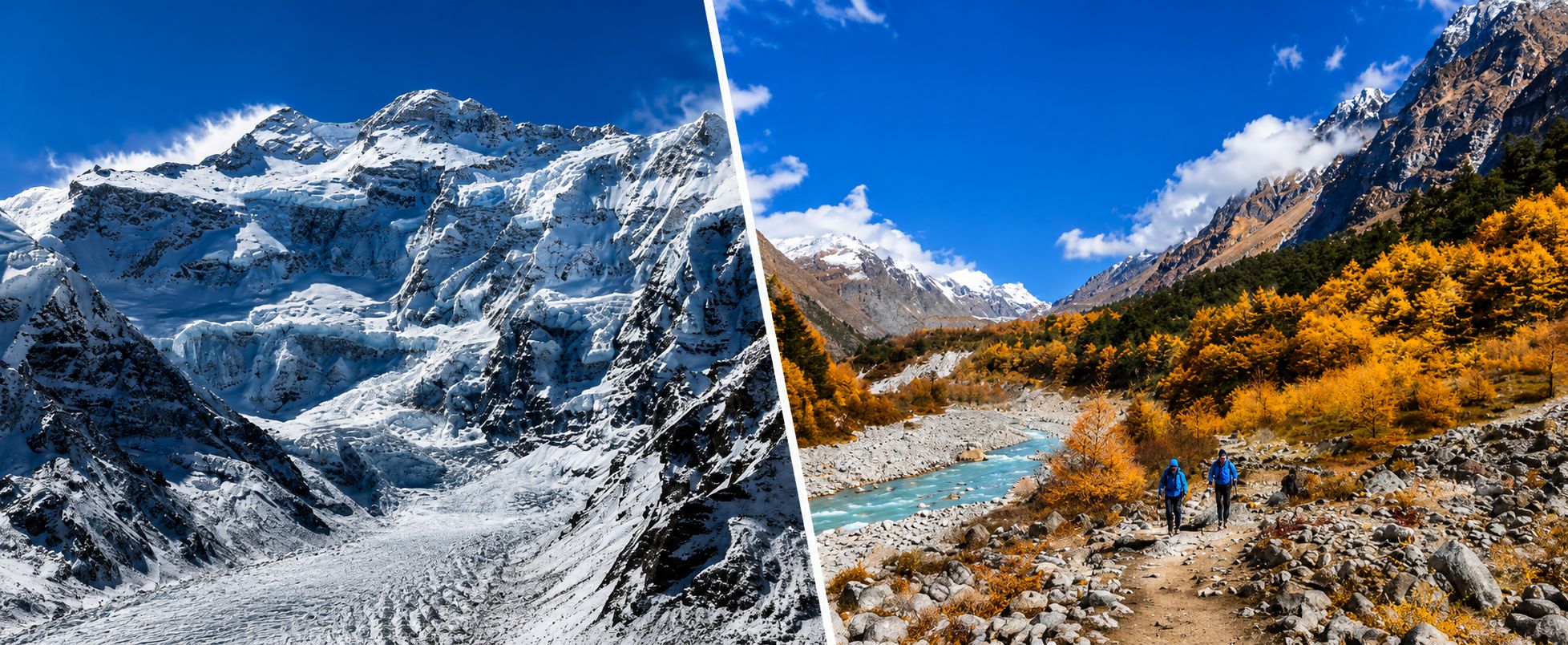
The Kanchenjunga Circuit Trek is one of the most remote trekking routes in Nepal, circling the base of the world’s third-highest mountain in the far eastern corner of the country. Unlike Everest or Annapurna, this region only opened to foreign trekkers in the mid-1980s, and it still requires special permits and a registered guide to enter. Anyone researching this trek usually has the same four questions in mind: what permits are required, how much does it cost, how difficult is it, and when is the best time to go. In this guide/blog, we will answer all four in detail, using real permit and package information so you can plan your Kanchenjunga trip for 2026 with accurate numbers.
Kanchenjunga Circuit Trek: Quick Overview
Before going into permits and cost line by line, here is a quick summary table covering the core facts of this trek.
| Factor | Details |
|---|---|
| Duration | 20 Days |
| Maximum Altitude | 5,143 m (Pangpema, North Base Camp) |
| Difficulty Level | Hard |
| Trek Type | Restricted area, tea house trek |
| Permits Required | Restricted Area Permit + Kanchenjunga Conservation Area Permit (KCAP) |
| Estimated Cost | US$1,755–US$2,155 per person |
| Best Season | Spring (March–May) and Autumn (September–November) |
| Access | Flight to Bhadrapur or overland drive from Kathmandu |
This overview reflects the standard Kanchenjunga Circuit Trek package, which visits both the North and South Base Camps of Kanchenjunga (8,586 m) and passes through the Kanchenjunga Conservation Area in eastern Nepal.
Kanchenjunga Circuit Trek Permit Requirements
Because the Kanchenjunga region borders Tibet and Sikkim, it falls under Nepal’s restricted-area system, meaning independent trekking is not allowed here. Every trekker must join a registered trekking agency and carry the correct permits before entering the trail.
Here are the permits you need for this trek:
Restricted Area Permit (RAP)
The Restricted Area Permit is compulsory for the Kanchenjunga region and can only be issued through a licensed trekking company in Nepal, since solo or independent trekking is not permitted here. This permit is checked at entry points along the route and is arranged as part of your Kanchenjunga Circuit Trek package.
Kanchenjunga Conservation Area Permit (KCAP)
In addition to the restricted area permit, trekkers need a Kanchenjunga Conservation Area Permit, since the entire route runs through the Kanchenjunga Conservation Area. This fee supports conservation work for species such as the red panda, snow leopard, and Himalayan black bear, which live within the protected zone. According to the Department of National Parks and Wildlife Conservation, the conservation area protects a wide range of high-altitude flora and fauna found across this part of eastern Nepal.
Trekking With a Registered Agency
Since the Kanchenjunga Circuit Trek permit rules require a minimum of two trekkers accompanied by a licensed guide, solo permits are not issued for this route. Booking through an established Nepal trekking company such as Igloo Himalaya Treks ensures your permits, guide, and paperwork are all correctly arranged before you fly out to Bhadrapur.
Kanchenjunga Circuit Trek Cost Breakdown
The Kanchenjunga Circuit Trek cost depends mainly on group size, since fixed expenses such as flights, permits, and guide fees are shared among the group. On average, the standard 20-day package costs between US$1,995 and US$2,155 per person, while a version of the trek that skips the domestic flight costs around US$1,755.
Here is how the pricing breaks down by group size:
| Group Size | Cost Per Person |
|---|---|
| Solo trekker | US$2,155 |
| Small group (2–4 people) | US$2,035 |
| Standard group (5–9 people) | US$1,995 |
| Kanchenjunga Circuit Trek Without Flight (20 Days) | US$1,755 |
What the Kanchenjunga Circuit Trek Cost Includes
Most standard packages cover airport transfers in Kathmandu, the Kathmandu-Bhadrapur-Kathmandu flight, jeep transport between Bhadrapur, Taplejung, and Rani Pul, three nights of hotel accommodation in Kathmandu with breakfast, teahouse accommodation during the trek, all trekking meals, a licensed guide, porters (one for every two trekkers), both required permits, a sleeping bag, down jacket, and duffel bag for the trek, and a first-aid kit carried by the guide.
What the Kanchenjunga Circuit Trek Cost Excludes
International flights, the Nepal visa fee, travel insurance with emergency evacuation coverage, lunch and dinner in Kathmandu, personal trekking gear, snacks and bottled drinks, tips for guide and porters, hot showers, and device charging during the trek are not included in the standard package price and should be budgeted separately.
Why the Kanchenjunga Circuit Trek Costs More Than Other Treks
Compared to more popular routes, the Kanchenjunga Circuit Trek cost is higher mainly because of the restricted area permit fee, the longer 20-day duration, and the domestic flight to Bhadrapur followed by a long jeep drive to the trailhead. If you’re comparing costs across regions, our guides on Everest Base Camp Trek cost 2026 and Annapurna Base Camp Trek cost 2026 offer a useful comparison point for trekkers weighing multiple destinations in Nepal.
Kanchenjunga Circuit Trek Difficulty
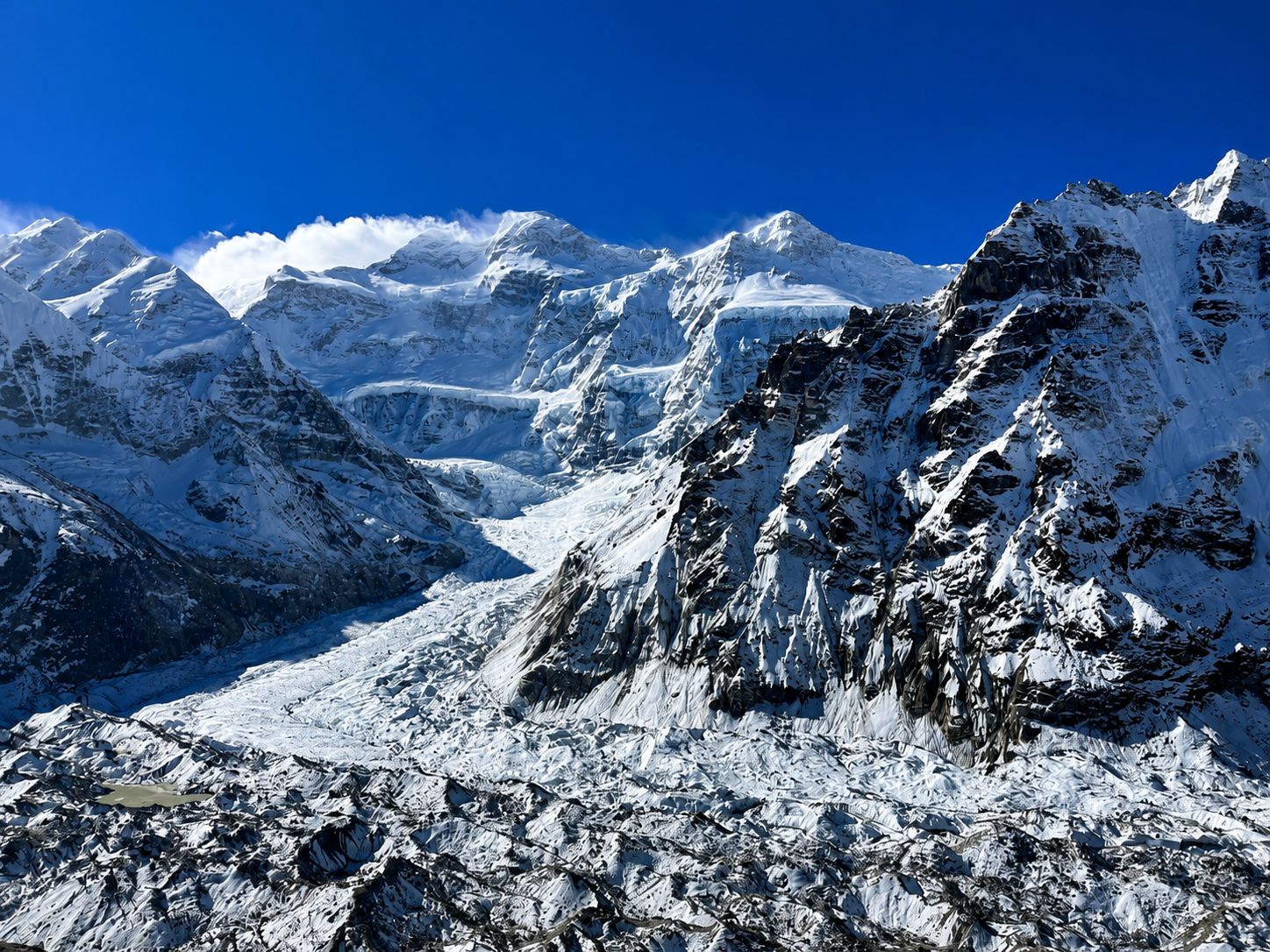
The Kanchenjunga Circuit Trek is officially rated Hard, and it is generally recommended for trekkers with prior high-altitude experience rather than complete beginners. Understanding what makes this trek demanding helps with realistic preparation.
Here are the main factors behind its difficulty rating:
Long Duration and Remote Terrain
At 20 days, this is one of the longer trekking circuits in Nepal, with several consecutive days spent walking through remote terrain far from road access or quick evacuation points.
High Altitude Exposure
The trek reaches 5,143 meters at Pangpema (North Base Camp) and around 4,730 to 4,840 meters at Oktang (South Base Camp), with multiple nights spent above 4,000 meters. This raises the risk of altitude sickness, which is why the itinerary includes built-in acclimatization days at Ghunsa.
Challenging Trail Conditions
Trekkers cross several high passes in a single stretch, including Sele La, Sinon La, Mirgin La, and Sinelapcha La, involving steep ascents and descents across exposed, rugged terrain. Sections of the trail near Kambachen and Torongding can also be prone to landslides, requiring careful footing.
Basic Teahouse Facilities
Accommodation becomes more basic at higher elevations, with limited electricity, patchy Wi-Fi, and simple stone shelters at places like Sele La. Trekkers should be mentally prepared for a more rustic experience compared to teahouses in the Everest or Annapurna regions.
Who Should Attempt This Trek
The Kanchenjunga Circuit Trek suits trekkers who have already completed at least one high-altitude trek, are comfortable with long trekking days, and are looking for a genuinely remote Himalayan experience away from crowded trails.
Best Season for the Kanchenjunga Circuit Trek
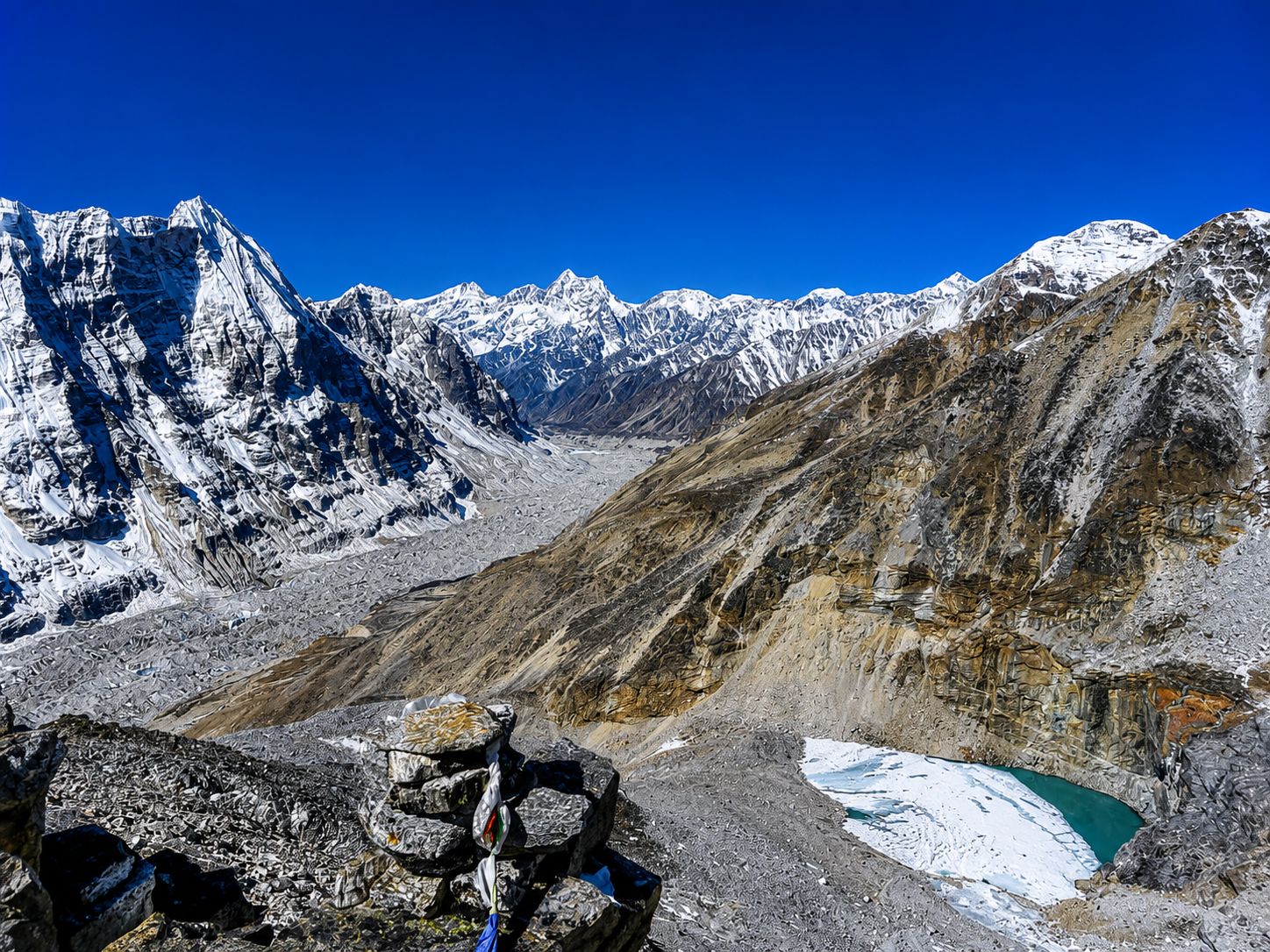
Choosing the best season for the Kanchenjunga Circuit Trek has a significant impact on your overall experience. Weather conditions affect trail safety, mountain visibility, river crossings, and the condition of high passes such as Sele La, Mirgin La, and Sinelapcha La. Because this is a remote Himalayan trek with limited rescue access, selecting the right season is more important here than on many of Nepal’s more popular trekking routes.
Spring (March to May)
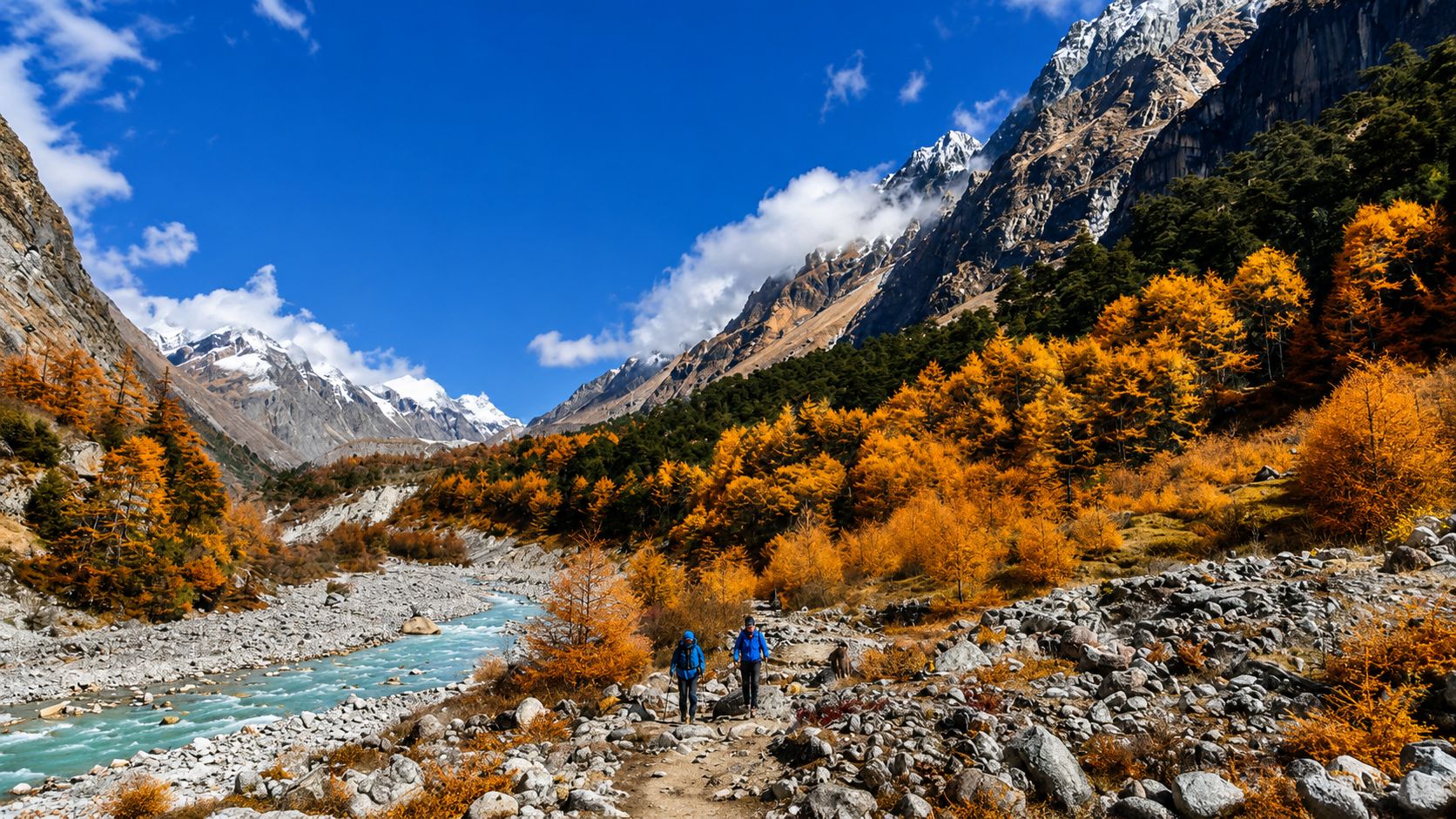
Spring is one of the best times to trek the Kanchenjunga Circuit. As winter snow gradually melts from the higher passes, trails become more accessible while temperatures remain comfortable for long trekking days. Lower elevations are covered with blooming rhododendron forests, magnolia trees, and other alpine flowers, adding vibrant color to the journey.
Mountain views are usually at their clearest during the morning hours, with excellent visibility of Kanchenjunga and neighboring Himalayan peaks. Wildlife is also more active during spring, making it one of the better seasons for spotting birds and animals within the Kanchenjunga Conservation Area.
Autumn (September to November)
Autumn is widely regarded as the most reliable trekking season in Nepal, and the Kanchenjunga Circuit is no exception. After the summer monsoon clears the atmosphere, trekkers are rewarded with crisp mountain views, stable weather, and dry trail conditions across much of the route.
The combination of mild daytime temperatures and low rainfall makes autumn ideal for crossing the trek’s high passes safely. Because of these favorable conditions, September through November is often considered the peak trekking season for Kanchenjunga, although teahouses and guides may be booked earlier than in spring.
Late Autumn, Winter, and Monsoon
Trekking into late November and early December is still possible, especially during years with stable weather, but temperatures drop rapidly at higher elevations and snowfall becomes more likely on the passes. Winter (December to February) is generally not recommended because heavy snow can block sections of the trail, making crossings more difficult and increasing the risk of delays.
The monsoon season (June to August) is also avoided by most trekkers due to frequent rainfall, slippery trails, leeches in lower forests, landslide risk, and reduced mountain visibility. Unless you have significant Himalayan trekking experience and a flexible itinerary, spring or autumn remains the safest and most rewarding season for this trek.
Average Seasonal Temperatures of the Kanchenjunga Circuit Trek
The following table shows the typical daytime and nighttime temperatures trekkers can expect during different seasons. Actual conditions vary with altitude, especially above 4,000 meters, where temperatures can change rapidly.
| Season | Daytime Temperature | Night Temperature | Trekking Conditions |
| Spring (March–May) | 8°C to 18°C | -8°C to 2°C | Clear skies, blooming forests, excellent trekking conditions |
| Summer/Monsoon (June–August) | 12°C to 20°C | 2°C to 8°C | Warm but wet, frequent rain, landslide risk, poor visibility |
| Autumn (September–November) | 8°C to 17°C | -6°C to 3°C | Stable weather, dry trails, outstanding mountain views |
| Winter (December–February) | -5°C to 8°C | -15°C to -5°C | Very cold, snowfall on high passes, challenging trekking conditions |
Note: Temperatures are approximate and vary depending on altitude, weather systems, and the specific location along the Kanchenjunga Circuit. Higher camps such as Pangpema (5,143 m) are often considerably colder than lower villages.
Kanchenjunga Circuit Trek Route Highlights
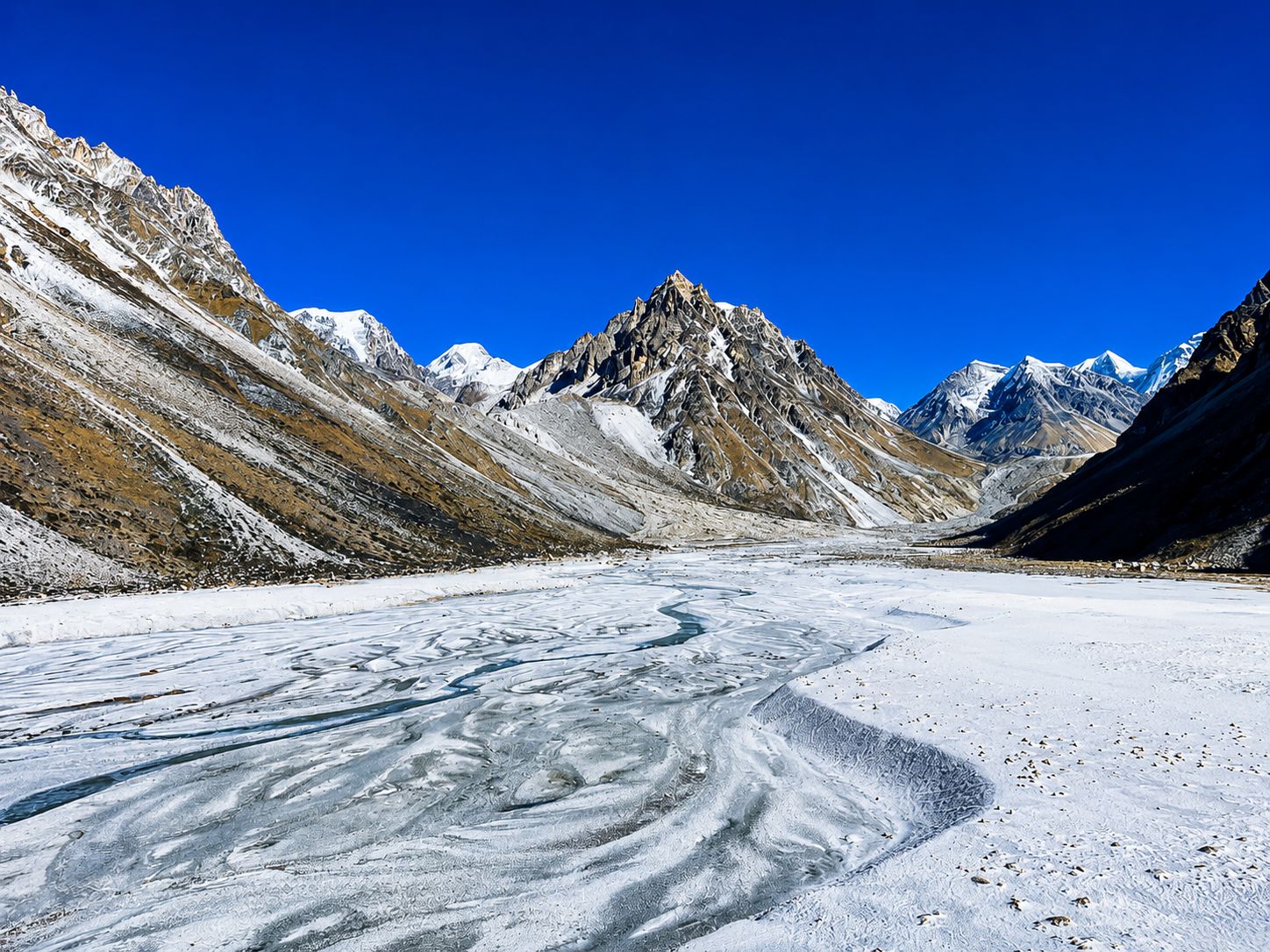
Beyond permits, cost, and difficulty, it helps to know what the actual trail includes, since this trek is structured differently from most other routes in Nepal.
Two Base Camps in One Trek
This is one of the few circuits in Nepal that includes both a North and South Base Camp of the same mountain, taking trekkers to Pangpema in the north and Oktang in the south for two completely different perspectives of Kanchenjunga.
Cultural Diversity Along the Trail
The route passes through villages home to Limbu, Rai, Sherpa, and Tibetan-influenced communities, offering a cultural experience that differs noticeably from the Sherpa-dominated Everest region or the Gurung villages of the Annapurna region.
Wildlife and Conservation Area
The entire trek runs through the Kanchenjunga Conservation Area, home to red pandas, blue sheep, Himalayan black bears, and snow leopards, along with diverse high-altitude birdlife.
How to Reach the Kanchenjunga Circuit Trek
Reaching the Kanchenjunga Circuit Trek takes more planning than many trekking routes in Nepal because the trail begins in the country’s far eastern region. Igloo Himalaya Treks offers two ways to reach the trailhead, depending on whether you prefer to fly or travel entirely by road.
Option 1: Kanchenjunga Circuit Trek (With Flight)
This is the fastest and most convenient way to reach the starting point.
- Fly from Kathmandu to Bhadrapur (around 45–50 minutes).
- Drive approximately 250 km (155 miles) from Bhadrapur to Taplejung via Ilam, which usually takes 8–10 hours, depending on road conditions.
- Continue another 35–40 km (22–25 miles) by jeep from Taplejung to Sekathum, the official starting point of the trek.
- From Sekathum, you’ll hike through villages such as Amjilosa, Gyabla, Ghunsa, Kambachen, and Lhonak before reaching Pangpema (North Base Camp, 5,143 m). After crossing the Sele La Pass (4,290 m), the trail continues to Oktang (South Base Camp) before returning to Taplejung.
Option 2: Kanchenjunga Circuit Trek Without Flight
If you prefer to avoid domestic flights, the overland package follows a different approach.
- Travel approximately 620–650 km (385–404 miles) by road from Kathmandu to Taplejung, usually spread over two travel days because of the long mountain roads.
- Continue by jeep for 35–40 km (22–25 miles) to Sekathum, where the trekking route begins.
- From this point onward, the itinerary is the same as the flight package, visiting both North Base Camp (Pangpema) and South Base Camp (Oktang) before returning to Taplejung.
Which Option Should You Choose?
If you have limited time, the flight package reduces travel time and lets you begin trekking sooner. The without-flight package is a good option if you prefer overland travel or want to avoid domestic flights. Either way, you’ll follow the same trekking route through the Kanchenjunga Conservation Area and complete the full circuit to both base camps.
Distance: The complete Kanchenjunga Circuit Trek covers approximately 220–240 km (137–149 miles) over 20 days, depending on the itinerary and side trips included. This makes it one of Nepal’s longest and most remote teahouse trekking routes.
Conclusion
The Kanchenjunga Circuit Trek offers one of the most remote and rewarding trekking experiences in Nepal, but it comes with real requirements: a Restricted Area Permit, a Kanchenjunga Conservation Area Permit, a registered guide, and a realistic understanding of its Hard difficulty rating. Costs typically range from US$1,755 to US$2,155 per person depending on group size and flight preference, with spring and autumn offering the most reliable trekking conditions.
If you are planning a trip to Kanchenjunga and want your permits, guide, and logistics handled correctly from the start, Igloo Himalaya Treks can help. As one of the best trekking companies in Nepal, our team has direct experience organizing restricted-area treks like this one, from permit paperwork in Kathmandu to guide support on the trail. Visit our Kanchenjunga Circuit Trek page to check current departure dates and get a personalized quote for your trip.
FAQs
How difficult is the Kanchenjunga Circuit Trek?
The Kanchenjunga Circuit Trek is rated Hard because it involves around 20 days of trekking, multiple high-altitude passes above 4,500 meters, and long walking days through remote Himalayan terrain. Previous high-altitude trekking experience, good physical fitness, and proper acclimatization are strongly recommended for a safe and enjoyable journey.
What permits are needed for the Kanchenjunga Circuit Trek?
Trekkers need two mandatory permits: the Restricted Area Permit (RAP) and the Kanchenjunga Conservation Area Permit (KCAP). Since the Kanchenjunga region is a restricted area, these permits must be arranged through a registered trekking agency, and independent trekking is not permitted.
How much does the Kanchenjunga Circuit Trek cost?
The Kanchenjunga Circuit Trek cost typically ranges from US$1,755 to US$2,155 per person, depending on group size and whether the Kathmandu–Bhadrapur domestic flight is included. Most trekking packages also cover permits, accommodation, meals during the trek, guide and porter services, and transportation.
What is the maximum altitude of the Kanchenjunga Circuit Trek?
The highest point of the trek is Pangpema (North Base Camp) at 5,143 meters (16,873 ft). The itinerary also visits Oktang (South Base Camp) at around 4,730–4,840 meters, making proper acclimatization essential to reduce the risk of altitude sickness.
When is the best time to trek the Kanchenjunga Circuit?
The best seasons are spring (March to May) and autumn (September to November). These months generally offer stable weather, clearer mountain views, comfortable trekking temperatures, and safer conditions for crossing the high Himalayan passes.
Can beginners do the Kanchenjunga Circuit Trek?
The Kanchenjunga Circuit Trek is not generally recommended for complete beginners because of its long duration, remote location, and high altitude. Trekkers who have previously completed a multi-day Himalayan trek and maintain a good level of fitness are better prepared for the challenges of this route.


