

Trip Informatiom
-
3-star hotel -Tea House - Lodge
-
Kathmandu-Breakfast, Mountain-Breakfast - Lunch - Dinner
-
Private Vehicle - Airplane
-
5545 m.
-
9
-
85
Why Everest Base Camp Trek – 14 Days Trek?
The Everest Base Camp Trek is more than a walk to a famous destination. It is a journey through the living culture of the Khumbu, where Sherpa villages, Buddhist monasteries, and dramatic Himalayan landscapes shape everyday life.
You will begin in the lush foothills near Lukla and gradually climb into the high-altitude world of Namche Bazaar, Tengboche, and Dingboche. As you gain altitude, the landscape changes from pine and rhododendron forest to open glacial valleys dominated by Ama Dablam, Lhotse, Nuptse, and Everest itself.
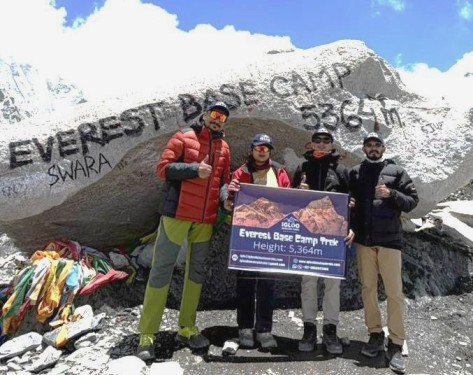
Reaching Everest Base Camp at 5,364m is the goal, but the sunrise hike to Kala Patthar at 5,545m is often the most rewarding moment. From this viewpoint, you see Everest, Nuptse, Pumori, and the Khumbu Glacier in a single sweep a view that makes every step of the climb toward the Everest Base Camp worthwhile.
This trek is designed with two acclimatisation days in Namche Bazaar and Dingboche, following safe altitude guidelines. You will not simply rush to Base Camp; you will have time to explore Sherpa culture, visit Tengboche Monastery, and understand the communities that have lived in these mountains for generations.
Whether you are a first-time high-altitude trekker or an experienced adventurer, this 14-day itinerary gives you the time, support, and structure to reach Base Camp safely while enjoying every stage of the journey.
Everest Base Camp – 14 Days Trek Overview
The Everest Base Camp Trek begins with a scenic flight to Lukla, the gateway to the Khumbu region. From Lukla, you follow the Dudh Koshi River through Sherpa settlements, pine forests, and suspension bridges toward Namche Bazaar, the bustling heart of the Khumbu.
After acclimatising in Namche, you continue to Tengboche, home to the region’s most important monastery, then climb to Dingboche for a second acclimatisation day. From Dingboche, the trail enters the rugged high-altitude zone through Lobuche to Gorak Shep, the last settlement before Base Camp.
On Day 9, you trek from Gorak Shep to Everest Base Camp on the Khumbu Glacier, then return to Gorak Shep for the night. The following morning, you climb Kala Patthar for sunrise over Everest before beginning the descent through Pheriche, Namche, and back to Lukla for the flight to Kathmandu.
The trek is graded challenging due to the altitude and daily walking hours, but the gradual itinerary with two acclimatization days makes it achievable for anyone with good fitness and determination.
What Happens When Your Lukla Flight Is Cancelled?
You wake up early in Kathmandu.
Your trekking bag is packed. Your boots are ready. Your excitement is probably higher than your sleep. Today is supposed to be the day you fly to Lukla. You arrive at the airport, check in, and wait for the announcement.
Then you hear the words no trekker wants to hear.
“The flight has been cancelled because of the weather.”
For a moment, you may not know what to do.
Should you wait?
Should you go back to the hotel?
Will you miss your trekking itinerary?
What about the money you have already paid?
Will you still reach Everest Base Camp?
If this is your first trek in Nepal, a cancelled Lukla flight can feel like a disaster. But it doesn’t have to be. At Igloo Himalaya Treks, we tell our trekkers something very simple.
The mountains are not going anywhere. We just sometimes have to change the plan.
Lukla flights depend on the weather
Lukla is not like flying into a large international airport. The weather in the mountains can change quickly. Cloud, wind, rain, poor visibility and other conditions can affect flights. Sometimes the morning looks promising and then the weather changes. Sometimes your flight is delayed for a few hours. Sometimes the entire day’s flights are cancelled.
And sometimes, even after waiting for several hours at the airport, you have to return to your hotel. This is one of the realities of trekking in the Everest region. It can be frustrating.
We understand that.
You may have taken time off work, travelled halfway around the world and planned every day of your Nepal trip. But weather is something nobody can control.
So, what happens after your flight is cancelled?
This is where having a local trekking company can make a big difference. If your Lukla flight is cancelled, we first look at the situation and discuss the available options with you. Depending on the weather and flight situation, there may be several possibilities.
1. You may fly the following day
If the weather improves and flights operate the next day, your Lukla flight can be rescheduled. This is the simplest situation. Your trekking itinerary may need a small adjustment, but we can work around it. Sometimes this means shortening or rearranging parts of the itinerary. Sometimes an extra night in Kathmandu is needed. The important thing is not to panic after one cancelled flight.
2. You may have to wait in Kathmandu
If the weather remains poor, you may need to stay another night in Kathmandu. Nobody wants an unexpected night in a hotel when they are dreaming about Namche Bazaar. But it is better to wait safely than to pressure a flight to operate when conditions are not suitable.
While you wait, we can help you understand what is happening with your flight and what the next step should be. You don’t have to spend the whole day wondering what is going on.
3. Sometimes the itinerary needs to change
A cancelled flight can affect the original trekking schedule. If you lose a day, we may need to adjust the itinerary. That does not automatically mean your Everest Base Camp dream is finished. The route can sometimes be reorganized depending on how much time you have available. This is one reason we don’t treat every trekking itinerary like a piece of paper that cannot be changed.
Mountains require flexibility.
What about your hotel in Kathmandu?
If your flight is cancelled and you need another night in Kathmandu, accommodation may need to be extended. Your trekking company should help you understand what is included and what additional costs may apply.
We prefer to discuss this openly rather than surprise trekkers later. There can be additional expenses caused by flight cancellations, particularly when the cancellation is due to weather. We believe travelers should know what is happening with their money and their itinerary.
What about the trekking days you lose?
This is one of the biggest concerns we hear from trekkers. You may have only two weeks in Nepal. If you lose one day, you may immediately think.
“I won’t have enough time to reach Everest Base Camp.”
Don’t make that decision before talking to your guide or trekking company. There may be ways to adjust the itinerary. For example, some days can sometimes be combined or reorganized, depending on your route, fitness, acclimatization requirements and remaining time.
But there is one thing we will not recommend simply to save a day.
rushing through altitude.
What if I have an international flight from Nepal?
This is something you should think about before booking your trek. If you have a very tight schedule between returning from the Everest region and your international flight home, a Lukla delay can create problems.
We always recommend leaving some extra time between your expected return to Kathmandu and your international departure.
Why?
Because the mountains don’t work according to your airline ticket. You may have perfect weather for your entire trek and then face a flight delay on the way back. A little extra time can save you a lot of stress.
Can I take a helicopter instead?
Sometimes trekkers ask.
“If my Lukla flight is cancelled, can I just take a helicopter?”
Depending on the weather, availability, operational conditions and other factors, helicopter flights may sometimes be an alternative. But a helicopter is not something we promise automatically.
It can be expensive, and weather conditions that stop regular flights can also affect helicopters. If this option is available, we can discuss the situation and the current cost with you. The decision should be based on the actual conditions that day—not on a promise made months before your trek.
The most important thing don’t panic
We have seen trekkers become extremely worried when their Lukla flight is cancelled. They start checking the clock every five minutes. They call their family. They start thinking about missing Everest Base Camp.
We understand why.
But a cancelled flight does not mean a cancelled trek. It means the plan has changed. And in Nepal, changing the plan is sometimes part of the adventure. The best thing you can do is stay calm, keep your phone available and stay in contact with your trekking company.
Let the people on the ground work through the situation.
This is one reason we stay close to our trekkers
At Igloo Himalaya Treks, our relationship with a trekker doesn’t start when you arrive at Lukla. It starts before you arrive in Nepal. If your flight changes, we want you to know what is happening. If your itinerary needs to change, we want to explain why.
If you have questions about the next flight, accommodation or trekking schedule, you should be able to ask us. We are a local Nepal trekking company. That means these situations are not something we only read about online.
They are part of the work we do.
We know that when you are sitting at Kathmandu airport with your backpack beside you, you don’t want another generic email saying, “Please wait for further updates.” You want someone to tell you what is happening. That’s the kind of support we try to provide.
What should you do if your Lukla flight is cancelled?
Keep it simple.
Don’t panic.
Talk to your trekking company.
Ask what happened.
Ask about the next available option.
Ask whether your itinerary needs to change.
Ask about any additional accommodation or transportation costs.
And most importantly, don’t make a rushed decision because you are worried about losing one day.
Your Everest Base Camp journey is not only about reaching the destination.
It is also about how you deal with the unexpected parts of the journey.
A mountain journey rarely goes exactly according to the plan you made at home.
And honestly, that’s part of what makes it a mountain journey.
One final thing we tell our trekkers
When you are standing at the airport waiting for your Lukla flight, you may feel that the mountains are causing you problems.
Later, when you are walking above Namche, looking at the Himalayas and remembering that cancelled flight in Kathmandu, you may see it differently. The cancelled flight becomes one small story from your Nepal adventure. The important thing is that you had people on the ground helping you through it.
That is what we want to be for our trekkers.
Not just the company that books your trek.
Not just the people who send you an itinerary.
But the local team you can call when the plan suddenly changes.
Because in the Himalayas, plans can change.
Your support shouldn’t.
Igloo Himalaya Treks
Trek Highlights
- Stand on the Khumbu Glacier at Everest Base Camp (5,364m), surrounded by the towering ice walls of Nuptse and the Khumbu Icefall during climbing season; you will walk among the colourful tents of expedition teams preparing for their summit attempts
- Watch the first light hit Everest's summit from Kala Patthar (5,545m). Waking before dawn in freezing temperatures, climbing by headlamp, and then seeing the sun rise over the world's highest peak is a moment most trekkers describe as the highlight of their entire journey
- Get your first glimpse of Everest from the Namche trail as you climb through pine forest on Day 3; the trees suddenly open to reveal Everest, Lhotse, and Nuptse appearing through the clouds for the first time
- Wake up to the sound of monks chanting at Tengboche Monastery, set against the backdrop of Ama Dablam's dramatic pyramid peak; this is one of the most spiritually moving stops on the entire route
- Cross the famous Hillary Suspension Bridge, swaying high above the Dudh Koshi River, decorated with hundreds of prayer flags; this is the moment many trekkers realise they are truly in the Himalayas
- Walk through Namche Bazaar on a Saturday, the weekly market where Tibetan traders, Sherpa families, and trekkers from around the world gather in the Sherpa capital's natural amphitheatre
- See Ama Dablam up close, often called the most beautiful mountain in the Himalayas; its sharp pyramid peak follows you for days as you trek through the Imja Valley toward Dingboche
- Walk the Khumbu Glacier moraine to Base Camp, scrambling over rocky glacial debris, passing memorials to climbers, and finally reaching the iconic Everest Base Camp sign for your photo
- Sleep in a warm teahouse in Gorak Shep at 5,164m, the highest settlement you will stay at, where the air is thin, the nights are freezing, and every breath reminds you how far you have come
- Experience the warmth of Sherpa hospitality from a cup of ginger tea offered by a teahouse owner in Phakding to a shared dinner with your guide and porter team in Lukla; the people of the Khumbu are as memorable as the mountains
Route & Itinerary Snapshot and Detailed Day-by-Day Itinerary of Everest Base Camp Trek – 14 Days
Route: Kathmandu → Lukla → Phakding → Namche Bazaar → Tengboche → Dingboche → Lobuche → Gorak Shep → Everest Base Camp → Kala Patthar → Pheriche → Namche Bazaar → Lukla → Kathmandu
| Day | Route | Altitude | Walking Time | Overnight |
| 1 | Arrival in Kathmandu | 1,400m | – | Hotel |
| 2 | Fly to Lukla, trek to Phakding | 2,610m | 3–4 hours | Teahouse |
| 3 | Trek to Namche Bazaar | 3,440m | 5–6 hours | Teahouse |
| 4 | Acclimatisation day in Namche | 3,440m | 3–4 hours (hike) | Teahouse |
| 5 | Trek to Tengboche | 3,860m | 5–6 hours | Teahouse |
| 6 | Trek to Dingboche | 4,410m | 5–6 hours | Teahouse |
| 7 | Acclimatisation day in Dingboche | 4,410m | 3–4 hours (hike) | Teahouse |
| 8 | Trek to Lobuche | 4,910m | 5–6 hours | Teahouse |
| 9 | Gorak Shep → Everest Base Camp → Gorak Shep | 5,364m / 5,164m | 7–8 hours | Teahouse |
| 10 | Kala Patthar sunrise → Pheriche | 5,545m / 4,240m | 6–7 hours | Teahouse |
| 11 | Trek to Namche Bazaar | 3,440m | 6–7 hours | Teahouse |
| 12 | Trek to Lukla | 2,860m | 6–7 hours | Teahouse |
| 13 | Fly to Kathmandu | 1,400m | – | Hotel |
| 14 | Departure | – | – | – |
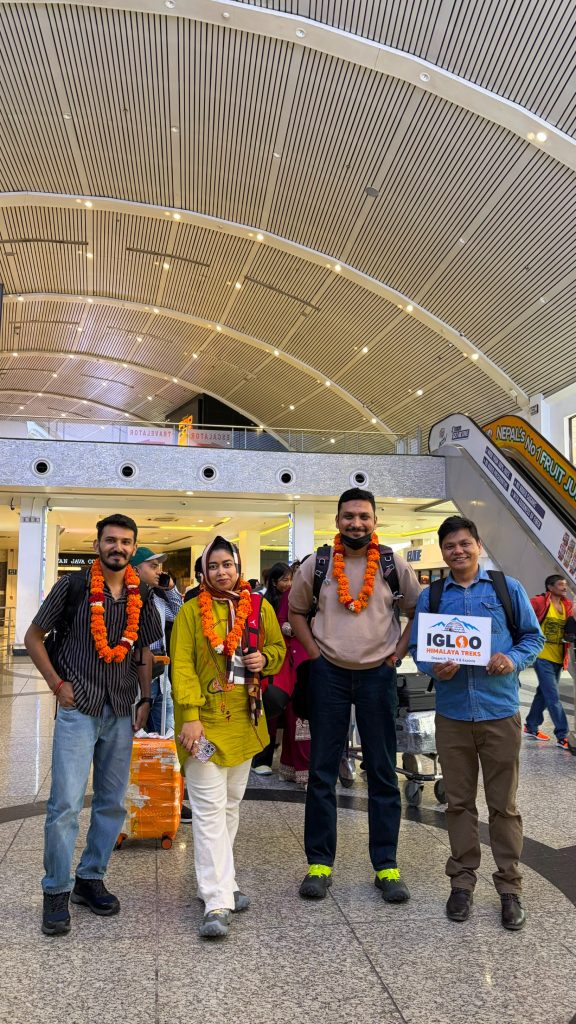
What happens today?
Welcome to Nepal and the beginning of your Everest Base Camp Trek. After you arrive at Tribhuvan International Airport, our representative will be there with the Igloo Himalaya Treks logo board to welcome you and transfer you to your hotel in Kathmandu.
Once you have settled in, our team will brief you about the trek, check your essential equipment, and help you with any last-minute preparations. If you are missing trekking gear, do not worry; we can help you arrange the necessary items in Kathmandu.
The rest of the day is yours to rest after your journey or explore the nearby streets of Thamel. Our priority is to make sure you are comfortable and properly prepared before heading into the mountains.
Route: Airport to Thamel hotel
Altitude: 1,400m
Accommodation: 3-star hotel (twin sharing)
Meals: Welcome dinner included
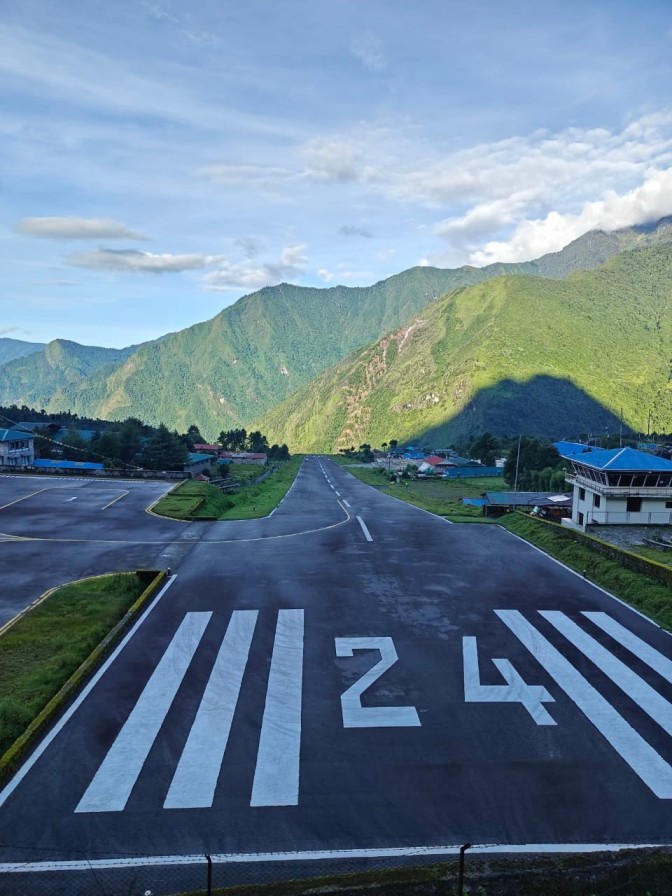
What happens today?
Your Himalayan adventure begins with a scenic flight to Lukla, the main gateway to the Everest region. Flight arrangements can vary by season and weather; during the busiest trekking months, flights may operate via Manthali Airport in Ramechhap rather than Kathmandu.
Our team will arrange your transfer according to the flight schedule and make sure you know when and where to meet. After landing in Lukla, your guide and porter team will welcome you, help organise your luggage, and prepare you for the first walk.
The trail from Lukla to Phakding is a gentle introduction to the Everest Base Camp Trek. You will pass through small Sherpa settlements, prayer flags, stone houses, pine and rhododendron forests, and follow sections of the Dudh Koshi River.
Your guide will introduce you to the local villages and explain some of the customs and landmarks you encounter along the way. After around three to four hours of walking, you will reach Phakding, where your teahouse will be ready for your arrival.
Route: Lukla → Chaurikharka → Phakding
Altitude: 2,610m (Phakding)
Walking Time: 3–4 hours
Distance: 8 km
Accommodation: Teahouse (attached room)
Meals: Breakfast, lunch, dinner
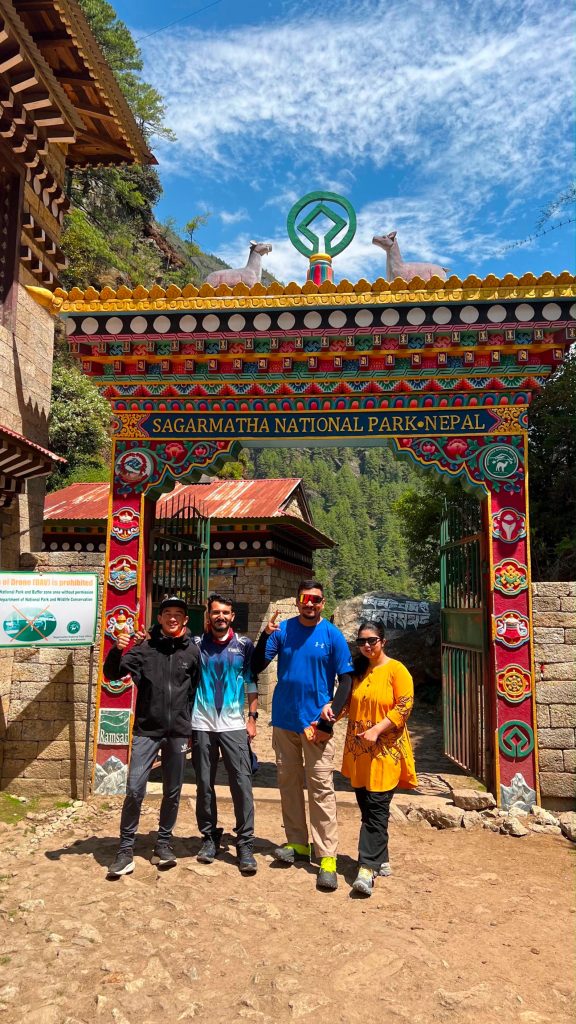
What happens today?
Today we enter deeper into the Khumbu region. After breakfast, we follow the Dudh Koshi River through pine forests and Sherpa settlements including Benkar, Monjo, and Jorsalle.
At Monjo, we enter Sagarmatha National Park, a UNESCO World Heritage Site. Your guide will help with the required permit checks before we continue toward Namche Bazaar.
The trail crosses several suspension bridges before reaching one of the most memorable climbs of the trek. We gradually ascend through the forest toward Namche, and if the weather is clear, your guide will point out the first views of Mount Everest, Lhotse, Nuptse, and Thamserku.
The final climb is steady, but we take it at a comfortable pace. There is no benefit in rushing at this stage of the trek.
When we reach Namche Bazaar, our team will take care of your teahouse check-in. You can then relax in the dining area, enjoy a warm meal, and take in the atmosphere of the famous Sherpa trading town.
Route: Phakding → Benkar → Monjo → Jorsalle → Namche Bazaar
Altitude: 3,440m (Namche Bazaar)
Walking Time: 5–6 hours
Distance: 10–11 km
Accommodation: Teahouse (attached room)
Meals: Breakfast, lunch, dinner
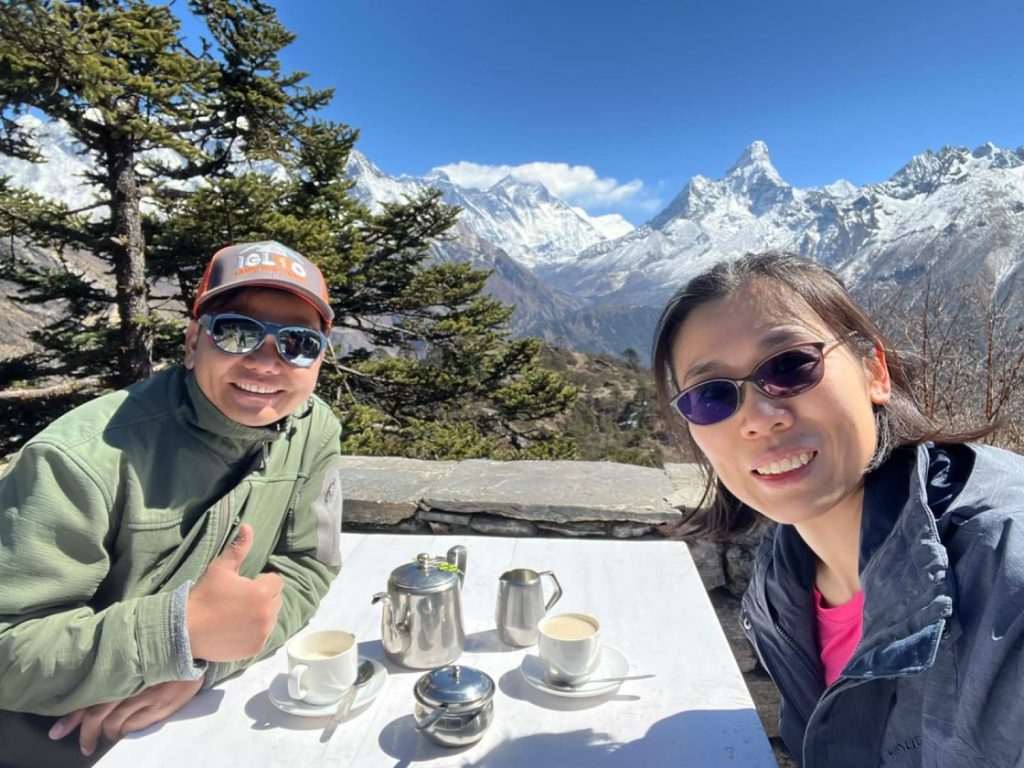
What happens today?
Today is an important part of your Everest Base Camp Trek itinerary. Rather than gaining more sleeping altitude, we spend another night at Namche to give your body time to adjust.
After breakfast, our guide will lead a gradual hike above Namche. A popular option is the trail toward Everest View Hotel at around 3,880m, where clear weather can reveal spectacular views of Everest, Lhotse, Nuptse, Ama Dablam, Thamserku, and other peaks.
We then return to Namche at a lower sleeping altitude. Depending on the group and conditions, your guide may also help you explore the Sherpa Culture Museum or other local attractions.
You will have time in the afternoon to explore Namche's cafés, bakeries, shops, and local market or simply rest at the teahouse. Our guide will also check how you are feeling and discuss the next stage of the trek.
Route: Namche Bazaar → Everest View Hotel → Namche Bazaar
Altitude: 3,440m (Namche), 3,880m (Everest View Hotel)
Walking Time: 3–4 hours
Distance: 5–6 km
Accommodation: Teahouse (attached room)
Meals: Breakfast, lunch, dinner
What happens today?
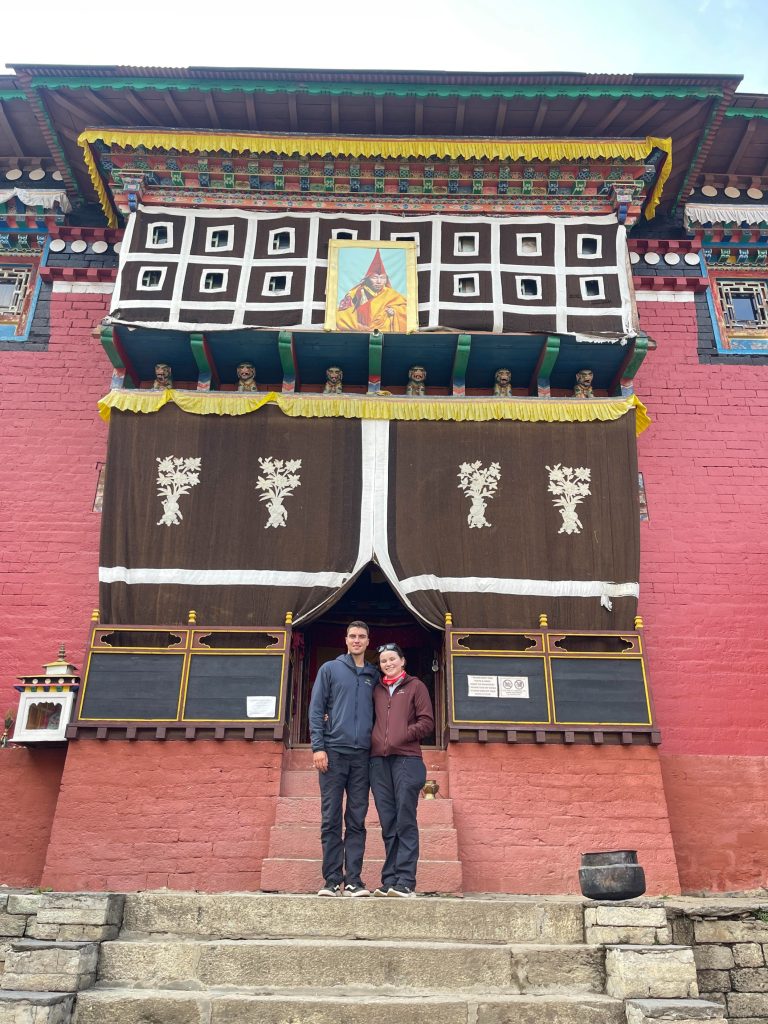
After breakfast, we leave Namche and follow one of the most scenic sections of the Everest Base Camp route. The trail initially follows the hillside with wide views of the Dudh Koshi Valley and Himalayan peaks before gradually descending toward Phunki Tenga.
Along the way, your guide can point out landmarks such as Ama Dablam, Thamserku, Khangtega, Everest, Lhotse, and Nuptse, while explaining the villages and Buddhist features along the trail.
From Phunki Tenga, the route climbs through pine and rhododendron forests toward Tengboche. This is the main uphill section of the day, so we take a steady pace and allow time for short rests.
Tengboche is famous for its monastery and its spectacular mountain setting. Once we arrive, our guide will help you settle into the teahouse and, if the monastery is open and appropriate to visit, explain the local customs before you explore.
Route: Namche Bazaar → Phunki Tenga → Tengboche
Altitude: 3,860m (Tengboche)
Walking Time: 5–6 hours
Distance: 10–11 km
Accommodation: Teahouse
Meals: Breakfast, lunch, dinner
What happens today?
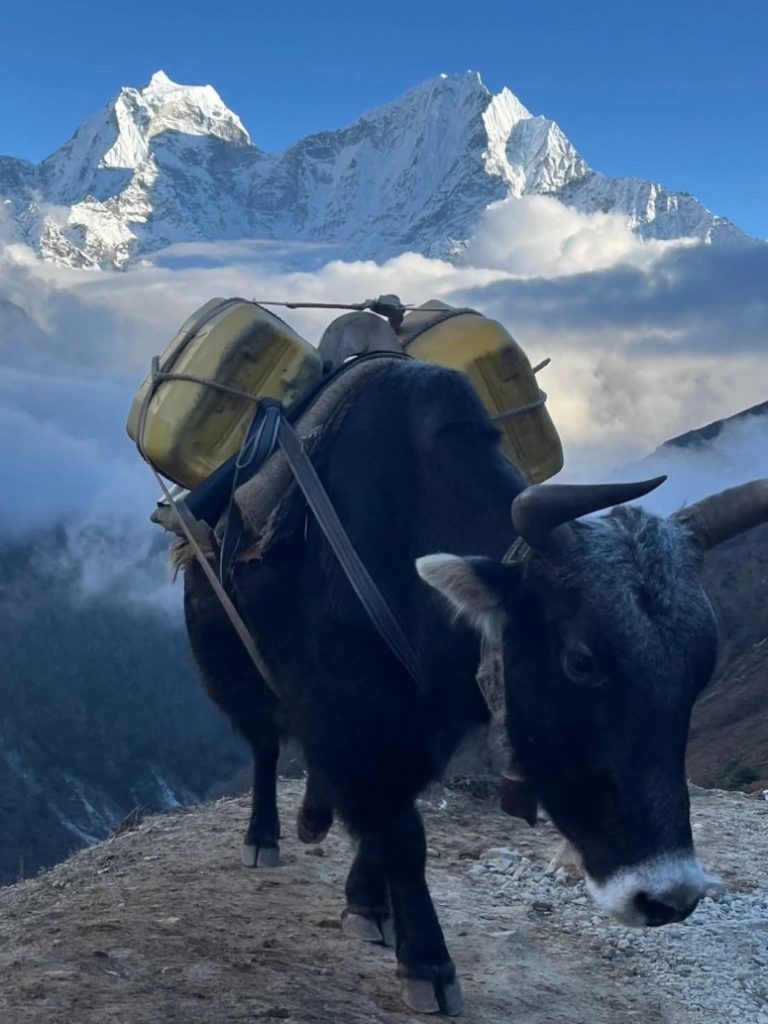
We begin the morning by descending through rhododendron and juniper forests toward Debuche and crossing the Imja Khola before continuing toward Pangboche.
As the trail climbs higher, the landscape gradually becomes drier and more open. Ama Dablam dominates the valley and provides a spectacular backdrop for much of today's walk.
We pass through Pangboche and continue toward Somare before entering the broad Imja Valley. Your guide will keep the pace comfortable as the altitude increases and will remind you to drink regularly and take breaks when needed.
By afternoon, we reach Dingboche (4,410m), one of the most important settlements on the high-altitude section of the Everest Base Camp Trek.
Once you arrive, your teahouse will be ready. You can settle in, enjoy a warm meal, and rest before tomorrow's acclimatisation hike.
Route: Tengboche → Debuche → Pangboche → Somare → Dingboche
Altitude: 4,410m (Dingboche)
Walking Time: 5–6 hours
Distance: 11–12 km
Accommodation: Teahouse
Meals: Breakfast, lunch, dinner
What happens today?
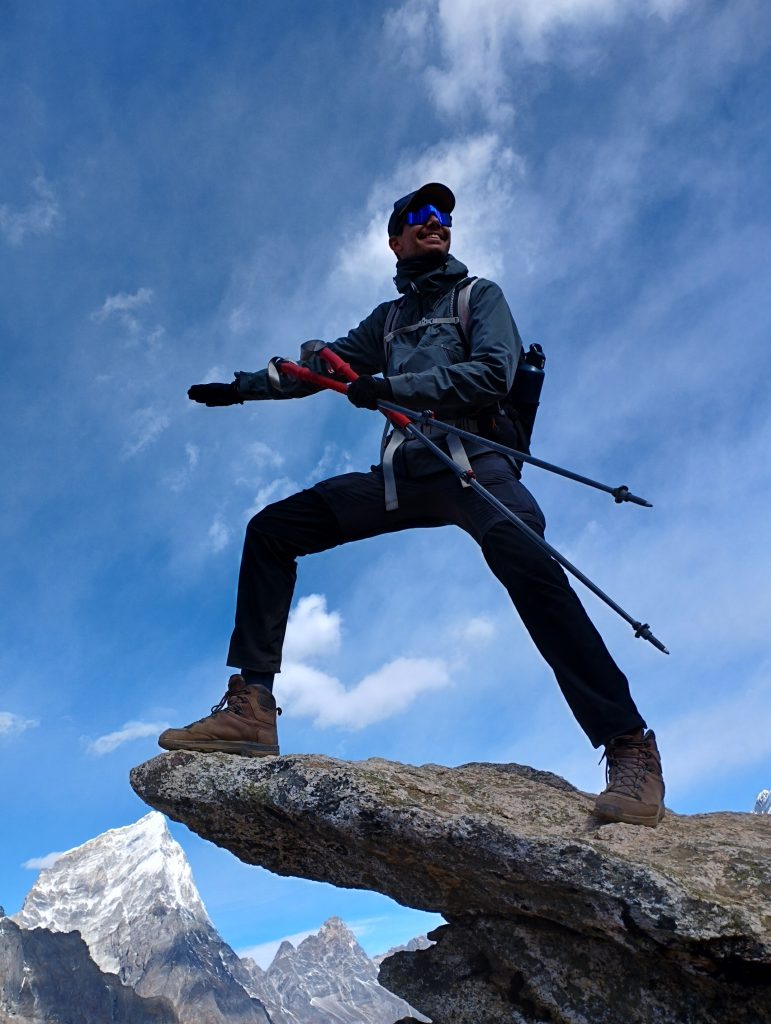
Another acclimatisation day is built into our itinerary before we climb toward Lobuche and Gorak Shep. This extra time is important because the air becomes noticeably thinner at these elevations.
Our guide will lead a gradual hike above Dingboche, often toward Nangkartshang viewpoint, depending on weather and the group's condition. The higher viewpoint provides impressive views of Ama Dablam, Island Peak, Lhotse, Makalu, and surrounding Himalayan peaks.
You do not need to push yourself to the highest point. The purpose of today's hike is to gain some altitude during the day and return to Dingboche to sleep lower.
After returning to the village, the afternoon is for rest. You can enjoy the teahouse, have a warm drink, talk with your guide about the next day's route, and prepare your daypack for the higher section of the trek.
Route: Dingboche → Nangkartshang Viewpoint → Dingboche
Altitude: 4,410m (Dingboche), up to 5,000m (viewpoint)
Walking Time: 3–4 hours
Distance: 4–5 km
Accommodation: Teahouse
Meals: Breakfast, lunch, dinner
What happens today?
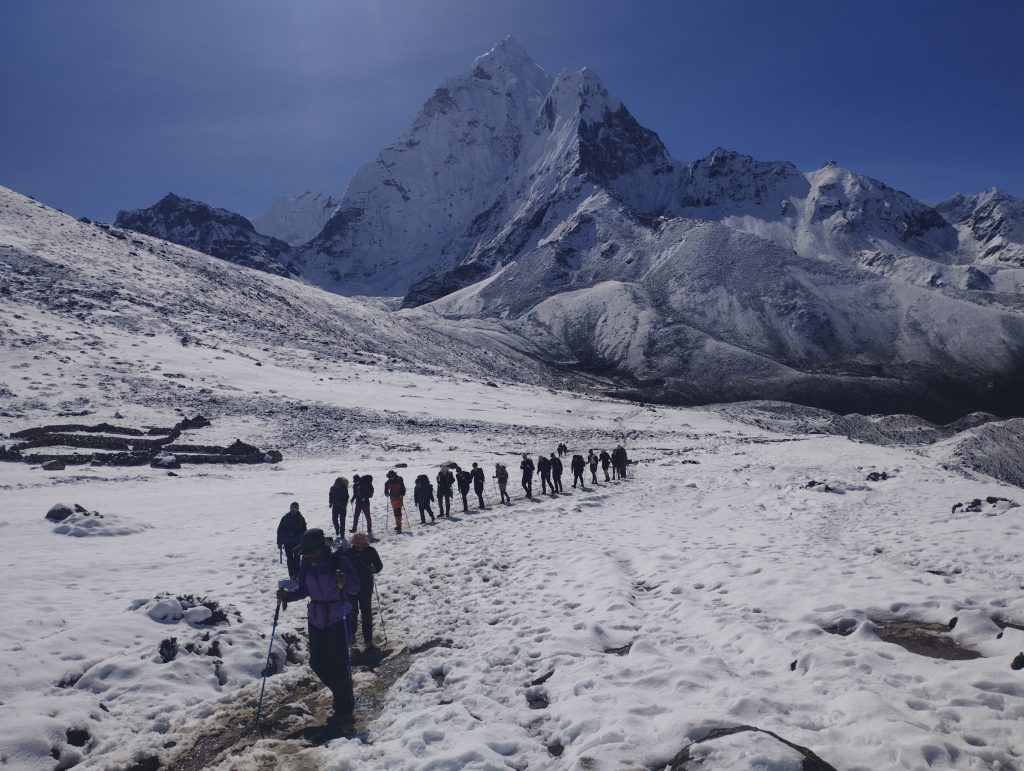
Today we leave Dingboche and enter the more rugged high-altitude landscape of the Khumbu. The trail climbs gradually through open terrain with impressive views of Taboche, Cholatse, Ama Dablam, and Pumori.
We reach Thukla, where we take a break before tackling the steeper section toward Thukla Pass. The memorials here honour climbers and Sherpas who lost their lives in the Himalayas. Your guide can explain the significance of the memorial area and the history behind it.
Beyond the pass, the landscape becomes increasingly rocky and glacial as we follow the Khumbu Glacier toward Lobuche.
The final section is slower because of the altitude, so we take our time rather than rushing. When we reach Lobuche at 4,910m, our team will make sure your room is ready and help you settle in.
Tonight is an early and restful evening. Tomorrow is one of the biggest days of your Everest Base Camp Trek.
Route: Dingboche → Thukla → Thukla Pass → Lobuche
Altitude: 4,910m (Lobuche)
Walking Time: 5–6 hours
Distance: 8–9 km
Accommodation: Teahouse
Meals: Breakfast, lunch, dinner
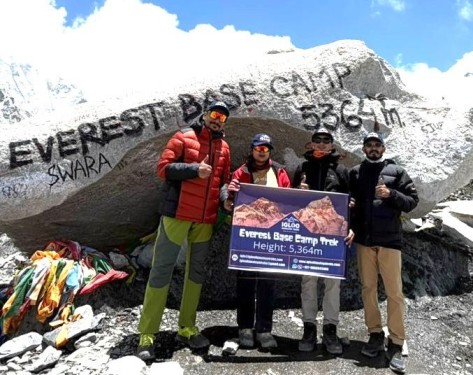
What happens today?
Today is the day we have been working toward.
We leave Lobuche early and follow the high-altitude trail toward Gorak Shep, the last settlement before Everest Base Camp. The landscape is rugged and exposed, with the Khumbu Glacier and surrounding peaks becoming increasingly prominent.
After a short break at Gorak Shep, we continue toward Everest Base Camp at 5,364m. The trail follows the glacial moraine, and our guide will set a manageable pace because the altitude is now significant.
When you finally reach Everest Base Camp, take your time. This is your achievement. Our guide will help you find a safe place for photographs and explain the surrounding landscape, including the Khumbu Glacier and Khumbu Icefall.
The appearance of Everest from Base Camp itself can be partly obscured by surrounding peaks, but the atmosphere and location are remarkable. During climbing season, expedition activity can add another dimension to the scene.
After spending time at Base Camp, we retrace the trail to Gorak Shep.
Route: Lobuche → Gorak Shep → Everest Base Camp → Gorak Shep
Altitude: 5,364m (Everest Base Camp), 5,164m (Gorak Shep)
Walking Time: 7–8 hours
Distance: 15 km round trip
Accommodation: Teahouse
Meals: Breakfast, lunch, dinner
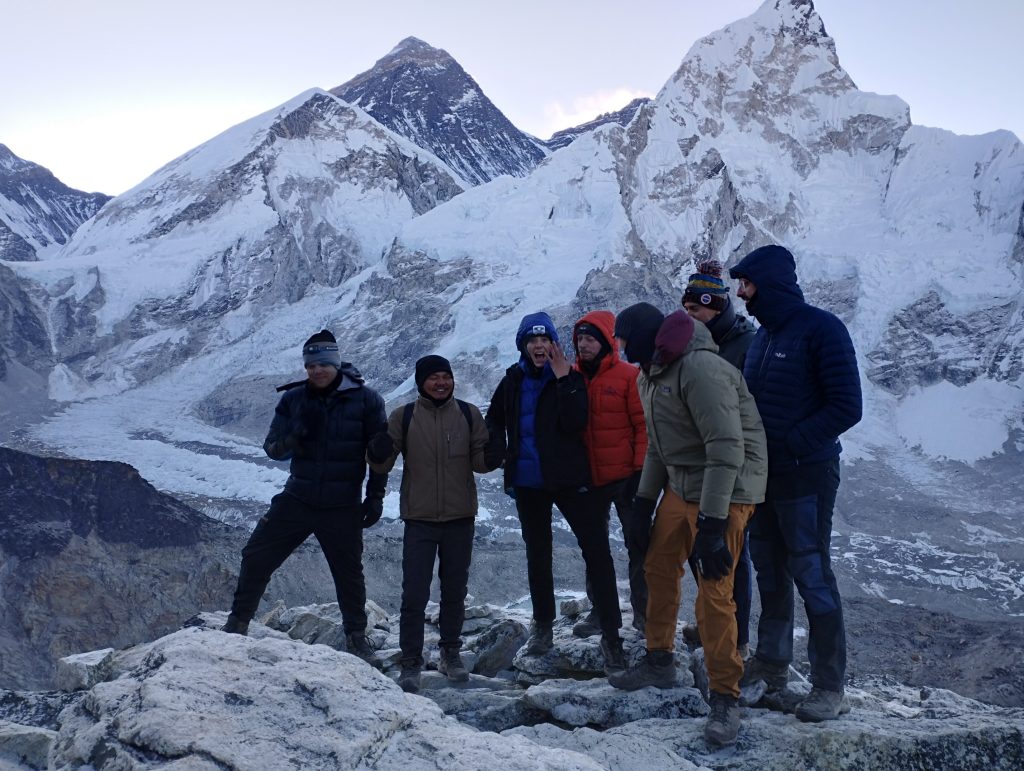
What happens today?
We start early today for the trek's highest point, Kala Patthar at approximately 5,545m. The climb is challenging, especially in the cold morning air, but our guide will keep the pace slow and steady.
Kala Patthar is one of the best viewpoints for close views of Mount Everest, Nuptse, Pumori, and the surrounding Khumbu peaks. If the weather is clear, sunrise brings beautiful changing light across the mountains.
After enjoying the viewpoint, we descend to Gorak Shep for breakfast and then continue down toward Pheriche.
The descent feels noticeably easier as we lose altitude and the air becomes richer in oxygen. We pass back through Lobuche and Thukla before following the trail toward Pheriche. By the time we arrive, our team will have your accommodation ready. After the demanding high-altitude days, Pheriche is a welcome place to relax, eat well, and recover.
Route: Gorak Shep → Kala Patthar → Gorak Shep → Pheriche
Altitude: 5,545m (Kala Patthar), 4,240m (Pheriche)
Walking Time: 6–7 hours
Distance: 13–14 km
Accommodation: Teahouse
Meals: Breakfast, lunch, dinner
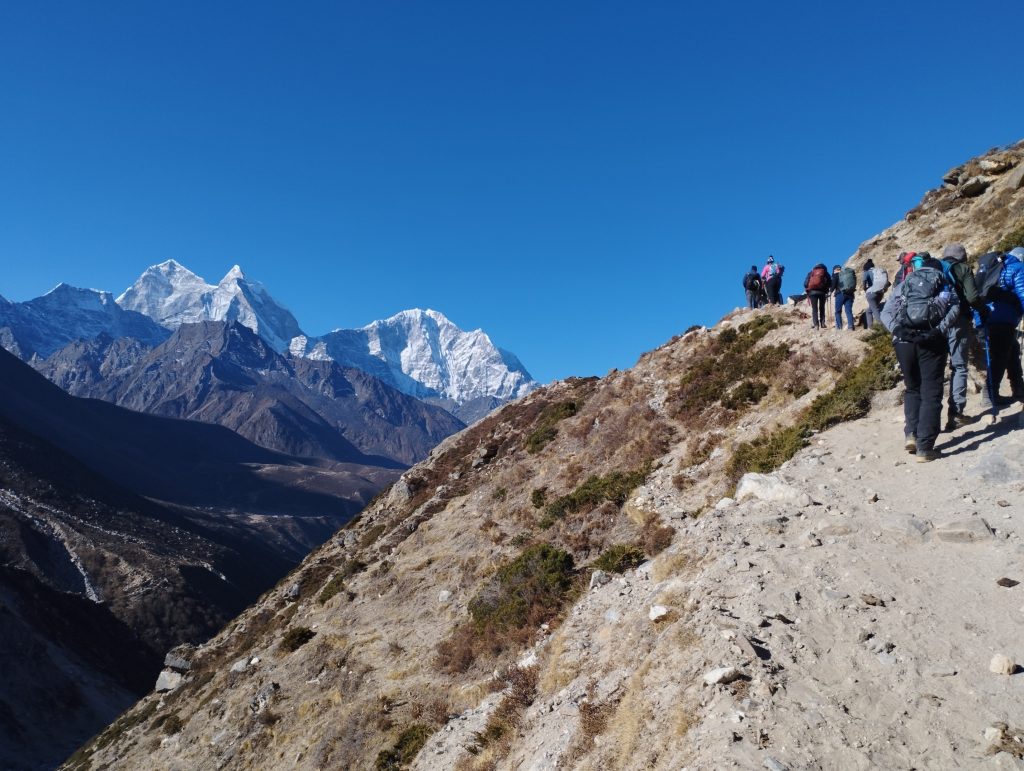
What happens today?
Today we make a substantial descent through the Khumbu Valley. With less altitude and more oxygen, most trekkers find the return journey physically easier than the climb toward Base Camp.
We pass through Pangboche and Tengboche, giving you a different perspective on familiar villages and mountain scenery. Your guide can also point out cultural landmarks and explain more about the Sherpa communities along the route.
From Tengboche, we continue through rhododendron and pine forests before following the Dudh Koshi Valley toward Namche.
It is a longer walking day, but the gradual descent makes it manageable. When we arrive in Namche Bazaar, you can enjoy the comforts of the town again with hot drinks, bakeries, shops, and a warmer atmosphere.
Route: Pheriche → Pangboche → Tengboche → Namche Bazaar
Altitude: 3,440m (Namche Bazaar)
Walking Time: 6–7 hours
Distance: 14–19 km
Accommodation: Teahouse (attached room)
Meals: Breakfast, lunch, dinner
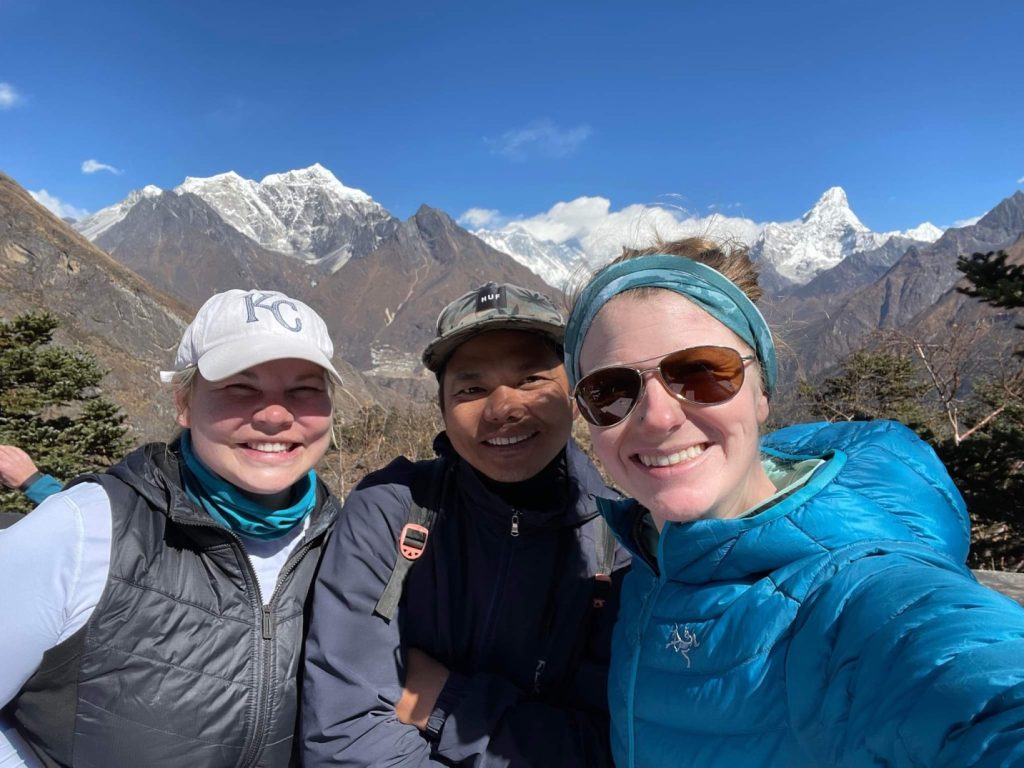
What happens today?
After breakfast, we begin the final trekking day of the Everest Base Camp Trek.
The trail descends through the forests toward Jorsalle, Monjo, and Phakding, following the Dudh Koshi River and crossing several suspension bridges along the way.
As we approach Lukla, the trail becomes familiar again, but there is often a different feeling now you know the trek is coming to an end.
Once we reach Lukla, our team will help with the final accommodation arrangements. You can relax, enjoy dinner, and spend the evening with your guides and porters.
This is also a good time to thank the local team who supported you throughout the trek. Their knowledge, hard work, and care are an important part of the Everest Base Camp experience.
Route: Namche Bazaar → Jorsalle → Monjo → Phakding → Lukla
Altitude: 2,860m (Lukla)
Walking Time: 6–7 hours
Distance: 18–20 km
Accommodation: Teahouse (attached room)
Meals: Breakfast, lunch, dinner
What happens today?
After breakfast, we prepare for our return flight from Lukla to Kathmandu.
Flight schedules depend on weather, visibility, and airline operations. During peak trekking seasons, flights may operate between Lukla and Manthali Airport in Ramechhap, followed by an overland transfer to Kathmandu. During other periods, direct Lukla–Kathmandu flights may operate.
Our team will handle the necessary arrangements and keep you informed about the departure schedule. Once you arrive in Kathmandu, our representative will meet you and transfer you to your hotel.
The rest of the day is yours to rest, explore Kathmandu, shop for souvenirs, or simply enjoy being back at a lower altitude.
Route: Lukla → Kathmandu (flight)
Altitude: 1,400m (Kathmandu)
Accommodation: 3-star hotel
Meals: Breakfast, farewell dinner
What happens today?
Your Everest Base Camp Trek comes to an end today.
Depending on your flight schedule, you can enjoy a relaxed morning in Kathmandu before our representative transfers you to Tribhuvan International Airport for your onward journey.
We will make sure you reach the airport comfortably and on time. As you leave Nepal, you take home more than photographs, you leave with the memories of the Khumbu, the people you met, the challenges you overcame, and the achievement of reaching Everest Base Camp.
Thank you for trekking with Igloo Himalaya Treks. We hope to welcome you back to Nepal for another Himalayan adventure.
Route: Hotel to airport
Altitude: 1,400m (Kathmandu)
Meals: Breakfast included
Includes
Included in the Package
- Airport pickups and drop-offs
- 2 nights hotel in Kathmandu (3-star level, twin sharing)
- Domestic flight (Kathmandu–Lukla–Kathmandu) During Peak season operate from Ramechhap Airport
- All meals during the trek (breakfast, lunch, dinner) fresh fruits and snickers chocolate with dinner
- 3 cups a tea or coffee in a Day
- Licensed, English-speaking guide and porter (1 porter per 2 trekkers)
- Sagarmatha National Park permit
- Khumbu Rural Municipality entry fee
- Medical kit, first-aid equipment
- Teahouse accommodation during the trek(Attached room in Phakding, Namche and Lukla )
- Sleeping bag (to be returned after the trek)
- Down jacket (to be returned after the trek)
- Duffel bag for carrying trekking gear
- Trip completion certificate
- Company hat/cap as a souvenir
- Farewell dinner in Kathmandu
- Helicopter rescue coordination (if required; insurance must cover it)
Not Included
- Nepal visa and international airfare
- Travel insurance (compulsory, must cover emergency evacuation)
- Personal gear, snacks, drinks, desserts
- Hot showers, WiFi, device charging (available at some lodges for extra cost)
- Tips for guide and porter (recommended)
FAQs – Everest Base Camp Trek
FAQs – Everest Base Camp Trek
It’s one of the most scenic and thrilling short flights in the world. Flights only operate in safe weather windows.
The Everest Base Camp Trek is considered a moderately difficult to challenging trek. The trail does not require technical climbing skills, but trekkers must walk for 5–8 hours per day while gaining altitude gradually. Good physical fitness and proper acclimatization are essential.
Yes. Beginners can complete the trek with adequate preparation, a realistic walking pace, and enough acclimatization days. Many first-time trekkers successfully reach Everest Base Camp every year.
The classic Everest Base Camp Trek usually takes 12–14 days, including arrival in Kathmandu, the Lukla flight, acclimatization days, and the return journey.
Everest Base Camp is located at 5,364 meters (17,598 feet) above sea level.
Kala Patthar is the highest point of the trek at 5,545 meters (18,192 feet). It offers one of the best panoramic views of Mount Everest.
The round-trip distance is approximately 130 kilometers (80 miles), depending on the exact itinerary.
Spring (March to May) and autumn (September to November) are the best seasons because of stable weather, clear skies, and excellent mountain views.
Yes. Winter trekking is possible from December to February. However, temperatures are much colder, and heavy snowfall can occasionally affect the trail.
Yes, but monsoon trekking from June to August is more challenging because of rainfall, cloudy conditions, and possible flight delays.
Although experienced trekkers can trek independently in some areas, hiring a local guide is highly recommended for safety, navigation, cultural experiences, and altitude management.
A porter is not mandatory, but many trekkers hire one to carry heavy bags and make the journey more enjoyable.
Trekkers need the Sagarmatha National Park Entry Permit and the Khumbu Pasang Lhamu Rural Municipality Permit.
The average cost ranges from USD 1,200 to USD 2,500, depending on the itinerary, accommodation, guide services, transportation, and group size.
Most packages include airport transfers, accommodation, domestic flights, permits, a guide, a porter, meals during the trek, and government taxes.
No. International airfare is generally not included in standard Everest Base Camp Trek packages.
Trekkers usually stay in mountain teahouses that provide basic but comfortable rooms.but we will provide you Phakding, Namche, Lukla attached bathroom.
Private rooms are available in lower-altitude villages, but they become limited at higher elevations during the peak trekking seasons.
Teahouses serve Nepali, Tibetan, Indian, and international dishes, including dal bhat, noodles, fried rice, pasta, soup, eggs, and potatoes.
Yes. Trekkers can purchase boiled water or refill their bottles at teahouses and water stations.
Yes. Hot showers are available in many villages, although they may require an additional payment.
Yes. Wi-Fi is available in many teahouses, but the connection becomes slower at higher elevations.
Yes. Most teahouses provide charging facilities for an additional fee.
Nepal Telecom and Ncell provide mobile coverage in many parts of the Khumbu region, although signals may be unreliable in some areas.
Altitude sickness occurs when the body cannot adapt to high elevations quickly enough. Common symptoms include headaches, nausea, dizziness, fatigue, and shortness of breath.
Walk slowly, stay hydrated, eat nutritious food, follow acclimatization guidelines, and avoid ascending too quickly.
Trekkers should be able to walk for several hours each day. Regular hiking, jogging, cycling, and cardiovascular exercise are recommended before the trek.
Begin training at least 8–12 weeks before your trip. Focus on endurance, strength, hiking, and cardiovascular fitness.
Essential items include warm clothing, trekking boots, a sleeping bag, a down jacket, gloves, sunglasses, sunscreen, and a first-aid kit.
Temperatures can fall below -15°C during winter and may drop below freezing even during the peak trekking seasons.
Yes. Travel insurance covering high-altitude trekking and emergency helicopter evacuation is strongly recommended.
ATMs are available in Lukla and Namche Bazaar, but trekkers should carry enough cash because ATM services are limited.
Yes. Trekkers can choose the overland route through Salleri or Phaplu to avoid the Lukla flight.
Yes. Physically active children with proper preparation can complete the trek under the supervision of experienced guides.
Yes. Many trekkers over 60 years old successfully complete the trek every year. Physical preparation and medical consultation are recommended.
Trekkers can enjoy spectacular views of Mount Everest, Lhotse, Nuptse, Ama Dablam, Pumori, Thamserku, Lobuche Peak, and many other Himalayan peaks.
Absolutely. The trek combines breathtaking mountain scenery, Sherpa culture, ancient monasteries, and the unforgettable experience of standing at the foot of the world's highest mountain.
Igloo Himalaya Treks offers experienced local guides, personalized service, carefully planned itineraries, flexible departures, and authentic Himalayan experiences.
You can book your trek by contacting Igloo Himalaya Treks directly through the inquiry form, email, or WhatsApp.
Yes. The itinerary can be customized according to your schedule, fitness level, travel preferences, and additional activities such as helicopter returns or peak climbing.
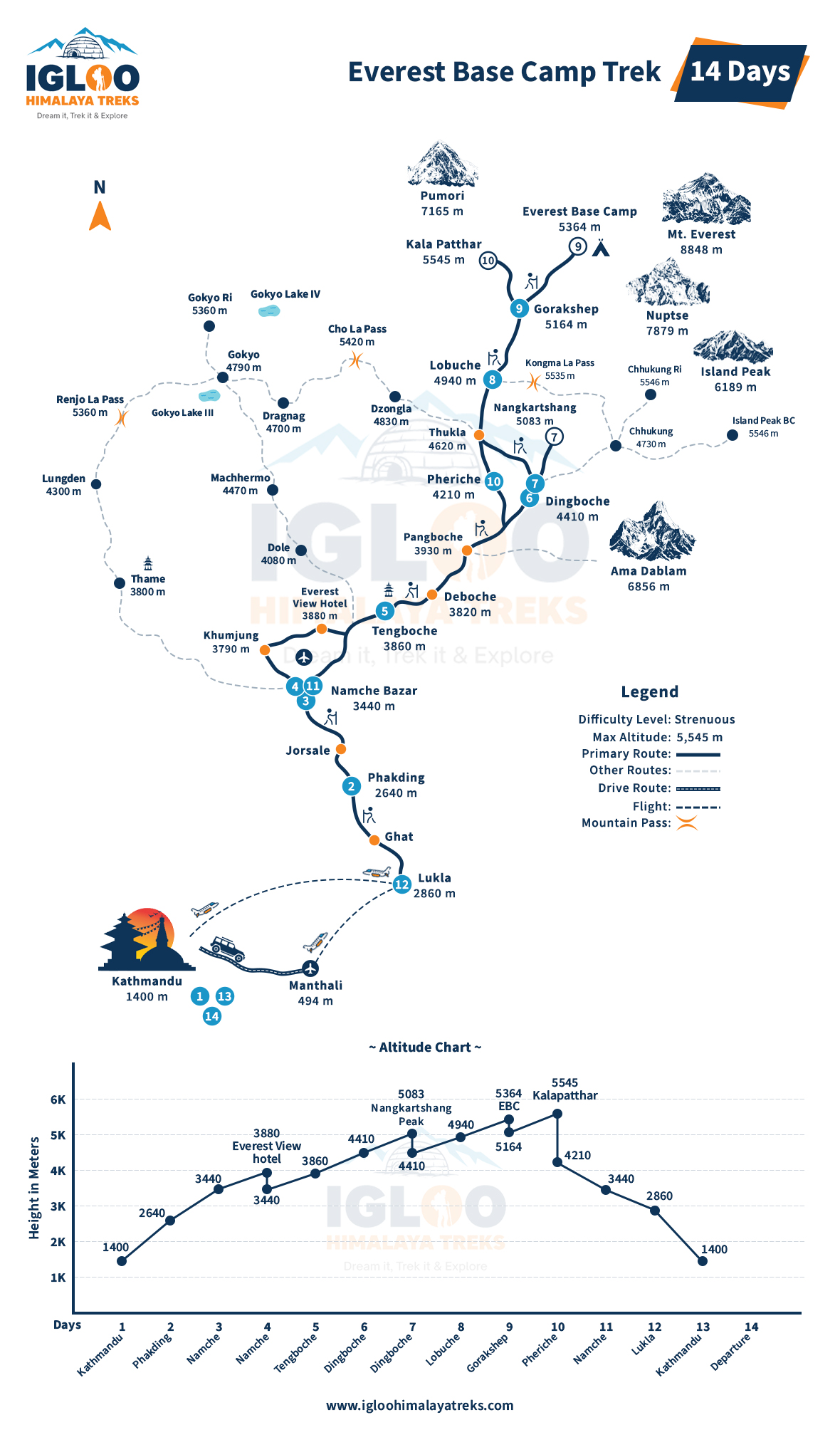
Detailed Map of Everest Base Camp 14 Days Treks.
Acclimatisation & Altitude Plan for Everest Base Camp 14-day Trek
Altitude is the most important factor to manage on the Everest Base Camp Trek. Our itinerary follows safe acclimatisation guidelines, with sleeping altitude gains kept to 300–500m per day above 2,500m, and rest days built in at Namche and Dingboche.ntb
Altitude Progression:
- Day 1: Kathmandu (1,400m)
- Day 2: Lukla (2,860m) → Phakding (2,610m)
- Day 3: Namche Bazaar (3,440m)
- Day 4: Acclimatisation at Namche (hike to 3,880m, sleep at 3,440m)
- Day 5: Tengboche (3,860m)
- Day 6: Dingboche (4,410m)
- Day 7: Acclimatisation at Dingboche (hike to 5,000m, sleep at 4,410m)
- Day 8: Lobuche (4,910m)
- Day 9: Gorak Shep (5,164m) → Everest Base Camp (5,364m)
- Day 10: Kala Patthar (5,545m) → Pheriche (4,240m)
- Day 11–12: Descent to Namche (3,440m) and Lukla (2,860m)
Our Acclimatisation Strategy:
- Two rest days: Namche Bazaar and Dingboche
- Climb high, sleep low: Hike higher during the day, return to lower altitude to sleep
- Gradual ascent: Daily sleeping altitude gain kept within safe limits
- Hydration: Drink 3–4 litres of water per day
- Health monitoring: Your guide checks your condition daily with a pulse oximeter
Difficulty & Physical Preparation
Overall Difficulty: Challenging
The Everest Base Camp Trek does not require technical climbing skills, but it is physically demanding due to the altitude, daily walking hours, and cumulative elevation gain.
What Makes It Challenging:
- Altitude up to 5,545m (Kala Patthar)
- Daily walking of 5–8 hours
- Steep climbs, rocky paths, and suspension bridges
- Cold mornings and variable weather
Who Can Do This Trek:
- Beginners with good fitness and determination
- Previous hiking experience helpful but not essential
- Age range 9–85 years with proper preparation
Physical Preparation (Start 2–3 Months Before):
- Cardio: Running, cycling, or brisk walking 4–5 times per week
- Hill training: Hike local hills with a weighted backpack
- Strength: Squats, lunges, step-ups, core exercises
- Endurance: Long weekend hikes to break in boots
Best Time to Trek Everest Base Camp
The best time for the Everest Base Camp Trek is generally spring (March–May) and autumn (September–November), when weather is stable, skies are clear, and trail conditions are reliable.
However, each season offers a different experience, and the right time depends on what you want from the journey: colourful landscapes, clear mountain views, cultural festivals, or a quiet snowy adventure.
Spring (March–May)
Spring is one of the most rewarding times to trek to Everest Base Camp. As the winter cold eases, the lower trails around Lukla, Phakding, and Namche come alive with blooming rhododendrons, adding colour to the forest sections. Days become warmer and more comfortable for walking, while mornings and evenings at higher altitudes remain cool but manageable.
This is also the main Everest climbing season. As you approach Gorak Shep and Base Camp, you will see expedition teams setting up their camps, prayer flags strung across the glacier, and the busy but exciting atmosphere of climbers preparing for their summit attempts. For many trekkers, seeing this side of Everest adds a special dimension to the journey.
April usually offers the most balanced spring conditions — stable weather, good visibility, and comfortable temperatures. March can still feel cold at higher elevations, while May is warmer but can bring occasional afternoon haze.
Good to know: April and May are busy months, so booking accommodation and Lukla flights early is a smart choice.
| Elevation | Daytime | Night |
| Namche Bazaar (3,440m) | 5°C–15°C | -5°C–5°C |
| Dingboche (4,410m) | 0°C–10°C | -10°C–0°C |
| Everest Base Camp (5,364m) | -5°C–5°C | -15°C–-5°C |
Autumn (September–November)
Autumn is widely considered the best time to trek to Everest Base Camp. After the monsoon rains, the air becomes clean and clear, and the surrounding peaks often appear exceptionally sharp against deep blue skies. Trails are dry and firm, making walking conditions ideal throughout the route.
October is the busiest month, with trekkers from around the world on the trail, but it also offers the most reliable weather and the best chance of clear mountain views. November brings cooler temperatures and fewer trekkers, creating a quieter and more peaceful atmosphere while still offering excellent visibility.
Autumn is also a special time for culture. If your trek coincides with the Mani Rimdu festival at Tengboche Monastery (usually held in October or November, depending on the Tibetan lunar calendar), you may witness masked dances, traditional music, and Buddhist ceremonies — one of the most important cultural events in the Khumbu region. Our team can advise you on the festival dates when planning your trek.
Autumn is ideal for first-time trekkers, photographers, and anyone looking for clear Himalayan views, dry trails, and reliable trekking conditions.
Good to know: Early September can still see some leftover monsoon weather, while October usually offers the clearest conditions.
| Elevation | Daytime | Night |
| Namche Bazaar (3,440m) | 5°C–15°C | -3°C–5°C |
| Dingboche (4,410m) | 0°C–8°C | -10°C–-2°C |
| Everest Base Camp (5,364m) | -5°C–5°C | -15°C–-5°C |
Winter (December–February)
Winter gives the Everest Base Camp Trek a quieter and more dramatic character. Snow-covered trails, crisp skies, and very few trekkers create a peaceful Himalayan experience that feels completely different from the busy spring and autumn seasons.
The main challenge is the cold. Temperatures at higher elevations drop sharply, especially at night, and shorter daylight hours mean you need to plan each day carefully. Snowfall can also make some sections of the trail more difficult, particularly around Lobuche and Gorak Shep.
Winter is best suited to experienced trekkers and travellers who are comfortable with freezing temperatures and want a quiet, snowy mountain adventure. If you trek in winter, proper cold-weather gear and a flexible itinerary are essential.
Good to know: Shorter daylight, cold nights, and possible snowfall mean winter trekkers need proper cold-weather gear and a flexible itinerary.
| Elevation | Daytime | Night |
| Namche Bazaar (3,440m) | 0°C–8°C | -10°C–-3°C |
| Dingboche (4,410m) | -5°C–5°C | -15°C–-8°C |
| Everest Base Camp (5,364m) | -10°C–-5°C | -25°C–-15°C |
Monsoon (June–August)
Monsoon is the quietest season for the Everest Base Camp Trek. Rain mainly affects the lower parts of the route, while clouds can hide the mountains and make trails wet or slippery. Flights to Lukla can also be affected by changing weather, so delays are more common.
The advantage of trekking during monsoon is the peaceful trails and lush, green landscapes. With far fewer trekkers on the route, you can enjoy a more solitary and intimate experience of the Khumbu. However, reduced mountain visibility means you may miss some of the classic views that make this trek famous.
Monsoon is best suited to flexible and experienced travellers who prefer peaceful trails and do not mind unpredictable weather or limited mountain views.
Good to know: If you trek during monsoon, allow extra time for possible Lukla flight delays and changing trail conditions.
| Elevation | Daytime | Night |
| Namche Bazaar (3,440m) | 12°C–18°C | 5°C–10°C |
| Dingboche (4,410m) | 5°C–12°C | 0°C–5°C |
| Everest Base Camp (5,364m) | 0°C–8°C | -5°C–2°C |
Quick Guide: Which Season Is Best for You?
| Season | Best For | Main Advantage |
| Spring (Mar–May) | Nature lovers & first-time trekkers | Rhododendron blooms, Everest climbing season, comfortable conditions |
| Autumn (Sep–Nov) | Most trekkers & photographers | Clearest skies, Mani Rimdu festival, reliable weather |
| Winter (Dec–Feb) | Experienced trekkers | Snowy scenery, quiet trails, peaceful atmosphere |
| Monsoon (Jun–Aug) | Flexible off-season travellers | Lush landscapes, fewest crowds |
Our recommendation: For the best overall experience, choose spring or autumn. If clear mountain views are your priority, October and November are especially attractive.
If you prefer flowers, warmer weather, and the energy of Everest climbing season, April and May are excellent choices. If you want to combine trekking with a unique cultural experience, plan your trek around the Mani Rimdu festival at Tengboche in autumn.
Accommodation during Everest Base Camp- 14-day Trek
- During the Trek: Teahouse Accommodation
Throughout the Everest Base Camp Trek, you will stay in traditional teahouses (also called mountain lodges) run by local Sherpa families. These family-run guesthouses are the heart of Himalayan trekking culture, offering a warm place to sleep, hearty meals, and a chance to experience genuine Sherpa hospitality.
Rooms are typically twin-sharing with two single beds, a small table, and basic furnishings. Blankets are provided, but we also include a sleeping bag free of charge for extra warmth and hygiene, especially useful at higher elevations where nights can drop well below freezing.
Most teahouses have a communal dining room heated by a yak dung or wood stove. This is where trekkers gather in the evening to eat, share stories, and warm up after a long day on the trail. The atmosphere is friendly and social, and it is one of the most memorable parts of the Everest Base Camp experience.
- In Kathmandu: 3-Star Hotel
Before and after the trek, you will stay in a comfortable 3-star hotel in Thamel, Kathmandu’s lively tourist hub. Rooms are twin-sharing with a private bathroom, hot shower, Wi-Fi, and breakfast included. Thamel is full of trekking shops, bakeries, cafés, and restaurants, making it the perfect base for preparation and relaxation.
Upgrades to 4-star or 5-star hotels are available on request for an additional cost.
Attached Bathroom & Toilet Facilities During the Everest Base Camp Trek
Bathroom facilities vary significantly as you gain altitude. Here is what you can realistically expect at each stage:
Lukla, Phakding, Namche Bazaar, and Lukla (return):
These are the most developed villages on the route. Most teahouses here offer attached bathrooms with Western-style toilets and hot showers. In Namche, many lodges have modern facilities with consistent hot water.
Tengboche to Gorak Shep (3,860m–5,164m):
As you climb higher, facilities become more basic. Most teahouses have shared bathrooms with squat or Western-style toilets. Hot showers are limited or often unavailable at these elevations due to freezing temperatures and limited heating. Some lodges offer bucket showers with warm water for an additional fee.
Pheriche (4,240m):
Facilities improve slightly compared to Gorak Shep. Most teahouses have shared bathrooms, and some offer hot showers for an additional fee (USD $3–5).
General Tips:
- Always carry toilet paper and hand sanitizer, as these are not always provided
- Dispose of toilet paper in the bins provided, not in the toilet, to avoid blockages
- Hot showers at higher elevations may be bucket showers rather than running water
- Wi-Fi and device charging cost extra at most teahouses (USD $3–5 per day / USD $2–5 per hour)
- Bring a quick-dry towel, as towels are not always provided
Food & Meals during Everest Base Camp Trek 14-day
Meals During the Trek
All meals breakfast, lunch, and dinner are included during the Everest Base Camp Trek. Teahouses along the route offer surprisingly extensive menus with a mix of Nepali, Tibetan, and Western dishes, all designed to provide the calories and carbohydrates needed for high-altitude trekking.
Breakfast Options:
- Porridge (oatmeal with honey, nuts, or dried fruit)
- Tibetan bread or pancakes
- Eggs (boiled, scrambled, fried, or omelette)
- Toast with jam, butter, or peanut butter
- Muesli with milk
- Tea, coffee, or hot chocolate
Lunch and Dinner Options:
- Dal Bhat: The quintessential Nepali meal rice, lentil soup (dal), vegetable curry (tarkari), and sometimes meat. Dal Bhat comes with unlimited refills, making it the best value and most recommended meal for trekkers.
- Momos: Tibetan dumplings filled with vegetables, chicken, or yak meat, served with spicy dipping sauce.
- Thukpa: A hearty Tibetan noodle soup, perfect for cold evenings.
- Fried Rice / Chow Mein: Quick, filling, and widely available.
- Pasta and Pizza: Available at most teahouses, especially in larger villages like Namche.
- Soup: Garlic soup (popular for altitude), tomato soup, or noodle soup.
Special Local Foods to Try
The Khumbu region has its own unique food culture shaped by Tibetan and Sherpa traditions. Here are some local dishes worth trying:
- Sherpa Stew: A hearty soup with potatoes, vegetables, and sometimes yak meat — perfect for cold evenings.
- Yak Cheese: Available at teahouses and local shops, often served with Tibetan bread.
- Butter Tea (Suja): A traditional Tibetan drink made with tea, butter, and salt. An acquired taste but excellent for warmth and energy at altitude.
- Tsampa Porridge: Roasted barley flour mixed with tea or water, a traditional Sherpa breakfast staple.
- Apple Products: In Namche and lower villages, try local apple pie, apple juice, and Marpha apple brandy.
Drinks and Hydration
Tea, coffee, and hot chocolate are available at all teahouses (3 cups per day included in your package). For hydration, we recommend bringing a reusable water bottle and water purification tablets or a filter, rather than buying bottled water. This is better for the environment and more cost-effective. Many teahouses offer boiled or filtered water at a reduced rate.
Dietary Requirements
- Vegetarian: Widely available and often fresher than meat at higher elevations
- Vegan: Available but limited; communicate your needs clearly to your guide
- Gluten-free: Limited but possible (rice-based dishes, potatoes, eggs)
- Allergies: Bring your own snacks and inform your guide in advance
Food Safety Tips
- Drink only purified, boiled, or filtered water
- Peel fruits and vegetables or wash them with purified water
- Avoid raw meat and unpasteurised dairy products at high altitude
- Wash hands frequently with soap or sanitiser
Permits & Documents for Everest Base Camp Trek 14-day
Trekking to Everest Base Camp requires two official permits, both of which are arranged by Igloo Himalaya Treks as part of your package. You do not need to apply for these yourself; we handle the paperwork so you can focus on preparing for the trek.
1. Sagarmatha National Park Entry Permit
Sagarmatha National Park is a UNESCO World Heritage Site that protects the Everest region’s unique Himalayan ecosystem, wildlife, and cultural heritage. Every trekker entering the park must obtain an entry permit.
- Cost: NPR 3,000 per person per entry for foreign nationals (plus applicable VAT)
- Issued by: Department of National Parks and Wildlife Conservation / Nepal Tourism Board
- Where to obtain: Tourist Service Centre in Kathmandu, or at the park entrance in Monjo
- We arrange this for you before departure
This permit is checked at the Sagarmatha National Park entrance in Monjo on Day 3 of your trek. Your guide will carry all permits for the group and handle the checkpoint formalities.ntb.gov
2. Khumbu Pasang Lhamu Rural Municipality Permit (Khumbu Trek Card)
The Khumbu Pasang Lhamu Rural Municipality is the local governing body for the Everest region. This permit supports local infrastructure, conservation, and community development in the Khumbu.
- Cost: NPR 3,000 per person for the first 4 weeks (foreign nationals)
- Issued by: Khumbu Pasang Lhamu Rural Municipality
- Where to obtain: Lukla or Monjo
- We arrange this for you upon arrival in Lukla
This permit replaced the old TIMS card for the Khumbu region. TIMS is no longer required for the Everest Base Camp Trek. Your guide will carry this permit and show it at checkpoints along the trail.
Total Permit Cost
| Permit | Cost (Foreign Nationals) |
| Sagarmatha National Park Entry Permit | NPR 3,000 + VAT |
| Khumbu Pasang Lhamu Rural Municipality Permit | NPR 3,000 |
| Total | Approximately NPR 6,390 (~USD $48) |
Both permits are included in your package price; there are no hidden permit costs.
Additional Documents You Need for Everest Base Camp trek 14 day
Passport
Your passport must be valid for at least 6 months beyond your travel dates. Keep a photocopy separately from the original in case of loss.
Nepal Visa
Most travellers obtain a visa on arrival at Tribhuvan International Airport in Kathmandu.
- 15 days: USD $30
- 30 days: USD $50
- 90 days: USD $125
You can also apply online in advance through the Nepal Department of Immigration website to skip queues at the airport.immigration.gov+1
Travel Insurance (Mandatory)
Travel insurance is compulsory for all trekkers. Your policy must specifically cover:
- High-altitude trekking up to 5,545m (Kala Patthar)
- Helicopter evacuation and emergency rescue
- Medical expenses and hospitalisation
- Trip cancellation and interruption
Without valid travel insurance covering these items, we cannot take you on the trek. Many standard travel insurance policies exclude high-altitude trekking, so check your policy carefully before booking.
Passport-Sized Photos
Bring 4–6 recent passport-sized photos for permit applications and any documentation needs.
Why We Arrange Permits for You
Arranging trekking permits yourself in Nepal can be hectic: long queues, multiple offices, confusing requirements, and language barriers. At Igloo Himalaya Treks, we handle all permit arrangements before and during your trek, so you can arrive in Kathmandu knowing everything is already sorted.
Transportation & Logistics
Getting to and from the Everest region requires careful planning, and Igloo Himalaya Treks handles all the logistics so you can focus on the trek itself. Here is exactly how your journey works from arrival in Kathmandu to your return.
Kathmandu to Lukla (Flight)
Your Everest Base Camp adventure begins with a scenic 35-minute flight from Kathmandu to Lukla (Tenzing-Hillary Airport), perched at 2,860m on a mountainside in the Khumbu. The flight offers spectacular views of the Himalayas, including Langtang, Ganesh Himal, Manaslu, and on clear days, even Everest in the distance.
Important — Seasonal Flight Operations:
During the busiest trekking months (spring and autumn), Lukla flights often operate from Manthali Airport in Ramechhap rather than directly from Kathmandu, due to air traffic congestion at Tribhuvan International Airport. This means an early morning overland transfer (approximately 4–5 hours by private vehicle) from Kathmandu to Manthali, followed by the flight to Lukla.
Our team will arrange your transfer according to the flight schedule and keep you informed about departure times and meeting points well in advance. You do not need to worry about any of these logistics — we handle everything.
Flight Details:
- Flight duration: 35 minutes
- Aircraft: Twin Otter or DHC-6 (15–18 seats)
- Baggage allowance: 10kg checked + 5kg carry-on per person (strictly enforced)
- Airlines: Sita Air, Tara Air, Summit Air, Goma Air
Weather Delays:
Lukla flights are highly dependent on weather and visibility. Delays of a few hours or even a full day are possible, especially during peak season. Our team monitors conditions closely and will keep you updated. We recommend building flexibility into your travel plans, and our team will assist with rebooking if needed.
Lukla to Kathmandu (Return Flight)
The return journey follows the same logistics as the outbound flight. Depending on the season and weather, you may fly directly from Lukla to Kathmandu, or via Manthali with an overland transfer back to Kathmandu.
Our team will handle the necessary arrangements and keep you informed about the departure schedule. Once you arrive in Kathmandu, our representative will meet you and transfer you to your hotel.
Airport Transfers
We provide complimentary airport transfers on both arrival and departure:
- Arrival (Day 1): Our representative will meet you at Tribhuvan International Airport arrivals hall with a sign bearing your name and the Igloo Himalaya Treks logo, and transfer you to your hotel in Thamel
- Departure (Day 14): Our representative will transfer you from your hotel to Tribhuvan International Airport, ensuring you arrive comfortably and on time
During the Trek
Once you land in Lukla, all transportation is on foot — this is a pure trekking route with no roads beyond Lukla. Your guide and porter team will handle all luggage logistics, leaving you to carry only a light daypack with daily essentials.
Extra Expenses for Everest Base Camp Trek 14 Days
While our package is comprehensive, there are some personal expenses you should budget for separately:
| Expense | Estimated Cost |
| Drinks (soft drinks, beer, bottled water) | USD $10–15 per day |
| Snacks (chocolate, biscuits, energy bars) | USD $5–10 per day |
| Hot showers | USD $3–5 per shower |
| Wi-Fi | USD $3–5 per day |
| Device charging | USD $2–5 per hour |
| Tips for guide | USD $10–15 per day |
| Tips for porter | USD $5–8 per day (shared among group) |
| Meals in Kathmandu (lunch/dinner) | USD $10–20 per meal |
| Souvenirs and personal shopping | Variable |
Emergency Fund:
We recommend carrying an additional USD $200–300 for unforeseen expenses such as flight delays, medical needs, or itinerary changes.
ATMs and Cash:
- ATMs are available in Kathmandu and Namche Bazaar, but are often unreliable or out of service
- No ATMs beyond Namche Bazaar — carry enough Nepali rupees for the entire trek
- USD dollars are widely accepted for tips and extras, but Nepali rupees are preferred for small purchases
- Credit/debit cards are accepted in Kathmandu but not on the trek
Trek Cost & Pricing
Everest Base Camp Trek 14 Days – Pricing:
Our 14-day Everest Base Camp Trek is priced to be transparent and all-inclusive, with no hidden costs. The price you see is the price you pay; we do not increase prices after booking, even if fuel costs or permit fees rise.
| Group Size | Price Per Person (USD) |
| Solo (1 person) | $1,435 |
| 2–4 people | $1,345 |
| 5–9 people | $1,265 |
| 10–20 people | $1,175 |
Why Trekking in a Group Lowers the Cost
When you trek with friends or join a group, fixed costs such as guide salary, porter wages, permits, and logistical overhead are shared among more people. This directly reduces the per-person price.
For example, a solo trekker pays for a dedicated guide and porter, while a group of 4 shares these costs between them, bringing the price down from $1,435 to $1,345 per person. A group of 10 or more brings it down further to $1,175 per person.
Our recommendation: Trek with friends or join one of our fixed group departures for the best value. Not only does it lower the cost, but sharing the journey with others also makes the challenging days more enjoyable and memorable.
Payment Terms
- Deposit: 20% of total cost to confirm your booking
- Balance: Payable upon arrival in Kathmandu (cash, credit card, or bank transfer accepted)
- Cancellation policy: Full refund (minus deposit) if cancelled 30+ days before departure; 50% refund if cancelled 15–29 days before; no refund if cancelled less than 15 days before
Price Guarantee
Once you book, your price is locked in. We do not increase prices after confirmation, regardless of changes in fuel costs, permit fees, or exchange rates.
Special Offers
- Early Bird Discount: Book 6 months in advance and receive 5% off
- Repeat Customer Discount: 10% off for returning trekkers
- Large Group Discount: Custom pricing for groups of 15+ people
For the most accurate and up-to-date pricing for your preferred travel dates and group size, please contact us directly.
Packing List
For a complete guide, see our Trekking Gears List.
Clothing
- 1–2 thermal tops, 1 thermal bottom
- 2–3 moisture-wicking T-shirts
- 1–2 long-sleeve trekking shirts
- 1 fleece or warm mid-layer
- 1 insulated down/synthetic jacket
- Waterproof/windproof jacket with hood
- Waterproof trekking trousers
- 2–3 pairs trekking trousers
- Quick-dry underwear, sleepwear
Footwear
- Waterproof trekking boots (broken in)
- 4–5 pairs trekking socks
- Camp shoes/sandals
- Gaiters (optional)
Headwear & Gloves
- Warm beanie, sun hat
- Warm gloves, waterproof outer gloves
- Buff/neck gaiter
- UV sunglasses
- SPF 50+ sunscreen, lip balm
Trekking Gear
- Trekking poles
- Headlamp + spare batteries
- Reusable water bottles/hydration bladder
- Water purification tablets
- Power bank, universal adapter, cables
- Dry bags, travel lock
- Camera/smartphone
Personal & Medical
- Prescription medicines
- Pain relief, cold/cough, allergy, anti-diarrheal medication
- Blister treatment, bandages
- Toothbrush, toothpaste, biodegradable soap
- Quick-dry towel, toilet paper, wet wipes, hand sanitizer
- Moisturiser
Documents & Money
- Passport, passport photos
- Travel insurance documents
- Permits (we arrange)
- Nepalese cash
- Waterproof document pouch
Snacks & Energy
- Energy bars, trail mix, nuts, dried fruit, chocolate
- Electrolyte powder
Special Packing List for Women
- Menstrual products (not available beyond Namche)
- Wet wipes, hand sanitizer
- Moisturiser
- Hair ties/clips
- Sports bras
- Lightweight scarf/shawl
- Quick-dry underwear
Safety & Health
Your safety is our top priority throughout the Everest Base Camp Trek. The Khumbu region reaches extreme altitudes, and proper preparation, awareness, and support are essential for a safe and enjoyable journey. At Igloo Himalaya Treks, we take a proactive approach to safety from careful itinerary planning to daily health monitoring and emergency preparedness.
Altitude Sickness (AMS)
Altitude sickness, or Acute Mountain Sickness (AMS), is the primary health risk on the Everest Base Camp Trek. It can affect anyone, regardless of age, fitness level, or previous trekking experience. The reduced oxygen at high altitude affects everyone differently, and there is no way to predict who will be affected.
Common Symptoms of AMS:
- Headache
- Nausea or loss of appetite
- Dizziness or light-headedness
- Fatigue and weakness
- Difficulty sleeping
- Shortness of breath during exertion
Severe Forms (Rare but Serious):
- HAPE (High Altitude Pulmonary Edema): Fluid in the lungs, causing extreme breathlessness, coughing, and chest tightness
- HACE (High Altitude Cerebral Edema): Fluid in the brain, causing confusion, loss of coordination, and severe headache
Both HAPE and HACE are medical emergencies requiring immediate descent and evacuation.
How We Prevent Altitude Sickness
Our 14-day itinerary is specifically designed around safe acclimatisation practices recommended by the Nepal Tourism Board and Himalayan Rescue Association.ntb.gov
- Two dedicated acclimatisation days: Namche Bazaar (Day 4) and Dingboche (Day 7), where you hike higher during the day and sleep at the same altitude (“climb high, sleep low”)
- Gradual ascent: Sleeping altitude gains are kept to 300–500m per day above 2,500m, following official guidelinesntb.gov
- Daily health monitoring: Your guide checks your oxygen saturation with a pulse oximeter every morning and evening
- Hydration: We encourage drinking 3–4 litres of water per day to help your body adjust
- No alcohol or smoking: Especially above 3,000m, as these worsen altitude adjustment
- Open communication: We encourage you to report any symptoms immediately, no matter how minor they seem
What Happens If You Get Altitude Sickness?
- Mild AMS: Rest, hydration, and over-the-counter pain relievers usually resolve symptoms within 24–48 hours. You may need to stay an extra night at the same altitude before continuing.
- Moderate AMS: Your guide will arrange a descent to a lower altitude. This is the most effective treatment and usually resolves symptoms quickly.
- Severe AMS (HAPE/HACE): Immediate descent and helicopter evacuation to Kathmandu or Pokhara. Our team coordinates with rescue services and your insurance provider for rapid response.
We never take risks with altitude sickness. If your guide advises descent, we follow that advice immediately — the mountain will always be there, but your health comes first.
Guide Support & Emergency Response
Your guide is trained in wilderness first aid and high-altitude emergency response. They carry:
- A comprehensive first-aid kit (including medications for common trekking ailments)
- A pulse oximeter to monitor oxygen saturation
- A fully charged phone and power bank for emergency communication
- Knowledge of evacuation procedures and local rescue services
For serious medical emergencies, your guide will coordinate with our Kathmandu office to arrange helicopter evacuation. We maintain relationships with local rescue services and insurance providers to ensure rapid response when needed.
Weather & Trail Safety
Weather in the Himalayas can change rapidly, especially at higher elevations. Mornings are typically clear, but afternoon clouds, wind, snow, and temperature drops are common even in the best seasons.
Your guide monitors weather forecasts daily and will adjust the itinerary if conditions become unsafe. This may mean starting earlier, taking a longer break, or in rare cases, delaying a section of the trek.
The trail includes rocky sections, steep climbs, suspension bridges, and uneven surfaces. Trekking poles are highly recommended for stability, especially during the descent from Kala Patthar. Proper trekking boots with ankle support are essential.
Travel Insurance (Mandatory)
Travel insurance is compulsory for all trekkers. Your policy must specifically cover:
- High-altitude trekking up to 5,545m (Kala Patthar)
- Helicopter evacuation and emergency rescue
- Medical expenses and hospitalisation
- Trip cancellation and interruption
Without valid travel insurance covering these items, we cannot take you on the trek. Many standard policies exclude high-altitude trekking, so check your policy carefully before booking.
Our Commitment
We will arrange all necessary support if anything goes wrong, including medical assistance, evacuation, itinerary changes, or accommodation adjustments. While we cannot guarantee perfect weather or remove every challenge from a high-altitude journey, we promise to prepare you properly, provide experienced local guidance, and respond responsibly when conditions change.
Responsible & Sustainable Trekking
We employ local Sherpa guides and porters, stay in locally owned teahouses, and practice waste reduction. We encourage carrying out non-biodegradable waste and using purified water instead of bottled water.
Respect local culture: dress modestly at monasteries, ask before photographing people, walk clockwise around religious sites.
Learn more about our team at Our Teams.
Who Is This Trek For?
The Everest Base Camp Trek attracts a wide range of travellers — from determined first-timers to seasoned Himalayan veterans. The beauty of this route is that it does not require technical climbing skills, but it does demand respect for altitude, good fitness, and the right mindset. Here is who this trek may suit:
- First-Time Trekkers
Yes, beginners can complete the Everest Base Camp Trek with good fitness, proper preparation, and a positive attitude. You do not need prior high-altitude experience or technical climbing skills. Our 14-day itinerary is designed with two acclimatisation days and a gradual altitude profile to give first-timers the best possible chance of reaching Base Camp safely. Our experienced guides will support you with pacing, hydration, and encouragement throughout the journey.
- Experienced Trekkers
If you have already completed high-altitude treks, the Everest Base Camp Trek will feel familiar but still rewarding. The altitude (up to 5,545m at Kala Patthar), the variety of terrain, and the cultural depth of the Khumbu make it a meaningful achievement even for seasoned trekkers. Many experienced trekkers return to the Everest region repeatedly for different routes and seasons.
- Solo Travellers
Solo travellers are very welcome. You can join one of our fixed group departures to meet like-minded adventurers from around the world, or book a private trek with a dedicated guide and porter. Many solo travellers find that the social atmosphere of the teahouses and the shared experience of the trail create lasting friendships.
- Couples
The Everest Base Camp Trek is a popular choice for couples seeking a meaningful adventure together. Sharing the challenge of high-altitude trekking, the quiet mornings at Kala Patthar, and the warmth of Sherpa hospitality creates memories that strengthen any relationship.
- Friends and Groups
Trekking with friends is highly recommended. Not only does it reduce the per-person cost through group pricing, but having companions makes the long walking days more enjoyable and the challenging sections (especially Thorong La-style passes and Kala Patthar) more motivating. Group departures also create a social atmosphere that many trekkers value.
- Families
Families with children aged 9 and above can complete the Everest Base Camp Trek if everyone is fit and prepared. Younger children may struggle with the altitude and long walking days, so we recommend assessing each child individually. The maximum age for our package is 85 years, and trekkers in their 60s and 70s have successfully completed this trek with good fitness and proper preparation.
- Photographers and Nature Enthusiasts
The Everest Base Camp Trek offers unparalleled opportunities for landscape, culture, and adventure photography. From the suspension bridges and prayer flags of the lower Khumbu to the glaciers and peaks around Gorak Shep, every day offers something new to capture.
Who May Need Additional Preparation
- Those with no prior trekking experience should train for 2–3 months before departure
- Individuals with pre-existing health conditions (heart, lung, blood pressure) should consult their doctor
- Anyone concerned about altitude should research AMS thoroughly and consider Diamox (after consulting a doctor)
- Those who have never trekked above 3,000m may want to consider a shorter acclimatisation trek first
Still Unsure?
If you are unsure whether the Everest Base Camp Trek is right for you, simply ask us. Our team will assess your fitness, experience, and expectations and help you choose the right itinerary. Contact us via email, phone, or WhatsApp, or visit our homepage for more information.
Related Treks
- Everest Base Camp Trek Without Flight
- EBC ChoLa Pass Gokyo Trek – 17 Days
- Annapurna Circuit Trek – 14 Days
- Annapurna Circuit with Tilicho Lake – 18 Days
Why Trek With Igloo Himalaya Treks?
Choosing a trekking company is about more than comparing prices and itineraries. Once you are above Namche Bazaar, small decisions about pacing, acclimatisation, weather, and equipment can make a real difference to your safety and enjoyment. At Igloo Himalaya Treks, our approach is built around local knowledge, personal care, and genuine support from the moment you start planning until you return home.
Learn More About Our Team
To understand who will be supporting you on your trek, visit our Our Team page to meet our guides, writers, and managing director.
Ready to write your own Everest story?
Contact us today to reserve your spot. Our team will answer your questions, help you prepare, and make sure your journey is seamless from the moment you land in Kathmandu to the moment you fly home with memories that last a lifetime.
Enquire Now Altitude is the most important factor to manage on the Everest Base Camp Trek. Our itinerary follows safe acclimatisation guidelines, with sleeping altitude gains kept to 300–500m per day above 2,500m, and rest days built in at Namche and Dingboche.ntb
Altitude Progression:
- Day 1: Kathmandu (1,400m)
- Day 2: Lukla (2,860m) → Phakding (2,610m)
- Day 3: Namche Bazaar (3,440m)
- Day 4: Acclimatisation at Namche (hike to 3,880m, sleep at 3,440m)
- Day 5: Tengboche (3,860m)
- Day 6: Dingboche (4,410m)
- Day 7: Acclimatisation at Dingboche (hike to 5,000m, sleep at 4,410m)
- Day 8: Lobuche (4,910m)
- Day 9: Gorak Shep (5,164m) → Everest Base Camp (5,364m)
- Day 10: Kala Patthar (5,545m) → Pheriche (4,240m)
- Day 11–12: Descent to Namche (3,440m) and Lukla (2,860m)
Our Acclimatisation Strategy:
- Two rest days: Namche Bazaar and Dingboche
- Climb high, sleep low: Hike higher during the day, return to lower altitude to sleep
- Gradual ascent: Daily sleeping altitude gain kept within safe limits
- Hydration: Drink 3–4 litres of water per day
- Health monitoring: Your guide checks your condition daily with a pulse oximeter
Difficulty & Physical Preparation
Overall Difficulty: Challenging
The Everest Base Camp Trek does not require technical climbing skills, but it is physically demanding due to the altitude, daily walking hours, and cumulative elevation gain.
What Makes It Challenging:
- Altitude up to 5,545m (Kala Patthar)
- Daily walking of 5–8 hours
- Steep climbs, rocky paths, and suspension bridges
- Cold mornings and variable weather
Who Can Do This Trek:
- Beginners with good fitness and determination
- Previous hiking experience helpful but not essential
- Age range 9–85 years with proper preparation
Physical Preparation (Start 2–3 Months Before):
- Cardio: Running, cycling, or brisk walking 4–5 times per week
- Hill training: Hike local hills with a weighted backpack
- Strength: Squats, lunges, step-ups, core exercises
- Endurance: Long weekend hikes to break in boots
Best Time to Trek Everest Base Camp
The best time for the Everest Base Camp Trek is generally spring (March–May) and autumn (September–November), when weather is stable, skies are clear, and trail conditions are reliable.
However, each season offers a different experience, and the right time depends on what you want from the journey: colourful landscapes, clear mountain views, cultural festivals, or a quiet snowy adventure.
Spring (March–May)
Spring is one of the most rewarding times to trek to Everest Base Camp. As the winter cold eases, the lower trails around Lukla, Phakding, and Namche come alive with blooming rhododendrons, adding colour to the forest sections. Days become warmer and more comfortable for walking, while mornings and evenings at higher altitudes remain cool but manageable.
This is also the main Everest climbing season. As you approach Gorak Shep and Base Camp, you will see expedition teams setting up their camps, prayer flags strung across the glacier, and the busy but exciting atmosphere of climbers preparing for their summit attempts. For many trekkers, seeing this side of Everest adds a special dimension to the journey.
April usually offers the most balanced spring conditions — stable weather, good visibility, and comfortable temperatures. March can still feel cold at higher elevations, while May is warmer but can bring occasional afternoon haze.
Good to know: April and May are busy months, so booking accommodation and Lukla flights early is a smart choice.
| Elevation | Daytime | Night |
| Namche Bazaar (3,440m) | 5°C–15°C | -5°C–5°C |
| Dingboche (4,410m) | 0°C–10°C | -10°C–0°C |
| Everest Base Camp (5,364m) | -5°C–5°C | -15°C–-5°C |
Autumn (September–November)
Autumn is widely considered the best time to trek to Everest Base Camp. After the monsoon rains, the air becomes clean and clear, and the surrounding peaks often appear exceptionally sharp against deep blue skies. Trails are dry and firm, making walking conditions ideal throughout the route.
October is the busiest month, with trekkers from around the world on the trail, but it also offers the most reliable weather and the best chance of clear mountain views. November brings cooler temperatures and fewer trekkers, creating a quieter and more peaceful atmosphere while still offering excellent visibility.
Autumn is also a special time for culture. If your trek coincides with the Mani Rimdu festival at Tengboche Monastery (usually held in October or November, depending on the Tibetan lunar calendar), you may witness masked dances, traditional music, and Buddhist ceremonies — one of the most important cultural events in the Khumbu region. Our team can advise you on the festival dates when planning your trek.
Autumn is ideal for first-time trekkers, photographers, and anyone looking for clear Himalayan views, dry trails, and reliable trekking conditions.
Good to know: Early September can still see some leftover monsoon weather, while October usually offers the clearest conditions.
| Elevation | Daytime | Night |
| Namche Bazaar (3,440m) | 5°C–15°C | -3°C–5°C |
| Dingboche (4,410m) | 0°C–8°C | -10°C–-2°C |
| Everest Base Camp (5,364m) | -5°C–5°C | -15°C–-5°C |
Winter (December–February)
Winter gives the Everest Base Camp Trek a quieter and more dramatic character. Snow-covered trails, crisp skies, and very few trekkers create a peaceful Himalayan experience that feels completely different from the busy spring and autumn seasons.
The main challenge is the cold. Temperatures at higher elevations drop sharply, especially at night, and shorter daylight hours mean you need to plan each day carefully. Snowfall can also make some sections of the trail more difficult, particularly around Lobuche and Gorak Shep.
Winter is best suited to experienced trekkers and travellers who are comfortable with freezing temperatures and want a quiet, snowy mountain adventure. If you trek in winter, proper cold-weather gear and a flexible itinerary are essential.
Good to know: Shorter daylight, cold nights, and possible snowfall mean winter trekkers need proper cold-weather gear and a flexible itinerary.
| Elevation | Daytime | Night |
| Namche Bazaar (3,440m) | 0°C–8°C | -10°C–-3°C |
| Dingboche (4,410m) | -5°C–5°C | -15°C–-8°C |
| Everest Base Camp (5,364m) | -10°C–-5°C | -25°C–-15°C |
Monsoon (June–August)
Monsoon is the quietest season for the Everest Base Camp Trek. Rain mainly affects the lower parts of the route, while clouds can hide the mountains and make trails wet or slippery. Flights to Lukla can also be affected by changing weather, so delays are more common.
The advantage of trekking during monsoon is the peaceful trails and lush, green landscapes. With far fewer trekkers on the route, you can enjoy a more solitary and intimate experience of the Khumbu. However, reduced mountain visibility means you may miss some of the classic views that make this trek famous.
Monsoon is best suited to flexible and experienced travellers who prefer peaceful trails and do not mind unpredictable weather or limited mountain views.
Good to know: If you trek during monsoon, allow extra time for possible Lukla flight delays and changing trail conditions.
| Elevation | Daytime | Night |
| Namche Bazaar (3,440m) | 12°C–18°C | 5°C–10°C |
| Dingboche (4,410m) | 5°C–12°C | 0°C–5°C |
| Everest Base Camp (5,364m) | 0°C–8°C | -5°C–2°C |
Quick Guide: Which Season Is Best for You?
| Season | Best For | Main Advantage |
| Spring (Mar–May) | Nature lovers & first-time trekkers | Rhododendron blooms, Everest climbing season, comfortable conditions |
| Autumn (Sep–Nov) | Most trekkers & photographers | Clearest skies, Mani Rimdu festival, reliable weather |
| Winter (Dec–Feb) | Experienced trekkers | Snowy scenery, quiet trails, peaceful atmosphere |
| Monsoon (Jun–Aug) | Flexible off-season travellers | Lush landscapes, fewest crowds |
Our recommendation: For the best overall experience, choose spring or autumn. If clear mountain views are your priority, October and November are especially attractive.
If you prefer flowers, warmer weather, and the energy of Everest climbing season, April and May are excellent choices. If you want to combine trekking with a unique cultural experience, plan your trek around the Mani Rimdu festival at Tengboche in autumn.
Accommodation during Everest Base Camp- 14-day Trek
- During the Trek: Teahouse Accommodation
Throughout the Everest Base Camp Trek, you will stay in traditional teahouses (also called mountain lodges) run by local Sherpa families. These family-run guesthouses are the heart of Himalayan trekking culture, offering a warm place to sleep, hearty meals, and a chance to experience genuine Sherpa hospitality.
Rooms are typically twin-sharing with two single beds, a small table, and basic furnishings. Blankets are provided, but we also include a sleeping bag free of charge for extra warmth and hygiene, especially useful at higher elevations where nights can drop well below freezing.
Most teahouses have a communal dining room heated by a yak dung or wood stove. This is where trekkers gather in the evening to eat, share stories, and warm up after a long day on the trail. The atmosphere is friendly and social, and it is one of the most memorable parts of the Everest Base Camp experience.
- In Kathmandu: 3-Star Hotel
Before and after the trek, you will stay in a comfortable 3-star hotel in Thamel, Kathmandu’s lively tourist hub. Rooms are twin-sharing with a private bathroom, hot shower, Wi-Fi, and breakfast included. Thamel is full of trekking shops, bakeries, cafés, and restaurants, making it the perfect base for preparation and relaxation.
Upgrades to 4-star or 5-star hotels are available on request for an additional cost.
Attached Bathroom & Toilet Facilities During the Everest Base Camp Trek
Bathroom facilities vary significantly as you gain altitude. Here is what you can realistically expect at each stage:
Lukla, Phakding, Namche Bazaar, and Lukla (return):
These are the most developed villages on the route. Most teahouses here offer attached bathrooms with Western-style toilets and hot showers. In Namche, many lodges have modern facilities with consistent hot water.
Tengboche to Gorak Shep (3,860m–5,164m):
As you climb higher, facilities become more basic. Most teahouses have shared bathrooms with squat or Western-style toilets. Hot showers are limited or often unavailable at these elevations due to freezing temperatures and limited heating. Some lodges offer bucket showers with warm water for an additional fee.
Pheriche (4,240m):
Facilities improve slightly compared to Gorak Shep. Most teahouses have shared bathrooms, and some offer hot showers for an additional fee (USD $3–5).
General Tips:
- Always carry toilet paper and hand sanitizer, as these are not always provided
- Dispose of toilet paper in the bins provided, not in the toilet, to avoid blockages
- Hot showers at higher elevations may be bucket showers rather than running water
- Wi-Fi and device charging cost extra at most teahouses (USD $3–5 per day / USD $2–5 per hour)
- Bring a quick-dry towel, as towels are not always provided
Food & Meals during Everest Base Camp Trek 14-day
Meals During the Trek
All meals breakfast, lunch, and dinner are included during the Everest Base Camp Trek. Teahouses along the route offer surprisingly extensive menus with a mix of Nepali, Tibetan, and Western dishes, all designed to provide the calories and carbohydrates needed for high-altitude trekking.
Breakfast Options:
- Porridge (oatmeal with honey, nuts, or dried fruit)
- Tibetan bread or pancakes
- Eggs (boiled, scrambled, fried, or omelette)
- Toast with jam, butter, or peanut butter
- Muesli with milk
- Tea, coffee, or hot chocolate
Lunch and Dinner Options:
- Dal Bhat: The quintessential Nepali meal rice, lentil soup (dal), vegetable curry (tarkari), and sometimes meat. Dal Bhat comes with unlimited refills, making it the best value and most recommended meal for trekkers.
- Momos: Tibetan dumplings filled with vegetables, chicken, or yak meat, served with spicy dipping sauce.
- Thukpa: A hearty Tibetan noodle soup, perfect for cold evenings.
- Fried Rice / Chow Mein: Quick, filling, and widely available.
- Pasta and Pizza: Available at most teahouses, especially in larger villages like Namche.
- Soup: Garlic soup (popular for altitude), tomato soup, or noodle soup.
Special Local Foods to Try
The Khumbu region has its own unique food culture shaped by Tibetan and Sherpa traditions. Here are some local dishes worth trying:
- Sherpa Stew: A hearty soup with potatoes, vegetables, and sometimes yak meat — perfect for cold evenings.
- Yak Cheese: Available at teahouses and local shops, often served with Tibetan bread.
- Butter Tea (Suja): A traditional Tibetan drink made with tea, butter, and salt. An acquired taste but excellent for warmth and energy at altitude.
- Tsampa Porridge: Roasted barley flour mixed with tea or water, a traditional Sherpa breakfast staple.
- Apple Products: In Namche and lower villages, try local apple pie, apple juice, and Marpha apple brandy.
Drinks and Hydration
Tea, coffee, and hot chocolate are available at all teahouses (3 cups per day included in your package). For hydration, we recommend bringing a reusable water bottle and water purification tablets or a filter, rather than buying bottled water. This is better for the environment and more cost-effective. Many teahouses offer boiled or filtered water at a reduced rate.
Dietary Requirements
- Vegetarian: Widely available and often fresher than meat at higher elevations
- Vegan: Available but limited; communicate your needs clearly to your guide
- Gluten-free: Limited but possible (rice-based dishes, potatoes, eggs)
- Allergies: Bring your own snacks and inform your guide in advance
Food Safety Tips
- Drink only purified, boiled, or filtered water
- Peel fruits and vegetables or wash them with purified water
- Avoid raw meat and unpasteurised dairy products at high altitude
- Wash hands frequently with soap or sanitiser
Permits & Documents for Everest Base Camp Trek 14-day
Trekking to Everest Base Camp requires two official permits, both of which are arranged by Igloo Himalaya Treks as part of your package. You do not need to apply for these yourself; we handle the paperwork so you can focus on preparing for the trek.
1. Sagarmatha National Park Entry Permit
Sagarmatha National Park is a UNESCO World Heritage Site that protects the Everest region’s unique Himalayan ecosystem, wildlife, and cultural heritage. Every trekker entering the park must obtain an entry permit.
- Cost: NPR 3,000 per person per entry for foreign nationals (plus applicable VAT)
- Issued by: Department of National Parks and Wildlife Conservation / Nepal Tourism Board
- Where to obtain: Tourist Service Centre in Kathmandu, or at the park entrance in Monjo
- We arrange this for you before departure
This permit is checked at the Sagarmatha National Park entrance in Monjo on Day 3 of your trek. Your guide will carry all permits for the group and handle the checkpoint formalities.ntb.gov
2. Khumbu Pasang Lhamu Rural Municipality Permit (Khumbu Trek Card)
The Khumbu Pasang Lhamu Rural Municipality is the local governing body for the Everest region. This permit supports local infrastructure, conservation, and community development in the Khumbu.
- Cost: NPR 3,000 per person for the first 4 weeks (foreign nationals)
- Issued by: Khumbu Pasang Lhamu Rural Municipality
- Where to obtain: Lukla or Monjo
- We arrange this for you upon arrival in Lukla
This permit replaced the old TIMS card for the Khumbu region. TIMS is no longer required for the Everest Base Camp Trek. Your guide will carry this permit and show it at checkpoints along the trail.
Total Permit Cost
| Permit | Cost (Foreign Nationals) |
| Sagarmatha National Park Entry Permit | NPR 3,000 + VAT |
| Khumbu Pasang Lhamu Rural Municipality Permit | NPR 3,000 |
| Total | Approximately NPR 6,390 (~USD $48) |
Both permits are included in your package price; there are no hidden permit costs.
Additional Documents You Need for Everest Base Camp trek 14 day
Passport
Your passport must be valid for at least 6 months beyond your travel dates. Keep a photocopy separately from the original in case of loss.
Nepal Visa
Most travellers obtain a visa on arrival at Tribhuvan International Airport in Kathmandu.
- 15 days: USD $30
- 30 days: USD $50
- 90 days: USD $125
You can also apply online in advance through the Nepal Department of Immigration website to skip queues at the airport.immigration.gov+1
Travel Insurance (Mandatory)
Travel insurance is compulsory for all trekkers. Your policy must specifically cover:
- High-altitude trekking up to 5,545m (Kala Patthar)
- Helicopter evacuation and emergency rescue
- Medical expenses and hospitalisation
- Trip cancellation and interruption
Without valid travel insurance covering these items, we cannot take you on the trek. Many standard travel insurance policies exclude high-altitude trekking, so check your policy carefully before booking.
Passport-Sized Photos
Bring 4–6 recent passport-sized photos for permit applications and any documentation needs.
Why We Arrange Permits for You
Arranging trekking permits yourself in Nepal can be hectic: long queues, multiple offices, confusing requirements, and language barriers. At Igloo Himalaya Treks, we handle all permit arrangements before and during your trek, so you can arrive in Kathmandu knowing everything is already sorted.
Transportation & Logistics
Getting to and from the Everest region requires careful planning, and Igloo Himalaya Treks handles all the logistics so you can focus on the trek itself. Here is exactly how your journey works from arrival in Kathmandu to your return.
Kathmandu to Lukla (Flight)
Your Everest Base Camp adventure begins with a scenic 35-minute flight from Kathmandu to Lukla (Tenzing-Hillary Airport), perched at 2,860m on a mountainside in the Khumbu. The flight offers spectacular views of the Himalayas, including Langtang, Ganesh Himal, Manaslu, and on clear days, even Everest in the distance.
Important — Seasonal Flight Operations:
During the busiest trekking months (spring and autumn), Lukla flights often operate from Manthali Airport in Ramechhap rather than directly from Kathmandu, due to air traffic congestion at Tribhuvan International Airport. This means an early morning overland transfer (approximately 4–5 hours by private vehicle) from Kathmandu to Manthali, followed by the flight to Lukla.
Our team will arrange your transfer according to the flight schedule and keep you informed about departure times and meeting points well in advance. You do not need to worry about any of these logistics — we handle everything.
Flight Details:
- Flight duration: 35 minutes
- Aircraft: Twin Otter or DHC-6 (15–18 seats)
- Baggage allowance: 10kg checked + 5kg carry-on per person (strictly enforced)
- Airlines: Sita Air, Tara Air, Summit Air, Goma Air
Weather Delays:
Lukla flights are highly dependent on weather and visibility. Delays of a few hours or even a full day are possible, especially during peak season. Our team monitors conditions closely and will keep you updated. We recommend building flexibility into your travel plans, and our team will assist with rebooking if needed.
Lukla to Kathmandu (Return Flight)
The return journey follows the same logistics as the outbound flight. Depending on the season and weather, you may fly directly from Lukla to Kathmandu, or via Manthali with an overland transfer back to Kathmandu.
Our team will handle the necessary arrangements and keep you informed about the departure schedule. Once you arrive in Kathmandu, our representative will meet you and transfer you to your hotel.
Airport Transfers
We provide complimentary airport transfers on both arrival and departure:
- Arrival (Day 1): Our representative will meet you at Tribhuvan International Airport arrivals hall with a sign bearing your name and the Igloo Himalaya Treks logo, and transfer you to your hotel in Thamel
- Departure (Day 14): Our representative will transfer you from your hotel to Tribhuvan International Airport, ensuring you arrive comfortably and on time
During the Trek
Once you land in Lukla, all transportation is on foot — this is a pure trekking route with no roads beyond Lukla. Your guide and porter team will handle all luggage logistics, leaving you to carry only a light daypack with daily essentials.
Extra Expenses for Everest Base Camp Trek 14 Days
While our package is comprehensive, there are some personal expenses you should budget for separately:
| Expense | Estimated Cost |
| Drinks (soft drinks, beer, bottled water) | USD $10–15 per day |
| Snacks (chocolate, biscuits, energy bars) | USD $5–10 per day |
| Hot showers | USD $3–5 per shower |
| Wi-Fi | USD $3–5 per day |
| Device charging | USD $2–5 per hour |
| Tips for guide | USD $10–15 per day |
| Tips for porter | USD $5–8 per day (shared among group) |
| Meals in Kathmandu (lunch/dinner) | USD $10–20 per meal |
| Souvenirs and personal shopping | Variable |
Emergency Fund:
We recommend carrying an additional USD $200–300 for unforeseen expenses such as flight delays, medical needs, or itinerary changes.
ATMs and Cash:
- ATMs are available in Kathmandu and Namche Bazaar, but are often unreliable or out of service
- No ATMs beyond Namche Bazaar — carry enough Nepali rupees for the entire trek
- USD dollars are widely accepted for tips and extras, but Nepali rupees are preferred for small purchases
- Credit/debit cards are accepted in Kathmandu but not on the trek
Trek Cost & Pricing
Everest Base Camp Trek 14 Days – Pricing:
Our 14-day Everest Base Camp Trek is priced to be transparent and all-inclusive, with no hidden costs. The price you see is the price you pay; we do not increase prices after booking, even if fuel costs or permit fees rise.
| Group Size | Price Per Person (USD) |
| Solo (1 person) | $1,435 |
| 2–4 people | $1,345 |
| 5–9 people | $1,265 |
| 10–20 people | $1,175 |
Why Trekking in a Group Lowers the Cost
When you trek with friends or join a group, fixed costs such as guide salary, porter wages, permits, and logistical overhead are shared among more people. This directly reduces the per-person price.
For example, a solo trekker pays for a dedicated guide and porter, while a group of 4 shares these costs between them, bringing the price down from $1,435 to $1,345 per person. A group of 10 or more brings it down further to $1,175 per person.
Our recommendation: Trek with friends or join one of our fixed group departures for the best value. Not only does it lower the cost, but sharing the journey with others also makes the challenging days more enjoyable and memorable.
Payment Terms
- Deposit: 20% of total cost to confirm your booking
- Balance: Payable upon arrival in Kathmandu (cash, credit card, or bank transfer accepted)
- Cancellation policy: Full refund (minus deposit) if cancelled 30+ days before departure; 50% refund if cancelled 15–29 days before; no refund if cancelled less than 15 days before
Price Guarantee
Once you book, your price is locked in. We do not increase prices after confirmation, regardless of changes in fuel costs, permit fees, or exchange rates.
Special Offers
- Early Bird Discount: Book 6 months in advance and receive 5% off
- Repeat Customer Discount: 10% off for returning trekkers
- Large Group Discount: Custom pricing for groups of 15+ people
For the most accurate and up-to-date pricing for your preferred travel dates and group size, please contact us directly.
Packing List
For a complete guide, see our Trekking Gears List.
Clothing
- 1–2 thermal tops, 1 thermal bottom
- 2–3 moisture-wicking T-shirts
- 1–2 long-sleeve trekking shirts
- 1 fleece or warm mid-layer
- 1 insulated down/synthetic jacket
- Waterproof/windproof jacket with hood
- Waterproof trekking trousers
- 2–3 pairs trekking trousers
- Quick-dry underwear, sleepwear
Footwear
- Waterproof trekking boots (broken in)
- 4–5 pairs trekking socks
- Camp shoes/sandals
- Gaiters (optional)
Headwear & Gloves
- Warm beanie, sun hat
- Warm gloves, waterproof outer gloves
- Buff/neck gaiter
- UV sunglasses
- SPF 50+ sunscreen, lip balm
Trekking Gear
- Trekking poles
- Headlamp + spare batteries
- Reusable water bottles/hydration bladder
- Water purification tablets
- Power bank, universal adapter, cables
- Dry bags, travel lock
- Camera/smartphone
Personal & Medical
- Prescription medicines
- Pain relief, cold/cough, allergy, anti-diarrheal medication
- Blister treatment, bandages
- Toothbrush, toothpaste, biodegradable soap
- Quick-dry towel, toilet paper, wet wipes, hand sanitizer
- Moisturiser
Documents & Money
- Passport, passport photos
- Travel insurance documents
- Permits (we arrange)
- Nepalese cash
- Waterproof document pouch
Snacks & Energy
- Energy bars, trail mix, nuts, dried fruit, chocolate
- Electrolyte powder
Special Packing List for Women
- Menstrual products (not available beyond Namche)
- Wet wipes, hand sanitizer
- Moisturiser
- Hair ties/clips
- Sports bras
- Lightweight scarf/shawl
- Quick-dry underwear
Safety & Health
Your safety is our top priority throughout the Everest Base Camp Trek. The Khumbu region reaches extreme altitudes, and proper preparation, awareness, and support are essential for a safe and enjoyable journey. At Igloo Himalaya Treks, we take a proactive approach to safety from careful itinerary planning to daily health monitoring and emergency preparedness.
Altitude Sickness (AMS)
Altitude sickness, or Acute Mountain Sickness (AMS), is the primary health risk on the Everest Base Camp Trek. It can affect anyone, regardless of age, fitness level, or previous trekking experience. The reduced oxygen at high altitude affects everyone differently, and there is no way to predict who will be affected.
Common Symptoms of AMS:
- Headache
- Nausea or loss of appetite
- Dizziness or light-headedness
- Fatigue and weakness
- Difficulty sleeping
- Shortness of breath during exertion
Severe Forms (Rare but Serious):
- HAPE (High Altitude Pulmonary Edema): Fluid in the lungs, causing extreme breathlessness, coughing, and chest tightness
- HACE (High Altitude Cerebral Edema): Fluid in the brain, causing confusion, loss of coordination, and severe headache
Both HAPE and HACE are medical emergencies requiring immediate descent and evacuation.
How We Prevent Altitude Sickness
Our 14-day itinerary is specifically designed around safe acclimatisation practices recommended by the Nepal Tourism Board and Himalayan Rescue Association.ntb.gov
- Two dedicated acclimatisation days: Namche Bazaar (Day 4) and Dingboche (Day 7), where you hike higher during the day and sleep at the same altitude (“climb high, sleep low”)
- Gradual ascent: Sleeping altitude gains are kept to 300–500m per day above 2,500m, following official guidelinesntb.gov
- Daily health monitoring: Your guide checks your oxygen saturation with a pulse oximeter every morning and evening
- Hydration: We encourage drinking 3–4 litres of water per day to help your body adjust
- No alcohol or smoking: Especially above 3,000m, as these worsen altitude adjustment
- Open communication: We encourage you to report any symptoms immediately, no matter how minor they seem
What Happens If You Get Altitude Sickness?
- Mild AMS: Rest, hydration, and over-the-counter pain relievers usually resolve symptoms within 24–48 hours. You may need to stay an extra night at the same altitude before continuing.
- Moderate AMS: Your guide will arrange a descent to a lower altitude. This is the most effective treatment and usually resolves symptoms quickly.
- Severe AMS (HAPE/HACE): Immediate descent and helicopter evacuation to Kathmandu or Pokhara. Our team coordinates with rescue services and your insurance provider for rapid response.
We never take risks with altitude sickness. If your guide advises descent, we follow that advice immediately — the mountain will always be there, but your health comes first.
Guide Support & Emergency Response
Your guide is trained in wilderness first aid and high-altitude emergency response. They carry:
- A comprehensive first-aid kit (including medications for common trekking ailments)
- A pulse oximeter to monitor oxygen saturation
- A fully charged phone and power bank for emergency communication
- Knowledge of evacuation procedures and local rescue services
For serious medical emergencies, your guide will coordinate with our Kathmandu office to arrange helicopter evacuation. We maintain relationships with local rescue services and insurance providers to ensure rapid response when needed.
Weather & Trail Safety
Weather in the Himalayas can change rapidly, especially at higher elevations. Mornings are typically clear, but afternoon clouds, wind, snow, and temperature drops are common even in the best seasons.
Your guide monitors weather forecasts daily and will adjust the itinerary if conditions become unsafe. This may mean starting earlier, taking a longer break, or in rare cases, delaying a section of the trek.
The trail includes rocky sections, steep climbs, suspension bridges, and uneven surfaces. Trekking poles are highly recommended for stability, especially during the descent from Kala Patthar. Proper trekking boots with ankle support are essential.
Travel Insurance (Mandatory)
Travel insurance is compulsory for all trekkers. Your policy must specifically cover:
- High-altitude trekking up to 5,545m (Kala Patthar)
- Helicopter evacuation and emergency rescue
- Medical expenses and hospitalisation
- Trip cancellation and interruption
Without valid travel insurance covering these items, we cannot take you on the trek. Many standard policies exclude high-altitude trekking, so check your policy carefully before booking.
Our Commitment
We will arrange all necessary support if anything goes wrong, including medical assistance, evacuation, itinerary changes, or accommodation adjustments. While we cannot guarantee perfect weather or remove every challenge from a high-altitude journey, we promise to prepare you properly, provide experienced local guidance, and respond responsibly when conditions change.
Responsible & Sustainable Trekking
We employ local Sherpa guides and porters, stay in locally owned teahouses, and practice waste reduction. We encourage carrying out non-biodegradable waste and using purified water instead of bottled water.
Respect local culture: dress modestly at monasteries, ask before photographing people, walk clockwise around religious sites.
Learn more about our team at Our Teams.
Who Is This Trek For?
The Everest Base Camp Trek attracts a wide range of travellers — from determined first-timers to seasoned Himalayan veterans. The beauty of this route is that it does not require technical climbing skills, but it does demand respect for altitude, good fitness, and the right mindset. Here is who this trek may suit:
- First-Time Trekkers
Yes, beginners can complete the Everest Base Camp Trek with good fitness, proper preparation, and a positive attitude. You do not need prior high-altitude experience or technical climbing skills. Our 14-day itinerary is designed with two acclimatisation days and a gradual altitude profile to give first-timers the best possible chance of reaching Base Camp safely. Our experienced guides will support you with pacing, hydration, and encouragement throughout the journey.
- Experienced Trekkers
If you have already completed high-altitude treks, the Everest Base Camp Trek will feel familiar but still rewarding. The altitude (up to 5,545m at Kala Patthar), the variety of terrain, and the cultural depth of the Khumbu make it a meaningful achievement even for seasoned trekkers. Many experienced trekkers return to the Everest region repeatedly for different routes and seasons.
- Solo Travellers
Solo travellers are very welcome. You can join one of our fixed group departures to meet like-minded adventurers from around the world, or book a private trek with a dedicated guide and porter. Many solo travellers find that the social atmosphere of the teahouses and the shared experience of the trail create lasting friendships.
- Couples
The Everest Base Camp Trek is a popular choice for couples seeking a meaningful adventure together. Sharing the challenge of high-altitude trekking, the quiet mornings at Kala Patthar, and the warmth of Sherpa hospitality creates memories that strengthen any relationship.
- Friends and Groups
Trekking with friends is highly recommended. Not only does it reduce the per-person cost through group pricing, but having companions makes the long walking days more enjoyable and the challenging sections (especially Thorong La-style passes and Kala Patthar) more motivating. Group departures also create a social atmosphere that many trekkers value.
- Families
Families with children aged 9 and above can complete the Everest Base Camp Trek if everyone is fit and prepared. Younger children may struggle with the altitude and long walking days, so we recommend assessing each child individually. The maximum age for our package is 85 years, and trekkers in their 60s and 70s have successfully completed this trek with good fitness and proper preparation.
- Photographers and Nature Enthusiasts
The Everest Base Camp Trek offers unparalleled opportunities for landscape, culture, and adventure photography. From the suspension bridges and prayer flags of the lower Khumbu to the glaciers and peaks around Gorak Shep, every day offers something new to capture.
Who May Need Additional Preparation
- Those with no prior trekking experience should train for 2–3 months before departure
- Individuals with pre-existing health conditions (heart, lung, blood pressure) should consult their doctor
- Anyone concerned about altitude should research AMS thoroughly and consider Diamox (after consulting a doctor)
- Those who have never trekked above 3,000m may want to consider a shorter acclimatisation trek first
Still Unsure?
If you are unsure whether the Everest Base Camp Trek is right for you, simply ask us. Our team will assess your fitness, experience, and expectations and help you choose the right itinerary. Contact us via email, phone, or WhatsApp, or visit our homepage for more information.
Related Treks
- Everest Base Camp Trek Without Flight
- EBC ChoLa Pass Gokyo Trek – 17 Days
- Annapurna Circuit Trek – 14 Days
- Annapurna Circuit with Tilicho Lake – 18 Days
Why Trek With Igloo Himalaya Treks?
Choosing a trekking company is about more than comparing prices and itineraries. Once you are above Namche Bazaar, small decisions about pacing, acclimatisation, weather, and equipment can make a real difference to your safety and enjoyment. At Igloo Himalaya Treks, our approach is built around local knowledge, personal care, and genuine support from the moment you start planning until you return home.
Learn More About Our Team
To understand who will be supporting you on your trek, visit our Our Team page to meet our guides, writers, and managing director.
Ready to write your own Everest story?
Contact us today to reserve your spot. Our team will answer your questions, help you prepare, and make sure your journey is seamless from the moment you land in Kathmandu to the moment you fly home with memories that last a lifetime.
Enquire Now Altitude is the most important factor to manage on the Everest Base Camp Trek. Our itinerary follows safe acclimatisation guidelines, with sleeping altitude gains kept to 300–500m per day above 2,500m, and rest days built in at Namche and Dingboche.ntb
Altitude Progression:
- Day 1: Kathmandu (1,400m)
- Day 2: Lukla (2,860m) → Phakding (2,610m)
- Day 3: Namche Bazaar (3,440m)
- Day 4: Acclimatisation at Namche (hike to 3,880m, sleep at 3,440m)
- Day 5: Tengboche (3,860m)
- Day 6: Dingboche (4,410m)
- Day 7: Acclimatisation at Dingboche (hike to 5,000m, sleep at 4,410m)
- Day 8: Lobuche (4,910m)
- Day 9: Gorak Shep (5,164m) → Everest Base Camp (5,364m)
- Day 10: Kala Patthar (5,545m) → Pheriche (4,240m)
- Day 11–12: Descent to Namche (3,440m) and Lukla (2,860m)
Our Acclimatisation Strategy:
- Two rest days: Namche Bazaar and Dingboche
- Climb high, sleep low: Hike higher during the day, return to lower altitude to sleep
- Gradual ascent: Daily sleeping altitude gain kept within safe limits
- Hydration: Drink 3–4 litres of water per day
- Health monitoring: Your guide checks your condition daily with a pulse oximeter
Difficulty & Physical Preparation
Overall Difficulty: Challenging
The Everest Base Camp Trek does not require technical climbing skills, but it is physically demanding due to the altitude, daily walking hours, and cumulative elevation gain.
What Makes It Challenging:
- Altitude up to 5,545m (Kala Patthar)
- Daily walking of 5–8 hours
- Steep climbs, rocky paths, and suspension bridges
- Cold mornings and variable weather
Who Can Do This Trek:
- Beginners with good fitness and determination
- Previous hiking experience helpful but not essential
- Age range 9–85 years with proper preparation
Physical Preparation (Start 2–3 Months Before):
- Cardio: Running, cycling, or brisk walking 4–5 times per week
- Hill training: Hike local hills with a weighted backpack
- Strength: Squats, lunges, step-ups, core exercises
- Endurance: Long weekend hikes to break in boots
Best Time to Trek Everest Base Camp
The best time for the Everest Base Camp Trek is generally spring (March–May) and autumn (September–November), when weather is stable, skies are clear, and trail conditions are reliable.
However, each season offers a different experience, and the right time depends on what you want from the journey: colourful landscapes, clear mountain views, cultural festivals, or a quiet snowy adventure.
Spring (March–May)
Spring is one of the most rewarding times to trek to Everest Base Camp. As the winter cold eases, the lower trails around Lukla, Phakding, and Namche come alive with blooming rhododendrons, adding colour to the forest sections. Days become warmer and more comfortable for walking, while mornings and evenings at higher altitudes remain cool but manageable.
This is also the main Everest climbing season. As you approach Gorak Shep and Base Camp, you will see expedition teams setting up their camps, prayer flags strung across the glacier, and the busy but exciting atmosphere of climbers preparing for their summit attempts. For many trekkers, seeing this side of Everest adds a special dimension to the journey.
April usually offers the most balanced spring conditions — stable weather, good visibility, and comfortable temperatures. March can still feel cold at higher elevations, while May is warmer but can bring occasional afternoon haze.
Good to know: April and May are busy months, so booking accommodation and Lukla flights early is a smart choice.
| Elevation | Daytime | Night |
| Namche Bazaar (3,440m) | 5°C–15°C | -5°C–5°C |
| Dingboche (4,410m) | 0°C–10°C | -10°C–0°C |
| Everest Base Camp (5,364m) | -5°C–5°C | -15°C–-5°C |
Autumn (September–November)
Autumn is widely considered the best time to trek to Everest Base Camp. After the monsoon rains, the air becomes clean and clear, and the surrounding peaks often appear exceptionally sharp against deep blue skies. Trails are dry and firm, making walking conditions ideal throughout the route.
October is the busiest month, with trekkers from around the world on the trail, but it also offers the most reliable weather and the best chance of clear mountain views. November brings cooler temperatures and fewer trekkers, creating a quieter and more peaceful atmosphere while still offering excellent visibility.
Autumn is also a special time for culture. If your trek coincides with the Mani Rimdu festival at Tengboche Monastery (usually held in October or November, depending on the Tibetan lunar calendar), you may witness masked dances, traditional music, and Buddhist ceremonies — one of the most important cultural events in the Khumbu region. Our team can advise you on the festival dates when planning your trek.
Autumn is ideal for first-time trekkers, photographers, and anyone looking for clear Himalayan views, dry trails, and reliable trekking conditions.
Good to know: Early September can still see some leftover monsoon weather, while October usually offers the clearest conditions.
| Elevation | Daytime | Night |
| Namche Bazaar (3,440m) | 5°C–15°C | -3°C–5°C |
| Dingboche (4,410m) | 0°C–8°C | -10°C–-2°C |
| Everest Base Camp (5,364m) | -5°C–5°C | -15°C–-5°C |
Winter (December–February)
Winter gives the Everest Base Camp Trek a quieter and more dramatic character. Snow-covered trails, crisp skies, and very few trekkers create a peaceful Himalayan experience that feels completely different from the busy spring and autumn seasons.
The main challenge is the cold. Temperatures at higher elevations drop sharply, especially at night, and shorter daylight hours mean you need to plan each day carefully. Snowfall can also make some sections of the trail more difficult, particularly around Lobuche and Gorak Shep.
Winter is best suited to experienced trekkers and travellers who are comfortable with freezing temperatures and want a quiet, snowy mountain adventure. If you trek in winter, proper cold-weather gear and a flexible itinerary are essential.
Good to know: Shorter daylight, cold nights, and possible snowfall mean winter trekkers need proper cold-weather gear and a flexible itinerary.
| Elevation | Daytime | Night |
| Namche Bazaar (3,440m) | 0°C–8°C | -10°C–-3°C |
| Dingboche (4,410m) | -5°C–5°C | -15°C–-8°C |
| Everest Base Camp (5,364m) | -10°C–-5°C | -25°C–-15°C |
Monsoon (June–August)
Monsoon is the quietest season for the Everest Base Camp Trek. Rain mainly affects the lower parts of the route, while clouds can hide the mountains and make trails wet or slippery. Flights to Lukla can also be affected by changing weather, so delays are more common.
The advantage of trekking during monsoon is the peaceful trails and lush, green landscapes. With far fewer trekkers on the route, you can enjoy a more solitary and intimate experience of the Khumbu. However, reduced mountain visibility means you may miss some of the classic views that make this trek famous.
Monsoon is best suited to flexible and experienced travellers who prefer peaceful trails and do not mind unpredictable weather or limited mountain views.
Good to know: If you trek during monsoon, allow extra time for possible Lukla flight delays and changing trail conditions.
| Elevation | Daytime | Night |
| Namche Bazaar (3,440m) | 12°C–18°C | 5°C–10°C |
| Dingboche (4,410m) | 5°C–12°C | 0°C–5°C |
| Everest Base Camp (5,364m) | 0°C–8°C | -5°C–2°C |
Quick Guide: Which Season Is Best for You?
| Season | Best For | Main Advantage |
| Spring (Mar–May) | Nature lovers & first-time trekkers | Rhododendron blooms, Everest climbing season, comfortable conditions |
| Autumn (Sep–Nov) | Most trekkers & photographers | Clearest skies, Mani Rimdu festival, reliable weather |
| Winter (Dec–Feb) | Experienced trekkers | Snowy scenery, quiet trails, peaceful atmosphere |
| Monsoon (Jun–Aug) | Flexible off-season travellers | Lush landscapes, fewest crowds |
Our recommendation: For the best overall experience, choose spring or autumn. If clear mountain views are your priority, October and November are especially attractive.
If you prefer flowers, warmer weather, and the energy of Everest climbing season, April and May are excellent choices. If you want to combine trekking with a unique cultural experience, plan your trek around the Mani Rimdu festival at Tengboche in autumn.
Accommodation during Everest Base Camp- 14-day Trek
- During the Trek: Teahouse Accommodation
Throughout the Everest Base Camp Trek, you will stay in traditional teahouses (also called mountain lodges) run by local Sherpa families. These family-run guesthouses are the heart of Himalayan trekking culture, offering a warm place to sleep, hearty meals, and a chance to experience genuine Sherpa hospitality.
Rooms are typically twin-sharing with two single beds, a small table, and basic furnishings. Blankets are provided, but we also include a sleeping bag free of charge for extra warmth and hygiene, especially useful at higher elevations where nights can drop well below freezing.
Most teahouses have a communal dining room heated by a yak dung or wood stove. This is where trekkers gather in the evening to eat, share stories, and warm up after a long day on the trail. The atmosphere is friendly and social, and it is one of the most memorable parts of the Everest Base Camp experience.
- In Kathmandu: 3-Star Hotel
Before and after the trek, you will stay in a comfortable 3-star hotel in Thamel, Kathmandu’s lively tourist hub. Rooms are twin-sharing with a private bathroom, hot shower, Wi-Fi, and breakfast included. Thamel is full of trekking shops, bakeries, cafés, and restaurants, making it the perfect base for preparation and relaxation.
Upgrades to 4-star or 5-star hotels are available on request for an additional cost.
Attached Bathroom & Toilet Facilities During the Everest Base Camp Trek
Bathroom facilities vary significantly as you gain altitude. Here is what you can realistically expect at each stage:
Lukla, Phakding, Namche Bazaar, and Lukla (return):
These are the most developed villages on the route. Most teahouses here offer attached bathrooms with Western-style toilets and hot showers. In Namche, many lodges have modern facilities with consistent hot water.
Tengboche to Gorak Shep (3,860m–5,164m):
As you climb higher, facilities become more basic. Most teahouses have shared bathrooms with squat or Western-style toilets. Hot showers are limited or often unavailable at these elevations due to freezing temperatures and limited heating. Some lodges offer bucket showers with warm water for an additional fee.
Pheriche (4,240m):
Facilities improve slightly compared to Gorak Shep. Most teahouses have shared bathrooms, and some offer hot showers for an additional fee (USD $3–5).
General Tips:
- Always carry toilet paper and hand sanitizer, as these are not always provided
- Dispose of toilet paper in the bins provided, not in the toilet, to avoid blockages
- Hot showers at higher elevations may be bucket showers rather than running water
- Wi-Fi and device charging cost extra at most teahouses (USD $3–5 per day / USD $2–5 per hour)
- Bring a quick-dry towel, as towels are not always provided
Food & Meals during Everest Base Camp Trek 14-day
Meals During the Trek
All meals breakfast, lunch, and dinner are included during the Everest Base Camp Trek. Teahouses along the route offer surprisingly extensive menus with a mix of Nepali, Tibetan, and Western dishes, all designed to provide the calories and carbohydrates needed for high-altitude trekking.
Breakfast Options:
- Porridge (oatmeal with honey, nuts, or dried fruit)
- Tibetan bread or pancakes
- Eggs (boiled, scrambled, fried, or omelette)
- Toast with jam, butter, or peanut butter
- Muesli with milk
- Tea, coffee, or hot chocolate
Lunch and Dinner Options:
- Dal Bhat: The quintessential Nepali meal rice, lentil soup (dal), vegetable curry (tarkari), and sometimes meat. Dal Bhat comes with unlimited refills, making it the best value and most recommended meal for trekkers.
- Momos: Tibetan dumplings filled with vegetables, chicken, or yak meat, served with spicy dipping sauce.
- Thukpa: A hearty Tibetan noodle soup, perfect for cold evenings.
- Fried Rice / Chow Mein: Quick, filling, and widely available.
- Pasta and Pizza: Available at most teahouses, especially in larger villages like Namche.
- Soup: Garlic soup (popular for altitude), tomato soup, or noodle soup.
Special Local Foods to Try
The Khumbu region has its own unique food culture shaped by Tibetan and Sherpa traditions. Here are some local dishes worth trying:
- Sherpa Stew: A hearty soup with potatoes, vegetables, and sometimes yak meat — perfect for cold evenings.
- Yak Cheese: Available at teahouses and local shops, often served with Tibetan bread.
- Butter Tea (Suja): A traditional Tibetan drink made with tea, butter, and salt. An acquired taste but excellent for warmth and energy at altitude.
- Tsampa Porridge: Roasted barley flour mixed with tea or water, a traditional Sherpa breakfast staple.
- Apple Products: In Namche and lower villages, try local apple pie, apple juice, and Marpha apple brandy.
Drinks and Hydration
Tea, coffee, and hot chocolate are available at all teahouses (3 cups per day included in your package). For hydration, we recommend bringing a reusable water bottle and water purification tablets or a filter, rather than buying bottled water. This is better for the environment and more cost-effective. Many teahouses offer boiled or filtered water at a reduced rate.
Dietary Requirements
- Vegetarian: Widely available and often fresher than meat at higher elevations
- Vegan: Available but limited; communicate your needs clearly to your guide
- Gluten-free: Limited but possible (rice-based dishes, potatoes, eggs)
- Allergies: Bring your own snacks and inform your guide in advance
Food Safety Tips
- Drink only purified, boiled, or filtered water
- Peel fruits and vegetables or wash them with purified water
- Avoid raw meat and unpasteurised dairy products at high altitude
- Wash hands frequently with soap or sanitiser
Permits & Documents for Everest Base Camp Trek 14-day
Trekking to Everest Base Camp requires two official permits, both of which are arranged by Igloo Himalaya Treks as part of your package. You do not need to apply for these yourself; we handle the paperwork so you can focus on preparing for the trek.
1. Sagarmatha National Park Entry Permit
Sagarmatha National Park is a UNESCO World Heritage Site that protects the Everest region’s unique Himalayan ecosystem, wildlife, and cultural heritage. Every trekker entering the park must obtain an entry permit.
- Cost: NPR 3,000 per person per entry for foreign nationals (plus applicable VAT)
- Issued by: Department of National Parks and Wildlife Conservation / Nepal Tourism Board
- Where to obtain: Tourist Service Centre in Kathmandu, or at the park entrance in Monjo
- We arrange this for you before departure
This permit is checked at the Sagarmatha National Park entrance in Monjo on Day 3 of your trek. Your guide will carry all permits for the group and handle the checkpoint formalities.ntb.gov
2. Khumbu Pasang Lhamu Rural Municipality Permit (Khumbu Trek Card)
The Khumbu Pasang Lhamu Rural Municipality is the local governing body for the Everest region. This permit supports local infrastructure, conservation, and community development in the Khumbu.
- Cost: NPR 3,000 per person for the first 4 weeks (foreign nationals)
- Issued by: Khumbu Pasang Lhamu Rural Municipality
- Where to obtain: Lukla or Monjo
- We arrange this for you upon arrival in Lukla
This permit replaced the old TIMS card for the Khumbu region. TIMS is no longer required for the Everest Base Camp Trek. Your guide will carry this permit and show it at checkpoints along the trail.
Total Permit Cost
| Permit | Cost (Foreign Nationals) |
| Sagarmatha National Park Entry Permit | NPR 3,000 + VAT |
| Khumbu Pasang Lhamu Rural Municipality Permit | NPR 3,000 |
| Total | Approximately NPR 6,390 (~USD $48) |
Both permits are included in your package price; there are no hidden permit costs.
Additional Documents You Need for Everest Base Camp trek 14 day
Passport
Your passport must be valid for at least 6 months beyond your travel dates. Keep a photocopy separately from the original in case of loss.
Nepal Visa
Most travellers obtain a visa on arrival at Tribhuvan International Airport in Kathmandu.
- 15 days: USD $30
- 30 days: USD $50
- 90 days: USD $125
You can also apply online in advance through the Nepal Department of Immigration website to skip queues at the airport.immigration.gov+1
Travel Insurance (Mandatory)
Travel insurance is compulsory for all trekkers. Your policy must specifically cover:
- High-altitude trekking up to 5,545m (Kala Patthar)
- Helicopter evacuation and emergency rescue
- Medical expenses and hospitalisation
- Trip cancellation and interruption
Without valid travel insurance covering these items, we cannot take you on the trek. Many standard travel insurance policies exclude high-altitude trekking, so check your policy carefully before booking.
Passport-Sized Photos
Bring 4–6 recent passport-sized photos for permit applications and any documentation needs.
Why We Arrange Permits for You
Arranging trekking permits yourself in Nepal can be hectic: long queues, multiple offices, confusing requirements, and language barriers. At Igloo Himalaya Treks, we handle all permit arrangements before and during your trek, so you can arrive in Kathmandu knowing everything is already sorted.
Transportation & Logistics
Getting to and from the Everest region requires careful planning, and Igloo Himalaya Treks handles all the logistics so you can focus on the trek itself. Here is exactly how your journey works from arrival in Kathmandu to your return.
Kathmandu to Lukla (Flight)
Your Everest Base Camp adventure begins with a scenic 35-minute flight from Kathmandu to Lukla (Tenzing-Hillary Airport), perched at 2,860m on a mountainside in the Khumbu. The flight offers spectacular views of the Himalayas, including Langtang, Ganesh Himal, Manaslu, and on clear days, even Everest in the distance.
Important — Seasonal Flight Operations:
During the busiest trekking months (spring and autumn), Lukla flights often operate from Manthali Airport in Ramechhap rather than directly from Kathmandu, due to air traffic congestion at Tribhuvan International Airport. This means an early morning overland transfer (approximately 4–5 hours by private vehicle) from Kathmandu to Manthali, followed by the flight to Lukla.
Our team will arrange your transfer according to the flight schedule and keep you informed about departure times and meeting points well in advance. You do not need to worry about any of these logistics — we handle everything.
Flight Details:
- Flight duration: 35 minutes
- Aircraft: Twin Otter or DHC-6 (15–18 seats)
- Baggage allowance: 10kg checked + 5kg carry-on per person (strictly enforced)
- Airlines: Sita Air, Tara Air, Summit Air, Goma Air
Weather Delays:
Lukla flights are highly dependent on weather and visibility. Delays of a few hours or even a full day are possible, especially during peak season. Our team monitors conditions closely and will keep you updated. We recommend building flexibility into your travel plans, and our team will assist with rebooking if needed.
Lukla to Kathmandu (Return Flight)
The return journey follows the same logistics as the outbound flight. Depending on the season and weather, you may fly directly from Lukla to Kathmandu, or via Manthali with an overland transfer back to Kathmandu.
Our team will handle the necessary arrangements and keep you informed about the departure schedule. Once you arrive in Kathmandu, our representative will meet you and transfer you to your hotel.
Airport Transfers
We provide complimentary airport transfers on both arrival and departure:
- Arrival (Day 1): Our representative will meet you at Tribhuvan International Airport arrivals hall with a sign bearing your name and the Igloo Himalaya Treks logo, and transfer you to your hotel in Thamel
- Departure (Day 14): Our representative will transfer you from your hotel to Tribhuvan International Airport, ensuring you arrive comfortably and on time
During the Trek
Once you land in Lukla, all transportation is on foot — this is a pure trekking route with no roads beyond Lukla. Your guide and porter team will handle all luggage logistics, leaving you to carry only a light daypack with daily essentials.
Extra Expenses for Everest Base Camp Trek 14 Days
While our package is comprehensive, there are some personal expenses you should budget for separately:
| Expense | Estimated Cost |
| Drinks (soft drinks, beer, bottled water) | USD $10–15 per day |
| Snacks (chocolate, biscuits, energy bars) | USD $5–10 per day |
| Hot showers | USD $3–5 per shower |
| Wi-Fi | USD $3–5 per day |
| Device charging | USD $2–5 per hour |
| Tips for guide | USD $10–15 per day |
| Tips for porter | USD $5–8 per day (shared among group) |
| Meals in Kathmandu (lunch/dinner) | USD $10–20 per meal |
| Souvenirs and personal shopping | Variable |
Emergency Fund:
We recommend carrying an additional USD $200–300 for unforeseen expenses such as flight delays, medical needs, or itinerary changes.
ATMs and Cash:
- ATMs are available in Kathmandu and Namche Bazaar, but are often unreliable or out of service
- No ATMs beyond Namche Bazaar — carry enough Nepali rupees for the entire trek
- USD dollars are widely accepted for tips and extras, but Nepali rupees are preferred for small purchases
- Credit/debit cards are accepted in Kathmandu but not on the trek
Trek Cost & Pricing
Everest Base Camp Trek 14 Days – Pricing:
Our 14-day Everest Base Camp Trek is priced to be transparent and all-inclusive, with no hidden costs. The price you see is the price you pay; we do not increase prices after booking, even if fuel costs or permit fees rise.
| Group Size | Price Per Person (USD) |
| Solo (1 person) | $1,435 |
| 2–4 people | $1,345 |
| 5–9 people | $1,265 |
| 10–20 people | $1,175 |
Why Trekking in a Group Lowers the Cost
When you trek with friends or join a group, fixed costs such as guide salary, porter wages, permits, and logistical overhead are shared among more people. This directly reduces the per-person price.
For example, a solo trekker pays for a dedicated guide and porter, while a group of 4 shares these costs between them, bringing the price down from $1,435 to $1,345 per person. A group of 10 or more brings it down further to $1,175 per person.
Our recommendation: Trek with friends or join one of our fixed group departures for the best value. Not only does it lower the cost, but sharing the journey with others also makes the challenging days more enjoyable and memorable.
Payment Terms
- Deposit: 20% of total cost to confirm your booking
- Balance: Payable upon arrival in Kathmandu (cash, credit card, or bank transfer accepted)
- Cancellation policy: Full refund (minus deposit) if cancelled 30+ days before departure; 50% refund if cancelled 15–29 days before; no refund if cancelled less than 15 days before
Price Guarantee
Once you book, your price is locked in. We do not increase prices after confirmation, regardless of changes in fuel costs, permit fees, or exchange rates.
Special Offers
- Early Bird Discount: Book 6 months in advance and receive 5% off
- Repeat Customer Discount: 10% off for returning trekkers
- Large Group Discount: Custom pricing for groups of 15+ people
For the most accurate and up-to-date pricing for your preferred travel dates and group size, please contact us directly.
Packing List
For a complete guide, see our Trekking Gears List.
Clothing
- 1–2 thermal tops, 1 thermal bottom
- 2–3 moisture-wicking T-shirts
- 1–2 long-sleeve trekking shirts
- 1 fleece or warm mid-layer
- 1 insulated down/synthetic jacket
- Waterproof/windproof jacket with hood
- Waterproof trekking trousers
- 2–3 pairs trekking trousers
- Quick-dry underwear, sleepwear
Footwear
- Waterproof trekking boots (broken in)
- 4–5 pairs trekking socks
- Camp shoes/sandals
- Gaiters (optional)
Headwear & Gloves
- Warm beanie, sun hat
- Warm gloves, waterproof outer gloves
- Buff/neck gaiter
- UV sunglasses
- SPF 50+ sunscreen, lip balm
Trekking Gear
- Trekking poles
- Headlamp + spare batteries
- Reusable water bottles/hydration bladder
- Water purification tablets
- Power bank, universal adapter, cables
- Dry bags, travel lock
- Camera/smartphone
Personal & Medical
- Prescription medicines
- Pain relief, cold/cough, allergy, anti-diarrheal medication
- Blister treatment, bandages
- Toothbrush, toothpaste, biodegradable soap
- Quick-dry towel, toilet paper, wet wipes, hand sanitizer
- Moisturiser
Documents & Money
- Passport, passport photos
- Travel insurance documents
- Permits (we arrange)
- Nepalese cash
- Waterproof document pouch
Snacks & Energy
- Energy bars, trail mix, nuts, dried fruit, chocolate
- Electrolyte powder
Special Packing List for Women
- Menstrual products (not available beyond Namche)
- Wet wipes, hand sanitizer
- Moisturiser
- Hair ties/clips
- Sports bras
- Lightweight scarf/shawl
- Quick-dry underwear
Safety & Health
Your safety is our top priority throughout the Everest Base Camp Trek. The Khumbu region reaches extreme altitudes, and proper preparation, awareness, and support are essential for a safe and enjoyable journey. At Igloo Himalaya Treks, we take a proactive approach to safety from careful itinerary planning to daily health monitoring and emergency preparedness.
Altitude Sickness (AMS)
Altitude sickness, or Acute Mountain Sickness (AMS), is the primary health risk on the Everest Base Camp Trek. It can affect anyone, regardless of age, fitness level, or previous trekking experience. The reduced oxygen at high altitude affects everyone differently, and there is no way to predict who will be affected.
Common Symptoms of AMS:
- Headache
- Nausea or loss of appetite
- Dizziness or light-headedness
- Fatigue and weakness
- Difficulty sleeping
- Shortness of breath during exertion
Severe Forms (Rare but Serious):
- HAPE (High Altitude Pulmonary Edema): Fluid in the lungs, causing extreme breathlessness, coughing, and chest tightness
- HACE (High Altitude Cerebral Edema): Fluid in the brain, causing confusion, loss of coordination, and severe headache
Both HAPE and HACE are medical emergencies requiring immediate descent and evacuation.
How We Prevent Altitude Sickness
Our 14-day itinerary is specifically designed around safe acclimatisation practices recommended by the Nepal Tourism Board and Himalayan Rescue Association.ntb.gov
- Two dedicated acclimatisation days: Namche Bazaar (Day 4) and Dingboche (Day 7), where you hike higher during the day and sleep at the same altitude (“climb high, sleep low”)
- Gradual ascent: Sleeping altitude gains are kept to 300–500m per day above 2,500m, following official guidelinesntb.gov
- Daily health monitoring: Your guide checks your oxygen saturation with a pulse oximeter every morning and evening
- Hydration: We encourage drinking 3–4 litres of water per day to help your body adjust
- No alcohol or smoking: Especially above 3,000m, as these worsen altitude adjustment
- Open communication: We encourage you to report any symptoms immediately, no matter how minor they seem
What Happens If You Get Altitude Sickness?
- Mild AMS: Rest, hydration, and over-the-counter pain relievers usually resolve symptoms within 24–48 hours. You may need to stay an extra night at the same altitude before continuing.
- Moderate AMS: Your guide will arrange a descent to a lower altitude. This is the most effective treatment and usually resolves symptoms quickly.
- Severe AMS (HAPE/HACE): Immediate descent and helicopter evacuation to Kathmandu or Pokhara. Our team coordinates with rescue services and your insurance provider for rapid response.
We never take risks with altitude sickness. If your guide advises descent, we follow that advice immediately — the mountain will always be there, but your health comes first.
Guide Support & Emergency Response
Your guide is trained in wilderness first aid and high-altitude emergency response. They carry:
- A comprehensive first-aid kit (including medications for common trekking ailments)
- A pulse oximeter to monitor oxygen saturation
- A fully charged phone and power bank for emergency communication
- Knowledge of evacuation procedures and local rescue services
For serious medical emergencies, your guide will coordinate with our Kathmandu office to arrange helicopter evacuation. We maintain relationships with local rescue services and insurance providers to ensure rapid response when needed.
Weather & Trail Safety
Weather in the Himalayas can change rapidly, especially at higher elevations. Mornings are typically clear, but afternoon clouds, wind, snow, and temperature drops are common even in the best seasons.
Your guide monitors weather forecasts daily and will adjust the itinerary if conditions become unsafe. This may mean starting earlier, taking a longer break, or in rare cases, delaying a section of the trek.
The trail includes rocky sections, steep climbs, suspension bridges, and uneven surfaces. Trekking poles are highly recommended for stability, especially during the descent from Kala Patthar. Proper trekking boots with ankle support are essential.
Travel Insurance (Mandatory)
Travel insurance is compulsory for all trekkers. Your policy must specifically cover:
- High-altitude trekking up to 5,545m (Kala Patthar)
- Helicopter evacuation and emergency rescue
- Medical expenses and hospitalisation
- Trip cancellation and interruption
Without valid travel insurance covering these items, we cannot take you on the trek. Many standard policies exclude high-altitude trekking, so check your policy carefully before booking.
Our Commitment
We will arrange all necessary support if anything goes wrong, including medical assistance, evacuation, itinerary changes, or accommodation adjustments. While we cannot guarantee perfect weather or remove every challenge from a high-altitude journey, we promise to prepare you properly, provide experienced local guidance, and respond responsibly when conditions change.
Responsible & Sustainable Trekking
We employ local Sherpa guides and porters, stay in locally owned teahouses, and practice waste reduction. We encourage carrying out non-biodegradable waste and using purified water instead of bottled water.
Respect local culture: dress modestly at monasteries, ask before photographing people, walk clockwise around religious sites.
Learn more about our team at Our Teams.
Who Is This Trek For?
The Everest Base Camp Trek attracts a wide range of travellers — from determined first-timers to seasoned Himalayan veterans. The beauty of this route is that it does not require technical climbing skills, but it does demand respect for altitude, good fitness, and the right mindset. Here is who this trek may suit:
- First-Time Trekkers
Yes, beginners can complete the Everest Base Camp Trek with good fitness, proper preparation, and a positive attitude. You do not need prior high-altitude experience or technical climbing skills. Our 14-day itinerary is designed with two acclimatisation days and a gradual altitude profile to give first-timers the best possible chance of reaching Base Camp safely. Our experienced guides will support you with pacing, hydration, and encouragement throughout the journey.
- Experienced Trekkers
If you have already completed high-altitude treks, the Everest Base Camp Trek will feel familiar but still rewarding. The altitude (up to 5,545m at Kala Patthar), the variety of terrain, and the cultural depth of the Khumbu make it a meaningful achievement even for seasoned trekkers. Many experienced trekkers return to the Everest region repeatedly for different routes and seasons.
- Solo Travellers
Solo travellers are very welcome. You can join one of our fixed group departures to meet like-minded adventurers from around the world, or book a private trek with a dedicated guide and porter. Many solo travellers find that the social atmosphere of the teahouses and the shared experience of the trail create lasting friendships.
- Couples
The Everest Base Camp Trek is a popular choice for couples seeking a meaningful adventure together. Sharing the challenge of high-altitude trekking, the quiet mornings at Kala Patthar, and the warmth of Sherpa hospitality creates memories that strengthen any relationship.
- Friends and Groups
Trekking with friends is highly recommended. Not only does it reduce the per-person cost through group pricing, but having companions makes the long walking days more enjoyable and the challenging sections (especially Thorong La-style passes and Kala Patthar) more motivating. Group departures also create a social atmosphere that many trekkers value.
- Families
Families with children aged 9 and above can complete the Everest Base Camp Trek if everyone is fit and prepared. Younger children may struggle with the altitude and long walking days, so we recommend assessing each child individually. The maximum age for our package is 85 years, and trekkers in their 60s and 70s have successfully completed this trek with good fitness and proper preparation.
- Photographers and Nature Enthusiasts
The Everest Base Camp Trek offers unparalleled opportunities for landscape, culture, and adventure photography. From the suspension bridges and prayer flags of the lower Khumbu to the glaciers and peaks around Gorak Shep, every day offers something new to capture.
Who May Need Additional Preparation
- Those with no prior trekking experience should train for 2–3 months before departure
- Individuals with pre-existing health conditions (heart, lung, blood pressure) should consult their doctor
- Anyone concerned about altitude should research AMS thoroughly and consider Diamox (after consulting a doctor)
- Those who have never trekked above 3,000m may want to consider a shorter acclimatisation trek first
Still Unsure?
If you are unsure whether the Everest Base Camp Trek is right for you, simply ask us. Our team will assess your fitness, experience, and expectations and help you choose the right itinerary. Contact us via email, phone, or WhatsApp, or visit our homepage for more information.
Related Treks
- Everest Base Camp Trek Without Flight
- EBC ChoLa Pass Gokyo Trek – 17 Days
- Annapurna Circuit Trek – 14 Days
- Annapurna Circuit with Tilicho Lake – 18 Days
Why Trek With Igloo Himalaya Treks?
Choosing a trekking company is about more than comparing prices and itineraries. Once you are above Namche Bazaar, small decisions about pacing, acclimatisation, weather, and equipment can make a real difference to your safety and enjoyment. At Igloo Himalaya Treks, our approach is built around local knowledge, personal care, and genuine support from the moment you start planning until you return home.
Learn More About Our Team
To understand who will be supporting you on your trek, visit our Our Team page to meet our guides, writers, and managing director.
Conclusion
Some treks take you to a destination. The Everest Base Camp Trek takes you through a world.
Over 14 days, you will walk through Sherpa villages where prayer flags flutter between stone houses, cross suspension bridges that sway high above the Dudh Koshi River, and watch the landscape transform from lush rhododendron forests to the raw, glacial terrain of the high Khumbu. You will share meals with local families in warm teahouses, listen to monks chanting at Tengboche Monastery, and slowly feel the mountains become part of you.
And then, on Day 9, you will stand at Everest Base Camp, 5,364 metres above sea level, on the Khumbu Glacier, beneath the towering walls of Nuptse and the Khumbu Icefall. The next morning, you will climb Kala Patthar in the pre-dawn darkness to watch the first light hit Everest’s summit. These are not just highlights on an itinerary. They are moments you will carry with you for the rest of your life.
Our 14-day itinerary is built around what matters most: gradual acclimatisation, manageable trekking days, experienced Sherpa guides, and enough time to truly experience the places along the route, not just tick them off a list.
Trek Overview:
| Duration | 14 days |
| Starting Price | From USD $1,345 per person |
| Difficulty | Challenging |
| Maximum Altitude | 5,545m (Kala Patthar) |
| Highlights | Everest Base Camp, Kala Patthar sunrise, Namche Bazaar, Tengboche Monastery |
Ready to write your own Everest story?
Contact us today to reserve your spot. Our team will answer your questions, help you prepare, and make sure your journey is seamless from the moment you land in Kathmandu to the moment you fly home with memories that last a lifetime.