
Every great trek has one defining moment. On the Annapurna Circuit Trek, that moment is crossing Thorong La Pass (5,416m/17,769 ft).
For many trekkers, this isn’t simply another day on the trail. It is the day that tests your physical strength, mental determination, and ability to adapt to high altitude.
The crossing connects the beautiful valley of Manang with the sacred pilgrimage destination of Muktinath. In just one day, the landscape transforms dramatically. Green alpine valleys disappear behind you, while the dry and mysterious landscapes of Mustang unfold before your eyes.
Standing beneath thousands of colorful prayer flags at the top of the pass is one of the most unforgettable experiences in Nepal.
At Igloo Himalaya Treks, we have guided trekkers across Thorong La Pass in different seasons and weather conditions. One lesson remains the same every year: success depends on preparation, not luck.
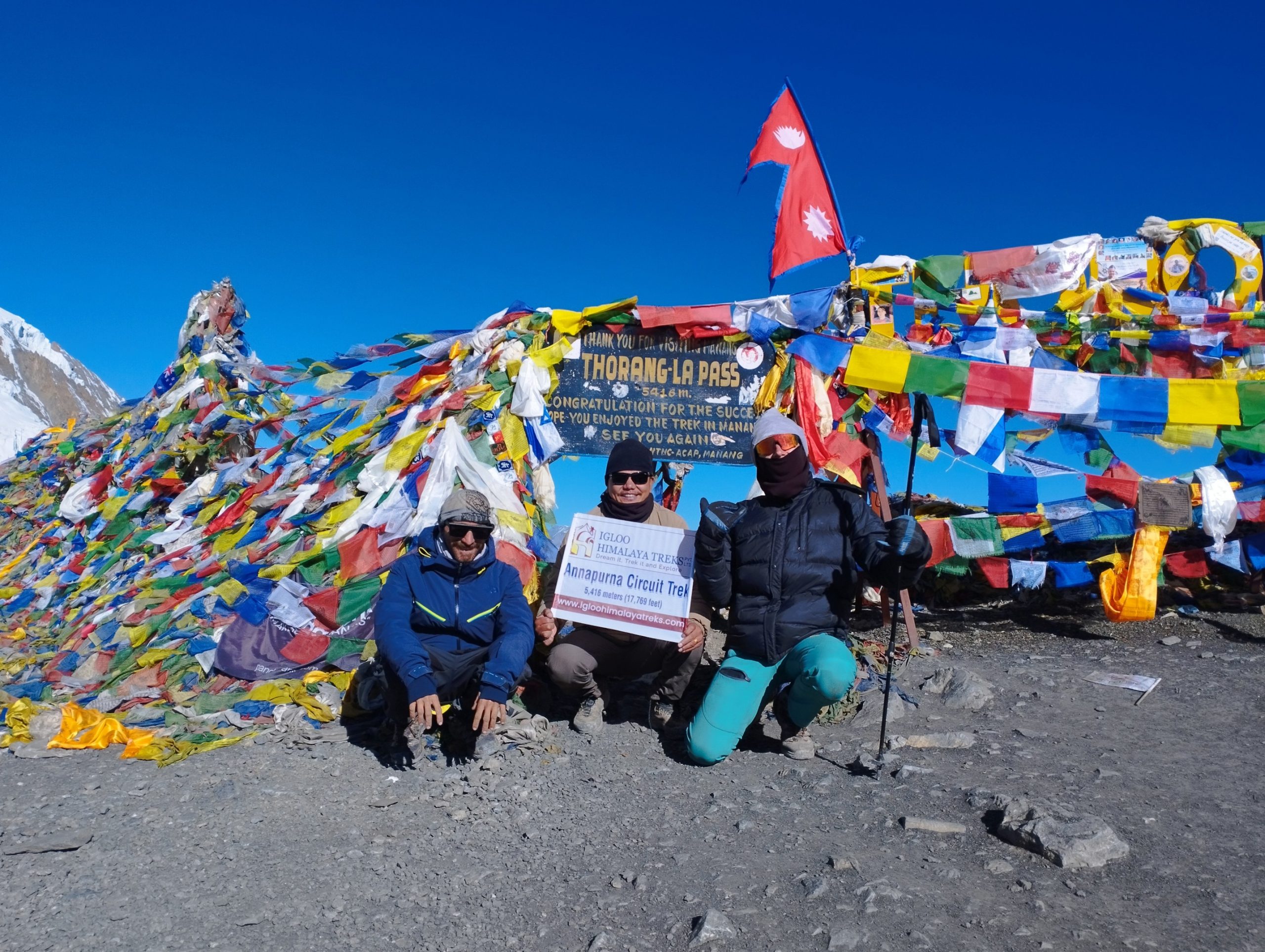
Quick Facts About Thorong La Pass
| Information | Details |
| Elevation | 5,416m (17,769 ft) |
| Trek | Annapurna Circuit Trek |
| Difficulty | Challenging |
| Trekking Time | 7-10 hours |
| Starting Point | Thorong Phedi (4,540m) or High Camp (4,880m) |
| Ending Point | Muktinath (3,800m) |
| Best Seasons | Spring and Autumn |
| Main Challenges | Altitude, cold temperatures, wind, and long descent |
The pass is widely recognized as the highest point of the Annapurna Circuit and requires a very early morning start, usually between 4:00 AM and 5:00 AM. Trekkers typically spend 7-10 hours completing the crossing. These characteristics are consistently highlighted in recent trekking guides.
Why Is Thorong La Pass So Famous?
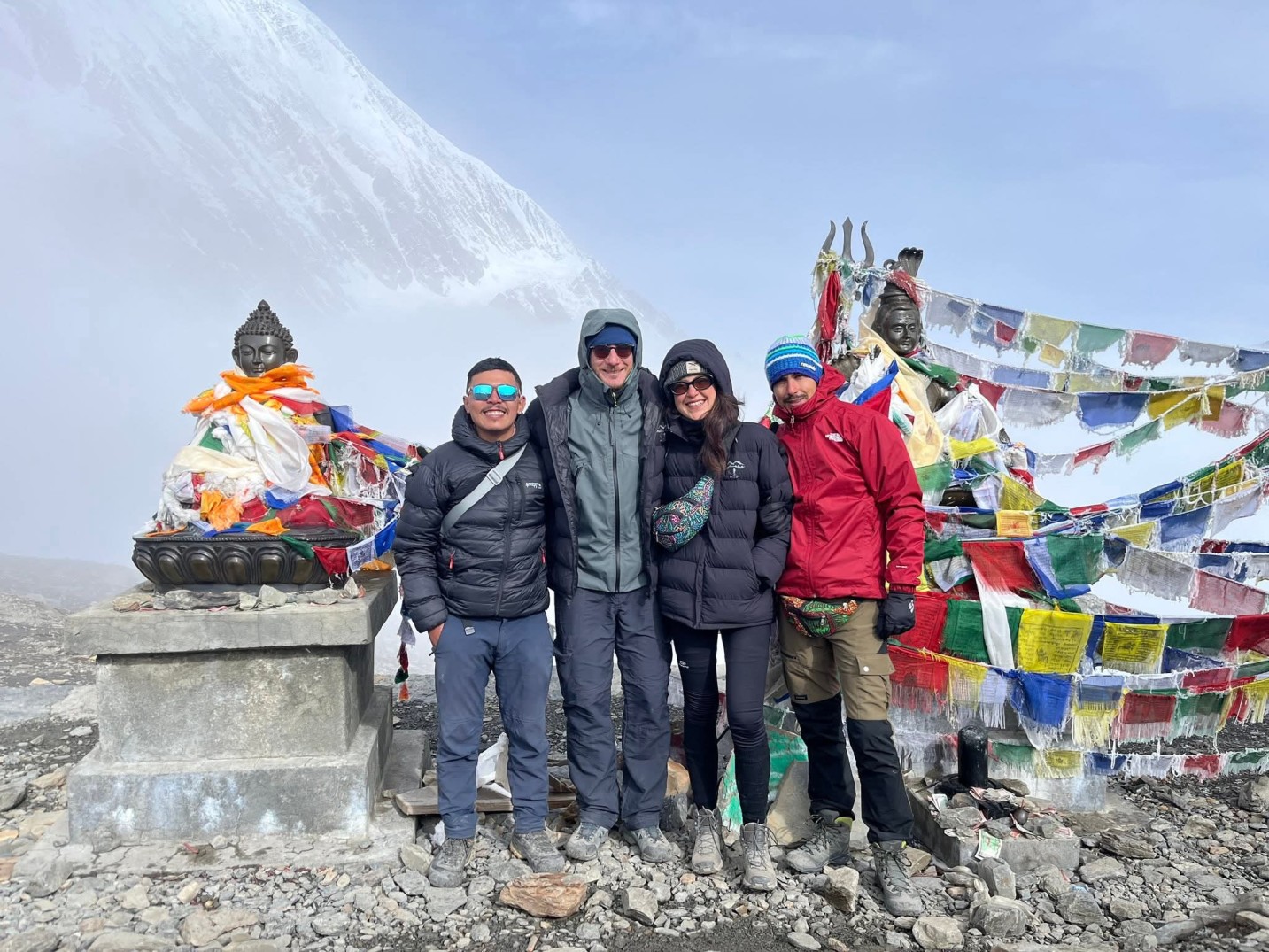
There are many beautiful trekking routes in Nepal, but few offer the same combination of:
- Extreme altitude
- Stunning mountain panoramas
- Diverse landscapes
- Ancient Buddhist culture
- A challenging mountain crossing
Thorong La Pass is famous because it combines all of these experiences into one incredible day.
Unlike technical mountain climbs, you don’t need ropes or climbing equipment. However, don’t underestimate the challenge. The pass demands respect because of its altitude and unpredictable weather.
What Does Crossing Thorong La Pass Actually Feel Like?
3:30 AM – Wake-Up Call
The day usually begins in complete darkness.
Your guide knocks on your door. Outside, temperatures are often below freezing.
Most trekkers don’t feel hungry because of the altitude, but eating breakfast is essential. Your body needs energy for the long climb ahead.
4:30 AM – Walking Under the Stars
Headlamps light the trail as trekkers slowly leave High Camp.
This is often the quietest and most magical part of the journey.
There are no crowds, no traffic, and no distractions.
Only silence, stars, and the sound of boots moving across the frozen trail.
5:30 AM – Reality Begins
The first hour feels manageable.
The second hour feels completely different.
Above 5,000 meters, every step becomes more difficult.
Your breathing becomes heavier.
Your pace slows down.
Conversations become shorter.
Instead of walking continuously, many trekkers follow a simple rhythm:
- Walk 20 steps.
- Stop.
- Take a deep breath.
- Continue.
7:00 AM – The Final Push
The final section before reaching Thorong La Pass feels much longer than it actually is.
The pass appears close, but it often takes another 30 to 45 minutes to reach it.
This is where mental strength becomes just as important as physical fitness.
Reaching the Summit
And then suddenly, you arrive.
Thousands of prayer flags welcome you.
The famous Thorong La Pass sign stands before you.
The mountains stretch in every direction.
At that moment, all the fatigue disappears.
For many trekkers, it becomes the most emotional moment of the entire Annapurna Circuit Trek.
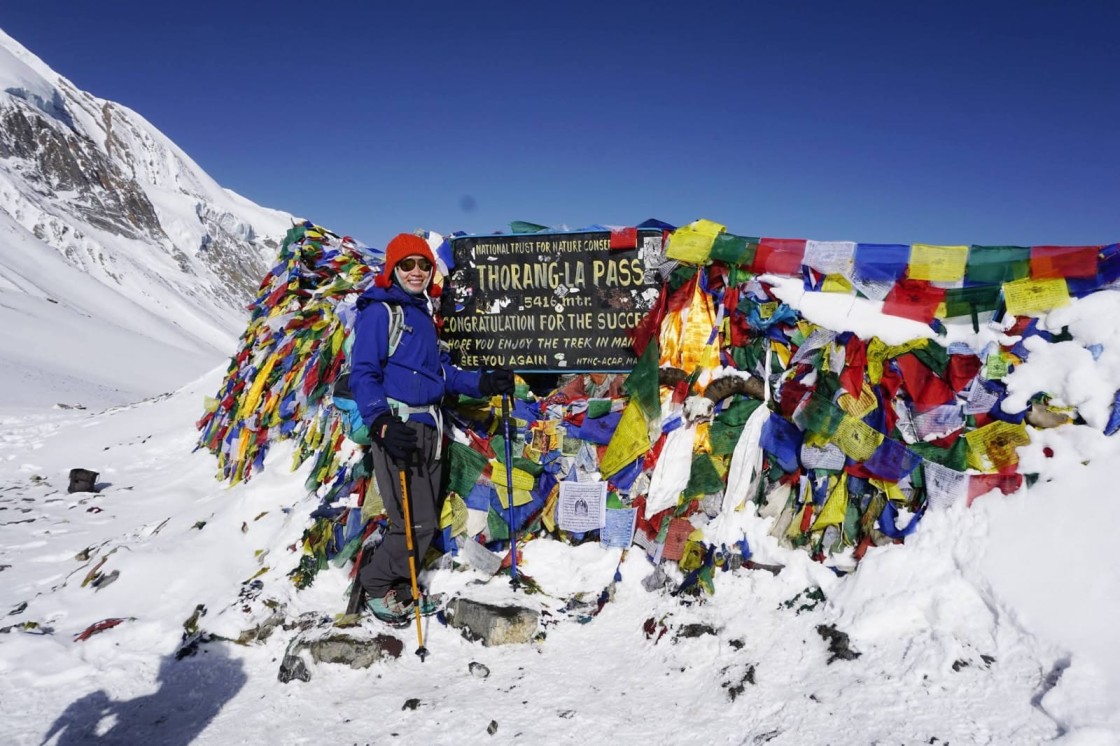
What to Expect When Crossing Thorong La Pass
Crossing Thorong La Pass is often described as the most challenging and rewarding day of the entire Annapurna Circuit Trek.
The day usually begins before sunrise. Most trekkers wake up between 3:30 AM and 4:00 AM and leave their lodge by 4:30 AM or 5:00 AM. Starting early is important because weather conditions are usually more stable during the morning.
The first part of the trail is cold and dark. Trekkers walk under a sky filled with stars while following the light from their headlamps. As the sun begins to rise, the surrounding mountains slowly appear, creating one of the most unforgettable moments of the trek.
The climb is steep and physically demanding. Every step feels slower as you gain elevation. Frequent breaks become necessary because of the thin air.
When you finally reach the summit, colorful prayer flags, breathtaking mountain views, and the famous Thorong La Pass sign welcome you. Many trekkers describe this moment as emotional because it represents days of hard work and determination.
However, the journey isn’t over after reaching the pass. The descent to Muktinath is long and often more tiring than the climb itself. The entire day usually requires between 7 and 10 hours of trekking.
Is Thorong La Pass Difficult?
Yes, Thorong La Pass is considered one of the most challenging sections of the Annapurna Circuit Trek.
The difficulty doesn’t come from technical climbing. There are no ropes, ice axes, or mountaineering skills required. Instead, the biggest challenges are altitude, weather, steep terrain, and physical exhaustion.
Several factors make Thorong La Pass difficult:
High altitude: Oxygen levels decrease significantly above 5,000 meters.
Steep ascent: The climb from Thorong Phedi or High Camp requires continuous uphill walking.
Long trekking day: Trekkers often spend 7 to 10 hours on the trail.
Cold temperatures: Morning temperatures frequently fall below freezing.
Strong winds: Afternoon winds can create difficult trekking conditions.
Fortunately, the pass is achievable for most people with reasonable fitness and proper acclimatization. You don’t need to be an athlete, but you should prepare for several days of walking at high altitude.
The key to success is maintaining a slow pace, staying hydrated, eating well, and following the guidance of an experienced local guide.
Understanding the Altitude: Why Thorong La Is So Challenging
The biggest obstacle isn’t the trail.
It’s the altitude.
At 5,416 meters, oxygen levels are approximately half of what they are at sea level, which is why even simple activities become physically demanding.
Common symptoms of altitude sickness include:
- Headache
- Loss of appetite
- Nausea
- Fatigue
- Dizziness
- Difficulty sleeping
Warning Signs That Should Never Be Ignored
- Severe headache
- Persistent vomiting
- Confusion
- Loss of coordination
- Shortness of breath while resting
If these symptoms appear, descending immediately is the safest option.
Why the Manang Acclimatization Day Is Non-Negotiable
Many trekkers try to shorten their itinerary.
This is one of the biggest mistakes you can make.
A proper acclimatization day in Manang significantly improves your chances of crossing the pass safely. Recent Annapurna Circuit guides consistently emphasize that skipping the Manang rest day is one of the most common causes of failed crossings.
Recommended Acclimatization Hikes
- Ice Lake
- Gangapurna Lake
- Ghyaru Village
- Ngawal Village
The principle is simple:
Climb high and sleep low.
This allows your body to adapt gradually before moving above 5,000 meters.
Weather at Thorong La Pass: Expect the Unexpected
Mountain weather changes quickly.
A beautiful morning can become dangerous within a few hours.
Spring (March-May)
Advantages:
- Rhododendron forests in bloom
- Warmer temperatures
- Excellent mountain views
Disadvantages:
- More trekkers on the trail
Weather at Thorong La Pass: Expect the Unexpected
Mountain weather changes quickly.
A beautiful morning can become dangerous within a few hours.
Spring (March-May)
Advantages:
- Rhododendron forests in bloom
- Warmer temperatures
- Excellent mountain views
Disadvantages:
- More trekkers on the trail
Winter (December-February)
Advantages:
- Fewer trekkers
- Beautiful snow-covered landscapes
Disadvantages:
- Heavy snowfall
- Extremely cold temperatures
- Possible trail closures
Monsoon (June-August)
Advantages:
- Green landscapes
Disadvantages:
- Rain
- Poor visibility
- Unstable trail conditions
Snow and strong winds can temporarily close the pass, making flexibility in your itinerary extremely important.
Why Do Trekkers Start Before Sunrise?
Wind.
Strong afternoon winds frequently develop around Thorong La Pass.
An early departure allows trekkers to:
- Reach the summit before the strongest winds
- Avoid unstable afternoon weather
- Complete the long descent to Muktinath safely
Most experienced guides recommend leaving High Camp between 4:00 AM and 5:00 AM.
Essential Gear for Crossing Thorong La Pass
Clothing
- Thermal base layers
- Down jacket
- Waterproof jacket
- Fleece jacket
- Warm trekking pants
- Insulated gloves
- Warm hat
Equipment
- Trekking poles
- Headlamp
- Water bottles
- Sunglasses
- Sunscreen
- Power bank
Snacks
- Chocolate
- Energy bars
- Nuts
- Electrolyte tablets
Common Mistakes Trekkers Make
Walking Too Fast
Slow and steady always wins at high altitude.
Skipping Meals
Your body burns more energy at high elevations.
Eat even when you don’t feel hungry.
Ignoring Symptoms
Altitude sickness doesn’t improve by pushing harder.
Listen to your body.
Choosing an Itinerary That’s Too Short
A rushed itinerary increases the risk of altitude-related problems.
Why Cross Thorong La Pass With Igloo Himalaya Treks?
At Igloo Himalaya Treks, we believe that reaching Thorong La Pass isn’t simply about arriving at the summit.
It’s about crossing safely while fully enjoying the journey.
When you trek with us, you benefit from:
- Experienced local guides
- Carefully designed itineraries
- Proper acclimatization schedules
- Flexible planning based on weather conditions
- Personalized support throughout the trek
- Authentic cultural experiences in the Annapurna region
We don’t rush our trekkers.
We focus on safety, comfort, and creating unforgettable Himalayan memories.
Final Thoughts: Is Thorong La Pass Worth It?
Absolutely.
The early morning wake-up call.
The freezing temperatures.
The thin air.
The challenging climb.
Every difficult step becomes worthwhile when you finally stand at the highest point of the Annapurna Circuit.
Thorong La Pass isn’t just a mountain crossing.
It’s a life-changing experience.
If you’re planning your Annapurna Circuit adventure, Igloo Himalaya Treks is ready to guide you across one of Nepal’s most legendary high-altitude passes.


