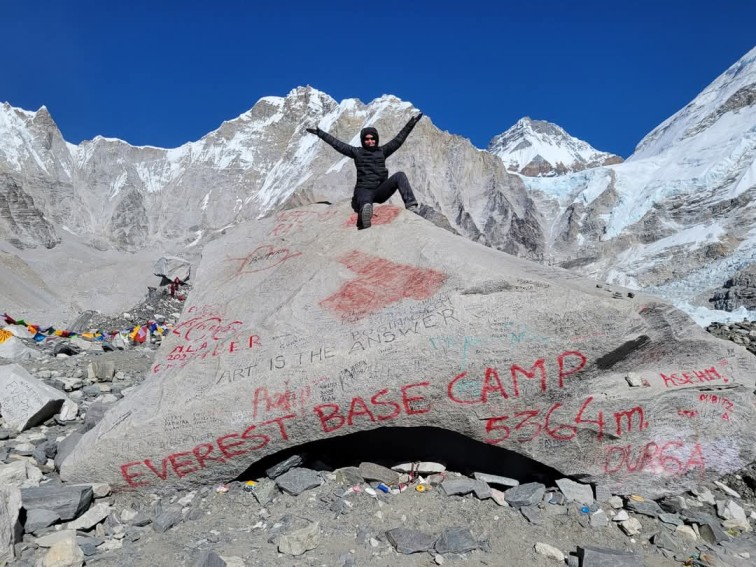
The Everest Base Camp Trek is often described with numbers: 5,364 meters, several days of walking, long uphill climbs, cold mornings, and a flight to Lukla. All of that is true, but numbers cannot explain what this journey actually feels like. The first morning you leave Lukla, you may be excited, nervous, or wondering whether you are really ready for the mountains ahead. Then the trail begins to unfold through small Sherpa villages, suspension bridges, pine forests, rivers, prayer wheels, and mountain paths that seem to disappear around every corner. You slowly leave the busy world behind. Your phone becomes less important, the sound of your footsteps becomes familiar, and the mountains become part of your everyday life. That is one of the reasons we believe the Everest Base Camp Trek should never be treated simply as a trip to a famous destination. Base Camp is the goal, but the journey is where the story is made.
One thing many people do not understand before coming to Nepal is how much the trek changes you physically and mentally. At lower elevations, you may feel strong and walk comfortably, but as you climb higher, the same trail can feel completely different. A short uphill section can suddenly require patience. You learn to walk slowly, drink enough water, rest when necessary, and listen to your body. The purpose of acclimatization is not to make the trek longer for no reason; it gives your body time to adjust to the increasing altitude. Your guide becomes an important part of this process, not simply someone who walks in front of you. A good local guide notices when you are tired, understands the conditions of the trail, helps you maintain a sensible pace, and knows when you need to stop and rest. At Igloo Himalaya Treks, we believe this personal connection matters because people do not remember only the mountain views they remember how they were treated when the journey became difficult.
The most memorable moments may also happen far away from the famous Base Camp sign. You might wake before sunrise in the mountains and step outside into freezing air to see the first light touch the peaks. You might sit inside a simple teahouse with your guide after a long day, drinking tea while snow falls outside. You might meet another trekker from a completely different country and somehow become friends within a few days. You might walk through Namche Bazaar and realize that the Himalayas are not empty wilderness but a living home filled with Sherpa families, Buddhist traditions, ancient trails, and generations of mountain life. Then, eventually, you reach Everest Base Camp. You take photographs, look around, and perhaps feel a strange mixture of happiness and disbelief. But when you begin walking back toward lower elevations, you may realize something unexpected. you were already collecting your best memories long before you reached Base Camp.
This is why Igloo Himalaya Treks wants to offer more than a standard Everest Base Camp package. We are a small local trekking company based in Nepal, and that allows us to keep our relationship with trekkers personal. Before your journey, you can ask us about the itinerary, altitude, preparation, equipment, accommodation, food, weather, or anything else that is on your mind. During the trek, our local team is there to support you through the good days and the difficult ones. We cannot promise that every day will be easy, because the Himalayas do not work that way. What we can promise is honest information, local knowledge, and a team that cares about your experience. You may come to Nepal because you want to see Everest, but our hope is that you return home with a story that is much bigger than a photograph at Base Camp.


