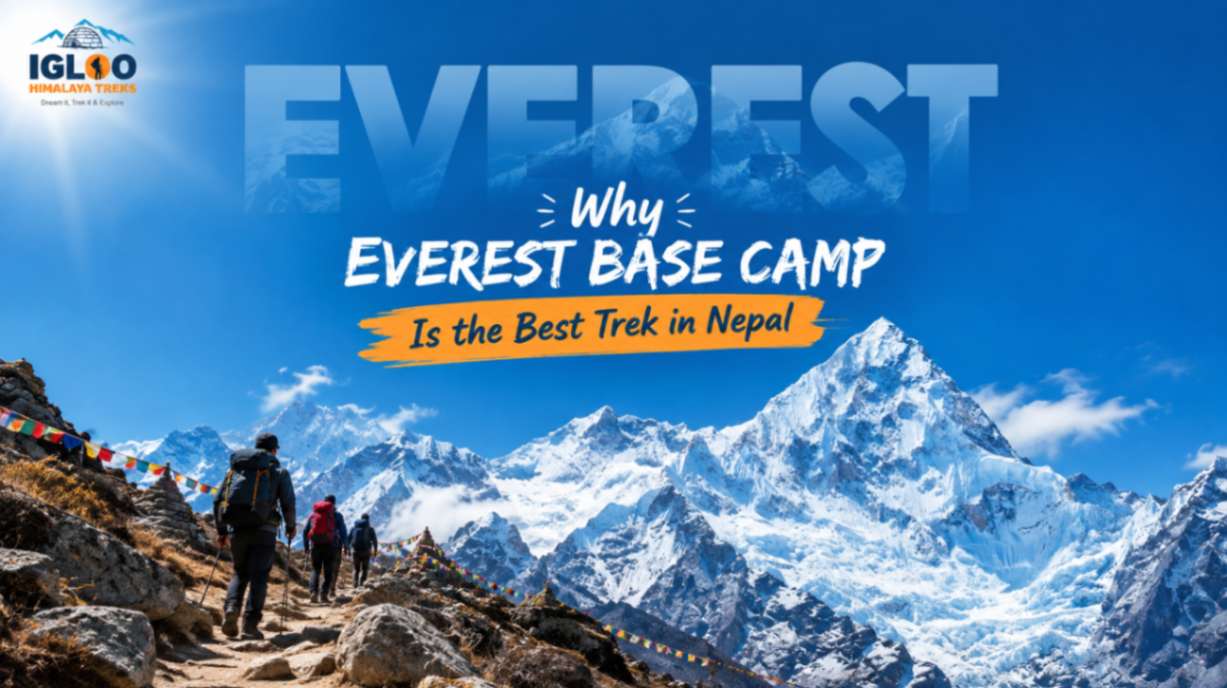
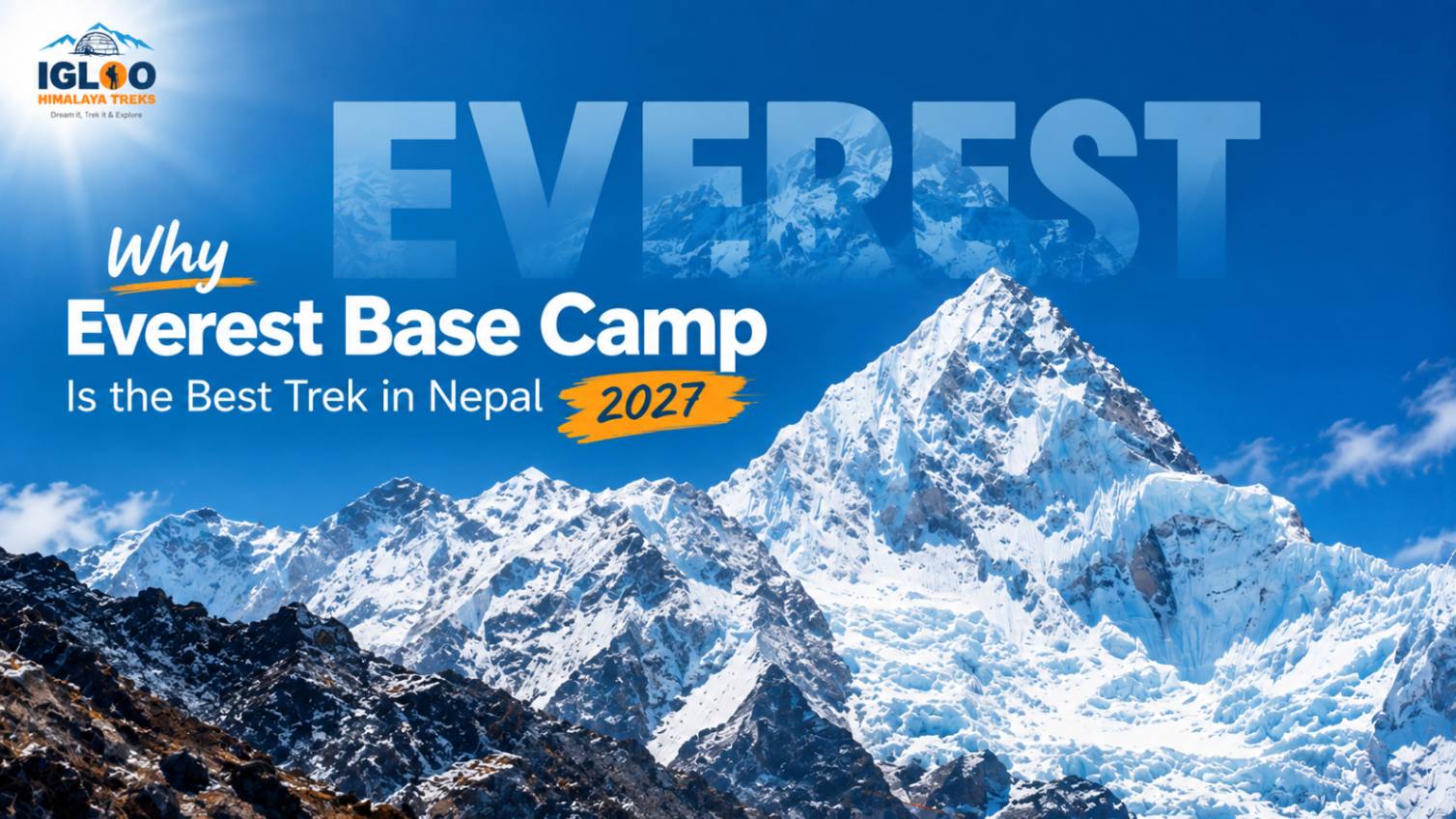
Why Everest Base Camp Is the Best Trek in Nepal for 2027
Overview
Everest Base Camp is more than a trek to a famous destination. It is a journey through the Khumbu Valley, the homeland of the Sherpa people, where mountain trails connect traditional villages, Buddhist monasteries, suspension bridges, forests, glaciers and some of the world’s most recognizable peaks.
The classic Everest Base Camp Trek reaches 5,364 meters at Everest Base Camp, with Kala Patthar providing one of the most celebrated viewpoints in the region.
The route combines high-altitude trekking with Sherpa culture, Himalayan scenery and the gradual experience of moving deeper into the Everest region.
For trekkers planning Nepal in 2027, EBC remains one of the strongest choices for a first Himalayan adventure because it offers a demanding but non-technical trekking experience, a well-established trail, memorable mountain views, and several ways to tailor the journey to different preferences.
Why Everest Base Camp Is the Best Trek in Nepal
The following are the reasons why Everest Base Camp is considered one of the best treks in Nepal.
-
A Journey to the Foot of Mount Everest
Few trekking routes have a destination as recognizable as Everest Base Camp. Reaching 5,364 meters means following the same Khumbu landscape used by mountaineering expeditions heading toward Mount Everest.
The trail becomes increasingly rugged and dramatic as you move from Lukla toward the high Himalayas.
-
A Trek Through the Heart of Sherpa Country
The EBC trail passes through communities such as Namche Bazaar, Tengboche, Dingboche, Lobuche and Gorak Shep, where Sherpa culture and Buddhist traditions are part of everyday mountain life.
Monasteries, prayer flags, mani walls and mountain lodges make the trek as culturally interesting as it is scenic.
-
Unforgettable Himalayan Mountain Views
The Everest region brings some of Nepal’s most impressive mountain scenery into a single trek.
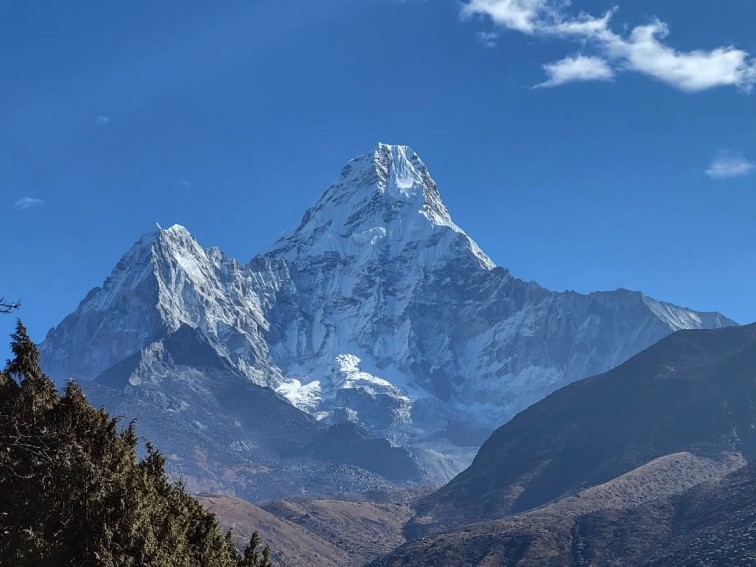
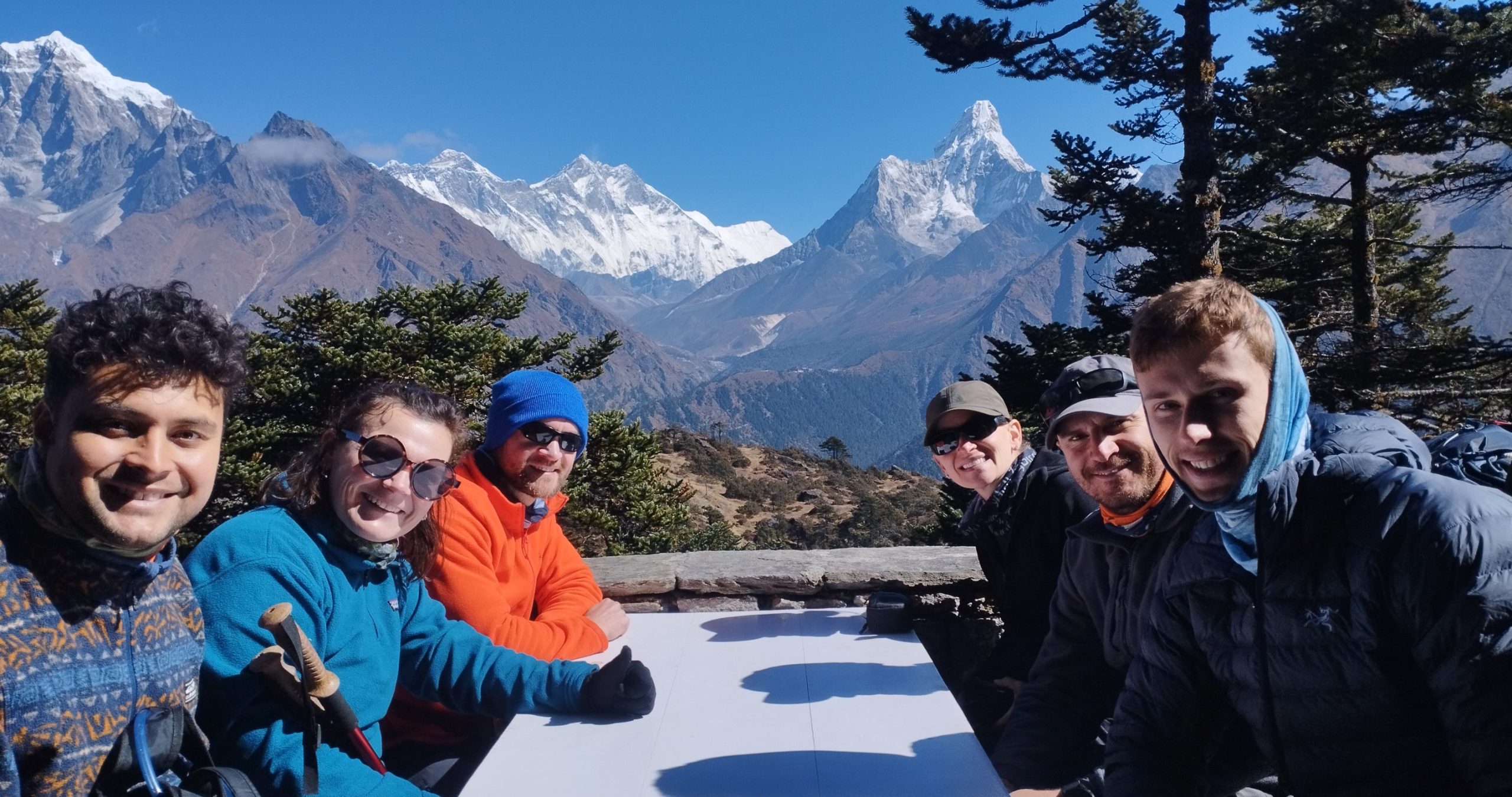
Depending on the section of the trail, you can see Mount Everest, Ama Dablam, Lhotse, Nuptse, Thamserku and other Himalayan peaks rising above the valleys.
-
Everest Base Camp and the Kala Patthar Experience
Everest Base Camp is the destination, but Kala Patthar is where many trekkers get their most memorable Everest panorama, and it is also higher than Everest Base Camp.
At around 5,550 meters, the early-morning climb to the viewpoint is rewarded with sweeping views of Mount Everest, Nuptse, Lhotse, Pumori, Ama Dablam and the surrounding Himalayan peaks, with the Khumbu Glacier and rugged valleys adding to the dramatic landscape.
Watching the sun rise over the mountains from Kala Patthar is one of the most memorable moments of the Everest Base Camp trek.
-
A High-Altitude Adventure Without Technical Climbing
The standard EBC trek does not require mountaineering or technical climbing skills.
It is still a serious high-altitude trek, however, and altitude, cold, long walking days, and changing mountain weather make preparation bit more important.
-
A Trek Where the Journey Matters as Much as the Destination
The best part of EBC is not one photograph at the base camp. It is the gradual change along the trail—from green valleys and forests near Lukla to the exposed, rocky landscapes around Gorak Shep.
By the time you reach Base Camp, you have experienced the Khumbu rather than simply visited it.
What Makes the Everest Base Camp Trek Different From Other Treks in Nepal?
Everest Base Camp stands out because the trek combines several experiences that are usually spread across different Himalayan journeys.
You get high mountain scenery, Sherpa culture, Buddhist heritage, famous viewpoints, and a genuine high-altitude trekking challenge within one route.
The trail also has a strong sense of progression. It begins as soon as you arrive in Lukla, the gateway to the Everest region. From here, the trail leads through the Dudh Koshi Valley, green forests, suspension bridges and traditional Sherpa villages.
As you walk higher, you pass through Namche Bazaar, Tengboche and Dingboche, with Buddhist monasteries and changing mountain landscapes along the way, each with its own specialty. Gradually, the forests give way to rocky trails, glaciers and towering peaks, leading you to Everest Base Camp.
Another major difference is the variety of ways to complete the journey. Trekkers can choose the classic 14-day route, allow more time with a 16-day itinerary, travel overland instead of flying to Lukla, return by helicopter, or choose a more comfortable luxury version.
That combination of scenery, culture, altitude and flexibility is also a major reason EBC remains one of Nepal’s most sought-after trekking experiences.
What Is the Everest Base Camp Trek Like?
- Typical duration: Around 12–17 days depending on the itinerary and transportation option.
- Classic route: Kathmandu → Lukla → Phakding → Namche → Tengboche → Dingboche → Lobuche → Gorak Shep → Everest Base Camp.
- Everest Base Camp altitude: 5,364 m / 17,598 ft.
- Highest trek point, Kala Patthar: Around 5,545–5,555 m.
- Daily walking: Generally several hours a day, with longer and more demanding days as you approach Base Camp.
- Accommodation: Hotels in Kathmandu and teahouses/lodges in the mountains.
- Difficulty: Challenging because of altitude and sustained walking rather than technical climbing.
- Acclimatization: Proper acclimatization days are built into standard itineraries, particularly around Namche Bazaar and Dingboche.
- Return: Usually by retracing the trail to Lukla and flying back to Kathmandu, although road and helicopter alternatives are available.
Highlights of the Everest Base Camp Trek
-
Lukla: The Gateway to the Everest Region
For the classic EBC route, the adventure begins with a flight to Lukla, home to one of the world’s highest-altitude airports at around 2,860 meters.
From here, the trail immediately feels different from city life: mountain villages, stone paths, prayer flags, and the Dudh Koshi Valley become part of the journey.
-
Phakding and the Dudh Koshi Valley
Phakding is a major overnight stop on the Everest Base Camp route and usually the first place trekkers stay after Lukla. During the first days of the trek, it offers a peaceful mountain setting with teahouses, small villages, suspension bridges and views along the Dudh Koshi Valley.
The Dudh Koshi River, known for its milky-white appearance, flows alongside the trail as you continue deeper into the Khumbu toward Namche Bazaar.
-
Namche Bazaar: The Heart of the Khumbu
Namche Bazaar is one of the most important stops on the Everest Base Camp route and a lively mountain town in the Khumbu. Built around a natural mountain amphitheater, it offers teahouses, lodges, cafés, bakeries, shops and trekking services. It is also a key acclimatization stop where trekkers spend time adjusting to the increasing altitude before heading higher.
-
Everest View Hotel and the First Everest Panorama
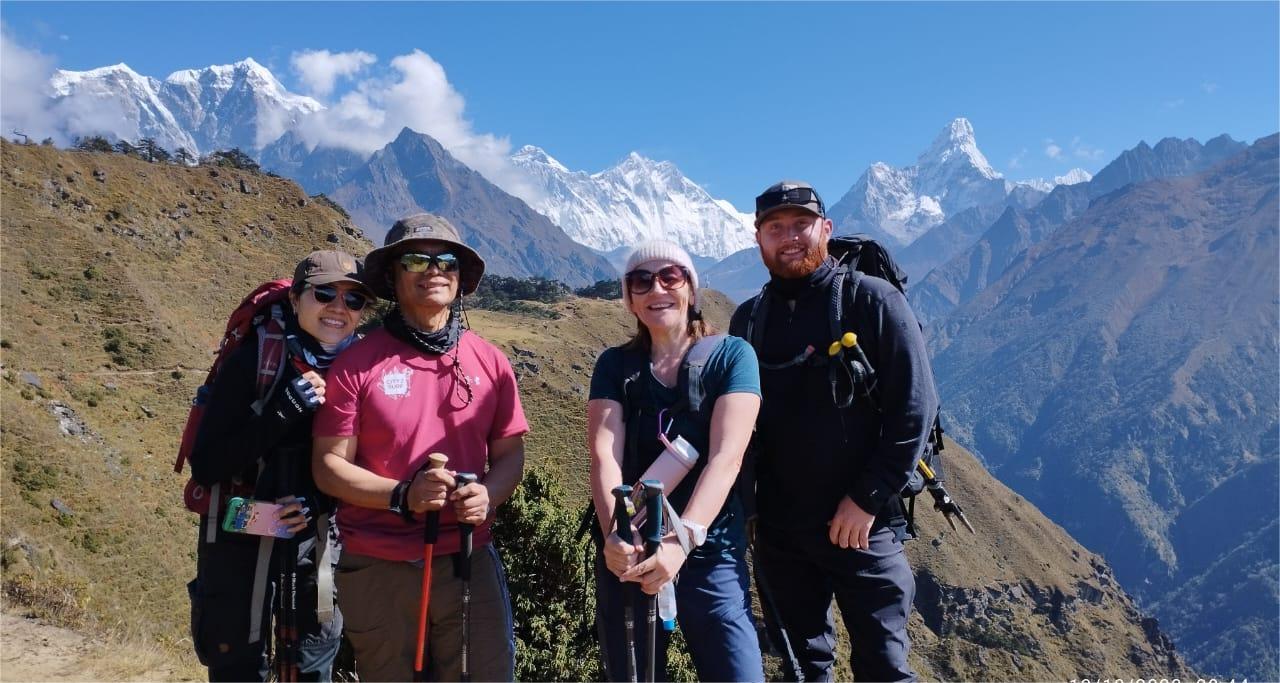
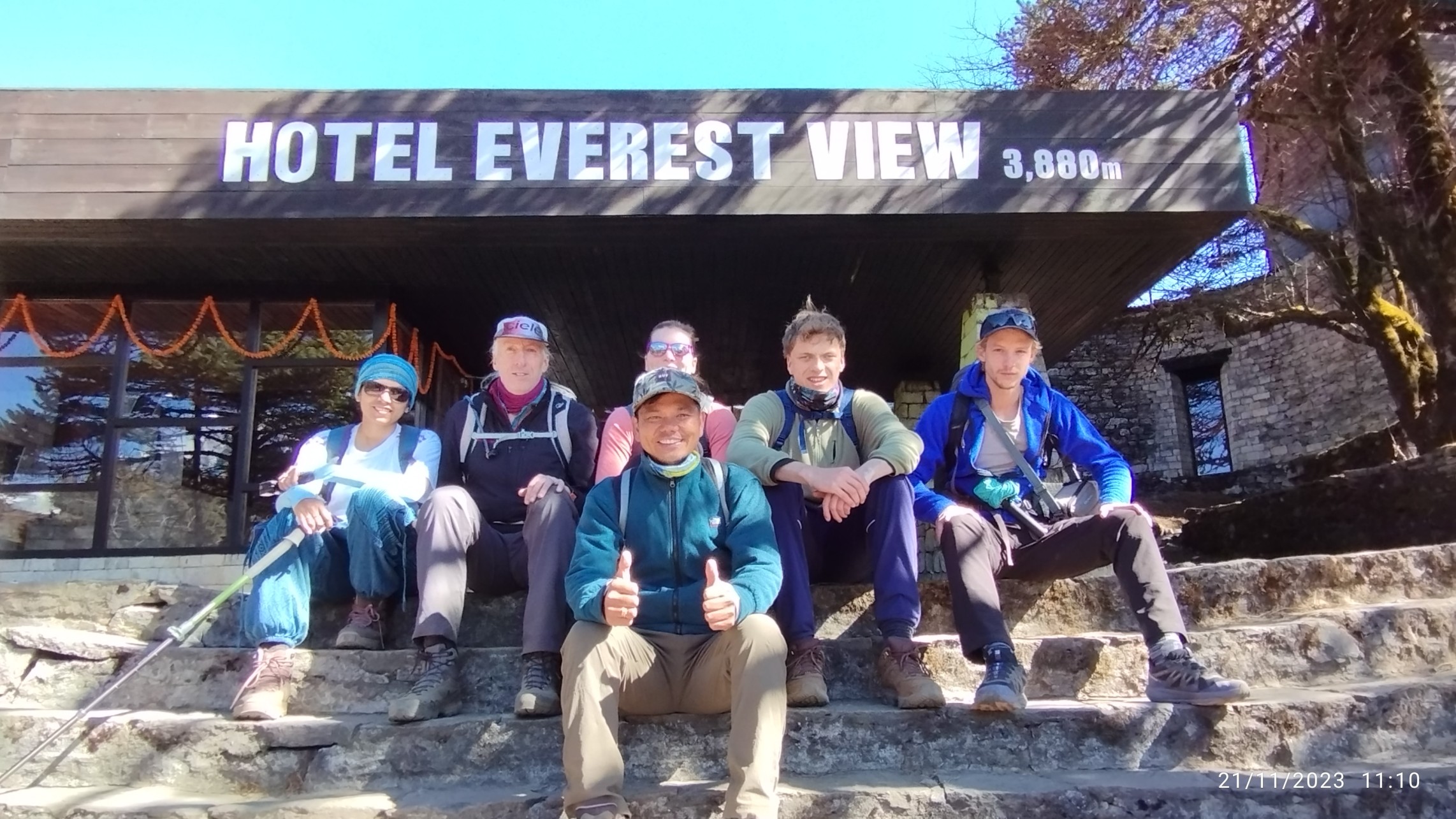
The acclimatization hike from Namche offers one of the first clear views of Mount Everest and the surrounding Himalayan peaks.
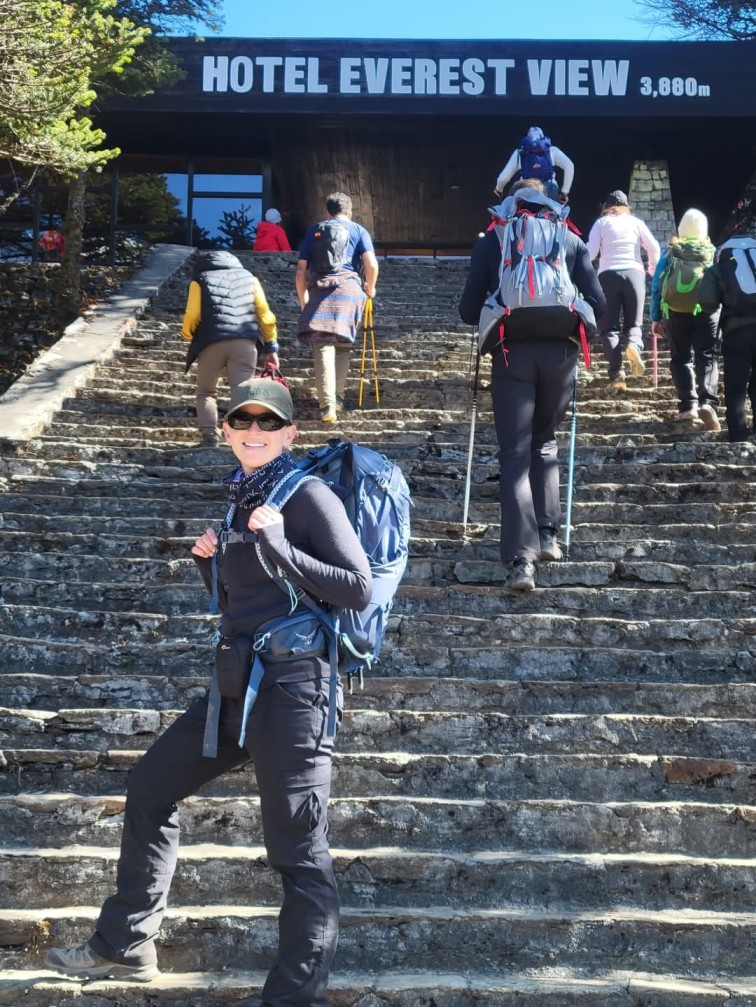
The trail also takes you toward the famous Everest View Hotel, where trekkers can enjoy a wide mountain panorama while gradually getting used to the altitude. It is a short hike but an important first glimpse of the mountains ahead.
-
Tengboche Monastery and Ama Dablam
Tengboche is known for its historic Buddhist monastery and spectacular mountain surroundings. The monastery sits on a ridge overlooking the valleys, with Ama Dablam standing prominently among the Himalayan peaks.
The stop also gives trekkers a chance to experience the Buddhist culture and peaceful atmosphere of the Khumbu.
-
Dingboche: Acclimatizing Above 4,000 Meters
Dingboche is another important acclimatization stop, located at around 4,400 meters. By this point, the landscape becomes drier and more open, with fewer trees and wider views of the surrounding mountains.
Trekkers usually spend an extra day here to rest and adapt to the higher altitude before continuing toward Lobuche.
-
Lobuche and the Approach to Everest Base Camp
Lobuche is one of the final major stops before Everest Base Camp. From here, the trail becomes more rugged and the landscape increasingly dominated by rocky mountains, glaciers and high-altitude terrain.
With Everest Base Camp getting closer, the sense of reaching the destination becomes stronger with every step.
-
Gorak Shep: The Last Settlement Before Base Camp
Gorak Shep, at around 5,164 meters, is the last settlement on the classic Everest Base Camp route.
It is the main stopping point before the final walk to Base Camp and usually where trekkers stay overnight. From here, the trail continues across the rugged landscape toward the Khumbu Glacier and Everest Base Camp.
-
Everest Base Camp: Reaching 5,364 Meters
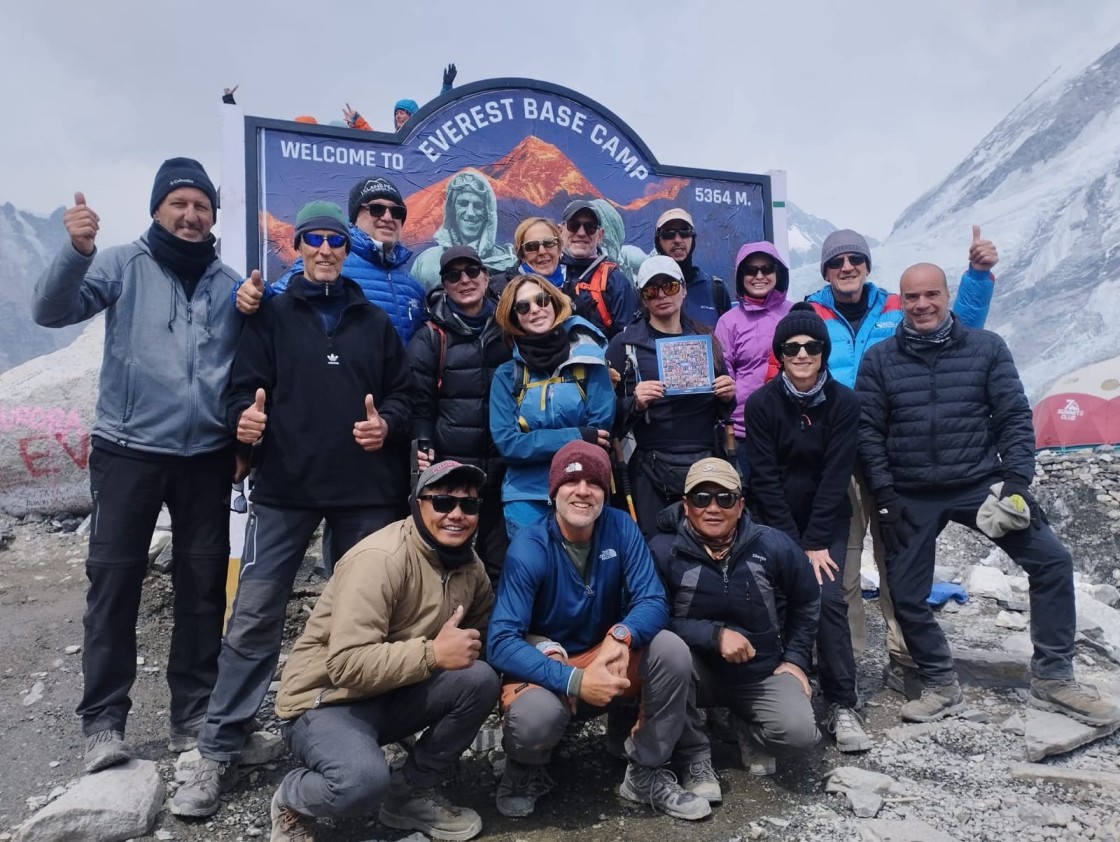
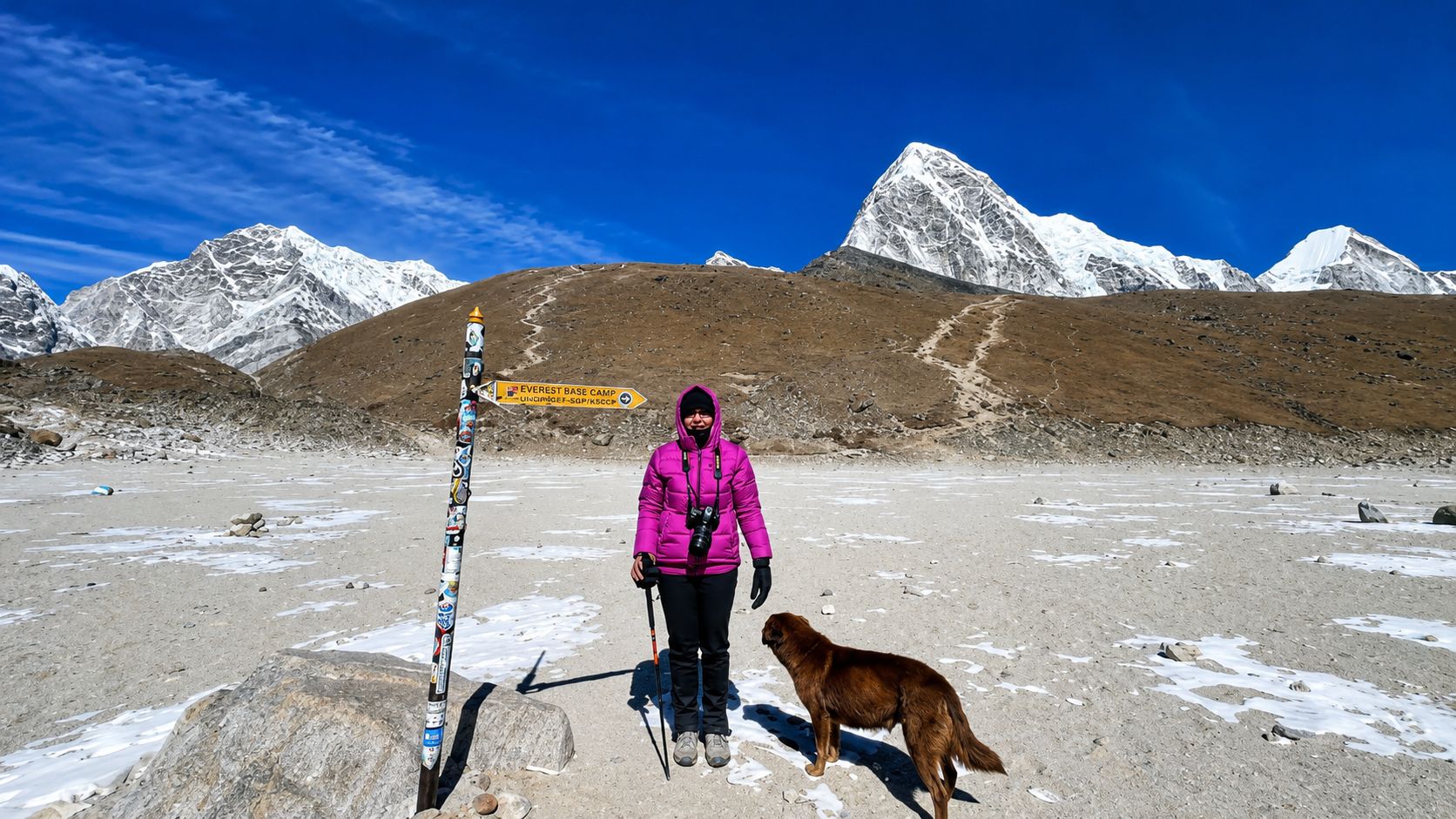
At 5,364 meters, Everest Base Camp is the main destination of the trek. Reaching the camp means standing beside the famous Khumbu Glacier, surrounded by some of the highest mountains in the world.
After days of walking through villages, valleys and rugged mountain trails, arriving at Base Camp brings a real sense of achievement and pride a moment when you can look back and realize how far you have come.
The atmosphere feels completely different from the green valleys where the journey began, making it a moment many trekkers remember for years.
-
Kala Patthar: The Classic Everest Viewpoint
For many trekkers, Kala Patthar is one of the visual highlights of the Everest Base Camp trek.
At around 5,545 meters, the viewpoint offers sweeping views of Mount Everest, Nuptse, Lhotse, Pumori, Ama Dablam, and other Himalayan peaks, along with the Khumbu Glacier and surrounding valleys.
The early-morning climb is especially rewarding as the first light reaches the mountains.
Best Time to Trek to Everest Base Camp in 2027
For the best time for Everest Base Camp Trek 2027, the two strongest trekking seasons are generally spring (March–May) and autumn (September–November). Autumn is particularly popular because the monsoon has cleared much of the atmosphere, bringing clearer mountain views and generally stable trekking conditions.
Autumn: The Best Season for Everest Base Camp Trekking
If someone asks, “What is the best month for Everest Base Camp?”, October is one of the strongest answers.
September, October and November make up Nepal’s autumn trekking season. For an Everest Base Camp trek in October, trekkers can generally expect clear post-monsoon skies, excellent mountain visibility, and comfortable daytime trekking conditions.
November continues to offer excellent visibility, although temperatures become noticeably colder, particularly at night and at higher elevations.
Autumn also brings a special atmosphere to Nepal. The monsoon has refreshed the lower landscapes, the air becomes clearer, and major Nepali festivals such as Dashain and Tihar fall during this period.
Domestic flight conditions are also generally more favorable than during the monsoon season, which matters for itineraries involving Lukla flights.
For trekkers who want the classic combination of clear Everest views, good trail conditions, established teahouse services and comfortable trekking weather, autumn is one of the best choices for EBC in 2027.
Spring: A Strong Alternative for EBC Trekking
Spring, particularly March to May, is another excellent period for the Everest Base Camp trek. Days gradually become warmer, visibility can be very good, and the lower parts of the trail begin to show spring vegetation and rhododendron blooms.
Spring is also a popular season, so trekkers should expect a lively trail and busy teahouses during the strongest weeks.
Winter and Monsoon: What Trekkers Should Know
Winter (December–February) brings colder temperatures and greater chances of snow at higher elevations. The trails can be quieter, but the cold makes high-altitude trekking more demanding.
Monsoon (June–August) is less suitable for the classic EBC route because rain, clouds and changing trail conditions can affect visibility and transportation.
| Season | Months | Main Advantage | Main Challenge |
| Spring | March–May | Rhododendrons, warming weather, good mountain views | Popular and increasingly busy |
| Autumn | September–November | Clear skies, excellent visibility, stable trekking conditions | Busy trails and colder late-season nights |
| Winter | December–February | Quiet trails and crisp mountain scenery | Very cold, possible snow at high elevations |
| Monsoon | June–August | Green lower landscapes and fewer trekkers | Rain, cloud cover and less reliable travel conditions |
How Difficult Is the Everest Base Camp Trek?
The Everest Base Camp Trek is challenging rather than technical. You do not need mountaineering experience for the standard route, but you do need to be prepared for long walking days, steep sections and the effects of altitude.
The biggest challenge is usually not one particular climb. It is the combination of altitude, repeated walking days, cold weather and limited recovery at high elevations.
- Altitude: Everest Base Camp sits at 5,364 m, while Kala Patthar rises above 5,500 m. The higher you go, the thinner the air becomes.
- Long walking days: Several days involve hours of continuous walking, particularly during the approach to Lobuche, Gorak Shep and Base Camp.
- Uneven terrain: Expect stone steps, rocky paths, suspension bridges, steep climbs and glacier-side terrain.
- Cold and changing weather: Conditions can change quickly in the high Himalayas, particularly in the morning and evening.
- Acclimatization: Gradual altitude gain and planned acclimatization days are essential parts of a responsible itinerary.
- Fitness: Regular walking, hiking and cardiovascular exercise before the trek can make the experience considerably easier.
- Mental endurance: The final approach can be physically and mentally demanding because the altitude is high even when the distance looks manageable.
Why Is Acclimatization Important on the EBC Trek?
Acclimatization gives your body time to adjust to lower oxygen availability as you climb higher.
This is why a good Everest Base Camp itinerary does not simply move upward every day without rest.
The classic EBC itinerary includes acclimatization around Namche Bazaar and Dingboche, allowing trekkers to spend additional time at altitude and make shorter acclimatization hikes before continuing higher. Igloo’s 14-day itinerary follows this gradual approach.
A slower itinerary, such as a 16-day EBC trek, can be attractive to trekkers who prefer more time in the mountains rather than rushing through the route.
Where Do You Stay During the Everest Base Camp Trek?
Accommodation on the standard Everest Base Camp route is primarily based around teahouses and mountain lodges.
Lower settlements such as Lukla and Namche have a wider choice of facilities, while accommodation becomes simpler as you move toward Lobuche and Gorak Shep.
The experience is part of the trek itself: after a long day outside, trekkers gather in a common dining area, eat a hot meal and rest before the next morning’s walk.
Facilities in Everest Base Camp Teahouses
Facilities vary by village and altitude, but you can generally expect:
- Twin-sharing rooms with basic beds.
- Blankets or bedding, although a sleeping bag is strongly recommended.
- Common dining areas, often heated by a central stove.
- Shared bathrooms in many lodges.
- Private bathrooms in some lower or better-equipped lodges.
- Hot showers available at many lower and mid-altitude lodges, usually for an additional charge.
- Electricity for charging, with availability becoming more limited at higher elevations.
- Wi-Fi in many lodges, although connection quality varies considerably.
The higher you go, the more basic the facilities generally become.
Food and Meals During the Everest Base Camp Trek
Food is surprisingly varied on the lower and middle sections of the EBC trail, although choices become simpler as altitude increases.
Lukla and Phakding
You can commonly find:
- Dal bhat
- Momos
- Thukpa
- Chow mein
- Pasta
- Pizza
- Pancakes
- Eggs
- Tibetan bread
- Soups
Namche Bazaar
Namche generally has one of the widest selections on the trail:
- Dal bhat
- Momos
- Thukpa
- Sherpa stew
- Pizza
- Pasta
- Sandwiches
- Burgers
- Pancakes
- Bakery items
- Eggs and other breakfast options
Tengboche and Dingboche
As the altitude increases, meals become more practical and filling:
- Dal bhat
- Sherpa stew
- Thukpa
- Momos
- Potatoes
- Noodles
- Pasta
- Eggs
- Tibetan bread
- Rice dishes
- Soups
Lobuche and Gorak Shep
At these higher settlements, expect a simpler menu:
- Dal bhat
- Noodles
- Pasta
- Potatoes
- Eggs
- Soup
- Tibetan bread
- Simple rice dishes
Unique Foods to Try
If you want to try local Himalayan flavors along the trail, look for:
- Sherpa stew
- Tibetan bread
- Momos
- Thukpa
- Dal bhat
- Yak cheese or yak-based dishes, where available
Drinks on the EBC Trail
Popular drinks include:
- Butter tea
- Masala tea
- Ginger, lemon and honey tea
- Black tea
- Coffee
- Hot chocolate
- Hot soup
Exact menus vary from lodge to lodge and become more limited with altitude.
Wi-Fi, Electricity and Mobile Network on the EBC Trail
Internet and mobile connectivity are available in parts of the Everest region, but they should not be treated as guaranteed throughout the trek. Wi-Fi is available at many lodges, usually for an additional fee, while electricity and charging become more limited and expensive as you move higher.
Everest Wi-Fi note: Do not plan your trek around having continuous internet access. Connectivity becomes less reliable as you move deeper into the high Khumbu.
What Permits Do You Need for Everest Base Camp?
For the standard Everest Base Camp trek, the main permits are:
| Permit | Approx. Current Fee | Purpose |
| Sagarmatha National Park Permit | NPR 3,000 | Entry to Sagarmatha National Park |
| Khumbu Pasang Lhamu Rural Municipality Permit | NPR 3,000 | Local trekking permit for the Khumbu region |
For organized treks, the trekking agency normally arranges and obtains the required permits on behalf of trekkers. You should not have to manage the permit process alone.
Permit fees and regulations can change, so the exact requirements and charges should be reconfirmed before your 2027 Everest Base Camp trek.
What Does the Everest Base Camp Trek Cost in 2027?
The cost of Everest Base Camp depends on the itinerary, group size, transportation, accommodation level, and services included.
Based on our current trekking packages, the cost of an Everest Base Camp trek can vary depending on the itinerary, group size and level of comfort. For example, our 14-day Everest Base Camp Trek currently ranges from $1,235 per person for groups of 10–20 to $1,525 for a solo trekker.
The main cost factors include:
| Cost Factor | What It Covers |
| Permits | Sagarmatha National Park and local Khumbu permit |
| Domestic flights | Kathmandu/Manthali–Lukla–Kathmandu for flight-based itineraries |
| Accommodation | Kathmandu hotel and mountain teahouses/lodges |
| Meals | Breakfast, lunch and dinner according to the package |
| Guide | Licensed trekking guide |
| Porter | Porter support where included |
| Transportation | Airport transfers and road transportation where applicable |
| Equipment | Depending on the package, items such as sleeping bags, duffle bags and down jackets |
| Personal expenses | Drinks, Wi-Fi, charging, snacks, showers, tips and other personal purchases |
Because group size affects the per-person cost most of the time, comparing only one headline price can be misleading.
So always check the price for your actual group size and the services included. It is mainly recommended to travel in group with your friends or family or the people you love , since it cut the cost more than you can imagine; you can even it is possible to get special discount as well for being able to bring people , also you can consult with us if you have any kind of requirements , feel free to consult with us igloo himlaya treks. We make your trekking dream possible.
Different Ways to Experience Everest Base Camp
Not every trekker wants the same Everest experience. As one of the best trekking agencies in Nepal, Igloo Himalaya Treks, we offer several ways to reach and experience Everest Base Camp.
Based on our real trekking experience and the needs of different trekkers, we have designed these options for people with different time, comfort, travel and trekking preferences.
Everest Base Camp Trek – 14 Days
The classic 14-day Everest Base Camp Trek is the standard choice for trekkers who want the established Lukla-to-EBC route with planned acclimatization days.
Current price:
- $1,235/person — 10–20 people
- $1,315/person — 5–9 people
- $1,375/person — 2–4 people
- $1,525/person — solo
The itinerary combines Kathmandu, Lukla, Namche, Tengboche, Dingboche, Lobuche, Gorak Shep, Everest Base Camp and Kala Patthar.
Everest Base Camp Trek – 16 Days
The 16-day EBC Trek gives trekkers more time in the Everest region and is a good option for those who prefer a less rushed schedule.
Current pricing starts at:
- $1,375/person — 5–9 people
- $1,495/person — 2–4 people
- $1,575/person — solo
The extra time can be valuable for trekkers who want a more relaxed Himalayan experience and additional time to adjust to altitude.
Everest Base Camp Trek Without Flight – 17 Days
If you would rather avoid the Lukla flight, Igloo’s 17-day Everest Base Camp Trek Without Flight uses an overland approach from Kathmandu toward the Solukhumbu region before joining the trekking route.
This current itinerary travels by road toward Salleri and continues toward the trekking trail near Paiya, eventually joining the classic EBC route.
Current displayed pricing:
- $1,275/person — 5–9 people
- $1,365/person — 2–4 people
- $1,455/person — solo
This is particularly interesting for trekkers who want to reach Everest Base Camp without relying on the Kathmandu–Lukla flight.
Everest Base Camp Trek with Helicopter Return – 12 Days
For travelers who want to reduce the return trekking time, the 12-day Everest Base Camp Trek with Helicopter Return combines the classic EBC trekking experience with a helicopter return.
The current displayed pricing is:
- $2,275/person — 5–9 people
- $2,355/person — 2–4 people
- $3,105/person — solo
It is a useful option for travelers with less time who still want to trek into the Everest region rather than taking a helicopter both ways.
Everest Base Camp Luxury Trek – 14 Days
The 14-day Everest Base Camp Luxury Trek is designed for travelers who want additional comfort while still experiencing the high-altitude trekking route.
The package includes two nights in a five-star Kathmandu hotel and premium accommodation at Yeti Mountain Home in Lukla, Phakding and Namche, with full-board meals. Higher on the route, accommodation shifts to mountain lodges with shared bathroom facilities, reflecting the reality of trekking at high altitude. The package also includes meals, drinking water, airport transfers and round-trip Lukla flights.
Current displayed pricing:
- $2,225/person — 5–9 people
- $2,495/person — 2–4 people
- $3,505/person — solo
This makes it one of the more comfortable ways to experience the classic Everest Base Camp journey without turning it into a purely luxury resort experience—the higher Khumbu remains a mountain environment.
Everest Three High Passes Trek – 21 Days
For experienced trekkers who want to explore beyond the classic EBC route, the 21-day Everest Three High Passes Trek is another option in the Everest region.
This journey crosses Kongma La, Cho La and Renjo La, while also incorporating major Everest-region destinations including Everest Base Camp and Gokyo. The maximum altitude listed by Igloo is 5,545 m.
It is considerably more demanding than the standard EBC trek and should be considered by trekkers who are specifically looking for a longer, harder high-altitude adventure rather than simply the most direct route to Everest Base Camp.
Is Everest Base Camp Worth It in 2027?
Yes, Everest Base Camp is worth it—not only because you get to stand at the foot of Mount Everest, but because of everything you experience to get there.
The trek gives you a real sense of achievement. From the moment you arrive at Lukla Airport, one of the highest airports in the world, the journey begins.
You leave the small mountain town behind and walk through forests, cross suspension bridges, pass traditional Sherpa villages and Buddhist monasteries, and gradually climb into the high Himalayas.
With every day, the landscape changes, from green valleys and rivers to rocky trails, glaciers and towering Himalayan peaks.
And when you finally reach Everest Base Camp at 5,364 meters, it feels different because you know how much effort it took to get there.
You have walked for days, adapted to the altitude and pushed yourself through challenging terrain. That feeling of standing there and thinking “I actually made it” is a big part of what makes the trek so special.
The best part is that there is no single way to experience Everest Base Camp. You can choose to trek with a Lukla flight, return by helicopter, travel by road without the Lukla flight, or choose an itinerary with more comfort and better facilities.
The trekking route itself can also be shorter, longer or more challenging depending on how much time and adventure you want.
So, is Everest Base Camp worth it in 2027? Absolutely. You come for Everest, but you leave with much more a sense of achievement, memories of the Khumbu, encounters with Sherpa culture and the experience of completing one of the world’s most famous high-altitude treks.
Conclusion: Why Everest Base Camp Remains One of Nepal’s Best Treks
Everest Base Camp is one of the best treks in Nepal because the journey itself is an experience. It begins with the famous flight from Kathmandu to Lukla, one of the world’s highest airports, and takes you step by step from the city into remote mountain villages, Sherpa communities and finally the high Himalayas.
Along the way, you cross suspension bridges, pass monasteries, experience the changing landscape and take on the challenge of high altitude. Reaching Everest Base Camp at 5,364 meters and climbing Kala Patthar, one of the highest viewpoints on the route, makes the achievement even more special.
And with different ways to experience Everest from budget-friendly and classic treks to longer, luxury and helicopter options there is an experience for almost every type of trekker.
If you are planning your Everest Base Camp trek for 2027, Igloo Himalaya Treks, as one of the best trekking companies in Nepal, we can help you out choose the right experience.
From shorter or longer EBC journeys to luxury and helicopter options, we also offer customizable itineraries, so you can plan the Everest adventure that fits you best.
Contact Igloo Himalaya Treks to plan your Everest adventure for 2027.
Other Recommended Blogs
- Everest Base Camp Trek Itinerary 2027: 14 Days, Cost, Route & Complete Guide
- How to Get to Everest Base Camp
- Everest Base Camp Trek Without Flight
- 8 Things Our Everest Base Camp Guides Want Every Trekker to Know
- Everest Base Camp Trek Elevation
- Suspension Bridges Along the Everest Base Camp Trail
Frequently Asked Questions About Everest Base Camp
Is Everest Base Camp the best trek in Nepal?
Everest Base Camp is widely regarded as one of Nepal’s most iconic treks because it combines Mount Everest views, Sherpa culture, Buddhist heritage, high-altitude landscapes and a challenging but non-technical trekking route.
Is Everest Base Camp worth visiting in 2027?
Yes. EBC remains an excellent choice for travelers who want a combination of Himalayan scenery, cultural experience and a major trekking achievement.
What is the best month for Everest Base Camp Trek?
October is one of the strongest choices because it falls within the autumn trekking season, when post-monsoon conditions generally bring clear mountain views and stable trekking weather. November is also excellent, although temperatures become colder.
Is September a good month for Everest Base Camp?
Yes, particularly later in September as the monsoon season recedes. Early September can still experience some residual monsoon conditions, so the exact timing matters.
How difficult is the Everest Base Camp Trek?
EBC is considered a challenging high-altitude trek. The main difficulties are altitude, long walking days, steep and uneven terrain, cold weather and the need for proper acclimatization.
Can beginners trek to Everest Base Camp?
Yes. Beginners can complete EBC with appropriate preparation, a suitable itinerary, gradual acclimatization and professional trekking support. Previous high-altitude trekking experience is helpful but not mandatory for the standard route.
How many days does the Everest Base Camp Trek take?
The classic itinerary is commonly around 14 days, although 16-day and other longer or alternative itineraries are available depending on how you travel and how much time you want in the region.
How high is Everest Base Camp?
Everest Base Camp is at approximately 5,364 meters (17,598 feet) above sea level.
How high is Kala Patthar?
Kala Patthar is approximately 5,550 meters above sea level, depending on the exact point measured on the route.
How much does the Everest Base Camp Trek cost in 2027?
The price depends on the itinerary and group size. Igloo’s current 14-day EBC package ranges from $1,235 to $1,525 per person, depending on group size.
What permits are required for Everest Base Camp?
The standard trek requires the Sagarmatha National Park Permit and Khumbu Pasang Lhamu Rural Municipality Permit. Trekking agencies normally arrange these permits for organized trekkers.
Do I need a guide for Everest Base Camp?
A professional guide is strongly recommended for safety, route management, acclimatization support, logistics and assistance during changing mountain conditions.
Where do you stay during the Everest Base Camp Trek?
Trekkers normally stay in hotels in Kathmandu and teahouses or mountain lodges along the trail. Facilities become simpler as altitude increases.
What food can you eat during the Everest Base Camp Trek?
Common meals include dal bhat, momos, thukpa, noodles, pasta, potatoes, eggs, Tibetan bread, soups and Sherpa stew. Namche generally offers the widest variety, while menus become simpler at higher elevations.
Can you trek to Everest Base Camp without flying to Lukla?
Yes. Igloo offers a 17-day Everest Base Camp Trek Without Flight, using a road-based approach toward the Solukhumbu region before joining the trekking route.
What happens if the Lukla flight is cancelled?
Lukla flights can be affected by mountain weather and visibility. Travelers should allow flexibility in their itinerary and follow their trekking agency’s arrangements for rescheduling, alternative transportation or other solutions when necessary.
What is the Everest Base Camp trek like?
The Everest Base Camp trek is a high-altitude journey through the Khumbu region of Nepal, taking trekkers from Lukla through Sherpa villages, monasteries and mountain valleys to Everest Base Camp. The route combines Himalayan scenery, Sherpa culture and a challenging but non-technical trekking experience. For official information about the Everest region and tourism in Nepal, you can also visit the Nepal Tourism Board.


