
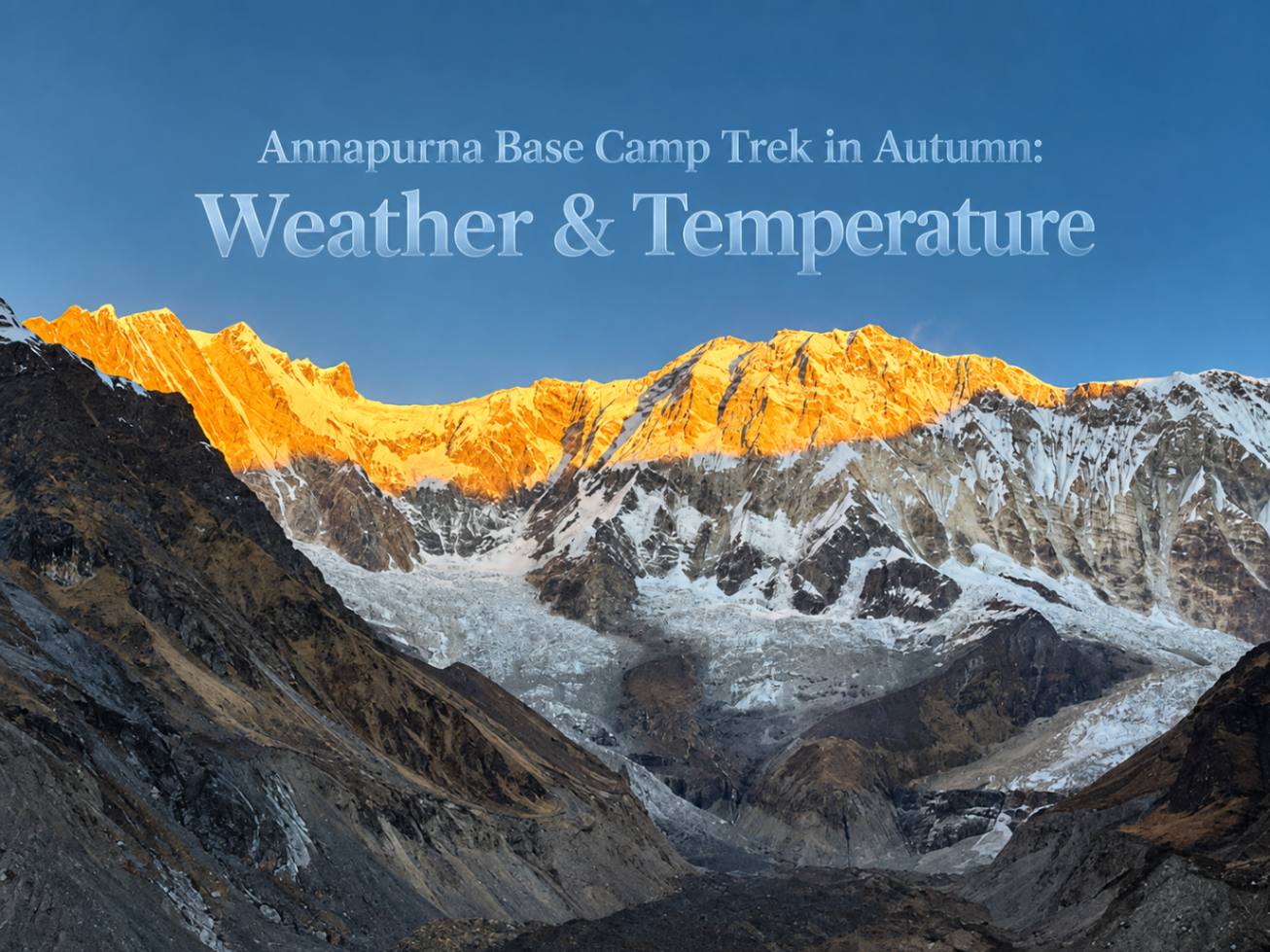
Annapurna Base Camp Trek in Autumn: Weather & Temperature
Planning the Annapurna Base Camp trek in autumn comes down to one practical question: what will the weather actually be like on the day you are standing at 4,130 meters, not just in general terms, but in real temperatures you can pack for.
Autumn runs from September through November, and each of these three months feels genuinely different on the trail, from lingering monsoon cloud in early September to the sharp, clear cold of late November.
This guide breaks down the Annapurna Base Camp trek autumn temperature and weather patterns month by month and altitude by altitude, so you know exactly what to expect before you go.
Annapurna Base Camp Trek Autumn Weather at a Glance
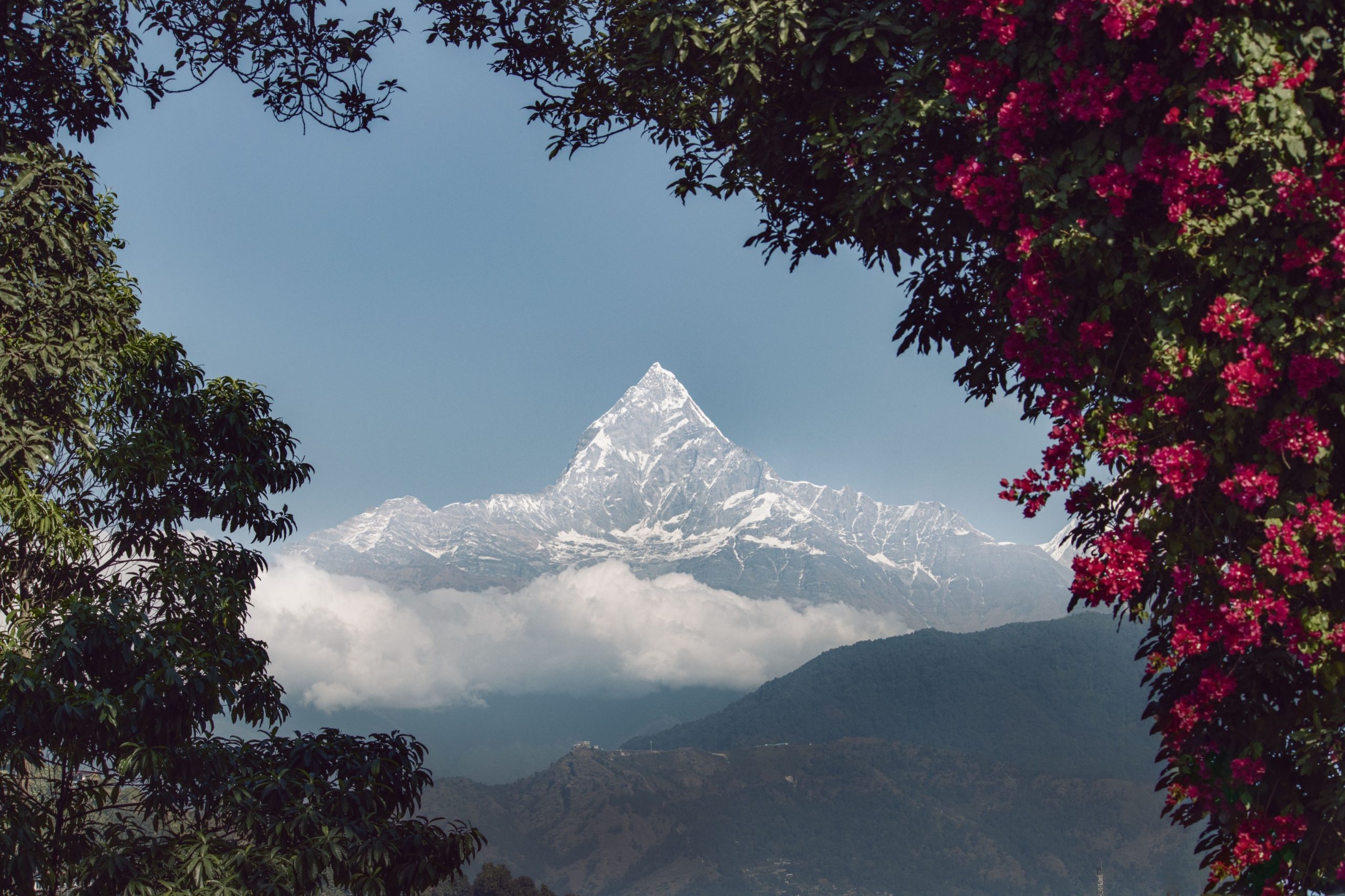
Autumn weather on this trek changes noticeably as the season progresses, and the short version is this: October is generally the most stable month, September is greener but wetter, and November is cooler, drier, and quieter.
At lower elevations like Jhinu Danda and Chhomrong (around 1,780–2,170 m), autumn days stay comfortably warm throughout the season.
Higher up, at Annapurna Base Camp itself (4,130 m), the gap between day and night temperature widens sharply, and by November, nights there regularly drop below freezing. Here’s how the three autumn months compare in more detail.
Annapurna Base Camp Weather and Temperature in September
September is a transition month, straddling the tail end of the monsoon and the start of Nepal’s clearest trekking season, and the difference between early and late September is significant enough to affect trip planning.
-
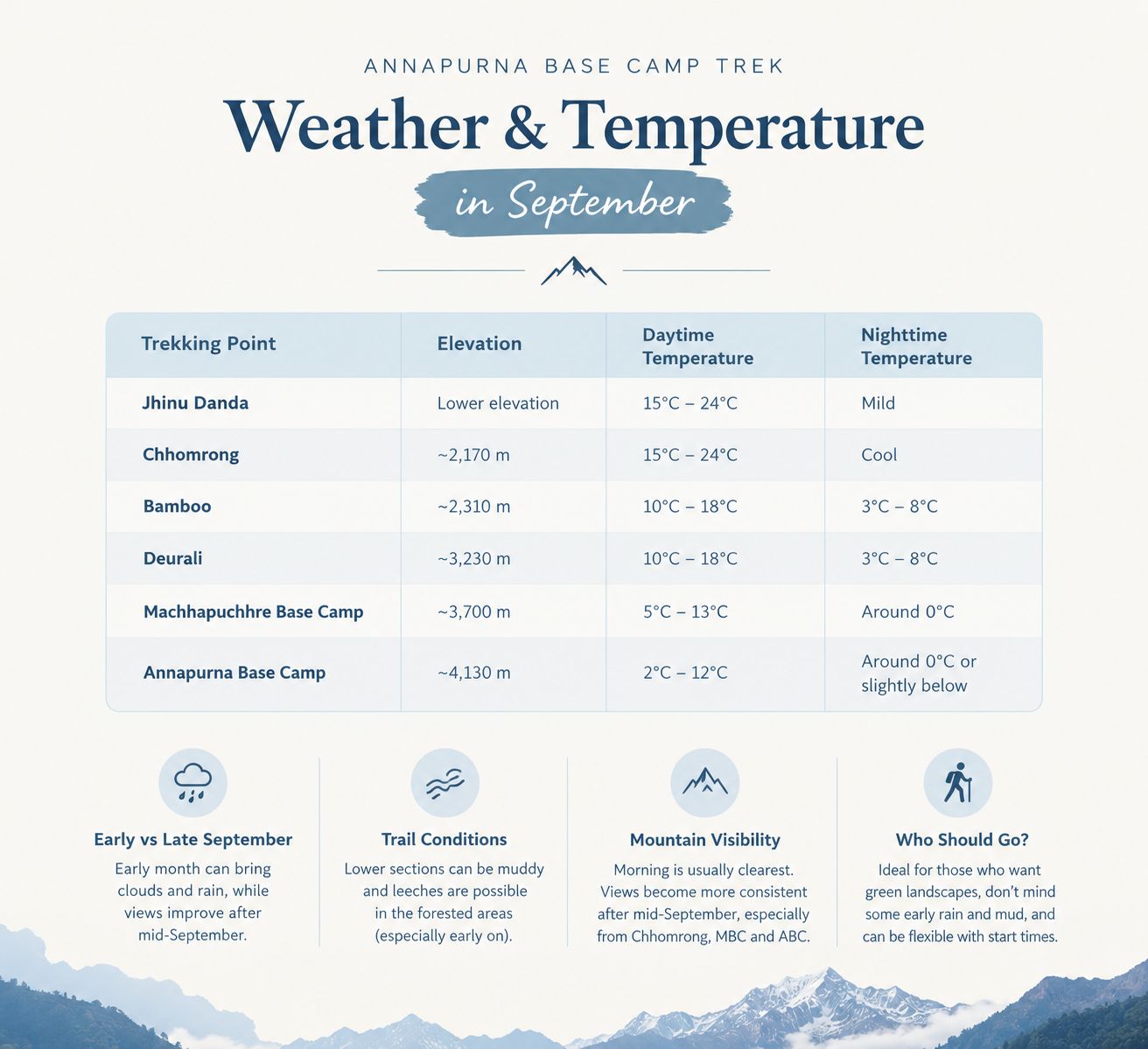
Early vs Late September
In early September, monsoon patterns are still active, meaning afternoon cloud and occasional rain are common, particularly below Chhomrong. By the third week of the month, rainfall drops off noticeably and mountain views start appearing more consistently, especially in the mornings.
-
Day and Night Temperatures
| Trekking Point | Elevation | Daytime Temperature | Nighttime Temperature |
| Jhinu Danda | Lower elevation | 15°C – 24°C | Mild |
| Chhomrong | ~2,170 m | 15°C – 24°C | Cool |
| Bamboo | ~2,310 m | 10°C – 18°C | 3°C – 8°C |
| Deurali | ~3,230 m | 10°C – 18°C | 3°C – 8°C |
| Machhapuchhre Base Camp | ~3,700 m | 5°C – 13°C | Around 0°C |
| Annapurna Base Camp | ~4,130 m | 2°C – 12°C | Around 0°C or slightly below |
Quick takeaway: Temperatures become colder as you gain altitude. Lower sections remain comfortable during the day, while MBC and ABC can feel freezing after sunset, especially in late autumn.
-
Remaining Monsoon Rain and Trail Conditions
Trails below Chhomrong can still be muddy in early September, and this is the one month of the autumn season where leeches are a realistic concern on the lower, forested sections of the route.
-
Mountain Visibility
Early September can still bring cloud-covered peaks and afternoon fog, especially around Chhomrong and the forested lower trail. Morning hours are usually the clearest, while visibility improves noticeably after mid-September as the monsoon weakens. By late September, views of Machhapuchhre, Annapurna South, and Hiunchuli are much more consistent from Chhomrong, MBC, and ABC.
-
Who Should Choose September?
September suits trekkers who want to see the trail at its greenest, do not mind some early-month rain and mud, and are flexible enough to adjust their daily start time around clearer morning weather.
Annapurna Base Camp Weather and Temperature in October
October is widely considered the best month for this trek, and the weather data backs that up: it’s the point in the season with the most consistently clear skies and the driest trail conditions.
-
Why October Is Considered the Best Autumn Month
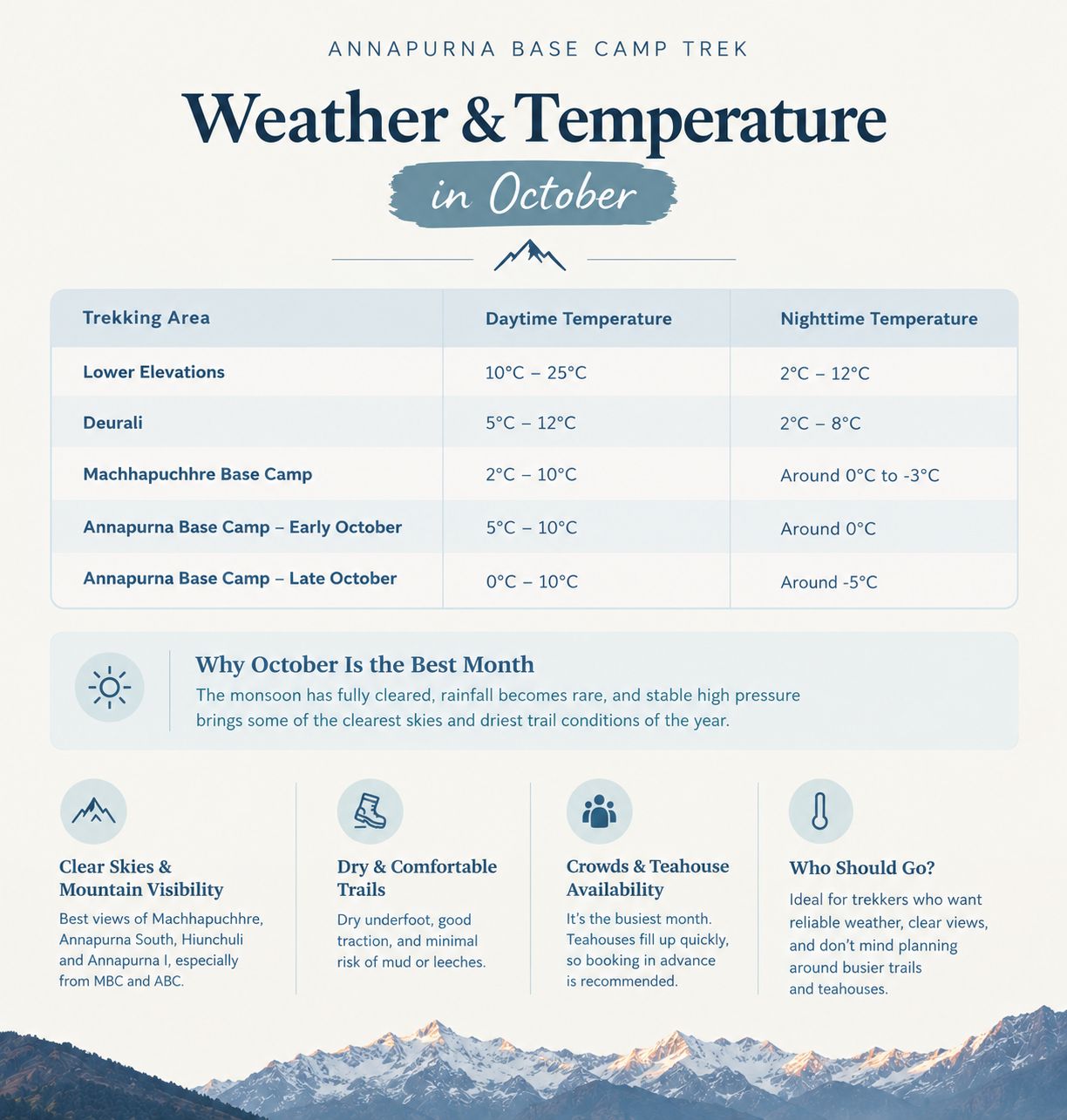
By October, the monsoon has fully cleared, rainfall becomes rare, and the combination of dry trails and stable high pressure produces some of the most reliable mountain visibility of the entire year.
-
Day and Night Temperatures
| Trekking Area | Daytime Temperature | Nighttime Temperature |
| Lower Elevations | 10°C – 25°C | 2°C – 12°C |
| Deurali | 5°C – 12°C | 2°C – 8°C |
| Machhapuchhre Base Camp | 2°C – 10°C | Around 0°C to -3°C |
| Annapurna Base Camp – Early October | 5°C – 10°C | Around 0°C |
| Annapurna Base Camp – Late October | 0°C – 10°C | Around -5°C |
Quick takeaway: October starts relatively mild, but temperatures at higher elevations drop steadily as the month progresses. By late October, freezing nights at ABC are common, so warm layers and a good sleeping bag are essential.
-
Clear Skies and Mountain Visibility
October usually offers the best visibility of the autumn season. Clear mornings provide sharp views of Machhapuchhre, Annapurna South, Hiunchuli, and Annapurna I, with the most dramatic scenery around MBC and ABC.
The air is generally clearer after the monsoon, allowing peaks to remain visible for longer rather than disappearing behind afternoon clouds.
-
Dry and Comfortable Trails
Trail conditions are at their best in October: dry underfoot, good traction, and minimal risk of mud or leeches that can affect the trail in early September.
-
Crowds and Teahouse Availability
This is also the trail’s busiest month. Teahouses along popular stops like Chhomrong, Deurali, and Jhinu Danda fill up quickly, and booking accommodation or arranging your trek in advance matters more in October than in any other month.
-
Who Should Choose October?
October is the right choice for trekkers whose top priority is reliable weather and clear mountain views, and who are comfortable planning around busier trails and teahouses.
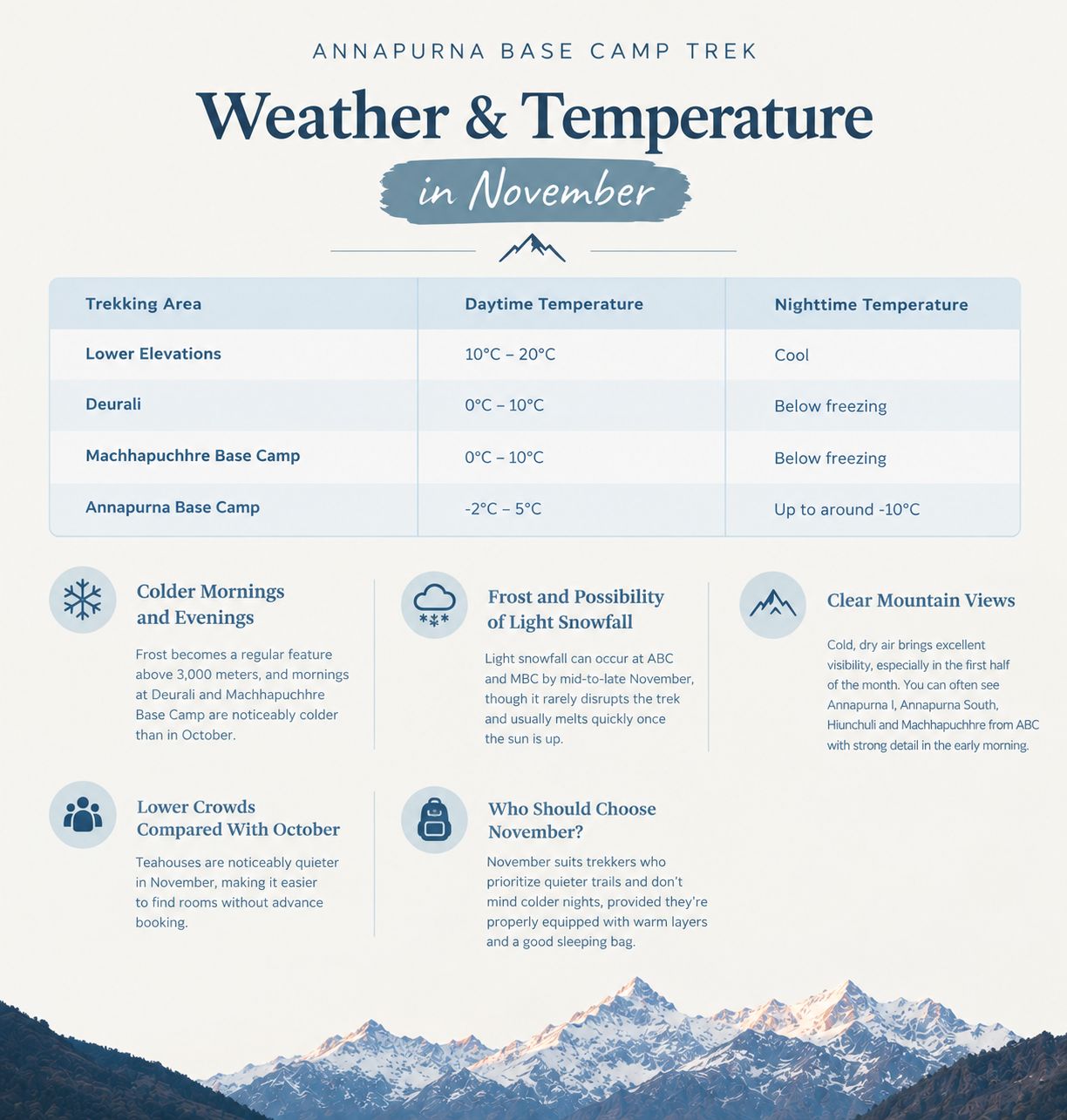
Annapurna Base Camp Weather and Temperature in November
November brings the coldest conditions of the autumn season, but also some of the driest air and sharpest mountain visibility, making it a strong choice for trekkers who prioritize quiet trails over milder temperatures.
-
Day and Night Temperatures
| Trekking Area | Daytime Temperature | Nighttime Temperature |
| Lower Elevations | 10°C – 20°C | Cool |
| Deurali | 0°C – 10°C | Below freezing |
| Machhapuchhre Base Camp | 0°C – 10°C | Below freezing |
| Annapurna Base Camp | -2°C – 5°C | Up to around -10°C |
-
Colder Mornings and Evenings
Frost becomes a regular feature above 3,000 meters in November, and mornings at Deurali and Machhapuchhre Base Camp are noticeably colder than in October.
-
Frost and Possibility of Light Snowfall
Light snowfall becomes possible at Annapurna Base Camp and Machhapuchhre Base Camp by mid-to-late November, though it rarely disrupts the trek and typically melts quickly once the sun is up.
-
Clear Mountain Views
November brings cold, dry air and excellent atmospheric clarity, particularly during the first half of the month.
From ABC, trekkers can often see Annapurna I, Annapurna South, Hiunchuli, and Machhapuchhre with strong detail in the early morning.
Toward late November, occasional cloud or light snowfall can temporarily reduce visibility around MBC and ABC.
-
Lower Crowds Compared With October
Teahouses are noticeably quieter in November than in October, since most trekkers cluster their trips around the October peak, making it easier to find rooms without advance booking.
-
Who Should Choose November?
November suits trekkers who prioritize quieter trails and don’t mind colder nights, provided they’re properly equipped with warm layers and a suitably rated sleeping bag.
Annapurna Base Camp Temperature by Altitude in Autumn
Altitude is the single biggest factor in how cold or warm a given day feels on this trek, often more significant than which autumn month you choose.
| Location | Altitude | Autumn Day Temp | Autumn Night Temp |
| Jhinu Danda / Chhomrong | 1,780–2,170 m | 10°C to 25°C | 5°C to 14°C |
| Bamboo / Deurali | 2,310–3,230 m | 5°C to 18°C | -3°C to 8°C |
| Machhapuchhre Base Camp | 3,700 m | 0°C to 13°C | -8°C to 3°C |
| Annapurna Base Camp | 4,130 m | -2°C to 12°C | -10°C to 0°C |
Why Temperature Changes So Much With Altitude
As a general rule, temperature drops by roughly 6°C to 7°C for every 1,000 meters gained, which is why a warm, T-shirt afternoon at Jhinu Danda can turn into a below-freezing evening at Annapurna Base Camp on the very same day. This is also why layering matters more on this trek than almost any single piece of gear: you’re not dressing for one climate, you’re dressing for four or five different ones across a single trekking day.
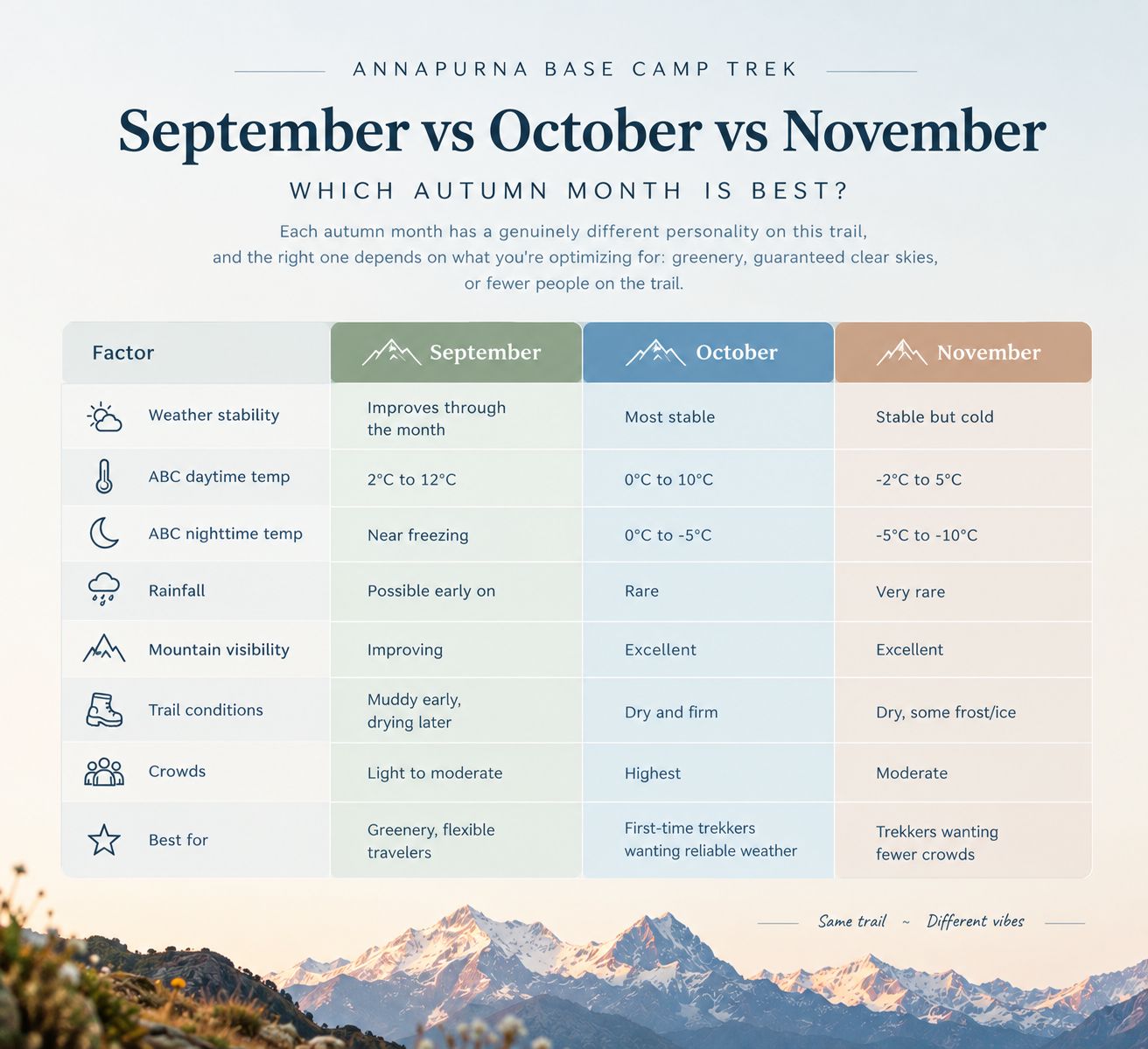
September vs October vs November: Which Autumn Month Is Best?
Each autumn month has a genuinely different personality on this trail, and the right one depends on what you’re optimizing for: greenery, guaranteed clear skies, or fewer people on the trail.
| Factor | September | October | November |
| Weather stability | Improves through the month | Most stable | Stable but cold |
| ABC daytime temp | 2°C to 12°C | 0°C to 10°C | -2°C to 5°C |
| ABC nighttime temp | Near freezing | 0°C to -5°C | -5°C to -10°C |
| Rainfall | Possible early on | Rare | Very rare |
| Mountain visibility | Improving | Excellent | Excellent |
| Trail conditions | Muddy early, drying later | Dry and firm | Dry, some frost/ice |
| Crowds | Light to moderate | Highest | Moderate |
| Best for | Greenery, flexible travelers | First-time trekkers wanting reliable weather | Trekkers wanting fewer crowds |
What Is the Weather Like During the Annapurna Base Camp Trek?
Beyond the month-by-month breakdown, it helps to know how weather typically unfolds within a single autumn day on this trek, since the pattern repeats fairly consistently.
-
Morning, Afternoon, and Evening Conditions
Mornings are almost always the clearest part of the day in autumn, with skies typically staying open until mid-morning.
Cloud tends to build through the afternoon, particularly around ridgelines and higher viewpoints, before clearing again in the evening as temperatures drop.
-
Why Mornings Are Usually Best for Mountain Views
This pattern is why virtually every guide on this route times summit-style viewpoints, like the approach to Annapurna Base Camp itself, for early morning arrival rather than a midday or afternoon push.
-
How Quickly Weather Can Change at Higher Elevations
Above Deurali, weather can shift within an hour: a clear morning can give way to sudden wind or light cloud cover by early afternoon, especially in September, when the tail end of monsoon moisture can still move through unpredictably.
-
What Trekkers Should Expect Instead of Relying Only on a Forecast
A phone weather app’s forecast for “Annapurna” or “Pokhara” won’t reflect conditions accurately at 4,130 meters.
It is more useful to expect the general daily pattern described above, dress in layers you can adjust hour to hour, and take guidance from your guide’s on-the-ground read of the sky rather than a generic forecast.
What to Pack for the Annapurna Base Camp Trek in Autumn
Packing for this trek means preparing for a temperature swing of 20°C or more within a single day, not just for “autumn weather” in general.
- Layered clothing: a base layer, an insulating mid-layer, and a shell you can add or remove as the day’s temperature shifts.
- A down or warm insulated jacket: essential for evenings at Deurali, Machhapuchhre Base Camp, and Annapurna Base Camp, where temperatures fall quickly after sunset.
- Thermal base layers: particularly useful for November mornings and nights.
- A rain jacket: most important in September, when leftover monsoon showers are still a real possibility.
- Gloves and a warm hat: needed from Machhapuchhre Base Camp upward in October and November especially.
- A sleeping bag rated to at least -10°C: teahouse rooms above Deurali are unheated, and this matters more than most first-time trekkers expect.
- Sun protection: sunglasses and sunscreen, since UV exposure is strong at altitude even on cool days.
- Trekking poles and proper footwear: useful on the steep, sometimes uneven stone steps between Chhomrong and Deurali, and for stability on any icy patches that can appear above 3,000 meters in late November.
Tips for Trekking to Annapurna Base Camp in Autumn
A few practical habits make a genuine difference to how comfortable and safe your autumn trek feels.
- Start early each day. Given how reliably afternoon cloud builds, an early departure gives you the best shot at clear views and avoids finishing your day’s walk in fading light.
- Check local, on-the-ground weather conditions, not just a general forecast for Pokhara or the wider region.
- Book accommodation ahead if trekking in October, since this is the busiest month on the trail and popular teahouses fill quickly.
- Stay hydrated and ascend at a sensible pace, particularly above Deurali, where the altitude gain to Annapurna Base Camp is more concentrated than earlier in the trek.
- Prepare for cold nights even when the daytime weather feels comfortable. A mild, sunny afternoon at Machhapuchhre Base Camp can still be followed by a night well below freezing.
- Keep some flexibility if trekking in early September, since lingering monsoon weather can occasionally affect trail conditions or visibility on a given day.

Conclusion
Autumn offers one of the best combinations of clear skies, manageable daytime temperatures, dry trails, and genuinely excellent mountain views anywhere on Nepal’s trekking calendar, but the three months aren’t interchangeable.
September rewards trekkers who want greener scenery and don’t mind some early-month unpredictability.
October delivers the most consistently reliable weather of the year, at the cost of busier trails. November trades a few degrees of warmth for quieter teahouses and equally sharp mountain views. Whichever month you choose, the altitude, not the calendar, is what determines how cold your evening at Annapurna Base Camp will actually feel.
If you are planning your Annapurna Base Camp trek for this autumn season, Igloo Himalaya Treks can help you choose the right month and pack correctly for it.
As one of the best trekking companies in Nepal, our guides run this route throughout September, October, and November and can advise on real trail conditions closer to your travel date.
Visit our Annapurna Base Camp Trek page to see current departure dates, or check our best season to trek in Nepal guide for how autumn compares to spring across the country’s other regions.
FAQ
What is the temperature at Annapurna Base Camp in autumn?
Daytime temperatures at Annapurna Base Camp in autumn generally range from -2°C to 12°C depending on the month, while nighttime temperatures fall between freezing and around -10°C, with the coldest nights occurring in late November.
Is October the best month for the Annapurna Base Camp Trek?
October is generally considered the best month due to its stable weather, minimal rainfall, and consistently clear mountain views, though it is also the busiest month on the trail.
How cold is Annapurna Base Camp in November?
Annapurna Base Camp in November typically sees daytime temperatures between -2°C and 5°C, with nighttime lows commonly dropping to around -10°C, especially in the second half of the month.
Does it rain during the Annapurna Base Camp Trek in September?
Yes, early September can still see rain and cloud cover from the tail end of the monsoon, particularly below Chhomrong, though conditions generally improve and dry out by the last week of the month.
Is Annapurna Base Camp cold at night in October?
Yes, nighttime temperatures at Annapurna Base Camp in October typically range from around freezing in early October to about -5°C by late October.
Can it snow at Annapurna Base Camp in autumn?
Light snowfall is possible at Annapurna Base Camp and Machhapuchhre Base Camp from mid-to-late November onward, though it is uncommon in September and October and rarely disrupts the trek when it does occur.
What is the best season for trekking in the Annapurna region?
Autumn, particularly September to November, is one of the most popular periods for trekking in the Annapurna region because of generally favorable daytime weather and mountain visibility. For official information about trekking destinations and conditions in Nepal, see the Nepal Tourism Board’s Annapurna Region guide.
Is October better than November for the Annapurna Base Camp Trek?
October generally offers milder temperatures and more comfortable trekking conditions, while November is colder but usually quieter with excellent mountain visibility. Choose October for the best balance of weather and comfort, or November if you prefer fewer crowds and don’t mind colder nights.


