

The Annapurna Base Camp Trek 13 Days is a beautiful Annaourna Region journey that takes you from the lively streets of Kathmandu and peaceful lakeside of Pokhara into the heart of the Annapurna mountains. Along the way, you walk through traditional villages, green forests, terraced hillsides and rhododendron forests before reaching Annapurna Base Camp at an altitude of 4,130 meters.
This 13-day itinerary is a good choice for travelers who do not want to rush their time in the mountains. The route includes some of the most beautiful parts of the Annapurna region, including Ulleri, Ghorepani, Poon Hill, Tadapani, Chhomrong, Machhapuchhre Base Camp and Annapurna Base Camp.
At Igloo Himalaya Treks, we focus on making the journey comfortable and enjoyable rather than simply trying to complete the route as quickly as possible. Our local guides stay with you throughout the trek, help you maintain a sensible pace and make sure you have time to enjoy the mountains and local villages.
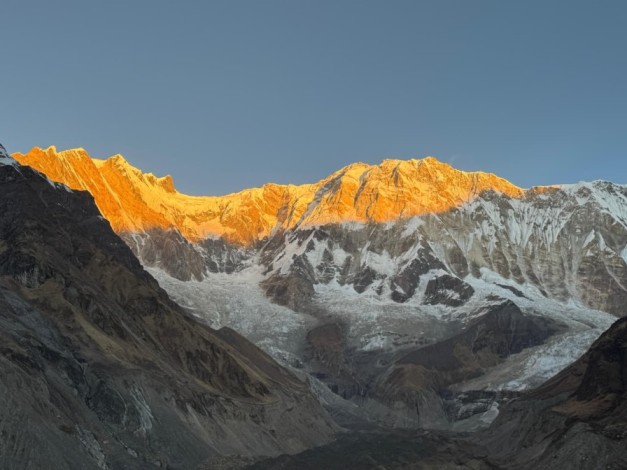
Annapurna Base Camp Trek 13 Days at a Glance
Trek duration: 13 days
Maximum altitude: 4,130 meters (13,550 feet)
Trek destination: Annapurna Base Camp
Trek starting point: Pokhara
Trek difficulty: Moderate
Best seasons: Spring and autumn
Accommodation: Hotels and local teahouses
Major highlights: Ghorepani, Poon Hill, Tadapani, Chhomrong, Machhapuchhre Base Camp and Annapurna Base Camp
Trekking region: Annapurna Conservation Area
Annapurna Base Camp Trek 13 Days Itinerary
Day 1: Arrival in Kathmandu
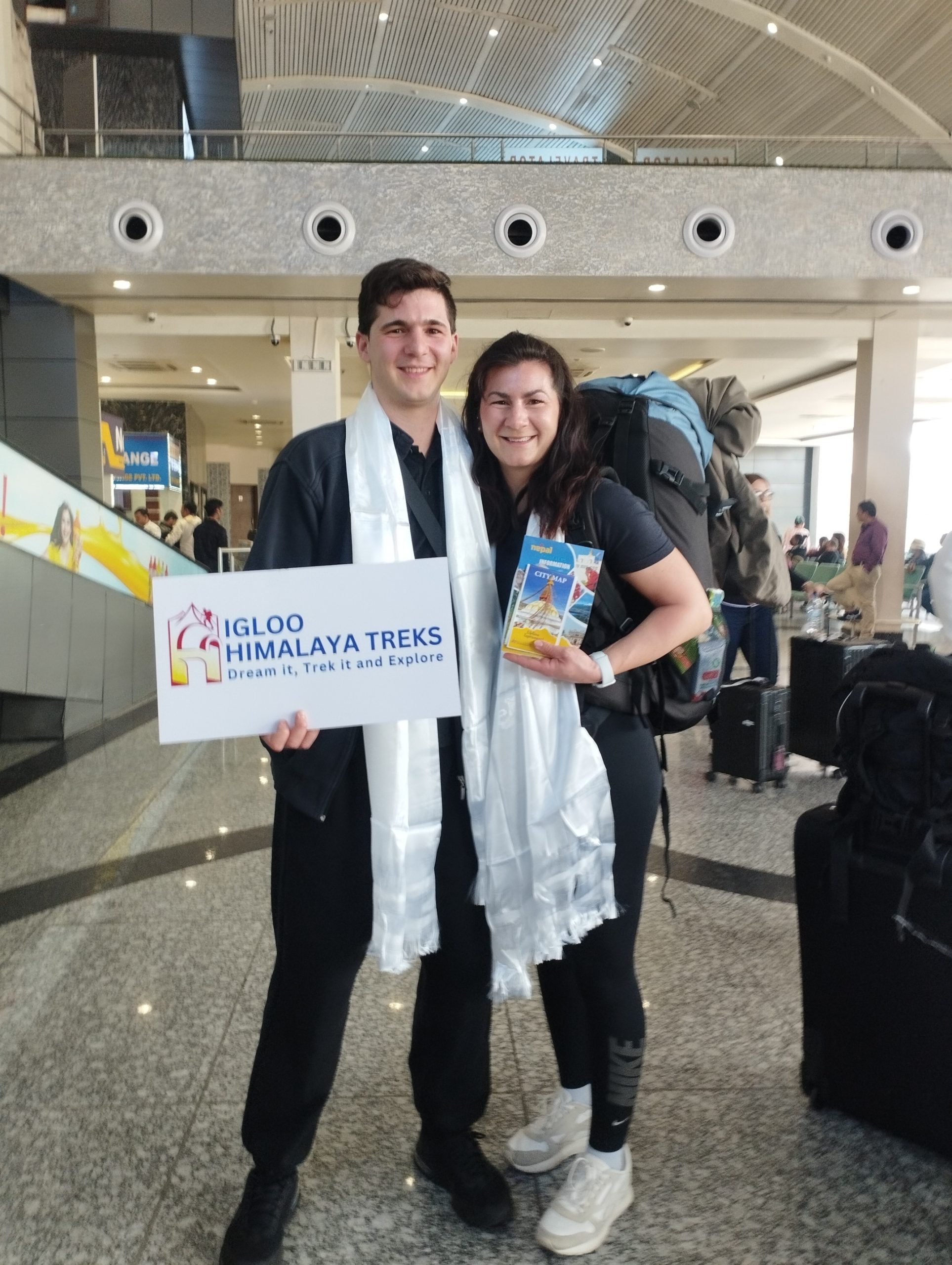
Your Annapurna Base Camp adventure begins when you arrive in Kathmandu. Our representative from Igloo Himalaya Treks will welcome you at the airport and transfer you to your hotel.
After checking in, you can take some time to rest after your journey. If you arrive early, you can explore the nearby streets of Thamel or simply relax at the hotel.
Later, our team will meet you and explain the trekking plan, transportation, packing requirements and other important details. This is also a good opportunity to ask any questions before heading toward the mountains.
Overnight: Kathmandu
Day 2: Drive from Kathmandu to Pokhara
After breakfast, we leave Kathmandu and travel toward Pokhara.
The journey takes you through Nepal’s beautiful countryside, with green hills, rivers, villages and terraced farmland appearing along the road. The drive itself is part of the experience because you get to see a different side of Nepal outside the cities.
After reaching Pokhara, you can relax around the famous Lakeside area. On a clear evening, the atmosphere around Phewa Lake is especially peaceful.
Pokhara is also the gateway to the Annapurna trekking region, so this is where we make our final preparations before starting the trek.
Overnight: Pokhara
Day 3: Drive to Birethanti and Trek to Ulleri
After breakfast, we leave Pokhara by road and drive toward Birethanti.
From Birethanti, the walking section of the Annapurna Base Camp trek begins. The trail passes through local villages, farmland and green hills as we gradually move higher.
The walk toward Ulleri includes a long section of stone steps. It can be challenging, especially at the beginning of the trek, but you do not need to hurry. Our guide will help you maintain a comfortable pace.
Ulleri is a traditional Magar village surrounded by beautiful hills and forests. After reaching the village, you can rest and enjoy the mountain atmosphere.
Trekking: Birethanti to Ulleri
Overnight: Ulleri
Day 4: Trek from Ulleri to Ghorepani
Today we continue toward Ghorepani.
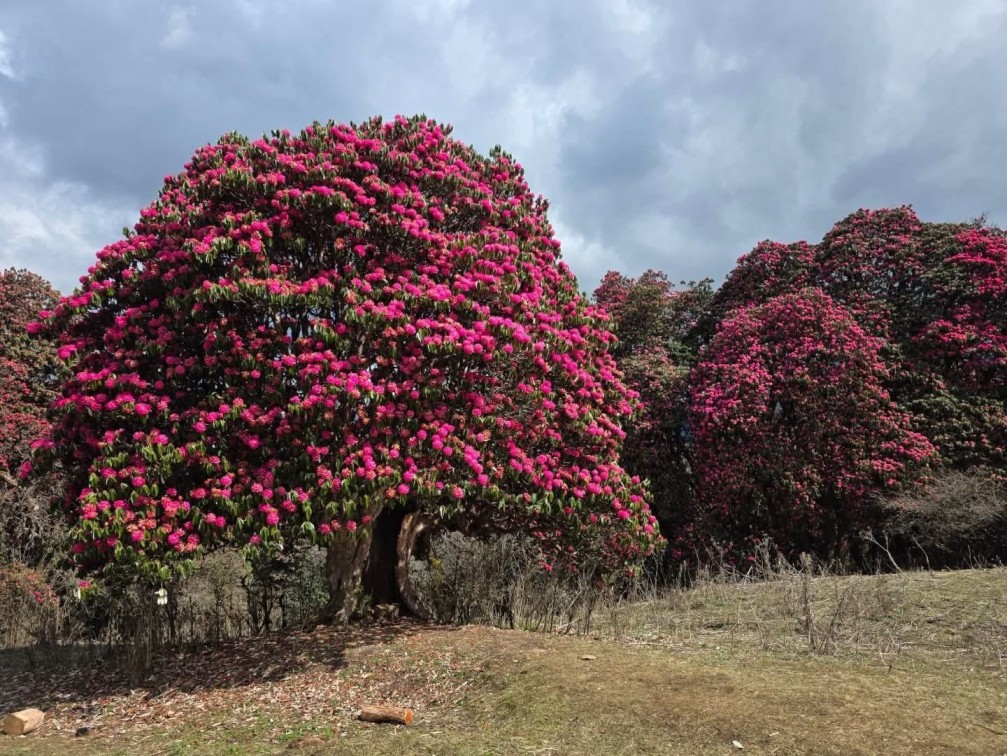
The trail passes through beautiful rhododendron and oak forests. In spring, the rhododendron flowers add bright colors to the forest and make this section particularly beautiful.
As we gain altitude, the landscape begins to change. The views become wider, the temperature becomes cooler and the mountains gradually appear through the trees.
After several hours of walking, we reach Ghorepani, one of the most famous villages on the Annapurna trekking route.
Ghorepani is also the starting point for the early-morning hike to Poon Hill.
Trekking: Ulleri to Ghorepani
Overnight: Ghorepani
Day 5: Sunrise at Poon Hill and Trek to Tadapani
Today begins early.
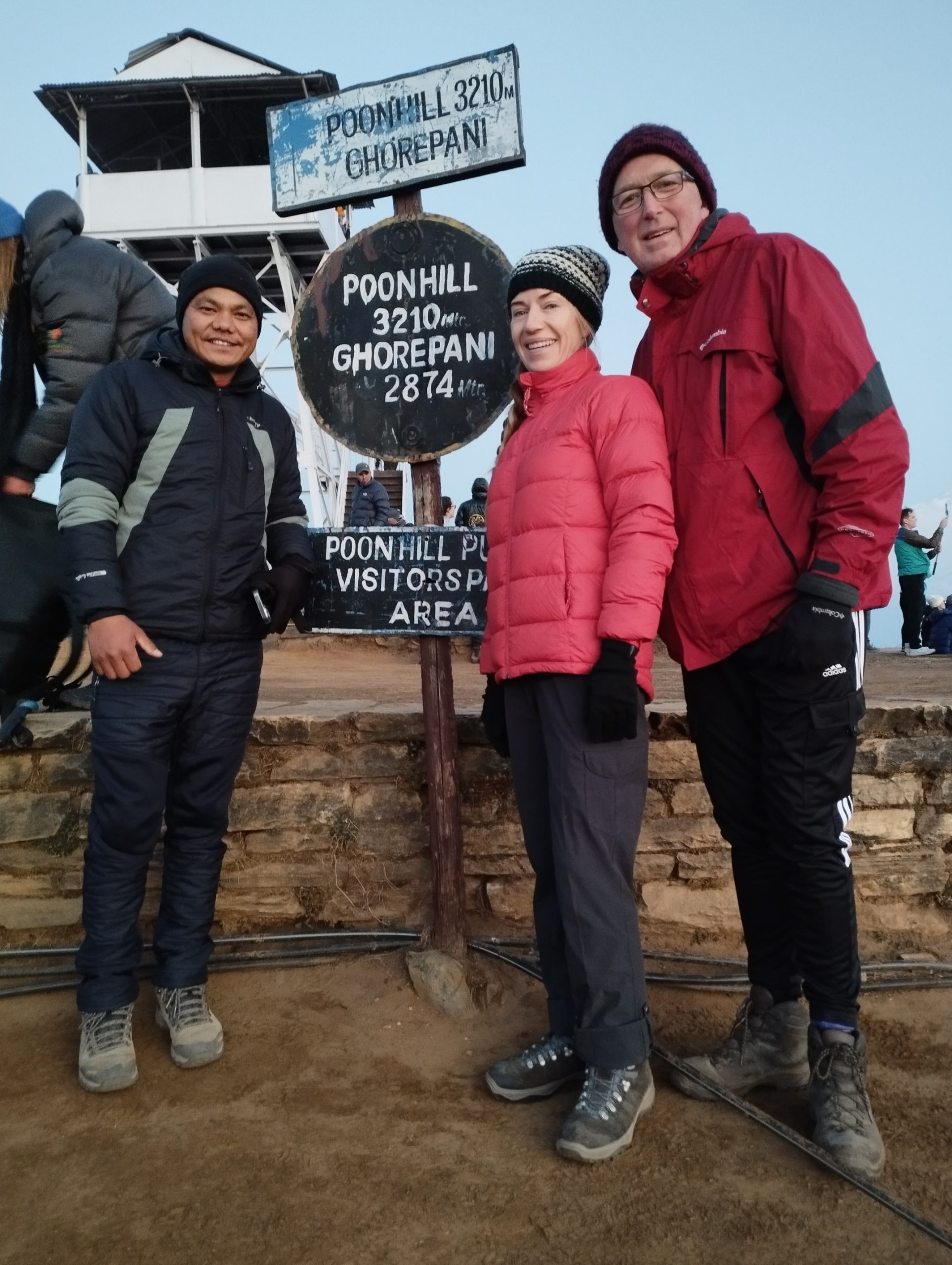
Before sunrise, we hike from Ghorepani to Poon Hill, one of the best-known viewpoints in the Annapurna region. The early morning climb is worth the effort when the first sunlight reaches the Himalayan peaks.
From Poon Hill, you can enjoy panoramic views of the Annapurna and Dhaulagiri mountain ranges. On a clear day, the scenery is unforgettable.
After enjoying the sunrise and taking photographs, we return to Ghorepani for breakfast.
We then continue toward Tadapani. The trail passes through beautiful forests with occasional views of the surrounding mountains.
Tadapani is a peaceful mountain settlement and a great place to spend the evening after a rewarding day on the trail.
Highlight: Poon Hill sunrise
Trekking: Ghorepani to Tadapani
Overnight: Tadapani
Day 6: Trek from Tadapani to Chhomrong
After breakfast, we continue our trek toward Chhomrong.
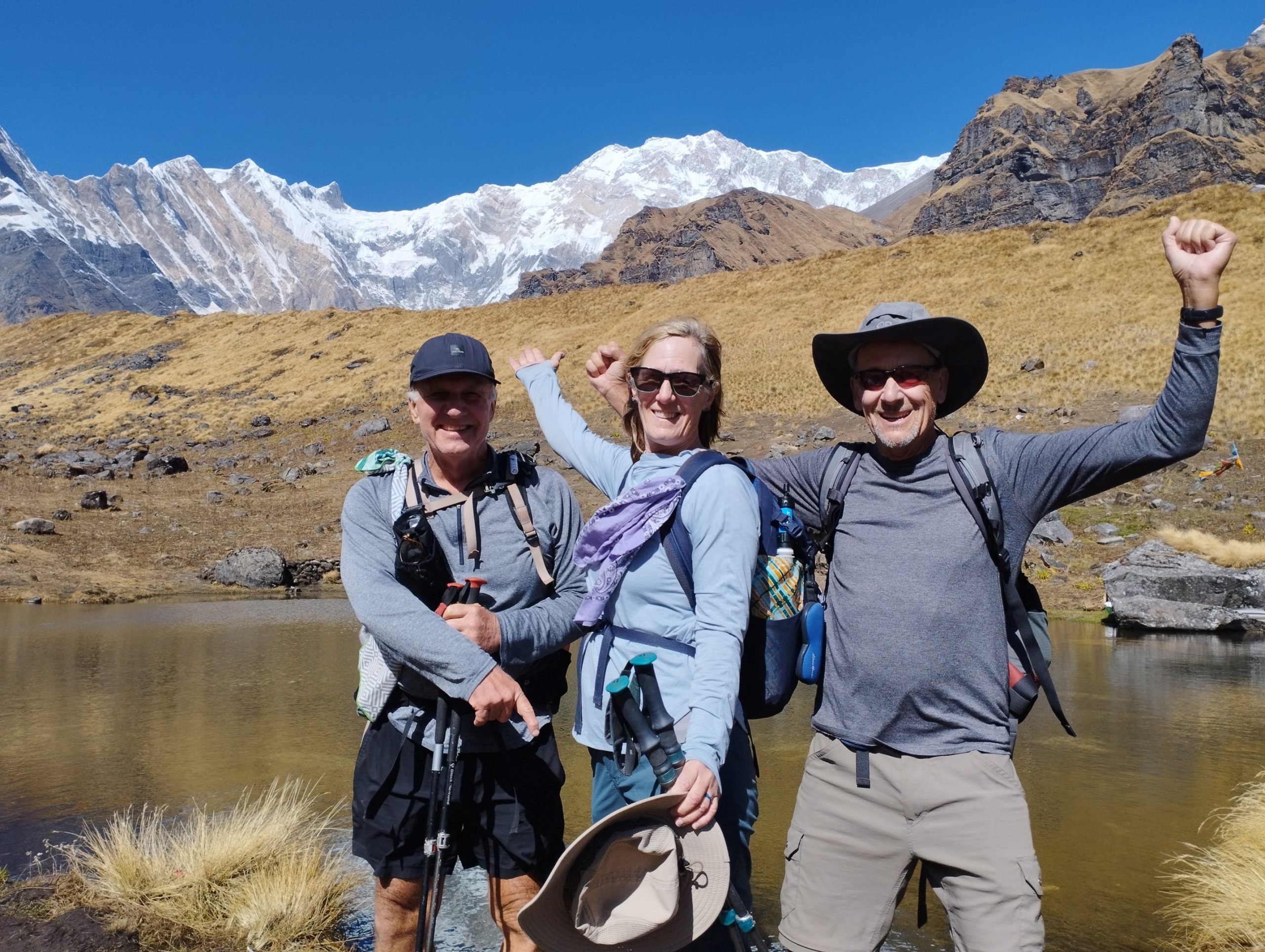
The trail passes through forest and small settlements before opening up to impressive views of Annapurna South, Hiunchuli and Machhapuchhre.
As we approach Chhomrong, the landscape becomes increasingly dramatic. The village is located on a hillside overlooking the valley and is one of the major settlements on the route to Annapurna Base Camp.
Chhomrong is an important stop because from here we enter deeper into the Annapurna Sanctuary.
After reaching the village, you can relax and enjoy the mountain views.
Trekking: Tadapani to Chhomrong
Overnight: Chhomrong
Day 7: Trek from Chhomrong to Himalaya
Today we leave Chhomrong and head deeper into the mountains.
The trail first descends toward Chhomrong Khola before crossing a suspension bridge. After the river, we climb again toward Sinuwa and continue through dense forest.
The route follows the Modi Khola valley. You will see waterfalls, forests, rocky trails and small mountain settlements along the way.
As we move farther from the lower villages, the surroundings become quieter and more remote.
After several hours of walking, we reach Himalaya, where we spend the night.
Trekking: Chhomrong to Himalaya
Overnight: Himalaya
Day 8: Trek from Himalaya to Annapurna Base Camp
Today is the main day of our Annapurna Base Camp Trek.
After breakfast, we continue toward Deurali and gradually enter the higher part of the Annapurna Sanctuary.
The scenery changes as we gain altitude. The forest becomes thinner, the valley becomes wider and the mountains seem much closer.
We continue toward Machhapuchhre Base Camp, also known as MBC. From here, the enormous Himalayan peaks surround the trail.
After continuing through the sanctuary, we finally reach Annapurna Base Camp at 4,130 meters.
Standing at Annapurna Base Camp with the mountains rising around you is a special moment. Annapurna I, Annapurna South, Hiunchuli, Machhapuchhre and other peaks create a spectacular natural amphitheater.
Take some time to enjoy the surroundings, take photographs and appreciate the achievement of reaching the base camp.
Trekking: Himalaya to Annapurna Base Camp
Maximum altitude: 4,130 meters
Overnight: Annapurna Base Camp
Day 9: Sunrise at Annapurna Base Camp and Trek to Bamboo
If the weather is clear, wake up early to watch sunrise from Annapurna Base Camp.
The mountains look completely different as the first sunlight reaches their peaks. The changing colors of the Himalayas make this one of the most memorable moments of the trek.
After breakfast, we begin our descent.
We follow the trail back through the Annapurna Sanctuary and continue toward lower elevations. Although descending may feel easier than climbing, long downhill sections can still be tiring, so it is important to walk carefully.
We continue through the forest and eventually reach Bamboo.
After the excitement of reaching ABC the previous day, Bamboo provides a quieter place to relax.
Highlight: Annapurna Base Camp sunrise
Trekking: Annapurna Base Camp to Bamboo
Overnight: Bamboo
Day 10: Trek from Bamboo to Jhinu Danda
Today we continue descending toward Jhinu Danda.
The trail passes through lush forest and mountain villages as we gradually lose altitude.
After reaching Jhinu Danda, you can enjoy one of the special attractions of this village: the natural hot springs.
After several days of trekking, relaxing in the warm water can be a wonderful way to rest your tired muscles. The hot springs are located near the Modi Khola River and offer a peaceful setting surrounded by nature.
Trekking: Bamboo to Jhinu Danda
Highlight: Natural hot springs
Overnight: Jhinu Danda
Day 11: Trek to the Roadhead and Drive to Pokhara
After breakfast, we begin the final walking section of the Annapurna Base Camp trek.
The trail gradually descends through greener landscapes as we move toward the roadhead.
Once we reach the roadhead, our vehicle will be waiting for the drive back to Pokhara.
After several days in the mountains, returning to Pokhara gives you the chance to enjoy some well-deserved comfort. You can relax around Lakeside, enjoy a good meal or take a peaceful walk beside Phewa Lake.
Overnight: Pokhara
Day 12: Drive from Pokhara to Kathmandu
After breakfast, we travel back from Pokhara to Kathmandu.
The road follows the same general route through Nepal’s hills and river valleys. You can spend the journey looking out at the countryside and reflecting on the trekking experience.
After reaching Kathmandu, the rest of the day is free.
You can explore Thamel, buy souvenirs for friends and family or simply relax at your hotel after completing your Annapurna Base Camp adventure.
Overnight: Kathmandu
Day 13: Departure from Nepal
Today is the final day of your Annapurna Base Camp journey.
Depending on your flight schedule, you may have some free time in Kathmandu before our representative transfers you to Tribhuvan International Airport.
Your trek may be finished, but the memories of walking through the Annapurna mountains, meeting local people, watching the sunrise from Poon Hill and standing beneath the world’s great Himalayan peaks will stay with you for a long time.
We hope you leave Nepal with wonderful memories and return again for another Himalayan adventure.
What Makes the 13-Day Annapurna Base Camp Trek Special?
The 13-day itinerary gives you time to experience much more than Annapurna Base Camp itself.
The journey starts with the countryside around Pokhara and gradually takes you higher through traditional villages and forests. Ulleri introduces you to the famous stone-step trails of the Annapurna region, while Ghorepani and Poon Hill provide some of the best early views of the mountains.
After Tadapani and Chhomrong, the trail becomes more dramatic as you enter the Modi Khola valley and approach the Annapurna Sanctuary.
Finally, the landscape opens around Annapurna Base Camp, where huge Himalayan peaks surround you from almost every direction.
This gradual change in scenery is one of the biggest reasons the Annapurna Base Camp trek is so popular.
Annapurna Base Camp Trek Difficulty
The Annapurna Base Camp trek is considered a moderate trek. You do not need technical climbing experience, but you should be prepared for several hours of walking each day.
Some sections have many stone steps, while others involve uphill and downhill walking through forests and mountain villages.
The altitude is another important factor. Annapurna Base Camp is at 4,130 meters, so you should not underestimate the effect of elevation.
The best way to prepare is to build your fitness before coming to Nepal. Regular walking, hiking, stair climbing and cardiovascular exercise can make the trek much more comfortable.
Most importantly, do not compare your walking speed with someone else. A steady pace is much more useful than trying to walk quickly.
Best Time for Annapurna Base Camp Trek
The best seasons for the Annapurna Base Camp trek are generally spring and autumn.
March, April and May offer pleasant trekking conditions, colorful rhododendron forests and good mountain views.
September, October and November are also popular because the weather is generally stable and the skies are often clear.
Winter is colder and snow can occur at higher elevations, but the trek is still possible with appropriate preparation and equipment.
The monsoon season brings more rain, slippery trails and cloudy conditions. However, travelers who are flexible and properly prepared can still explore parts of the Annapurna region during this period.
What Should You Pack for the Annapurna Base Camp Trek?
Packing correctly can make a big difference to your trekking experience.
You should bring comfortable trekking shoes, warm layers, a waterproof jacket, trekking trousers, thermal clothing, warm socks, gloves, a hat and sunglasses.
A good daypack, water bottle, sunscreen, personal medication, basic toiletries and a headlamp are also useful.
Do not make your backpack heavier than necessary. You will be carrying it for many hours, and a lighter pack makes uphill walking much easier.
The equipment you need also depends on the season. If you are trekking in winter, you will need warmer clothing and better protection from cold weather.
Before the trek, our Igloo Himalaya Treks team can help you understand what you actually need to bring.
Annapurna Base Camp Trek Permits
The Annapurna Base Camp trek passes through the Annapurna Conservation Area, so trekkers need the required permits for the region.
The exact permit and registration requirements can change, so it is important to follow the current regulations when planning your trip.
When you trek with Igloo Himalaya Treks, our team helps arrange the required trekking permits and documentation so you do not have to worry about completing the process alone.
Food During the ABC Trek
You will find a variety of meals along the Annapurna Base Camp route.
Dal bhat is one of the most popular choices because it provides a filling combination of rice, lentils and vegetables. You can also find noodles, pasta, soup, potatoes, eggs, bread and other simple meals at teahouses.
Food choices become more limited as you get higher, but there are still enough options to keep you energized for the trek.
We recommend eating properly even when you do not feel extremely hungry. Your body needs enough energy during long days of walking.
Is 13 Days Enough for Annapurna Base Camp?
Yes. A 13-day itinerary provides enough time to travel from Kathmandu to the Annapurna region, complete the trek to Annapurna Base Camp and return to Kathmandu.
It also allows you to include important highlights such as Ghorepani and Poon Hill instead of focusing only on reaching ABC as quickly as possible.
For travelers who want a comfortable pace and enough time to enjoy the journey, 13 days is an excellent option.
Is Annapurna Base Camp Trek Suitable for Beginners?
Yes, the Annapurna Base Camp trek can be suitable for beginners who have a reasonable level of fitness.
You do not need previous mountaineering experience or technical climbing skills.
However, you should be comfortable walking uphill and downhill for several hours. Preparing before your trip will make the experience much easier.
A good guide also makes a difference, especially for first-time trekkers. Your guide can help with the pace, route, accommodation and practical decisions along the trail.
Why Trek Annapurna Base Camp With Igloo Himalaya Treks?
Choosing a trekking company is about more than finding the cheapest price.
At Igloo Himalaya Treks, we are a local Nepal trekking company with knowledge of the trails, villages and practical conditions of trekking in Nepal.
Our guides are there to support you throughout the journey. They help you walk at a sensible pace, communicate with local teahouses, organize the daily arrangements and respond to problems if they occur.
We also understand that every traveler is different. Some people walk quickly, while others prefer to stop often for photographs and enjoy the scenery.
Our goal is to make your Annapurna Base Camp trek a genuine Himalayan experience rather than simply a checklist of places to visit.
Frequently Asked Questions About Annapurna Base Camp Trek 13 Days
How long is the Annapurna Base Camp trek?
The complete journey depends on the itinerary and transportation arrangements. Our 13-day Annapurna Base Camp itinerary includes Kathmandu, Pokhara, the trekking section to ABC and the return journey to Kathmandu.
How high is Annapurna Base Camp?
Annapurna Base Camp is located at 4,130 meters (13,550 feet) above sea level.
How difficult is the 13-day Annapurna Base Camp trek?
It is considered a moderate trek. The main challenges are long walking days, stone steps, uphill and downhill sections and the increasing altitude.
Is Annapurna Base Camp suitable for first-time trekkers?
Yes. Beginners who are reasonably fit and prepare properly can complete the trek. You do not need technical mountaineering experience.
Does the 13-day itinerary include Poon Hill?
Yes. The route includes Ghorepani and the early-morning hike to Poon Hill before continuing toward Tadapani and Chhomrong.
What is the best month for Annapurna Base Camp?
March, April, May, September, October and November are generally considered the best months because of favorable trekking conditions and mountain visibility.
Can I trek to Annapurna Base Camp in winter?
Yes, but winter brings colder temperatures and the possibility of snow at higher elevations. Proper clothing, equipment and route planning are important.
Do I need a guide for Annapurna Base Camp?
A local guide can make the trek much easier by helping with navigation, accommodation, communication, pace and safety. Trekking requirements can change, so check the latest regulations before traveling.
What is the highest point of the Annapurna Base Camp trek?
The highest point of the trek is Annapurna Base Camp at 4,130 meters.
How many hours do you walk each day?
Walking time varies depending on the day and route. Most trekking days involve several hours of walking, with some days longer than others.
What should I pack for Annapurna Base Camp?
You should pack trekking shoes, warm layers, waterproof clothing, gloves, a hat, sunglasses, sunscreen, a water bottle, personal medication and other basic trekking equipment. Your packing list should also change according to the season.
Is the Annapurna Base Camp trek worth doing?
For travelers who enjoy mountains, nature, local villages and walking, the Annapurna Base Camp trek is one of Nepal’s most rewarding trekking experiences. The combination of Poon Hill, traditional villages, forests and the dramatic Annapurna Sanctuary makes the journey special.
Final Thoughts
The Annapurna Base Camp Trek 13 Days is not simply a walk to a mountain base camp. It is a journey through different landscapes and communities, from the lower green hills to the high Himalayan sanctuary.
You will walk through traditional villages, cross suspension bridges, climb stone steps, pass through rhododendron forests and watch the mountains change as you gain altitude.
The sunrise from Poon Hill and the first view of Annapurna Base Camp are likely to become some of the strongest memories of your trip.
With enough time, proper preparation and a good local trekking team, the 13-day itinerary allows you to experience the Annapurna region without rushing.
If you are planning your Annapurna Base Camp adventure, Igloo Himalaya Treks is ready to help you plan the journey from your arrival in Nepal to your final departure.


