If you are searching for Gokyo Lake location, height, altitude, and everything you need to know before visiting, you are probably wondering what makes this remote Himalayan lake so special.
Gokyo is not simply one beautiful lake in Nepal. It is a high Himalayan valley surrounded by glaciers, enormous mountains, turquoise lakes, and small mountain settlements. The landscape changes dramatically as you walk higher into the Khumbu region. Green hills disappear, trees become rare, and eventually you find yourself walking beside blue-green glacial water with some of the world’s highest mountains rising around you.
The Gokyo Lakes are located in the Gokyo Valley of the Everest region in Solukhumbu District, Nepal, inside Sagarmatha National Park. The valley lies west of the main Everest Base Camp route and can be reached by trekking from Lukla through Namche Bazaar, Dole and Machhermo.
For many trekkers, Gokyo is an alternative to the traditional Everest Base Camp route. For others, it becomes something even more special because the journey combines high-altitude lakes, the Ngozumpa Glacier, Sherpa villages and the spectacular viewpoint of Gokyo Ri.
Where Is Gokyo Lake Located?
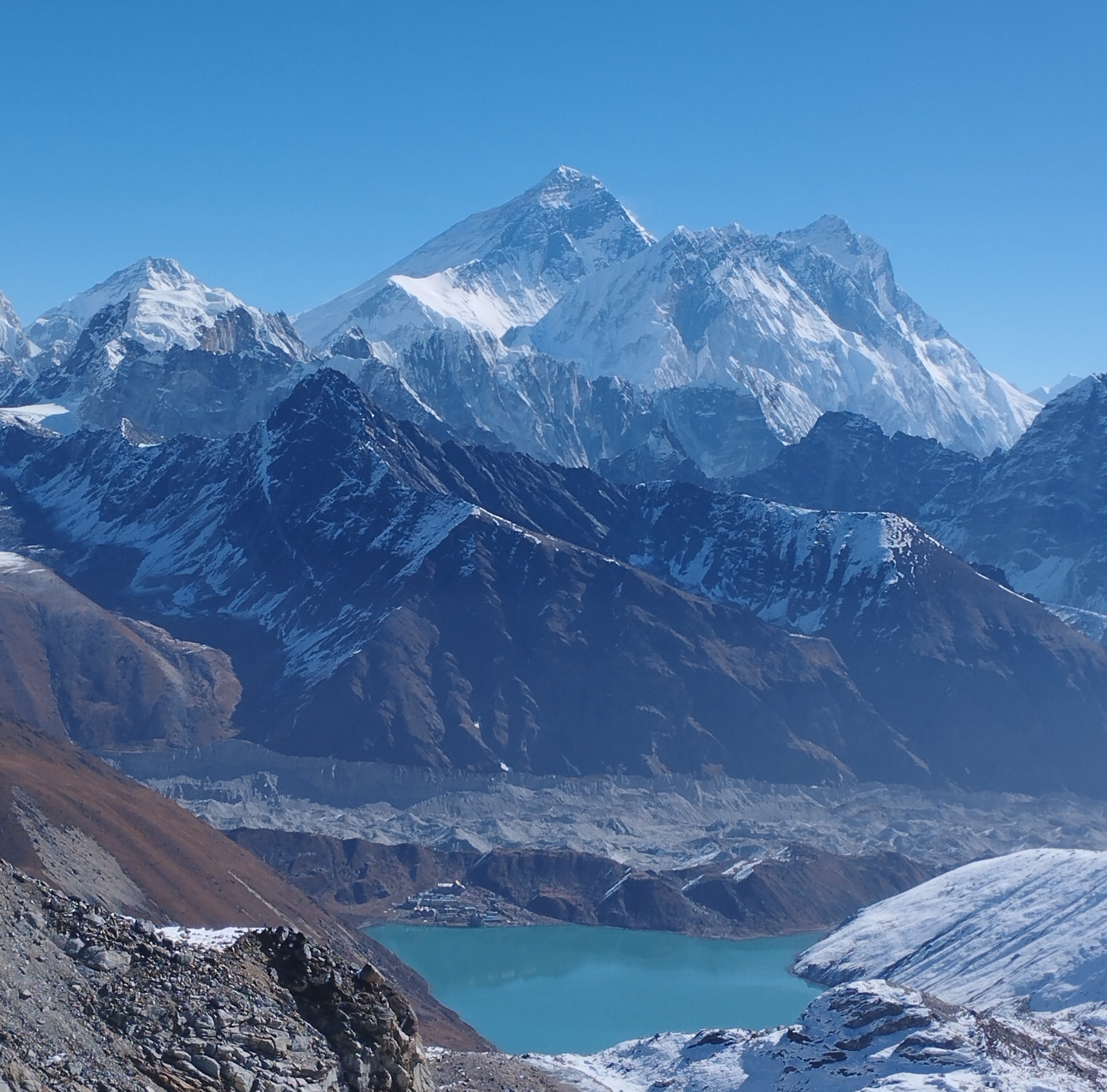
Gokyo Lake is located in the Gokyo Valley of Nepal’s Khumbu region, within Sagarmatha National Park in Solukhumbu District in Nepal.
Gokyo Valley is situated on the western side of the main Everest trekking corridor. After reaching Namche Bazaar, trekkers leave the main Everest Base Camp trail and head toward Dole and Machhermo before arriving at Gokyo.
The village of Gokyo sits beside the third and most famous lake, commonly called Gokyo Cho or Dudh Pokhari.
This is important because people often say “Gokyo Lake” as if there is only one lake. In reality, Gokyo is a system of several high-altitude glacial lakes. The main lake beside Gokyo village is the one most trekkers photograph and remember.
The entire lake system lies at roughly 4,700–5,000 metres above sea level, although individual sources and surveys give slightly different elevations for particular lakes.
How High Is Gokyo Lake?
The altitude is one of the most important things to understand before planning a Gokyo trek.
The main Gokyo Lake beside the village is generally described at around 4,750 metres (15,584 feet), while Gokyo Lake 3rd is around 4,790 metres (15,715 feet) above sea level. The wider Gokyo lake system extends from roughly 4,700 metres to around 5,000 metres and above depending on which lake is being measured.
Gokyo altitude at a glance
| Place | Approximate elevation |
| Kathmandu | 1,400 m |
| Lukla | 2,860 m |
| Namche Bazaar | 3,440 m |
| Dole | 4,040 m |
| Machhermo | 4,470 m |
| Gokyo Lake / Dudh Pokhari | about 4,750 m |
| Gokyo 3rd Lake | about 4,790 m |
| Gokyo Ri | 5,357 m |
The exact figures can vary slightly depending on the map, survey or reference used, but the important point is simple: Gokyo is a very high-altitude destination.
That is why a good itinerary should not rush from Lukla to Gokyo. Gradual altitude gain and proper acclimatization are important parts of the trek.
How Many Gokyo Lakes Are There?
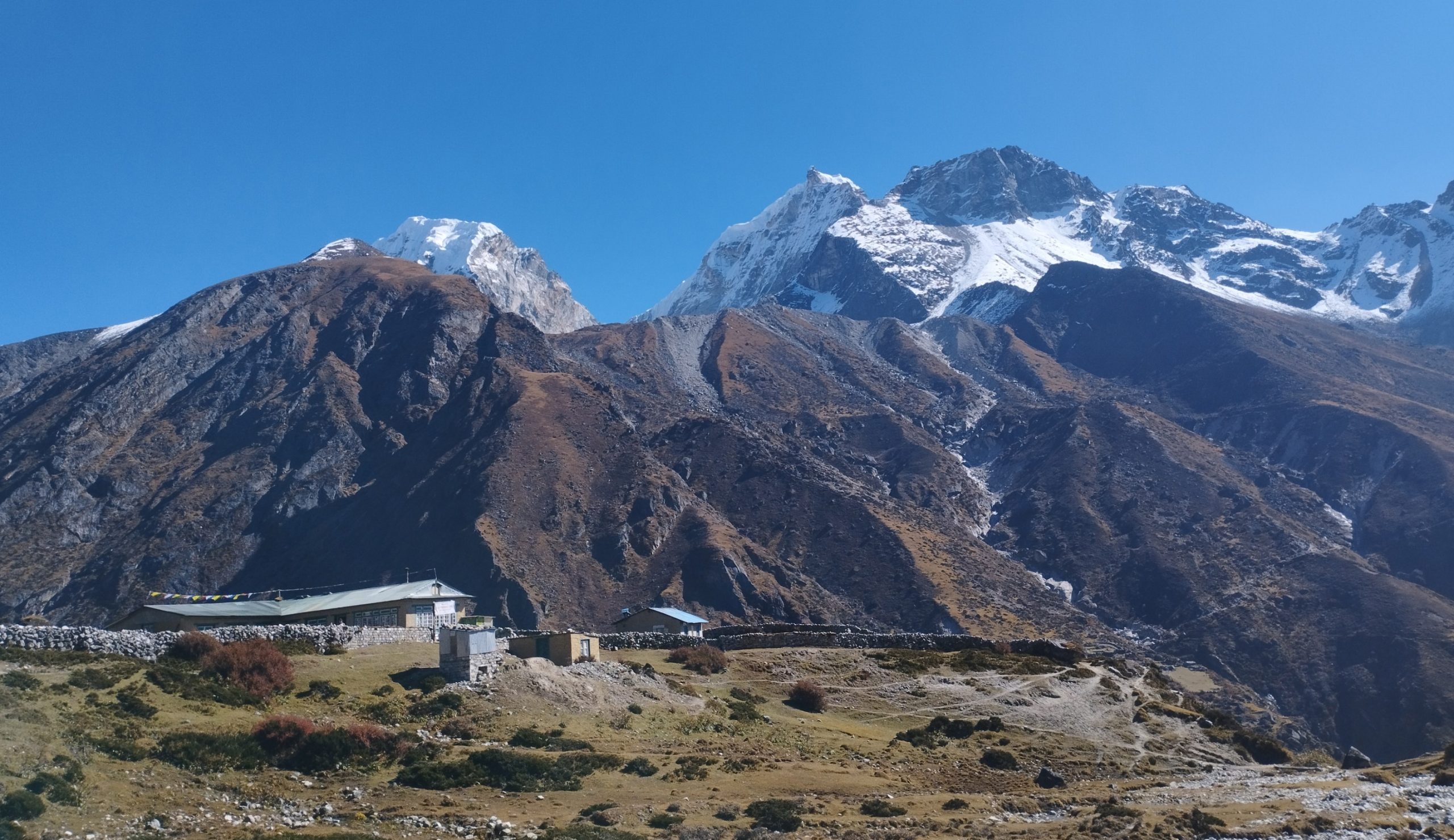
The Gokyo Valley is famous for its chain of glacial lakes. Six principal lakes are commonly described in travel references, although scientific descriptions of the wider wetland system can vary in how they count individual water bodies.
The main lakes include:
- First Gokyo Lake
- Second Gokyo Lake
- Third Gokyo Lake, also known as Dudh Pokhari
- Fourth Gokyo Lake, known as Thonak Cho
- Fifth Gokyo Lake, known as Ngojumba Cho
- Sixth/highest lake area associated with the upper Gokyo system
The third lake is the one directly beside Gokyo village and is the lake most visitors mean when they say Gokyo Lake.
The higher lakes require additional walking beyond the village and take you deeper into the dramatic glacial landscape.
What Makes Gokyo Lake So Beautiful?
There is something different about arriving at Gokyo. You have already spent several days walking through the Everest region. You have passed suspension bridges, pine forests, Sherpa villages and mountain trails. But as you approach Gokyo, the landscape becomes much more open and rugged.
Then the lake appears. The turquoise water sits between rocky mountains and glaciers, while snow-covered peaks rise behind the valley. The combination of blue water, white mountains and the enormous Ngozumpa Glacier gives Gokyo its distinctive character.
It doesn’t feel like an ordinary mountain lake.It feels like you have walked into another world. The Nepal Tourism Board describes the Gokyo Valley as a serene alternative route in the Everest region, known for its pristine turquoise lakes and high Himalayan scenery.
Gokyo Lake and Ngozumpa Glacier
One of the most impressive features of Gokyo is its relationship with the Ngozumpa Glacier.
The glacier dominates the landscape around the valley and is an important part of the hydrological system that feeds the Gokyo wetlands. Scientific research on the region describes the Gokyo lakes as glacial in origin and associated with the Ngozumpa Glacier.
For trekkers, this means that the lake is not an isolated attraction. The glacier, lakes, mountains and valley all form one extraordinary Himalayan landscape. Walking around Gokyo, you can see how dramatically the environment changes at this elevation.
Gokyo Ri Height: 5,357 Metres
One of the biggest highlights of visiting Gokyo is climbing Gokyo Ri.
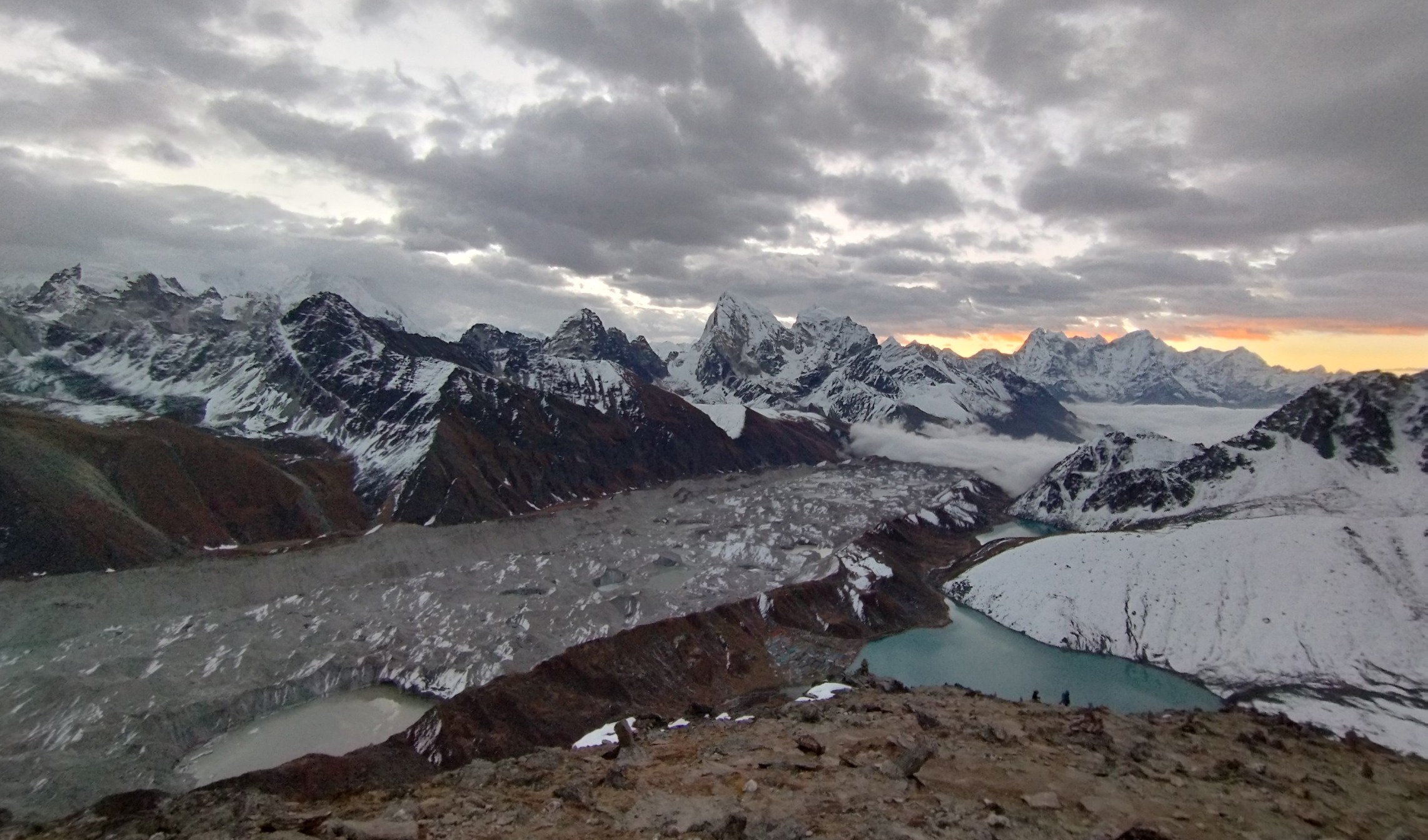
Gokyo Ri rises to approximately 5,357 metres (17,575 feet) above sea level. From the summit, trekkers can look across the high Himalayas and see an extraordinary panorama that includes Everest, Lhotse, Makalu and Cho Oyu.
The climb normally begins early in the morning.You leave Gokyo while it is still dark or before sunrise and slowly climb the rocky slope. At this altitude, even a short climb feels different. Your breathing becomes heavier, your steps become slower, and you begin to understand why altitude matters more than distance.
Then the sun reaches the mountains.The peaks begin to change colour, the Gokyo lakes appear below, and the surrounding Himalayan landscape opens up. That sunrise is one of the experiences that people remember long after returning home.
Which Mountains Can You See From Gokyo?
Gokyo is surrounded by some of the world’s highest mountains. From the valley and especially from Gokyo Ri, you can see major Himalayan peaks including.
Mount Everest
The highest mountain on Earth needs little introduction. Seeing Everest from Gokyo gives you a different perspective from the classic Everest Base Camp route.
Cho Oyu
Cho Oyu stands north of Gokyo and is particularly prominent from the valley. Nepal Tourism Board specifically highlights views of Cho Oyu from Gokyo.
Lhotse
Lhotse is part of the enormous Himalayan panorama visible from the region.
Makalu
Makalu is another 8,000-metre mountain visible from the high viewpoints around Gokyo. The combination of these enormous peaks is one reason Gokyo Ri is such an important viewpoint in the Everest region.
Is Gokyo Lake Near Everest Base Camp?
Yes, but Gokyo Lake is not located at Everest Base Camp.Gokyo is in the same broader Everest/Khumbu region, but it lies on a different trekking route. From the main Everest Base Camp trail near Namche, trekkers can take the route toward Dole, Machhermo and Gokyo instead of continuing directly toward Tengboche and Everest Base Camp.
This gives trekkers several possibilities.You can do a dedicated Gokyo Lakes Trek.You can combine Gokyo with Everest Base Camp. Or you can make a longer Himalayan circuit using high passes such as Cho La or Renjo La, depending on your itinerary and experience.
How Do You Get to Gokyo Lake?
For the classic trekking route, the journey normally begins in Kathmandu. A typical route looks like this.
Kathmandu → Lukla → Phakding → Namche Bazaar → Dole → Machhermo → Gokyo
The trek begins at Lukla, after the flight from Kathmandu, and follows the Dudh Koshi Valley toward Namche.After acclimatizing around Namche, the trail turns toward Dole and Machhermo. From Machhermo, the landscape becomes increasingly alpine before you finally reach Gokyo.
The journey is not simply transportation from one point to another.The walking is part of the experience. You move from forests to open valleys, from villages to yak pastures, and finally into a high-altitude landscape dominated by rock, ice and snow.
How Difficult Is the Gokyo Lake Trek?
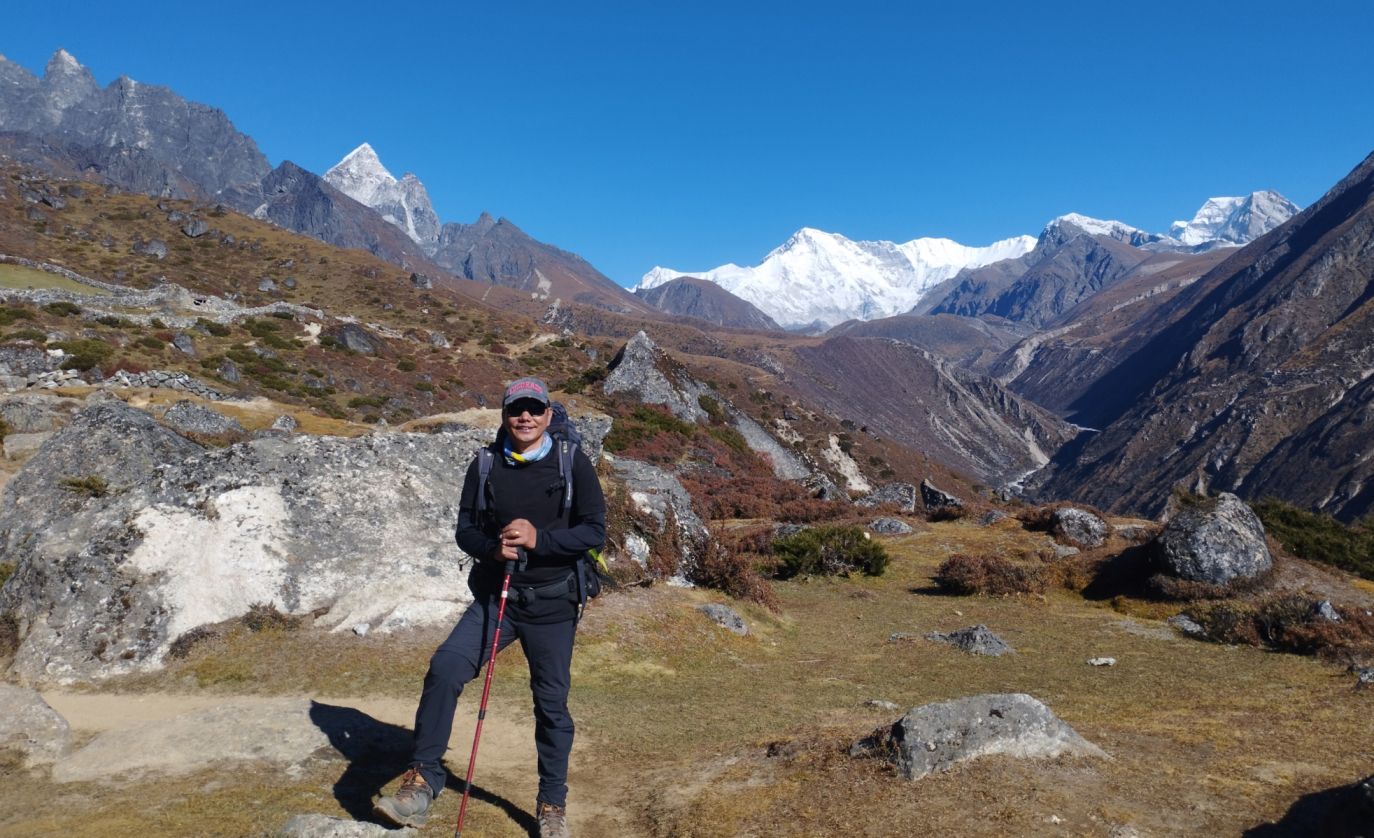
The Gokyo Lakes Trek is generally considered a challenging high-altitude trek. You don’t need technical mountaineering skills for the standard route, but you do need reasonable physical fitness and preparation. The biggest challenge is not simply walking distance.It is altitude.
Sleeping at nearly 4,800 metres is very different from spending a night at 2,000 or 3,000 metres. That is why a sensible itinerary includes acclimatization and avoids gaining altitude too quickly. The climb to Gokyo Ri is also demanding because you gain significant elevation above an already high village. The reward is the view.
Why Is Acclimatization Important at Gokyo?
Altitude should never be treated casually.A trekker can be physically strong and still have difficulty adjusting to high elevation.A well-planned Gokyo itinerary normally builds altitude gradually and includes an acclimatization strategy. Staying hydrated, walking at a comfortable pace and listening to your body are important.
If you develop symptoms that may indicate altitude illness, you should tell your guide immediately and follow appropriate medical advice. The goal is not to reach Gokyo as quickly as possible.
The goal is to reach Gokyo safely and actually enjoy being there.
Is Gokyo Lake Sacred?
Yes.
The Gokyo lakes have religious significance for both Hindus and Buddhists. Nepal Tourism Board notes the spiritual importance of the lakes as well as their ecological value.This gives Gokyo another layer beyond its scenery.
It is not simply a photographic destination.The lakes are part of the cultural and spiritual landscape of the Himalayas. Visitors should therefore treat the area respectfully, avoid littering and follow local guidance around religious sites and the lakes.
Gokyo Lakes and Ramsar Wetland
The Gokyo wetland system also has international conservation importance. The Gokyo and associated wetlands were designated a Ramsar Site in 2007, recognizing the importance of this high-altitude wetland ecosystem.
The lakes also provide habitat for migratory birds moving through the Himalayan region. Nepal Tourism Board notes their role in supporting migratory birds during trans-Himalayan migration. This is another reason trekkers should leave the valley as they found it.
Best Time to Visit Gokyo Lake
The main trekking seasons are generally spring and autumn.
Spring: March to May
Spring brings clearer mountain views, warmer daytime conditions and blooming vegetation at lower elevations.
As you climb higher, the landscape becomes increasingly alpine.
Autumn: September to November
Autumn is another popular period because the monsoon has usually cleared the atmosphere, producing excellent mountain visibility.
October and November are especially popular trekking months.
Winter
Winter can be extremely cold at Gokyo. Snow and freezing temperatures can make the journey more demanding, and some accommodation and route conditions can be affected.
Monsoon
Summer monsoon conditions can bring clouds, rain and difficult visibility at lower elevations, although the higher Everest region can still be visited depending on conditions.
Weather in the Himalayas can change quickly, so trekking dates should always be considered together with current trail and weather conditions.
What Should You Pack for Gokyo Lake?
Because Gokyo is nearly 4,800 metres high, packing for a high-altitude environment is essential.
Important items include.
- Warm down jacket
- Thermal base layers
- Fleece or insulating layer
- Waterproof trekking jacket
- Trekking trousers
- Warm hat and gloves
- Good trekking boots
- Warm trekking socks
- Sunglasses with strong UV protection
- Sunscreen and lip balm
- Water bottle or hydration system
- Headlamp
- Trekking poles
- Sleeping bag suitable for cold Himalayan nights
- Personal medicines
- Basic first-aid supplies
- Comfortable backpack
- Power bank and charging equipment
You don’t need to carry your entire house to Gokyo. But you do need to prepare for cold, wind, strong sunlight and high altitude.
How Many Days Do You Need for Gokyo Lakes Trek?
A comfortable Gokyo Lakes itinerary commonly takes around 11–12 trekking days from Kathmandu and back, depending on the route, acclimatization plan, flights and individual pace.
A typical journey may include.
Day 1: Arrival in Kathmandu
Day 2: Fly to Lukla and trek to Phakding
Day 3: Trek to Namche Bazaar
Day 4: Acclimatization in Namche
Day 5: Trek to Dole
Day 6: Trek to Machhermo
Day 7: Trek to Gokyo
Day 8: Gokyo Ri sunrise and exploration
Day 9: Gokyo to Dole
Day 10: Dole to Namche
Day 11: Namche to Lukla
Day 12: Fly to Kathmandu
The exact itinerary can be adjusted according to flight schedules, weather, acclimatization requirements and the traveler’s pace.
Gokyo Lake vs Everest Base Camp
The two destinations offer different experiences. Everest Base Camp is famous for its legendary trekking history, Sherpa villages and direct connection with the world’s highest mountain.
Gokyo offers a different landscape. Here you have turquoise glacial lakes, the Ngozumpa Glacier, Gokyo Valley and the spectacular Gokyo Ri viewpoint. You don’t necessarily have to choose one forever.
Many experienced trekkers combine Gokyo Lakes, Cho La and Everest Base Camp into one longer adventure. That creates a much bigger journey through the Khumbu Himalayas.
What Is the Most Special Thing About Gokyo?
For me, the most interesting thing about Gokyo is not one single mountain or one single lake.
It is the combination.
You have a high Himalayan village.
You have turquoise glacial lakes.
You have the enormous Ngozumpa Glacier.
You have views toward four 8,000-metre peaks.
You have Sherpa culture.
You have a sunrise from Gokyo Ri.
And you have the feeling of being far away from the normal world.
That combination is what makes Gokyo different.
Is Gokyo Lake Worth Visiting?
If you want a Himalayan trek that combines high-altitude scenery, glacial lakes, mountain views and a quieter alternative route through the Everest region, Gokyo deserves serious consideration.
The journey is not easy.
You have to walk for several days.
You have to adapt to altitude.
You have to accept cold mornings and basic mountain accommodation.
But that is also part of the experience.
When you finally stand beside the turquoise water at nearly 4,800 metres, with enormous Himalayan peaks around you, the difficult days suddenly make more sense. Gokyo is not just somewhere you go to take a photograph.
Gokyo is somewhere you walk to, slowly, step by step, until the Himalayas reveal themselves.
Plan Your Gokyo Lakes Trek With Igloo Himalaya Treks
At Igloo Himalaya Treks, we believe a Himalayan trek should not feel like simply following a timetable. Your pace, acclimatization, comfort and experience matter. If you are planning a Gokyo Lakes Trek, we can help you choose an itinerary based on your available days, trekking experience and the kind of Himalayan experience you want.
Whether you want to explore only Gokyo Lakes or combine Gokyo with Everest Base Camp and Cho La Pass, the route can be planned around your journey rather than forcing every traveler into exactly the same schedule. If Gokyo has been on your Nepal list for a while, perhaps it is time to stop looking at photographs and start planning the walk.
The lake is waiting at the end of the trail.


