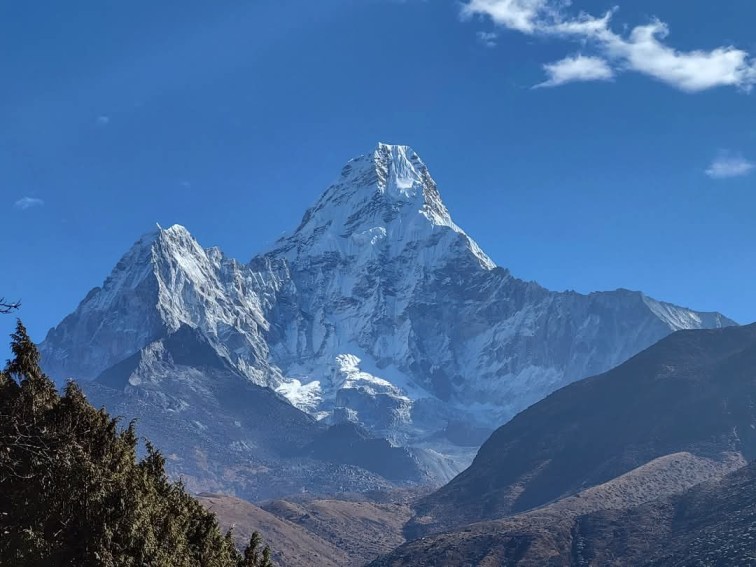
People often say, “I conquered Everest.” But when you are standing on the trail toward Everest Base Camp, surrounded by huge mountains and watching the clouds move slowly across the peaks, that sentence starts to feel a little strange. Everest is not waiting for you to defeat it. It does not care how strong you are, how expensive your trekking boots are, or how many mountains you have climbed before. The mountain simply stands there, just as it has for thousands of years. You are the one who changes. That is what makes a journey to Everest Base Camp so special.
Before coming to Nepal, many trekkers imagine Everest as a challenge that needs to be beaten. They think about the distance, the altitude, the cold mornings, the long walking days, and the famous trail leading toward Base Camp. But after a few days in the Himalayas, something slowly changes. Your attention moves away from the idea of conquering Everest. You start noticing the smaller things. The sound of your boots on the trail. The first view of a snow-covered mountain behind the clouds. A hot cup of tea after several hours of walking. The sound of a river far below a suspension bridge. The quiet streets of a Sherpa village in the early morning. A porter carrying a heavy load while still giving you a smile. A tired conversation with another trekker at the end of the day. These moments become just as important as reaching the destination.
The trail does not care how quickly you want to arrive. Some days feel easy, while other days feel surprisingly long. You may wake up excited and ready to walk, only to discover that your body needs more time. You may walk for hours and still feel like the destination is far away. This is one of the lessons the Himalayas teach very well: you cannot rush everything. You have to walk at a sensible pace, drink enough water, eat properly, rest when you need to, and give your body time to adjust to the increasing altitude. Sometimes you simply have to accept that today is harder than yesterday. There is nothing embarrassing about that. The mountains do not reward you for pretending to be stronger than you are. They teach you to be honest with yourself.
People often ask us how difficult the Everest Base Camp trek is, how many hours they will walk each day, whether they will be able to complete it, and what happens if they become tired. These are all important questions, but there is another question that is rarely asked: can you be patient with yourself? The Everest journey is not only a physical challenge. There are mornings when you would rather stay inside your warm sleeping bag. There are afternoons when your legs feel heavy. There are moments when the trail seems to go uphill forever. There may be cold mornings, simple accommodation, changing weather and basic meals. But then, unexpectedly, something happens that makes everything feel worthwhile. Maybe it is a sunrise over the mountains. Maybe it is your first view of Everest. Maybe it is arriving in Namche Bazaar. Maybe it is walking past prayer flags moving in the wind. Maybe it is finally standing at Everest Base Camp. You suddenly remember why you came.
One of the strangest and most beautiful things about the Everest journey is that the closer you get to the world’s highest mountain, the less you feel the need to hurry. At home, we are always rushing from one thing to another. We rush to work, rush to answer messages, rush through meals, and rush toward the next appointment. In the Himalayas, the trail gives you permission to slow down. You walk, breathe, look around, talk, rest, and then walk again. There is something peaceful about having only one important job for the day: keep moving toward the next village. Slowly, you begin to understand that a good journey is not measured only by how quickly you finish it. Sometimes the slower journey becomes the one you remember for the rest of your life.
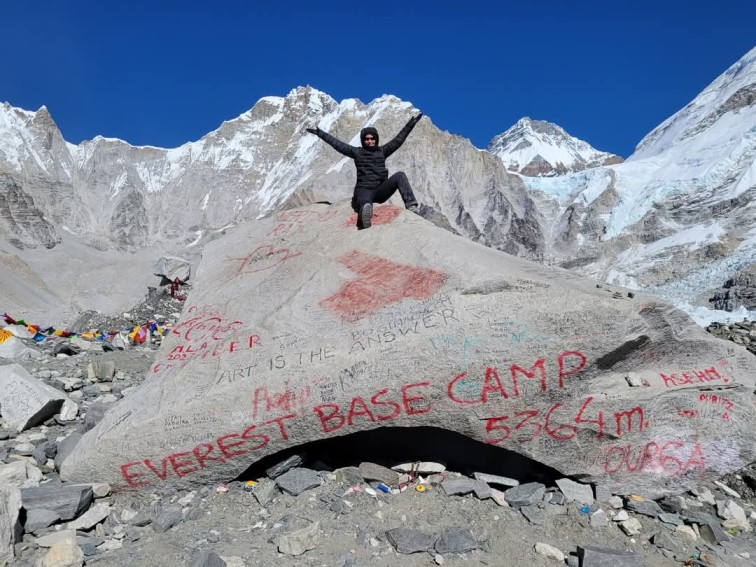
When trekkers finally reach Everest Base Camp, there is often a powerful moment. Some people take photographs, some call their families, some laugh, and some become emotional. Others simply stand quietly and look at the mountains. But nobody has conquered Everest. You have not defeated the mountain. You have simply walked to a place that once seemed impossibly far away. And perhaps that is more meaningful. You respected the mountain enough to take your time. You listened to your body. You crossed suspension bridges, climbed thousands of steps, walked through Sherpa villages, watched the landscape change, and continued when the trail became difficult. The achievement is not that Everest surrendered to you. The achievement is that you kept moving.
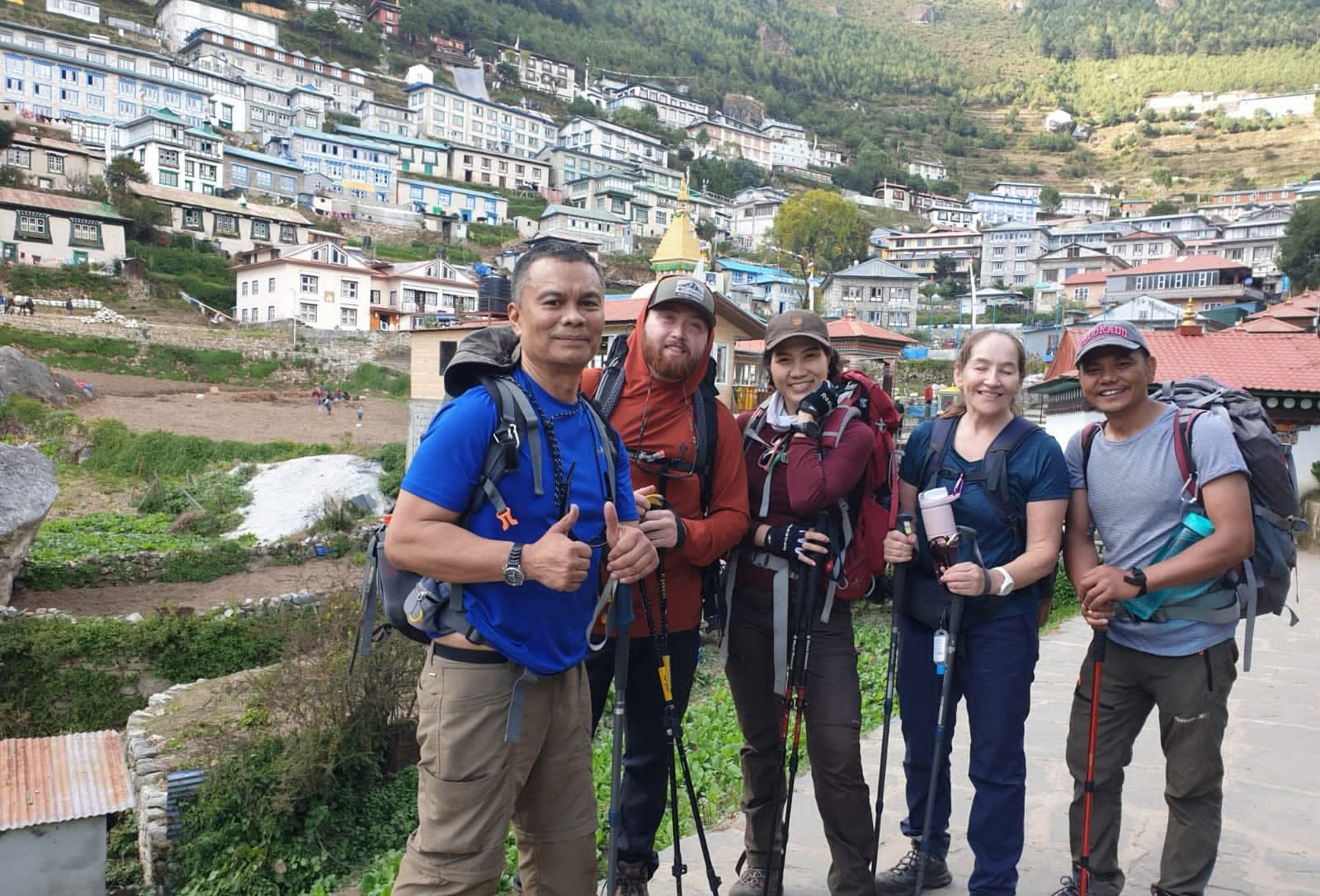
Another part of the Everest journey that often stays in people’s memories is the people they meet along the way. Trekkers from different countries walk toward the same destination. Guides and porters work quietly behind the scenes. Local families run teahouses in mountain villages. People carry supplies along trails that have connected Himalayan communities for generations. A short conversation over breakfast can stay in your memory for years. A guide telling you something interesting about a mountain, a porter making you laugh when you are tired, a local family welcoming you into their teahouse, or another trekker sharing a story from their home can become part of your own story. Years later, you may not remember exactly how many kilometers you walked on one particular day, but you may remember the person who smiled at you when you were exhausted.
Everest Base Camp itself is an important moment, but it is not the whole story. The story begins when you leave Kathmandu and continues when you reach the mountains. It continues through Namche Bazaar, the high valleys, suspension bridges, prayer wheels, stone walls, forests and long mountain trails. It continues when you wake before sunrise in the cold and when you look back and realize how far you have already walked. It even continues after you return home. The trek may end, but the experience does not necessarily end with it. You may return to your normal life and suddenly find that something has changed. A stressful day may not seem quite as stressful. A difficult problem may not feel quite as large. You may remember that there was a time when you only had to take one step, then another, and then another.
Perhaps Everest also changes the way we understand success. We often think success means reaching the highest point, achieving the biggest goal, or arriving at the final destination. But the Everest Base Camp trail can give you a different definition. Success can mean continuing when the day is difficult. It can mean knowing when to rest. It can mean taking care of your body instead of pushing yourself beyond your limits. It can mean helping another trekker who is struggling. It can mean reaching your destination without forgetting to enjoy the journey along the way. Sometimes success simply means returning home with a story you will tell for the rest of your life.
After returning from Everest Base Camp, you may look through the photographs on your phone and see the mountains, the trails, the villages and Base Camp itself. You will see yourself standing in places you once only saw in photographs. But you may notice something else. You will remember the small moments,the morning tea, the tired legs, the laughter at dinner, the cold air, the silence of the mountains, the first glimpse of Everest, the people you met, the days when you wondered whether you could continue, and the moment you realized that you could. That is the real story.
Everest was never something you had to conquer. It was a journey that asked you to slow down, respect the mountains, trust the process and discover what you were capable of. Perhaps that is why people who visit the Everest region often return with more than photographs. They return with memories, friendships, stories and a different understanding of what a mountain and a journey can mean.
At Igloo Himalaya Treks, we believe an Everest Base Camp journey should never feel like a race. It should feel like your own Himalayan story. We take care of the practical details, from the route and accommodation to permits, logistics, acclimatization and local support, so you can spend more time experiencing the mountains rather than worrying about them. Because you do not need to conquer Everest. You only need to walk toward it.


