Everyone has seen the photographs.
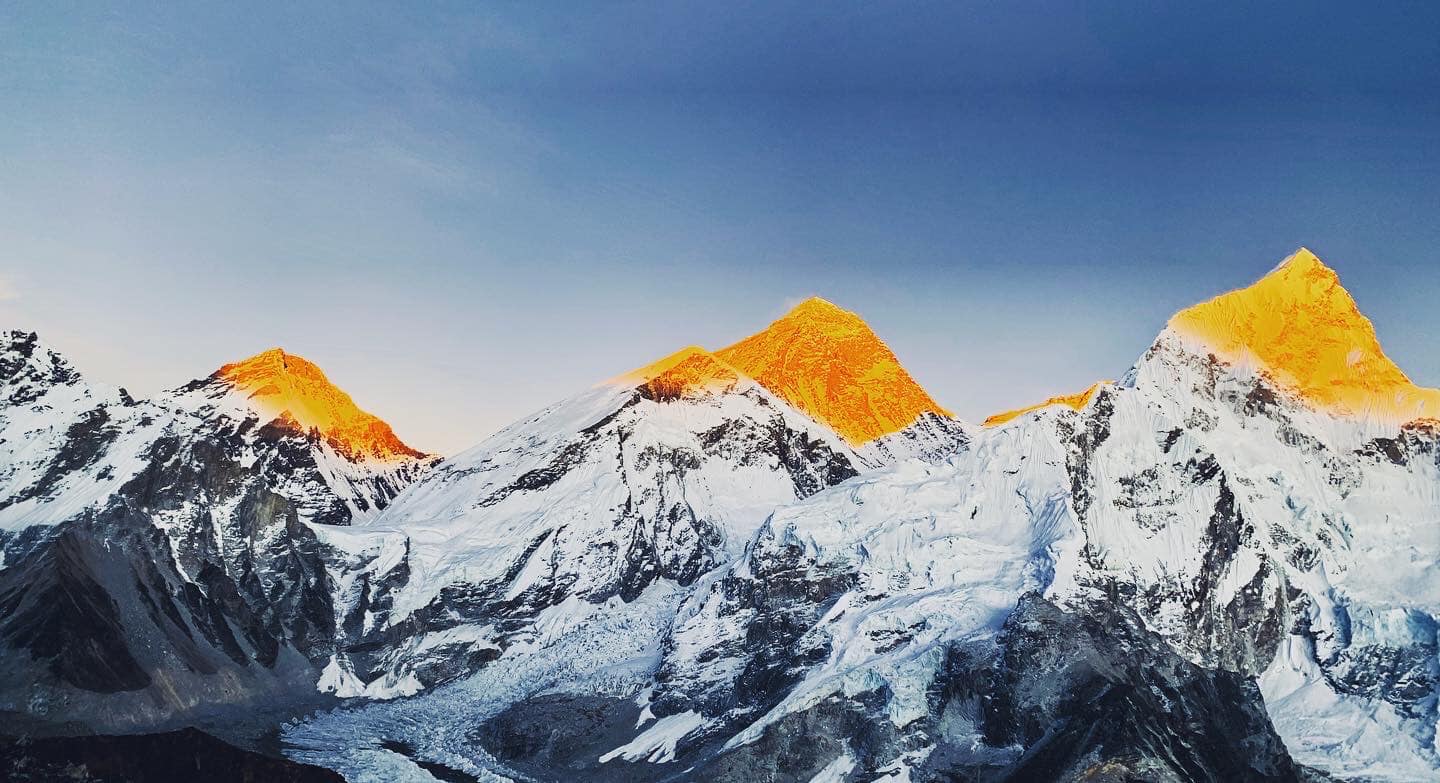
The prayer flags moving in the mountain wind. The stone walls of Namche Bazaar Mani wall on the way. The narrow trail above the Dudh Koshi River. The first glimpse of Everest. The snow-covered peaks glowing in the morning light. And finally, that famous sign at Everest Base Camp.
From the outside, the Everest Base Camp trek looks like a beautiful adventure through the Himalayas.
And it is.
But photographs don’t tell the whole story.
They don’t tell you about the silence you feel when you wake up before sunrise in the mountains. They don’t tell you how slowly you begin to walk as the altitude increases. They don’t tell you how exciting a simple hot shower can feel after several days on the trail. They don’t tell you about the friendships you make with people you met only a few days earlier.
And they certainly don’t tell you how much the journey can change you.
After spending time on the Everest trail, there are some things I believe every first-time trekker should know before starting the journey.
Here are the things nobody really tells you about trekking to Everest Base Camp.
-
Everest Base Camp is not really about Everest
This might sound strange.
You travel thousands of kilometres to Nepal because you want to see Everest. You dream about standing in front of the world’s highest mountain.
But somewhere along the trail, something changes.
You start paying attention to other things.
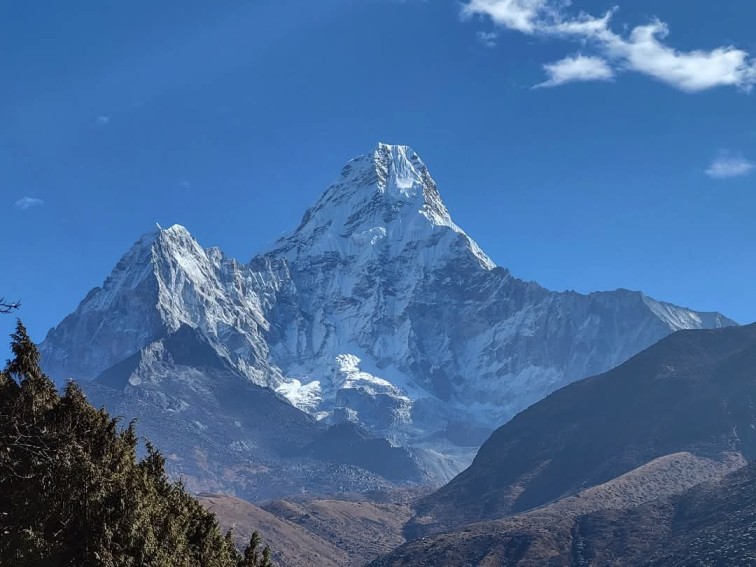
A sunrise over Ama Dablam.
A small Sherpa village waking up in the cold morning.
The sound of a river far below the trail.
A cup of hot tea in a simple mountain lodge.
A group of trekkers laughing around a dining-room stove.
A Buddhist prayer wheel turning slowly as you pass.
The mountains become part of the background of your entire day.
Everest is still there, of course. But the journey becomes much bigger than one mountain.
That is one of the most beautiful surprises of the trek.
-
The first few days can feel easier than you expected
When people imagine Everest Base Camp, they often imagine difficult climbing from the first morning.
That’s not how it begins.
The trail starts with forests, suspension bridges, villages, rivers and green hills.
You may even wonder:
“Is this really the Everest Base Camp trail?”
Then the landscape slowly changes.
The trees become shorter. The air becomes colder. The villages become more remote. The mountains appear larger.
And eventually, you realize that the Himalayas are slowly taking you higher.
The difficulty doesn’t usually arrive all at once.
It builds quietly.
-
Walking slowly is not a weakness
This is something many first-time trekkers struggle with.
You see someone walking faster than you and naturally think you should keep up.
Don’t.
The mountains don’t reward speed.
At high altitude, walking too quickly can make the journey much harder. Your body needs time to adjust to the thinner air.
A good trekking day isn’t about reaching the destination as quickly as possible.
It’s about arriving safely, comfortably and with enough energy to enjoy where you are.
Your guide may tell you:
“Slowly, slowly.” in Nepal language ( Bistarai – Bistarai )
Listen to them.
In the Himalayas, slow is often smart.
-
Your body will surprise you
You may be fit.
You may run every morning.
You may spend hours in the gym.
You may have completed difficult hikes at home.
And then the altitude teaches you something completely different.
At higher elevations, simple things can feel surprisingly difficult.
Walking uphill.
Getting dressed.
Climbing stairs.
Carrying your daypack.
Sometimes even getting out of bed.
This doesn’t necessarily mean you are unfit.
The air is thinner, and your body is working harder.
That’s why the Everest Base Camp trek is as much about patience as it is about fitness.
-
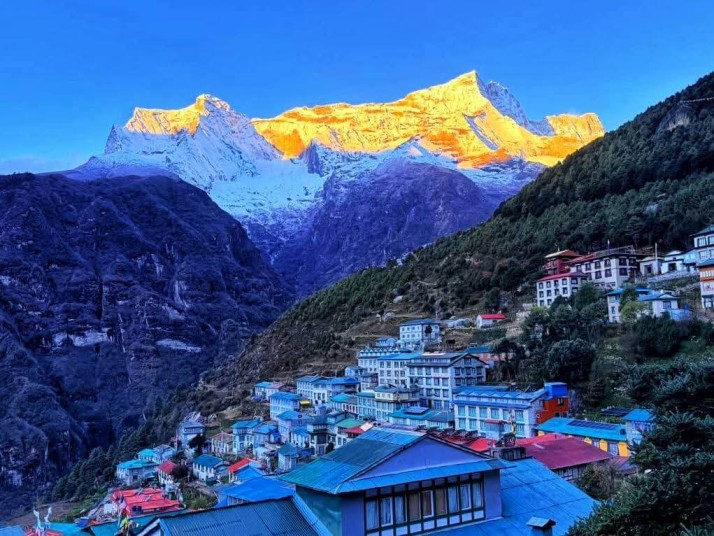
Namche Bazaar feels like a little mountain world
Then you reach Namche.
For many trekkers, Namche Bazaar is one of the most memorable places on the entire route.
It doesn’t feel like a normal mountain village.
There are bakeries, cafés, trekking shops, small restaurants, hotels and colourful streets built into the mountainside.
You can sit with a coffee and look at the mountains while talking to someone who travelled from the other side of the world.
And then you realize something:
People from everywhere have come here for the same reason.
The mountains have brought strangers together.
-
You will probably think about food more than you expected
Nobody warns you about this.
After several hours of walking, food becomes incredibly important.
A simple bowl of dal bhat can taste better than an expensive meal in the city.
Hot soup feels like a luxury.
Tea becomes part of your daily routine.
And when the weather is cold, sitting inside a warm dining room with a hot meal in front of you feels like one of the best moments of the day.
You may arrive in the mountains thinking about photography and adventure.
After a few days, you might be thinking:
“How soon can I have dal bhat?”
That’s normal.
-
The nights are different
During the day, you are busy walking.
At night, everything becomes quiet.
Very quiet.
In some villages, there is almost nothing outside except darkness, mountains and stars.
The temperature drops quickly after sunset.
Your room may be simple. The walls may be thin. The bathroom may be outside your room.
And you may suddenly appreciate things you normally never think about.
A warm sleeping bag.
A hot meal.
A charging socket.
A clean bed.
A cup of tea.
Comfort becomes something you notice.
-
A hot shower can become the highlight of your day
At home, taking a shower is just part of your routine.
On the Everest trail, it can become an event.
You might spend several hours walking in the cold and then arrive at a lodge thinking about nothing except getting warm.
When you finally get that hot shower, you feel incredibly happy.
It is funny how quickly the mountains can change your definition of luxury.
-
The mountains make you put your phone down
You might arrive with plans to take hundreds of photographs.
And you probably will.
But eventually, there will be moments when you don’t want to take a picture.
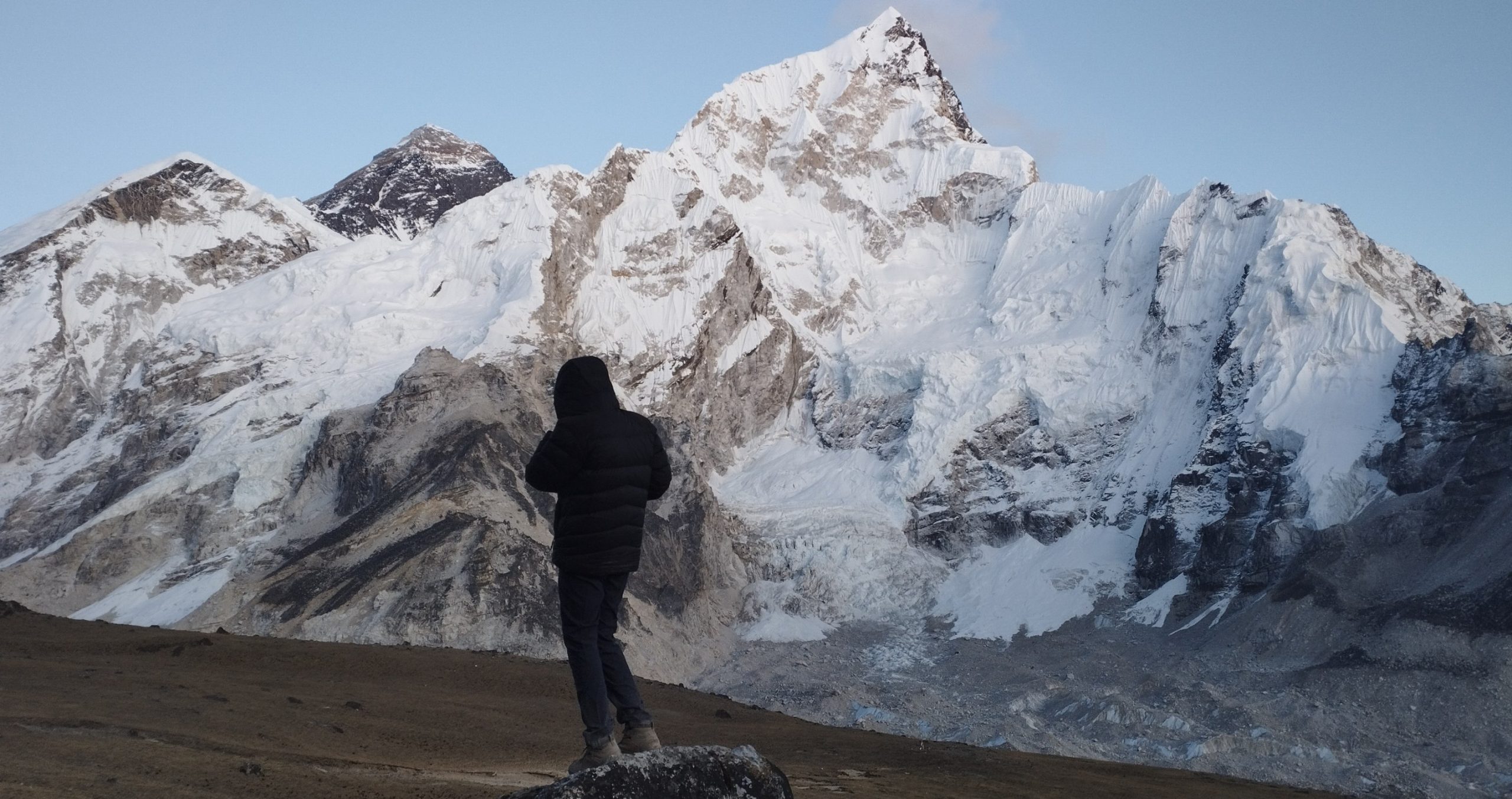
You just want to look.
You stand on a trail above the clouds.
A huge mountain rises in front of you.
The wind moves through the prayer flags.
Nobody says anything.
For a few minutes, you simply stand there.
Those moments often become more valuable than the photographs.
-
You will meet people you may never forget
One of the best parts of the trek is the people.
You meet trekkers from different countries.
You share tables.
You share stories.
You encourage each other on difficult sections.
Sometimes you meet someone in Lukla and keep seeing them throughout the trek.
You may start as strangers.
A few days later, you’re asking:
“How was your day?”
“Are you feeling okay?”
“Where are you staying tonight?”
The mountains create a strange kind of friendship.
You don’t need much introduction.
Everyone is walking the same trial.
-
Your guide becomes much more important than you expected
Before the trek, you might think a guide is simply someone who shows you the route.
Once you’re in the mountains, you understand the difference.
A good guide watches your pace.
They notice when you are tired.
They know when you need to drink water.
They understand the trail and the weather.
They know the villages.
They can explain the mountains you are looking at.
They can tell you the meaning behind prayer flags, mani walls, monasteries and local traditions.
And when you are having a difficult day, sometimes they simply say:
“Take your time. We are not in a hurry.”
That can mean a lot.
-
The Sherpa culture may become one of your favourite memories
The Everest region isn’t just a place with spectacular mountains.
It is home to communities with a deep relationship with the Himalayas.
You pass mani walls covered with Buddhist inscriptions.
You hear bells and see prayer wheels.
You walk past monasteries.
You see prayer flags moving in the wind.
You meet people whose lives are closely connected to these mountains.
Take the time to learn.
Don’t just walk through the villages.
Look around.
Talk to people when appropriate.
Ask questions.
The cultural experience is an important part of the journey.
-
There will probably be a day when you wonder why you are doing this
Be prepared for it.
You may be cold.
You may be tired.
Your legs may hurt.
The trail may seem longer than expected.
The altitude may make you uncomfortable.
You may look at the uphill path ahead and think:
“Why did I decide to do this?”
Almost everyone has a difficult moment.
Don’t let that moment define the whole trek.
Rest.
Eat something.
Drink water.
Talk to your guide.
Take a breath.
Then continue when you are ready.
The next morning can feel completely different.
-
Everest Base Camp itself may surprise you
Many people imagine a huge permanent camp with tents and climbers everywhere.
The reality is different depending on the season.
You arrive at a rocky area surrounded by enormous mountains and glaciers.
There may be trekkers taking photographs, expedition teams preparing for climbs, prayer flags and the famous Everest Base Camp marker.
You take your photograph.
You smile.
Maybe you feel emotional.
But there is something important to remember.
You didn’t really arrive at Everest Base Camp on that day.
You arrived there over many days.
Every step from Lukla.
Every bridge.
Every village.
Every climb.
Every cold morning.
Every tired evening.
Every moment you wanted to stop.
That is what you are celebrating.
-
Kala Patthar can be more emotional than Base Camp
For many trekkers, the sunrise from Kala Patthar becomes one of the greatest moments of the entire journey.
You wake up early.
It’s cold.
Very cold.
You walk in the darkness.
Your headlamp lights the trail ahead.
Then the sky begins to change.
Slowly, the first light touches the mountains.
Everest appears.
Ama Dablam.
Pumori.
Lhotse.
The entire Himalayan landscape begins to glow.
Nobody needs to explain why you woke up at 4 or 5 in the morning.
You understand.
Some views are worth being cold for.
-
You will discover that the way down is not “easy”
After reaching Base Camp, some trekkers think the difficult part is finished.
Not exactly.
The trail down still requires strong legs.
Your knees may complain.
Your feet may be tired.
And after reaching your goal, motivation can change.
That’s why it’s important to remember:
The trek isn’t finished when you reach Base Camp.
You still need to return safely.
-
You may become less interested in luxury
This is perhaps one of the strangest things the mountains teach you.
After several days on the trail, you stop worrying about having everything.
You become happy with enough.
Enough food.
Enough warmth.
Enough sleep.
A clean room.
A friendly person.
A beautiful view.
A safe trail.
You realize how little you actually need to be happy.
And that lesson can stay with you long after you return home.
-
The hardest part may be saying goodbye
Nobody really talks about this.
You spend days walking through the same landscape.
You become familiar with the villages.
You know the faces at the lodge.
You have inside jokes with your trekking group.
Your guide and porter become part of your daily life.
Then suddenly, you are flying back to Kathmandu.
The mountains get smaller through the airplane window.
The trail disappears behind you.
And you realize that a place you knew nothing about a few weeks earlier has become a place you already miss.
-
You don’t have to be a professional mountaineer
Everest Base Camp is not an expedition to the summit of Everest.
You don’t need to climb Everest.
You don’t need technical mountaineering skills.
But you do need preparation, patience and respect for altitude.
The most important thing isn’t proving how strong you are.
It’s knowing your body, listening to your guide and taking the journey one day at a time.
-
You will come home with more than photographs
This is probably the biggest thing nobody tells you.
You think you’re going to Nepal to see Everest.
But you may return home thinking about completely different things.
The old man spinning a prayer wheel.
The porter carrying an incredible load up the mountain.
The child smiling outside a village house.
The sound of a river.
The taste of your first cup of tea in the morning.
The person you met on the trail.
The sunrise from Kala Patthar.
The feeling of reaching a place you had dreamed about for years.
And perhaps the biggest memory of all:
Realizing that you were capable of more than you thought.
The Everest Base Camp Trek Is a Journey, Not a Checklist
There is a temptation to treat the Everest Base Camp trek like a list.
Lukla — done.
Namche — done.
Tengboche — done.
Dingboche — done.
Lobuche — done.
Base Camp — done.
But the Himalayas don’t work that way.
The best memories usually happen between the destinations.
They happen when you stop for tea.
When the clouds suddenly clear.
When your guide points toward a mountain and tells you its name.
When a stranger offers you a seat near the stove.
When you look back at the trail and realize how far you’ve walked.
When you are tired but still smiling.
That is the Everest experience.
And if you are thinking about doing this trek, don’t go only to say:
“I reached Everest Base Camp.”
Go to experience the journey.
Walk slowly.
Look around.
Talk to people.
Respect the mountains.
Listen to your body.
Learn something about the culture.
And allow yourself to be surprised.
Because when you finally return home, you may discover that the thing you remember most isn’t standing at Everest Base Camp.
It is everything that happened on the way there.
The mountains are not just a destination. They become a story you carry home.
Thinking About Your Own Everest Journey?
If Everest Base Camp is a journey you have been dreaming about, take your time to plan it in a way that feels right for you. Every trekker is different, and the mountains should be experienced at your own pace.
At Igloo Himalaya Treks, we are a local Nepal-based trekking team, and we believe good trekking is not only about reaching the destination. It is about feeling safe, being well looked after, learning about the places you pass through, and enjoying the journey along the way.
If you are planning your Everest Base Camp adventure and simply want some honest advice before making a decision, feel free to talk to us. We will be happy to share what we know and help you understand what the journey is really like.
Maybe one day, we’ll meet you on the trail.
— Igloo Himalaya Treks, Nepal


