
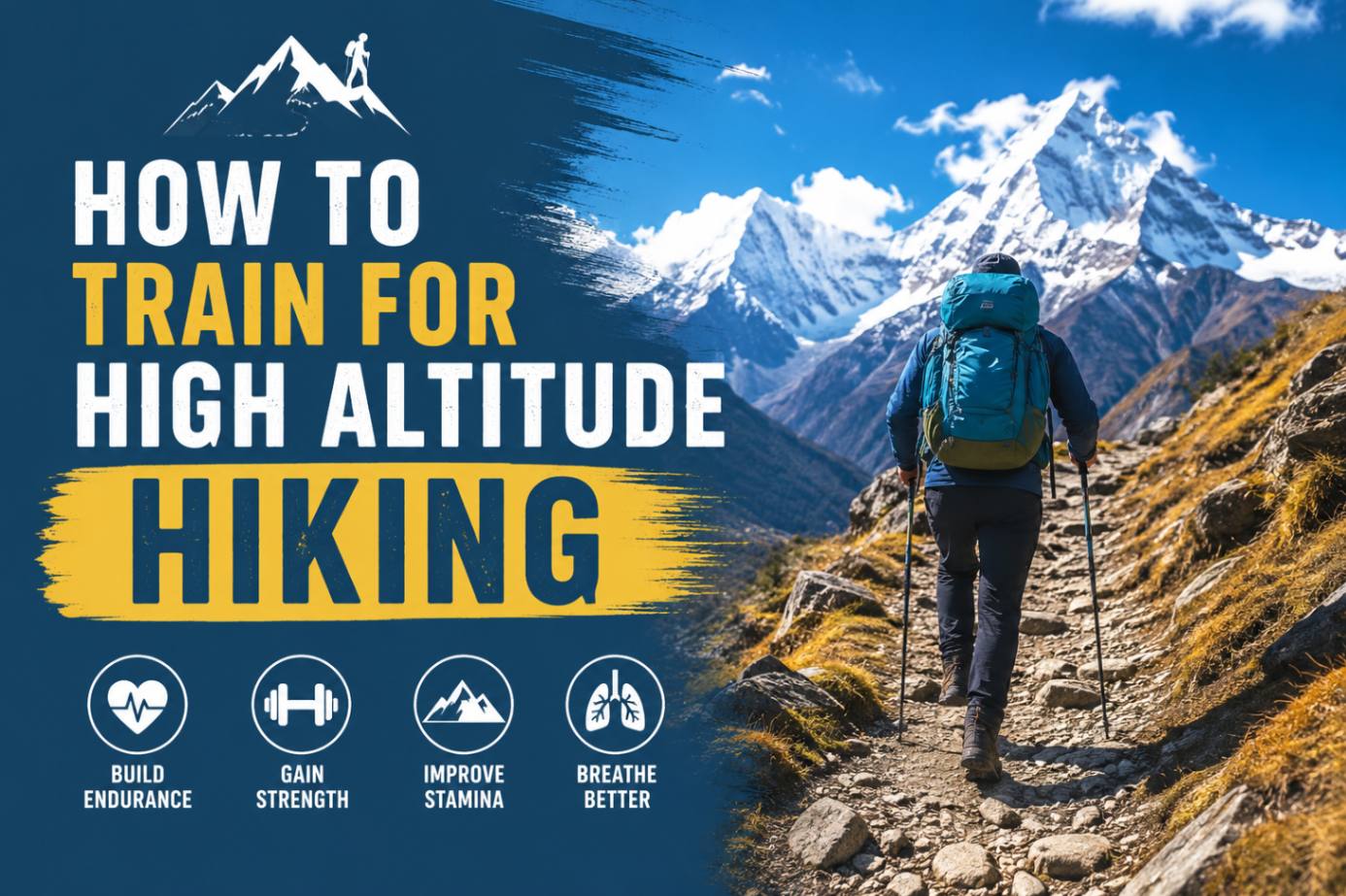
How to Train for High Altitude Hiking
Training for high altitude hiking means building your aerobic base, leg and core strength, and acclimatization strategy in the 8 to 12 weeks before your trek, since fitness at sea level only partly transfers to thin air above 2,400 m. No amount of gym training fully replaces acclimatization, but a structured plan measurably lowers your risk of altitude sickness and makes the actual walking easier on the trail.
This guide covers what altitude does to your body, how to structure a training timeline, which exercises matter most, and how to prepare for trekking at high altitudes safely, whether you’re heading to the Andes, the Rockies, or the Himalayas.
What “High Altitude” Actually Means
Altitude is generally classified into four bands, and knowing which one your trek falls into tells you how seriously to take training and acclimatization.
- High altitude: 8,000–12,000 ft (2,400–3,600 m), where most people first notice reduced performance and mild symptoms are possible.
- Very high altitude: 12,000–18,000 ft (3,600–5,500 m), where acute mountain sickness becomes a real risk without proper acclimatization. Everest Base Camp (5,364 m) and Annapurna Base Camp (4,130 m) both fall in this band.
- Extreme altitude: above 18,000 ft (5,500 m), where the body can no longer fully acclimatize, and supplemental oxygen is often used for sustained stays.
- Hiking elevation gain (how much you climb during the day) is a separate factor from absolute altitude, and both affect how hard a hike feels a 900 m elevation gain at 4,000 m is far more taxing than the same gain at sea level.
How Your Body Responds to Altitude
Air pressure drops as you gain elevation, which means each breath delivers less oxygen to your bloodstream even though the percentage of oxygen in the air stays the same. Your body compensates by breathing faster and deeper, increasing your heart rate, and, over several days, producing more red blood cells to carry oxygen more efficiently.
This adjustment period, called acclimatization, typically takes several days at any new altitude band and cannot be rushed through fitness alone.
A strong training base does not prevent altitude sickness, but it does reduce the physical strain of walking uphill with a pack in low oxygen, which is where most training benefit actually comes from.
How Long Before Your Trek You Should Start Training
Most guides and training programs recommend starting 8 to 12 weeks before departure, or up to 3 to 4 months out if you are currently sedentary or the trek involves sustained days above 4,000 m.
Begin with general aerobic fitness and gradually shift toward hike-specific training: longer distances, more elevation gain, and a loaded pack as your departure date gets closer.
Increase training volume by roughly 10% per week rather than jumping straight to long, heavy sessions, and plan a lighter final week before departure so you arrive rested rather than fatigued.
Cardio and Aerobic Training for High Altitude Hiking
Aerobic capacity is the single biggest factor in how well you handle high altitude hiking, since your heart and lungs are already working harder than normal just to keep your muscles supplied with oxygen.
-
Best Aerobic Exercises
Long-distance running, hill running, cycling, swimming, rowing, and high-intensity interval training (HIIT) all build the aerobic base you need.
Stair climbing and hill repeats are particularly useful because they combine cardio with the specific leg muscles used in uphill walking. Aim for three to five aerobic sessions per week, mixing steady-state efforts of 45 to 90 minutes with one or two higher-intensity interval sessions.
-
Weekly Training Volume
Track your progress using a few simple markers: your resting heart rate should trend downward as your fitness improves, your recovery time after hard sessions should shorten, and the distance or elevation gain you can comfortably cover on training hikes should steadily increase.
A falling resting heart rate over several weeks is one of the clearest signs your aerobic base is improving.
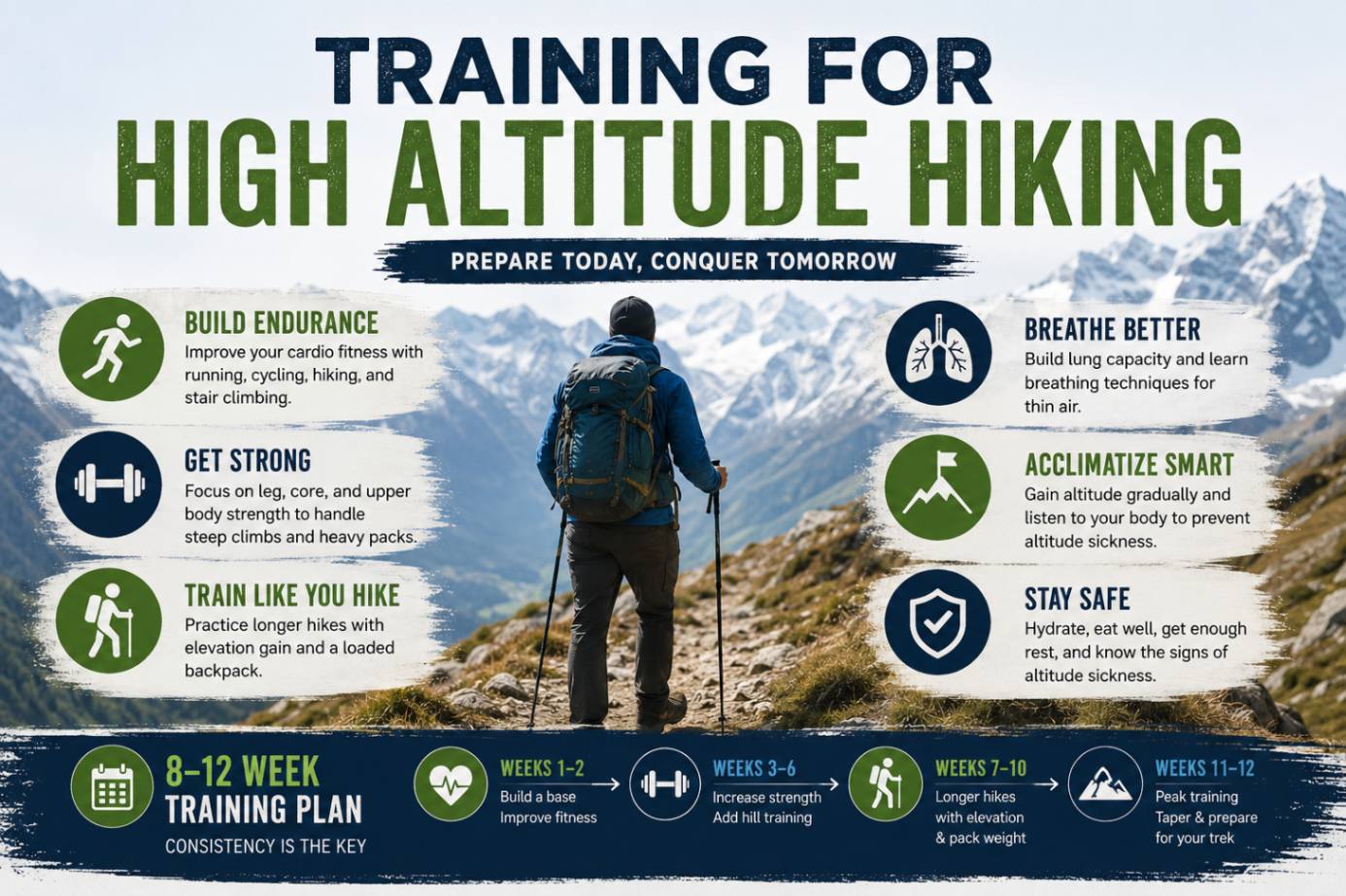
Strength Training for High Altitude Trekking
Strength training prepares your body for the repetitive load of carrying a pack over uneven terrain for multiple hours a day, and it matters as much as cardio for avoiding injury and fatigue on the trail.
-
Key Exercises
Squats, lunges, step-ups, deadlifts, and calf raises build the leg strength needed for sustained climbing and descending.
Planks, dead bugs, and other core work stabilize your torso under a loaded pack, while push-ups, pull-ups, and shoulder presses build the upper-body and shoulder strength that trekking poles and pack straps demand.
Two to three strength sessions per week, alongside your cardio work, is a reasonable target.
-
Backpack-Loaded Training
Downhill walking is harder on your joints than climbing, since your quadriceps work eccentrically lengthening under load with every step down.
Training step-downs and doing hill repeats with a loaded pack builds this specific strength and meaningfully reduces knee and ankle strain on multi-day descents. Start with a lighter pack than your actual trek weight and build up gradually.
Practice Hikes and Elevation Simulation
Nothing replaces time on your feet carrying weight over real terrain, so practice hikes should become a regular part of your training as your trek approaches.
-
Stair Climbing and Hill Repeats
If you don’t live near mountains, stairwells, stadium steps, and treadmill incline settings are effective substitutes.
Gradually increase the length of your hikes if you are comfortable with an 8 km hike, add roughly 1.5 km each week rather than jumping straight to your longest planned day. Schedule your longest training hike at least two weeks before departure so you have time to recover fully before travel.
-
Altitude Tents and Hypoxic Training
Some gyms offer altitude rooms or tents that simulate reduced oxygen levels, and dedicated athletes sometimes use altitude tents for sleeping in the weeks before a big trip.
These tools can help your body begin producing more red blood cells ahead of time, though they are optional extras rather than a requirement a solid aerobic and strength base matters far more for most trekkers.
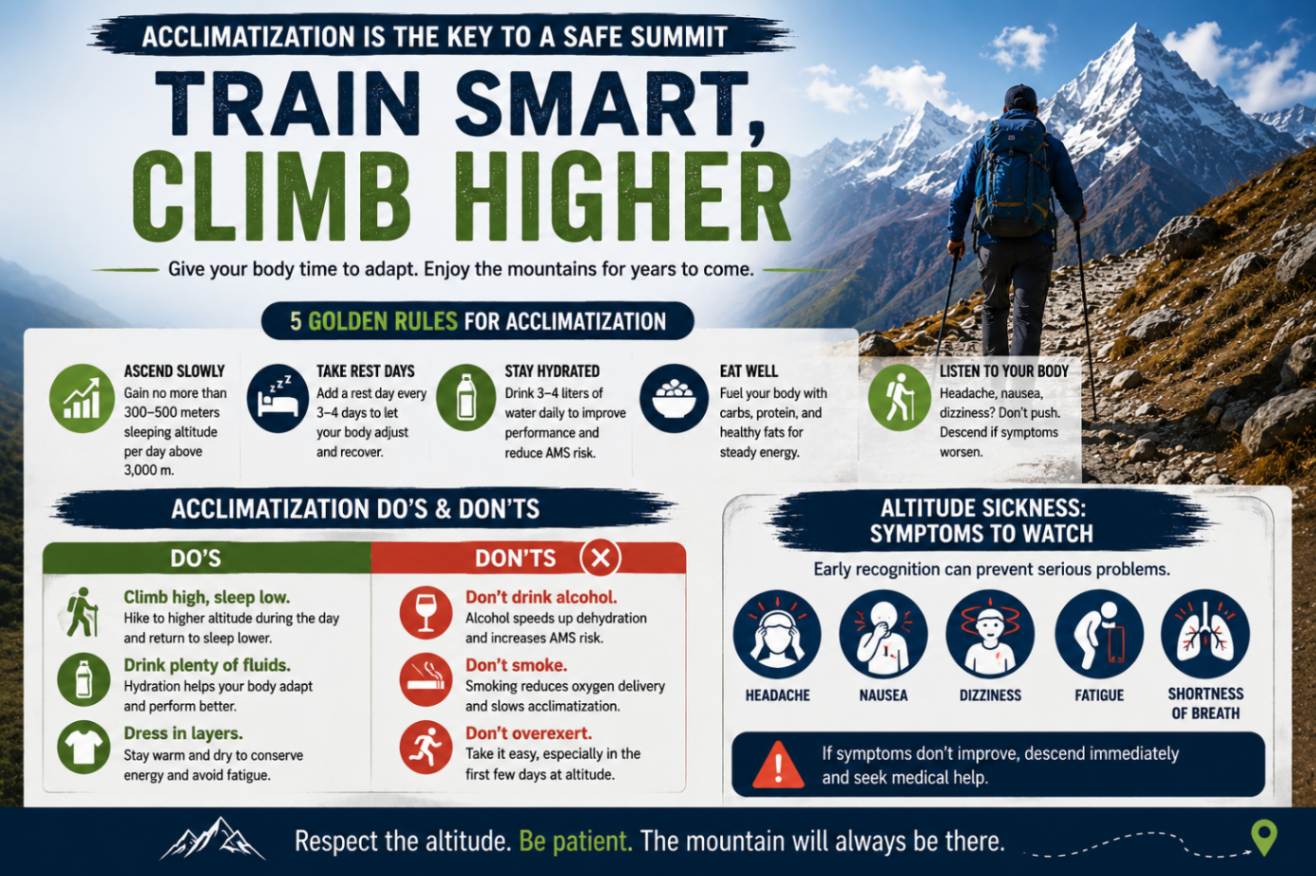
How to Prepare for Trekking at High Altitudes: Acclimatization Strategy
Training builds your fitness, but acclimatization is what actually prevents altitude sickness, and the two need to work together.
-
Climb High, Sleep Low
“Climb high, sleep low” is the core principle behind safe acclimatization: gain elevation during the day, but descend to sleep at a lower altitude when possible. Most well-designed treks, including multi-day Himalayan itineraries, build this into the daily schedule automatically with rest days scheduled at key elevation points.
A study of mountaineers found that those who spent five or more days above 3,000 m in the two months before a big ascent had fewer cases of acute mountain sickness than those with no prior altitude exposure.
-
Pre-Trip Altitude Exposure
If you have access to elevation near home, weekend trips to progressively higher elevations in the months before your trek genuinely help.
Even a few days at 1,500–1,800 m a few weeks out gives your body a preview of what’s coming. If you’re flying directly into a high-altitude starting point, such as Lukla (2,860 m) or Cusco (3,400 m), plan a day or two of light activity on arrival before starting to hike, rather than setting off immediately.
Nutrition and Hydration Before and During Your Hike
Altitude increases fluid loss through faster breathing and can suppress appetite, so both hydration and calorie intake need deliberate attention.
Drink more water than feels necessary; dehydration compounds the symptoms of altitude sickness, and prioritize iron-rich foods like leafy greens, beans, and lean meat in the weeks before departure, since iron supports the oxygen-carrying capacity of your blood.
On the trail, carry calorie-dense snacks and eat consistently even when your appetite drops, since a calorie deficit at altitude makes the physical strain noticeably worse. Limiting alcohol in the days before and during your ascent also matters, since it worsens dehydration and can mask early symptoms of altitude sickness.
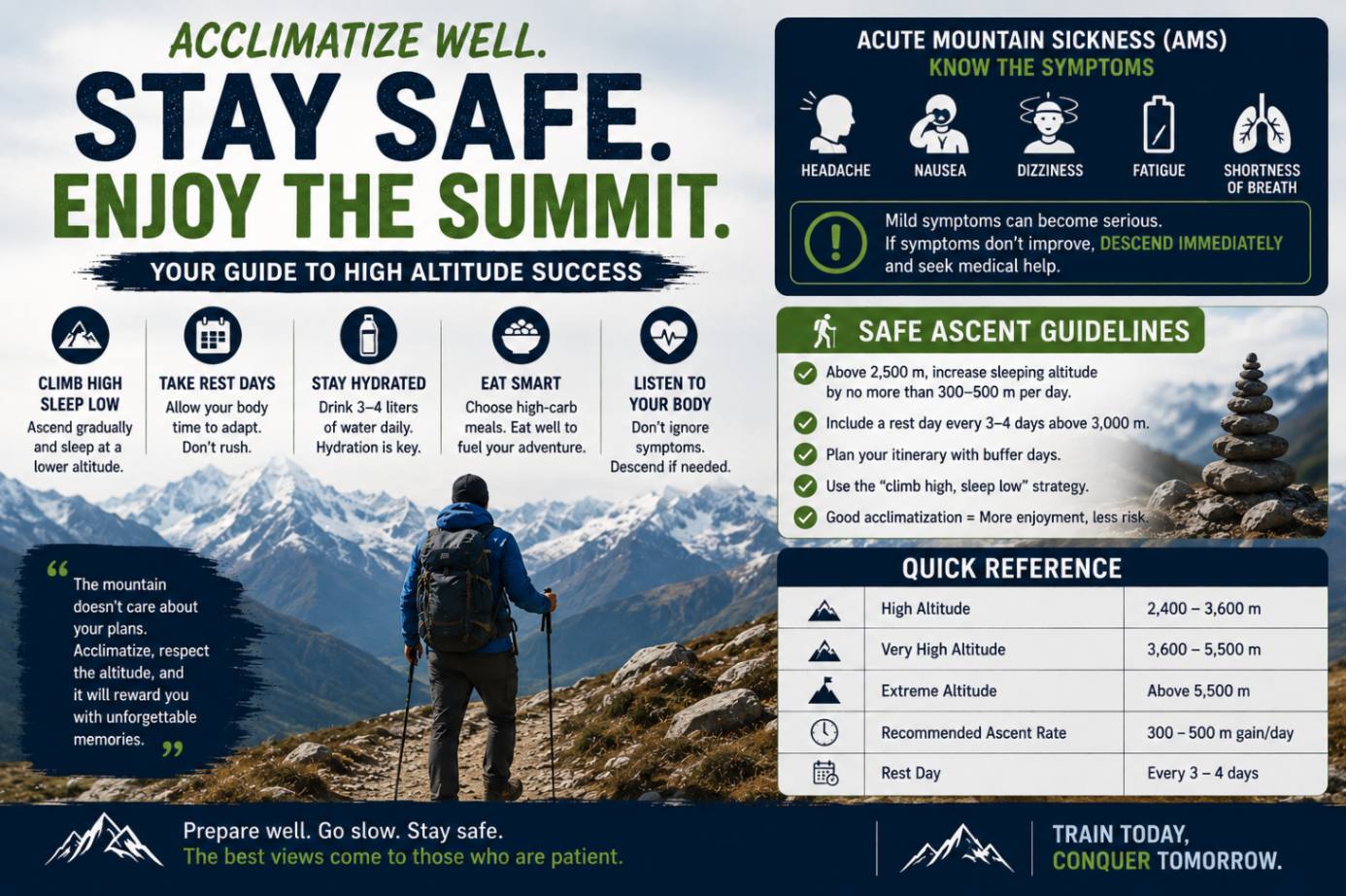
Preventing Altitude Sickness: What to Know Before You Go
Training and acclimatization reduce your risk, but every trekker should understand the warning signs of altitude illness before heading above 2,500 m. The CDC Yellow Book guidance on high-altitude travel and altitude illness provides detailed information on acclimatization, altitude illness prevention, and treatment.
-
Recognizing AMS Symptoms
Acute mountain sickness (AMS) typically presents as headache combined with at least one of the following: nausea, loss of appetite, dizziness, fatigue, or trouble sleeping. Symptoms usually appear within the first 6 to 12 hours at a new altitude.
Mild AMS can often be managed by resting at the same altitude rather than continuing to climb, but if symptoms worsen or don’t improve, descending to a lower elevation is the most effective treatment.
Left unmanaged, AMS can progress to the more serious high altitude cerebral edema (HACE) or high altitude pulmonary edema (HAPE), both of which require immediate descent and medical attention.
-
Acetazolamide (Diamox): What the Guidelines Say
Acetazolamide, sold as Diamox, is commonly used to help prevent AMS by speeding up the body’s natural acclimatization process. According to Wilderness Medical Society guidelines, the standard adult prophylactic dose is 125 mg taken twice daily, usually starting the day before ascent and continued for a couple of days after reaching the highest planned altitude.
This medication requires a prescription and carries potential side effects, including tingling in the fingers and toes and increased urination, so it should only be used after discussing it with a doctor or travel medicine clinic before your trip — this article is informational and not a substitute for medical advice.
A Sample 8-Week Training Plan for High Altitude Hiking
This is a general framework you can adjust based on your starting fitness level and the specific demands of your trek.
| Week | Cardio | Strength | Hiking |
|---|---|---|---|
| 1–2 | 3x/week, 30–45 min moderate | 2x/week, bodyweight squats, lunges, planks | 1 short hike (5–8 km), light pack |
| 3–4 | 4x/week, add 1 interval session | 2–3x/week, add loaded squats, step-ups | 1 hike (8–10 km) with 4–6 kg pack |
| 5–6 | 4–5x/week, longer steady sessions | 3x/week, add weighted step-downs | 1–2 hikes (10–14 km) with 6–9 kg pack |
| 7 | Maintain volume, reduce intensity slightly | 2x/week, lighter loads | Longest training hike, close to actual trek distance |
| 8 (taper week) | Light cardio only, 20–30 min | 1x/week, mobility-focused | Rest or short easy walk before departure |
Gear and Mental Preparation
Break in your hiking boots during training, not on the trail. New boots are one of the most common causes of blisters on multi-day treks.
Train with the actual pack, layers, and trekking poles you plan to use, so you know how your gear performs under real load before you’re days from the nearest town.
High altitude hiking is a mental challenge as much as a physical one: breathlessness after minor exertion is normal at altitude, and practicing slow, controlled breathing during training hikes helps you stay calm when it happens on the trail.
A steady, patient pace often described as “trekker’s pace” by Himalayan guides beats pushing hard and needing frequent stops.
Training for High Altitude Mountaineering vs. Trekking
Training for high altitude mountaineering builds on everything above but adds technical skill work: crampon and ice axe use, roped travel, and load-carrying on steeper, more exposed terrain, typically for peaks like Island Peak (6,189 m) or Yala Peak (5,500–5,732 m) that involve glacier travel above base camp.
Standard high-altitude trekking, by contrast, stays on established trails and doesn’t require technical climbing skills. Even at similar altitudes, the Everest Base Camp Trek and Annapurna Base Camp Trek are good examples of treks that reach very high altitude without any climbing gear.
If your trip includes a peak-climbing component, add grip and forearm strength work, practice hikes on steeper, looser terrain, and, where possible, a guided skills day before your expedition.
Conclusion
Training for high altitude hiking comes down to three things working together: an aerobic and strength base built over 8 to 12 weeks, a sensible acclimatization strategy on the mountain itself, and enough awareness of altitude sickness symptoms to make good decisions on the trail.
None of these replace each other: strong fitness with poor acclimatization still leads to AMS, and good acclimatization with poor fitness still makes for a miserable, exhausting trek.
If you are planning a high-altitude trek in Nepal, Igloo Himalaya Treks builds acclimatization days directly into every itinerary and can advise on a training timeline suited to your specific route, whether that’s the Everest Base Camp Trek, the Annapurna Base Camp Trek, the Gokyo Lakes Trek, or a technical objective like Yala Peak Climbing. Their guides can also help you plan a realistic pre-trip conditioning schedule based on your trek’s specific elevation profile.
FAQs
How long does it take to train for high altitude hiking?
Most people need 8 to 12 weeks of structured training, or 3 to 4 months if starting from a sedentary baseline or preparing for a trek that spends multiple days above 4,000 m.
Can you train for altitude without living near mountains?
Yes. Stair climbing, treadmill incline work, weighted hiking on flat trails, and cardio-focused HIIT sessions all build the fitness needed, even without access to elevation. Altitude tents and gym altitude rooms are optional extras, not requirements.
What is the best exercise to prepare for high altitude hiking?
Weighted hill hiking or stair climbing is considered the most specific exercise, since it combines cardiovascular training with the exact leg muscles and pack-carrying demands used on the trail.
Does being fit prevent altitude sickness?
No. Fitness level and susceptibility to altitude sickness are largely unrelated; even very fit people can develop AMS. Gradual ascent and proper acclimatization are the main protective factors, though good fitness does make the physical exertion easier.
How much elevation gain should I train for before a high altitude trek?
Build up gradually to hikes with elevation gain similar to your trek’s toughest days, ideally reaching that volume by 2 to 3 weeks before departure so you have time to recover before travel.
Should I take Diamox for high altitude hiking?
Diamox (acetazolamide) can help prevent AMS and is commonly used by trekkers heading above 3,000 m, but it requires a prescription and should be discussed with a doctor or travel medicine clinic before your trip, since it isn’t right for everyone.
What altitude is considered dangerous without acclimatization?
Altitudes above 3,600 m (“very high altitude”) carry meaningful AMS risk without proper acclimatization, and altitudes above 5,500 m (“extreme altitude”) are where the body can no longer fully adapt for sustained stays.
How do I know if my training is working?
Track your resting heart rate (it should trend down), your recovery time after hard sessions (it should shorten), and the distance or elevation you can comfortably cover on training hikes (it should steadily increase).
Can I prepare for high altitude hiking if I am a beginner?
Yes, beginners can prepare for high altitude hiking with a gradual 8–12 week training plan. Start with 30–45 minutes of moderate cardio three times per week, add two strength sessions focusing on squats, lunges, step-ups, and core exercises, and gradually introduce longer hikes with a light backpack. As your fitness improves, increase the distance, elevation gain, and pack weight rather than trying to do everything at once. For a high-altitude trek in Nepal, such as Everest Base Camp or Annapurna Base Camp, consistent training and proper acclimatization are more important than having an advanced fitness level.
How many days a week should I train for a high altitude trek?
Aim for 4–6 training days per week, combining cardio, strength training, and hiking rather than doing the same workout every day. A practical schedule can include three to five aerobic sessions, two to three strength workouts, and one longer practice hike each week, with some sessions overlapping. Gradually increase your training volume by around 10% per week and reduce the intensity during the final week before your trek. The goal is to arrive at high altitude strong and well-recovered, not exhausted from last-minute training.


