How to Get to Everest Base Camp: Permits, Gear, and Daily Budget (2026)
Getting to Everest Base Camp starts in Kathmandu, but from there, travelers have real choices to make. Most trekkers fly to Lukla and walk in over eight to nine days. Others skip the flight entirely and drive to a lower trailhead before starting on foot. A smaller group skips walking altogether and reaches the base camp area by helicopter in a single morning. This guide walks through each option, what it costs, what permits you need, and how to plan the trip from Kathmandu to the base of the world’s highest mountain.
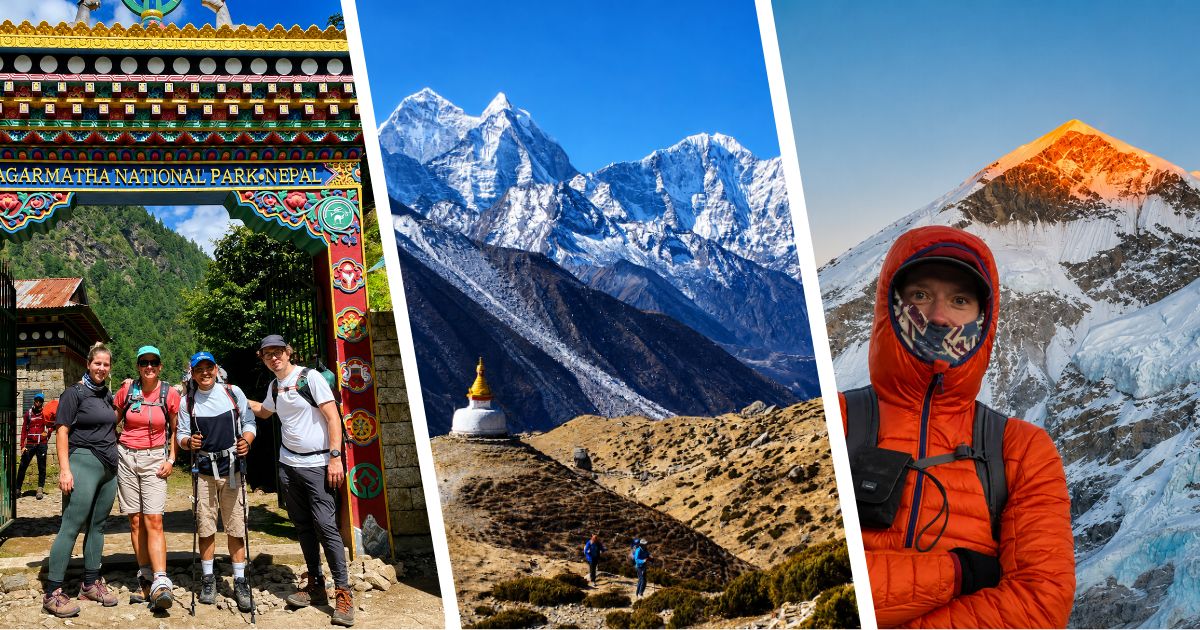
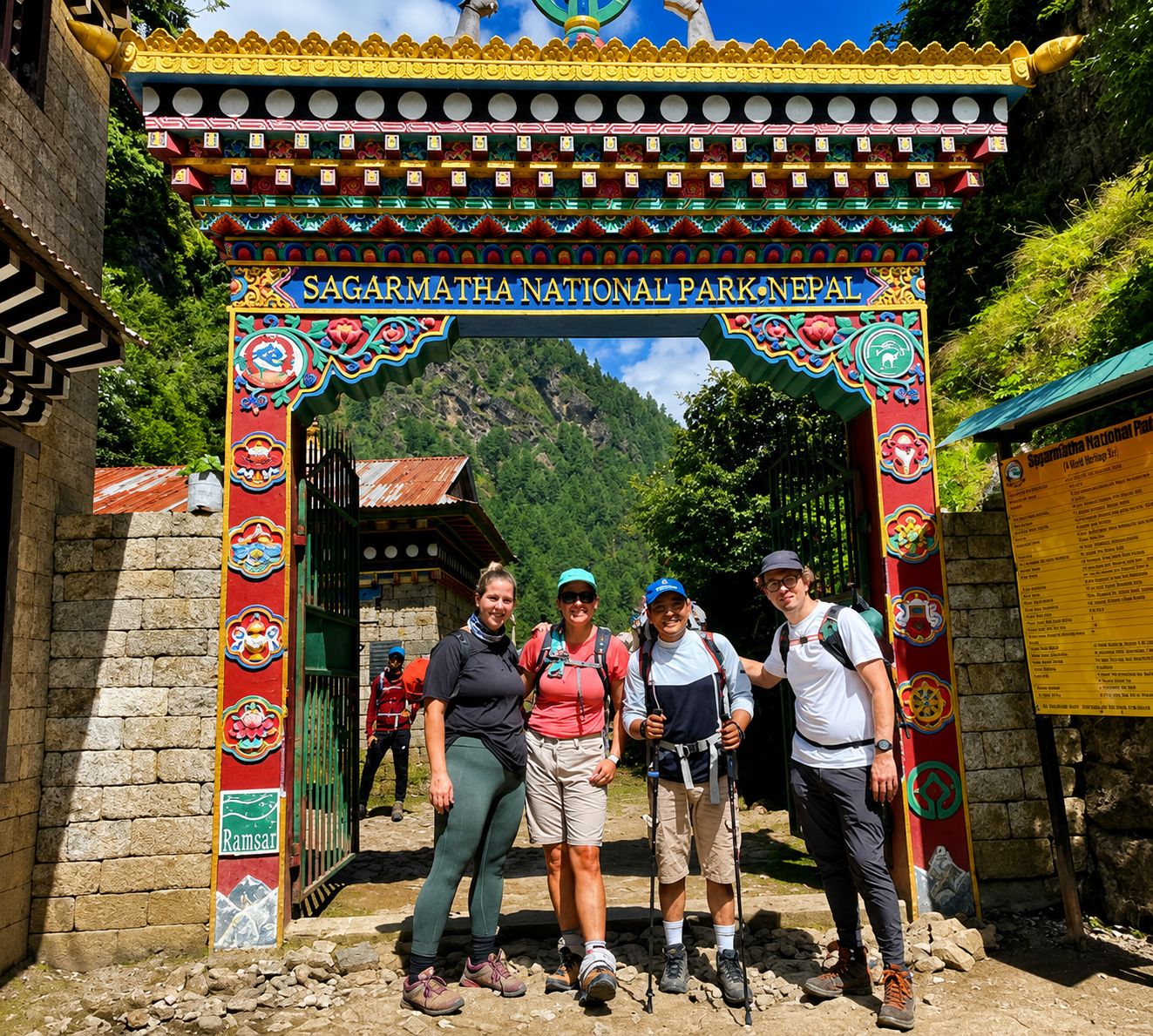
Everest Base Camp sits at 5,364 m in the Khumbu region of Nepal’s Solukhumbu District, inside Sagarmatha National Park, a UNESCO World Heritage Site. The trek covers about 130 km round trip from Lukla, with the trail climbing from 2,860 m to the base camp itself, and up to 5,545 m if you add the side trip to Kala Patthar, the region’s best viewpoint of Mount Everest.
Where Everest Base Camp Is and Why the Route Matters
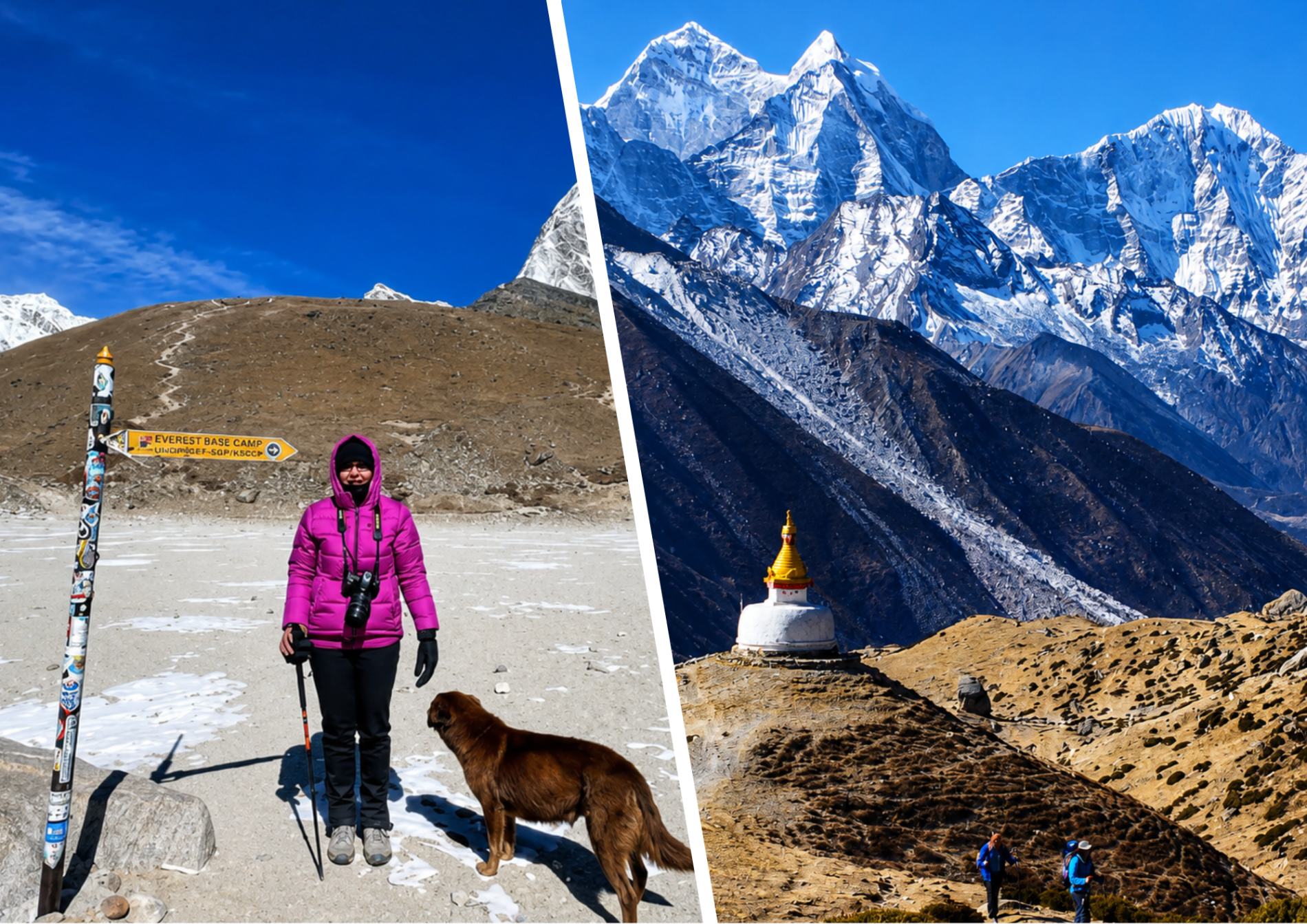
Everest Base Camp lies at the foot of the Khumbu Icefall, on the edge of the Khumbu Glacier, close to the Nepal-Tibet border.
There is no road anywhere near it. Every route in involves either flying partway and walking the rest, driving to a lower trailhead and walking a longer distance, or flying over the trail entirely by helicopter.
Which option makes sense depends on how much time you have, your budget, and whether you want the multi-day trekking experience or just the view.
Here is a breakdown of each route.
Option 1: Fly to Lukla and Trek In (the Standard Route)
This is how roughly 90% of Everest Base Camp trekkers travel. It is faster, more predictable, and lets you start walking at a higher elevation, which shortens the trip.
-
Kathmandu to Lukla Flight Details
The flight from Kathmandu to Lukla’s Tenzing-Hillary Airport takes 25 to 40 minutes and costs approximately USD 200 to 255 per person one way, depending on the airline and season. Tara Air, Summit Air, and Sita Air operate the route using small STOL aircraft built for Lukla’s short, sloped 527 m runway.
During the two busiest seasons, spring (March–May) and autumn (September–November), the Civil Aviation Authority of Nepal typically diverts Lukla flights to Manthali Airport in Ramechhap instead of Kathmandu, to reduce congestion at Tribhuvan International Airport.
This adds a road transfer of about 4 to 5 hours each way between Kathmandu and Manthali, usually starting at 2 to 3 a.m. to catch the first weather window. Flights only operate under visual flight rules, so morning departures are standard and afternoon flights are rare.
-
Trekking Days From Lukla to Base Camp
From Lukla, the walk to Everest Base Camp and back typically takes 8 to 9 trekking days, including two acclimatization days. A common route looks like this:
- Lukla (2,860 m) to Phakding (2,610 m)
- Phakding to Namche Bazaar (3,440 m), plus an acclimatization day
- Namche to Tengboche (3,860 m)
- Tengboche to Dingboche (4,410 m), plus an acclimatization day
- Dingboche to Lobuche (4,910 m)
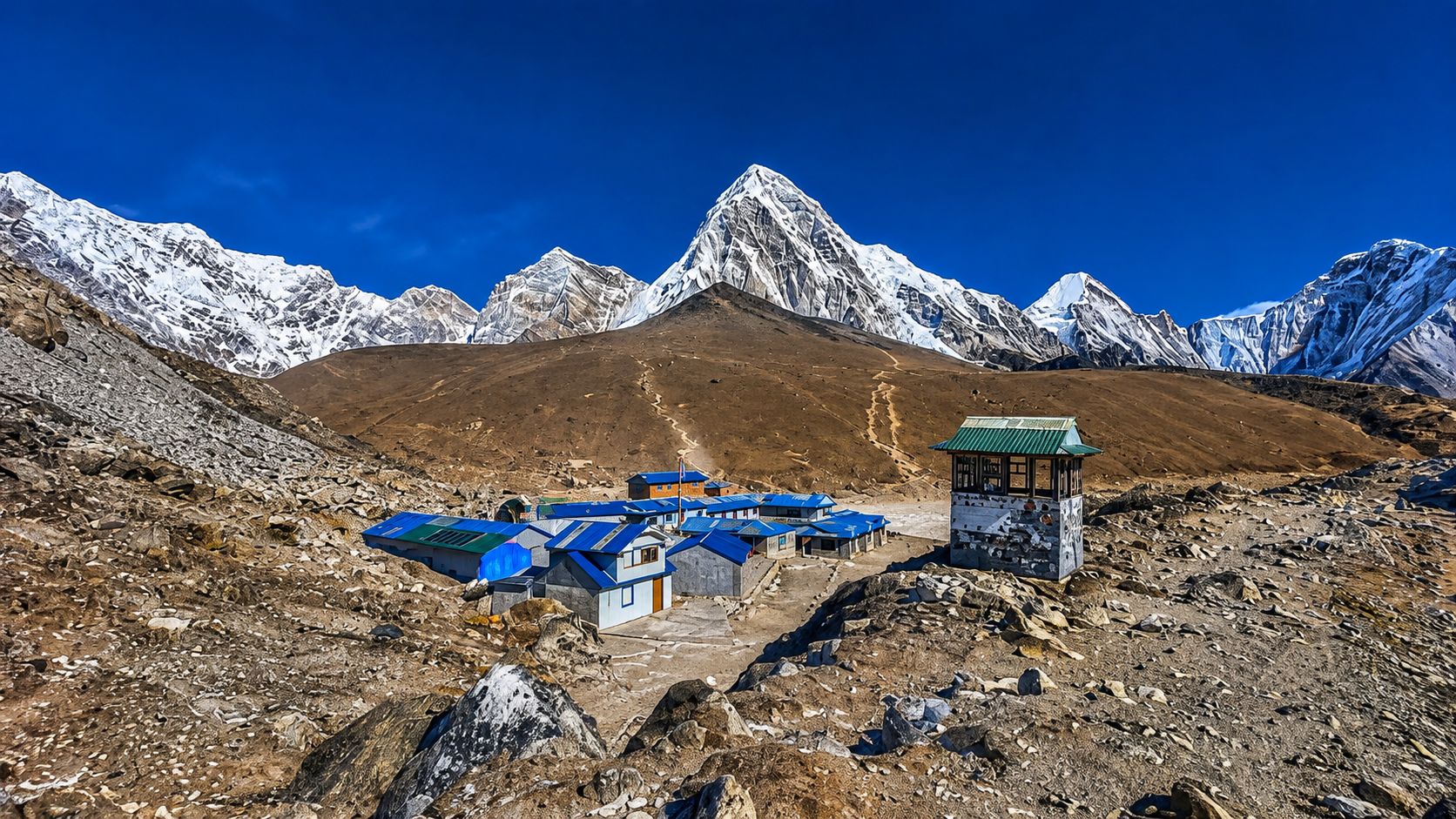
- Lobuche to Gorak Shep (5,164 m) and on to Everest Base Camp (5,364 m), returning to Gorak Shep
- Early morning at Kala Patthar (5,545 m), then descend toward Pheriche
- Descend through Namche back to Lukla
Combined with two hotel nights in Kathmandu and the return flight, most operators run this as a 12 to 14 day package. Igloo Himalaya Treks’ 14-day Everest Base Camp Trek prices from USD 1,235 per person for groups of 10 to 20, up to USD 1,525 for a solo traveler, and includes the Kathmandu-Lukla-Kathmandu flight, guide, porter, permits, and teahouse accommodation.
Option 2: Trek to Everest Base Camp Without Flying
For travelers who want to avoid Lukla’s flight cancellations altogether, or simply prefer overland travel, there is a road-based route into the Khumbu.
-
Driving to Jiri, Salleri, or Paiya
This route starts with a drive from Kathmandu to a lower trailhead town such as Jiri, Salleri, or Paiya, taking roughly 8 to 12 hours depending on road conditions and the exact starting point. From there, trekkers walk through mid-hill villages and forested ridges for several days before joining the standard Everest Base Camp trail around Lukla or Phakding. Igloo Himalaya Treks runs this as a road-based itinerary starting from Paiya, which avoids Lukla flights entirely in both directions.
-
How Many Extra Days This Adds
Walking in from Jiri, Salleri, or Paiya adds roughly 5 to 7 extra trekking days compared to flying, since you are covering distance that a 30-minute flight would otherwise skip. Full itineraries for this route typically run 17 days from Kathmandu to Kathmandu.
This route also passes through the Gaurishankar Conservation Area before reaching Sagarmatha National Park, so it requires one additional permit beyond the standard two (covered below). The upside is a gentler, more gradual altitude gain, more contact with Sherpa and Rai villages that most flight-based trekkers never see, and zero exposure to Lukla flight delays.
Option 3: Reach Everest Base Camp by Helicopter
For travelers short on time, or unable to handle 8 to 9 days of high-altitude walking, a helicopter is the fastest way to see Everest Base Camp up close.
-
Helicopter Tour (No Trekking)
A shared Everest Base Camp helicopter tour departs Kathmandu early in the morning, stops at Kala Patthar or the Everest View Hotel in Syangboche for breakfast, flies over or lands near the base camp itself, and returns to Kathmandu by late morning.
The full round trip takes about 4 to 5 hours. Group-sharing seats cost approximately USD 1,200 to 1,500 per person, while a private charter for 1 to 5 passengers runs USD 2,500 to 6,500 depending on the operator, group size, and season. This option skips acclimatization entirely, so operators typically keep time on the ground short to limit altitude exposure.
-
Helicopter as a Lukla Flight Backup
Helicopters are also used as a backup when fixed-wing flights to Lukla are grounded by weather. A shared helicopter seat between Kathmandu and Lukla during a backlog typically costs around USD 500 per person, while a private charter runs from about USD 3,000 one way.
Since helicopters can sometimes fly in marginal weather that grounds Twin Otter and Dornier aircraft, this is a common way for trekkers to avoid missing an international flight home after a multi-day Lukla backlog.
Option 4: Combine the Route With Gokyo, High Passes, or Peak Climbing
Once you are in the Khumbu, several longer routes reach Everest Base Camp as part of a bigger loop rather than a there-and-back trek. The Gokyo Lakes route adds a crossing of the Cho La pass and a visit to the turquoise Gokyo Lakes and Gokyo Ri viewpoint.
The Everest Three High Passes route links Kongma La, Cho La, and Renjo La in a 20-plus day circuit through the entire Khumbu. Trekkers with mountaineering experience sometimes combine the base camp trek with a climb of a trekking peak such as Island Peak or Lobuche Peak, both accessed from the same trail.
These routes take longer and require better fitness, but they reach Everest Base Camp by a different, less crowded path than the standard out-and-back trail.
Permits You Need to Get to Everest Base Camp
Regardless of which route you take, two permits are mandatory for the standard flight-based or trekking route into the Khumbu:
- Sagarmatha National Park Entry Permit: NPR 3,000 (about USD 23–25) per person, available at the Nepal Tourism Board office in Kathmandu or at the park checkpoint in Monjo.
- Khumbu Pasang Lhamu Rural Municipality Entry Permit: NPR 3,000 (about USD 23–25) per person, available only in Lukla or at Monjo, not in Kathmandu.
The TIMS card, once required for most Nepal treks, was replaced in the Khumbu region in 2018 by the rural municipality permit above and is not needed for Everest Base Camp. If you take the road route through Jiri or Salleri, you will also need a Gaurishankar Conservation Area Permit, priced similarly at around NPR 3,000.
Since 2023, Nepal also requires all trekkers in this region to trek with a licensed guide, so independent, guideless trekking to Everest Base Camp is no longer permitted. Most operators, including Igloo Himalaya Treks, arrange both permits as part of the package price, so you will not need to queue at the offices yourself.
On top of the trekking permits, foreign travelers need a Nepal tourist visa, available on arrival at Tribhuvan International Airport for USD 30 (15 days), USD 50 (30 days), or USD 125 (90 days). Current visa fees are listed on the Department of Immigration, Nepal website.
Step-by-Step: Kathmandu to Everest Base Camp
Here is what the standard flight-based route looks like from arrival to departure:
- Arrive in Kathmandu and spend a night at a hotel, usually in Thamel, while your operator briefs you and checks your gear.
- Fly to Lukla (or drive to Manthali and fly from there during peak season), then trek roughly 3 to 4 hours to Phakding.
- Trek to Namche Bazaar, the main trading hub of the Khumbu, and take a rest day here to acclimatize.
- Continue through Tengboche, home to the region’s largest monastery, and on to Dingboche for a second acclimatization day.
- Trek to Lobuche, then to Gorak Shep, the last settlement before base camp.
- Walk to Everest Base Camp and return to Gorak Shep the same day.
- Hike to Kala Patthar before sunrise for the closest full view of Mount Everest, then begin the descent.
- Retrace the trail back to Lukla over 2 to 3 days, then fly back to Kathmandu.
Best Time to Travel to Everest Base Camp
Everest Base Camp can technically be visited most of the year, but spring and autumn are generally the best seasons for weather, trail conditions, and Lukla flight reliability.
Spring (March to May)
Spring brings steadily warming temperatures to the trail as it climbs from Lukla toward Namche Bazaar. March still carries a chill in the mornings, but April and May settle into comfortable daytime walking conditions across most of the route.
Rhododendron and magnolia forests bloom through the lower sections between Phakding and Namche, adding color to a trail that is otherwise rock, pine, and glacier. Mornings typically offer the clearest views of Everest, Lhotse, and Ama Dablam, with cloud building later in the day as the season pushes toward May.
Spring is also Everest’s main expedition season, so the trail and base camp itself carry extra energy, with international climbing teams preparing for summit attempts. This is one of the two busiest and most popular windows for the trek, alongside autumn.
Autumn (September to November)
Autumn is widely considered the single best season for the Everest Base Camp trek. The monsoon clears by mid-September, leaving the air noticeably clean and the forests still green heading into October.
By October and November, days are typically dry and stable, with some of the sharpest, most consistent Himalayan views of the year. This is when Everest, Nuptse, and Ama Dablam are most likely to stay fully visible for days at a stretch rather than clouding over by afternoon, making it the strongest season for photography and for the sunrise view from Kala Patthar.
Autumn also lines up with Dashain and Tihar, Nepal’s two biggest festivals, adding a cultural layer to villages like Namche Bazaar and Tengboche for trekkers passing through during the celebrations. Expect busier teahouses and more company on the trail, since this is the Khumbu’s peak season alongside spring.
Winter (December to February)
Winter is the quietest season on the Everest Base Camp trail, with far fewer trekkers and a noticeably calmer pace at teahouses in Namche, Dingboche, and Lobuche. Clear winter days often deliver the sharpest mountain visibility of the year, since the cold, dry air holds very little haze.
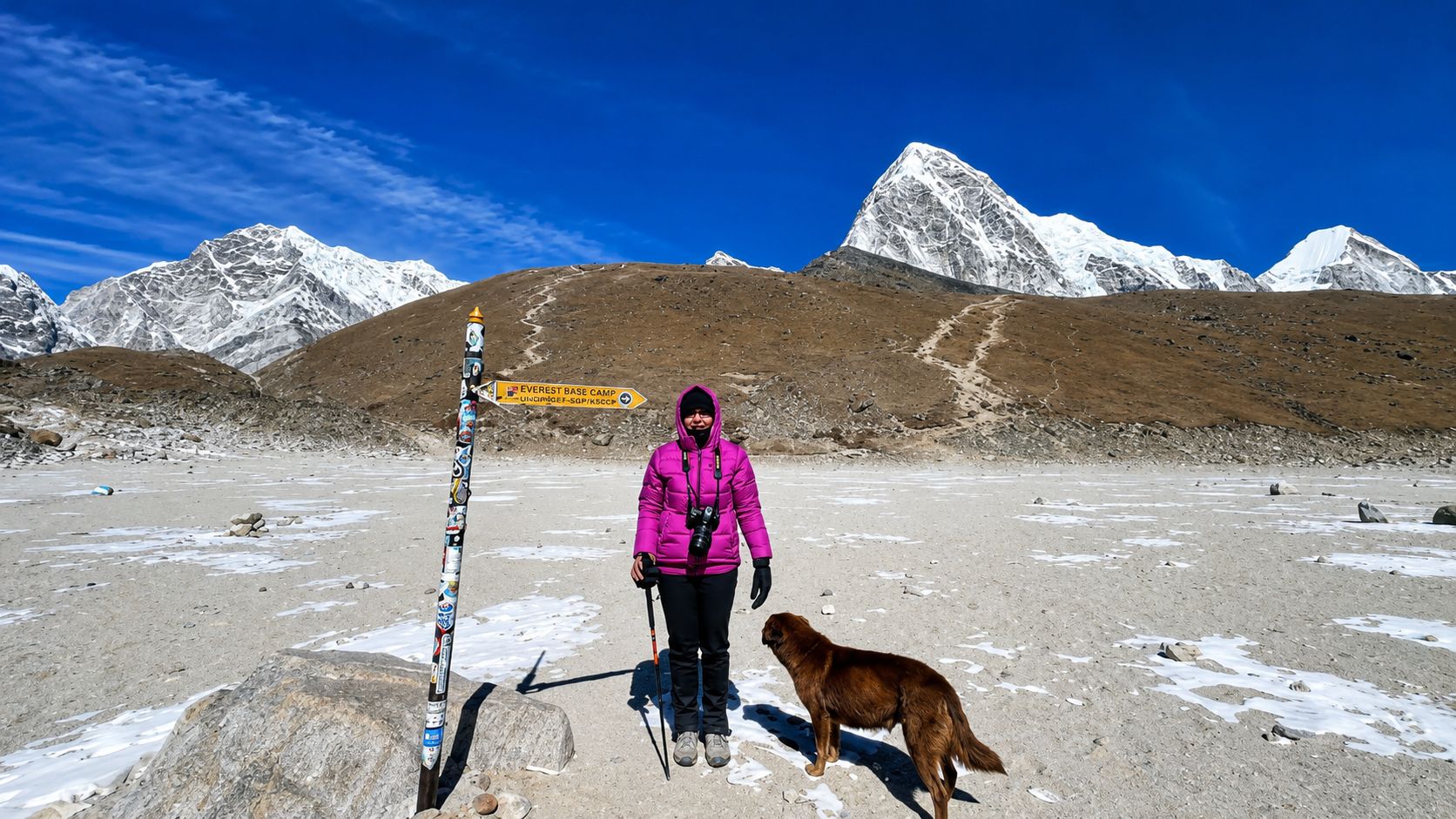
Snow accumulates around the higher villages and near base camp itself, adding real drama to the scenery for trekkers equipped for the cold. Nights at higher elevations drop well below freezing, so this season suits trekkers who come prepared with proper cold-weather gear and are comfortable with a quieter, more rugged version of the trek.
Monsoon (June to August)
Monsoon brings the region’s heaviest rainfall, concentrated mainly in the lower and mid-elevation sections of the trail below Namche Bazaar. Afternoons often turn cloudy, but the upper Khumbu near base camp stays comparatively dry, and mornings can still open up to clear mountain views.
The trail changes character completely in this season. The lower valleys turn a deep, saturated green, waterfalls run at full force, and the usually busy trail feels peaceful with far fewer trekkers around. For travelers who don’t mind some rain and the possibility of Lukla flight delays, monsoon offers a quieter, greener version of the same route at lower season rates.
Temperature at Everest Base Camp
| Season | Lower Region (Daytime / Night) | Higher Region (Daytime / Night) |
| Spring (Mar–May) | 10°C to 12°C / 2°C to 15°C | 5°C to 15°C / -8°C to -20°C |
| Autumn (Sep–Nov) | 15°C to 22°C / 5°C to 10°C | 4°C to 10°C / -10°C to -3°C |
| Winter (Dec–Feb) | 5°C to 12°C / -5°C to 2°C | -2°C to 6°C / -25°C to -10°C |
| Monsoon (Jun–Aug) | 18°C to 25°C / 10°C to 15°C | 8°C to 15°C / 0°C to 5°C |
How Many Days Does It Take to Reach Everest Base Camp
Flying to Lukla and trekking in takes 8 to 9 days to reach base camp and return to Lukla, or 12 to 14 days total counting Kathmandu arrival and departure. The road route from Jiri, Salleri, or Paiya adds roughly a week, bringing the full trip to around 17 days. A helicopter day tour with no trekking covers the same distance in about half a day.
-
How Fit Do You Need to Be
The Everest Base Camp trek is rated moderate to challenging.
Most days involve 5 to 8 hours of walking on established trails, with some steep, sustained climbs, particularly the ascent into Namche Bazaar and the final approach to Gorak Shep.
No technical climbing or mountaineering skill is required for the standard trek.
Regular cardio training and hill walking in the months before departure make a real difference, since the main physical demand is sustained walking at altitude rather than technical difficulty.
Conclusion
Most travelers reach Everest Base Camp by flying to Lukla and trekking in over 8 to 9 days, a route that balances cost, time, and reliability. Those who want to avoid Lukla’s flight cancellations can drive to a lower trailhead and walk a longer route instead, while those short on time can reach the area by helicopter in a single morning. Whichever route you choose, you will need two local permits, a Nepal visa, and, since 2023, a licensed guide.
If you are planning this trek, Igloo Himalaya Treks can help you with experienced local guides, permits, transportation, and itinerary planning, whether you want the standard flight-based route, the Everest Base Camp Trek Without Flight, or a helicopter option. As a Nepal trekking company with routes across the Khumbu, the team can also help you plan a longer trip combining base camp with the Gokyo Lakes Trek or connect you with other guided trekking in Nepal, such as the Annapurna Base Camp Trek or Manaslu Circuit Trek, if you’re deciding between Himalayan objectives.
FAQs
What is the fastest way to get to Everest Base Camp?
A helicopter tour is the fastest option, covering Kathmandu to the base camp area and back in about 4 to 5 hours. The fastest trekking route is flying to Lukla and walking in, which takes 8 to 9 trekking days.
Can I get to Everest Base Camp without flying?
Yes. A road-based route drives to a lower trailhead such as Jiri, Salleri, or Paiya, then treks in over several additional days, adding roughly a week to the standard itinerary.
Do I need a guide to trek to Everest Base Camp?
Yes. Since 2023, Nepal requires all trekkers in this region to be accompanied by a licensed guide.
How much does a Lukla flight cost?
A one-way flight between Kathmandu (or Manthali during peak season) and Lukla costs approximately USD 200 to 255 per person.
Is the Lukla flight safe?
Lukla flights are operated by CAAN-certified pilots trained for mountain airstrips, and flights only depart under clear visual conditions. Weather-related delays and cancellations are common, especially during monsoon season, but they exist for safety reasons.
What permits do I need to reach Everest Base Camp?
You need the Sagarmatha National Park Entry Permit and the Khumbu Pasang Lhamu Rural Municipality Entry Permit, both priced at NPR 3,000. The TIMS card is not required in this region.
How many days does the Everest Base Camp trek take?
Most flight-based itineraries run 12 to 14 days from Kathmandu to Kathmandu, including two acclimatization days. Road-based itineraries typically run around 17 days.
Is a helicopter tour a good substitute for trekking to Everest Base Camp?
It depends on your goal. A helicopter tour gets you close to the same views in a single morning, but it skips the multi-day trekking experience, Sherpa villages, and acclimatization process that most travelers come to Nepal for.


