

Dreaming of standing before the majestic Mt. Everest, but uneasy about flying?
Begin your adventure not in the sky, but on the trail, where every step reveals a story. Experience the journey of a lifetime with Igloo Himalaya Treks.
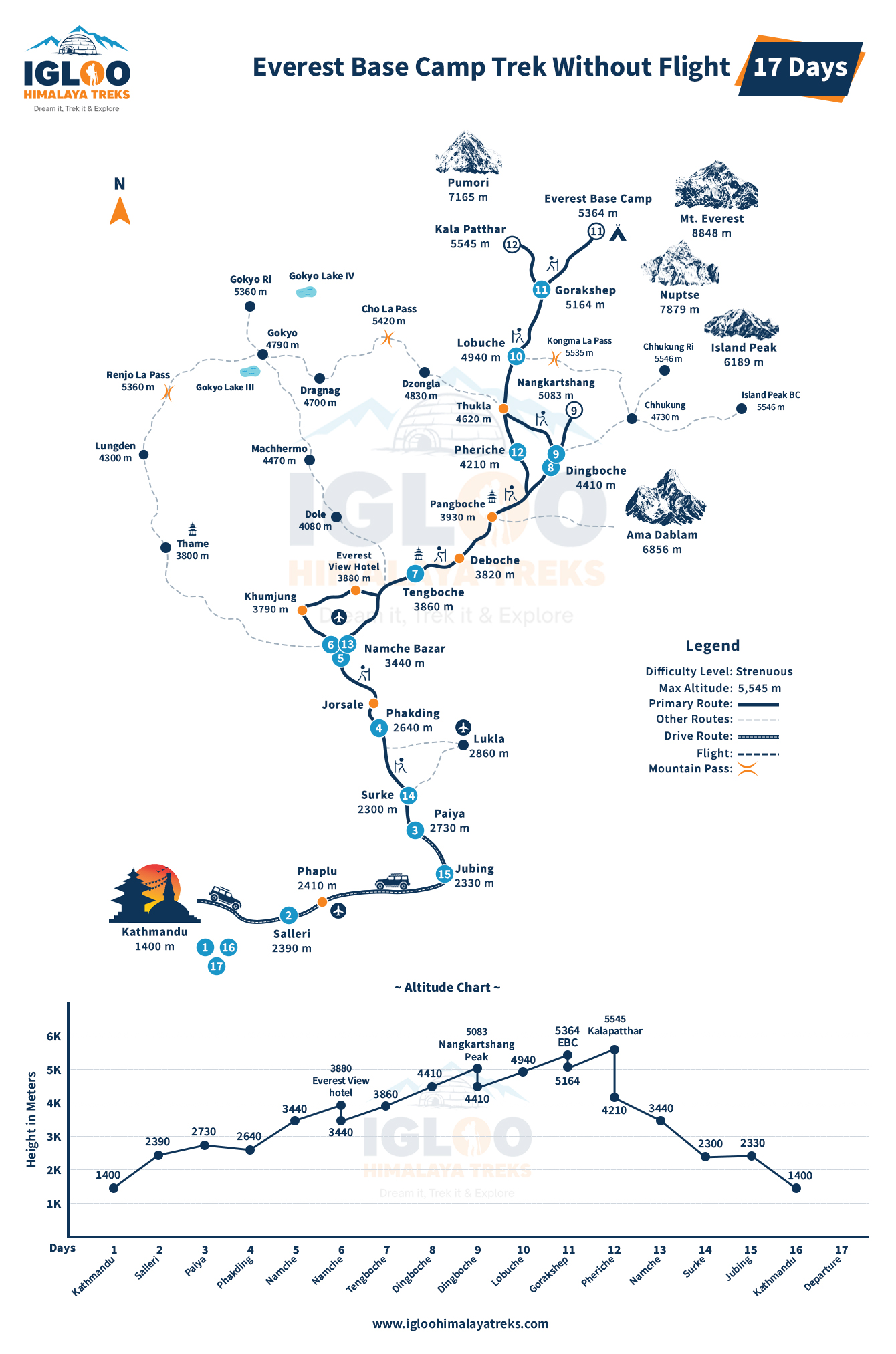
Yes, you can reach Everest Base Camp without taking a flight to Lukla. The Everest Base Camp Trek Without Flight 17 day is a road-based alternative that begins with an overland journey from Kathmandu toward the Solukhumbu region before continuing on foot through the Everest trail.
Instead of flying to Lukla, this itinerary travels by road toward Salleri and continues toward the trekking trail near Paiya. From there, you trek through traditional Himalayan villages, forests, suspension bridges and Sherpa settlements before joining the classic Everest Base Camp route toward Namche Bazaar, Tengboche, Dingboche, Lobuche and Gorakshep.
This Everest Base Camp trek without flight 17 day is ideal for trekkers who want to avoid the Lukla flight and experience more of the lower Everest region. The road approach adds travel time compared with the classic Lukla-flight itinerary, but it also gives you more time to experience rural Nepal and the gradual transition from the middle hills to the high Himalayas.
-
Private Vehicle / Bus / Jeep
-
3-star hotel -Tea House - Lodge
-
Kathmandu-Breakfast, Mountain-Breakfast - Lunch - Dinner
-
5545 m.
Overview
A Unique Everest base Camp Trek Without Flight with Igloo Himalaya Treks
Our Everest Base Camp trek without flight is a soul-stirring adventure designed for those who yearn to feel every heartbeat of the Himalayas. No flights, no fear, just winding roads, breathtaking landscapes, and a slow, meaningful passage to the foot of the world’s greatest peak. This isn’t just a trek it’s a journey of courage, wonder, and connection. Come walk the path less taken, where the road leads not only to Everest, but to a deeper part of yourself.
Step away from the crowds and delays of Lukla flights and dive into a more immersive Himalayan experience with Igloo Himalaya Treks. Our Everest Base Camp trek by road—beginning at Paiya—offers a scenic, reliable, and enriching route into the heart of the Khumbu. This overland journey lets you bypass the frequent flight cancellations and congestion at Lukla, replacing them with a peaceful drive and a gradual trek
Traveling this way isn’t just about avoiding flights—it’s about reconnecting with the spirit of true adventure. With every step, you’ll uncover hidden cultural gems, encounter warm local hospitality, and experience the landscape at a pace that respects both nature and your body.
At Igloo Himalaya Treks, we believe the journey is just as important as the destination. Our carefully crafted itinerary from Paiya to Everest Base Camp is designed for those who seek more than just a trek—it’s for those who crave a deeper connection to the land, the people, and the path itself.
Choose the road less traveled. Choose a journey that begins with trust, unfolds with wonder, and ends with memories that last a lifetime with Igloo Himalaya Treks.
Can You Do the Everest Base Camp Trek Without Flying?
Yes. You do not need to fly to Lukla to reach Everest Base Camp. You can travel overland from Kathmandu toward the Solukhumbu region and begin trekking from a road-accessible trailhead before connecting with the main Everest Base Camp trail.
The exact road and trekking starting point can vary depending on current road conditions and local transportation access. Our team checks the practical route before departure and arranges the appropriate ground transportation.
Why Choose the Everest Base Camp Trek Without Flight ?
A Deeper, More Connected Journey with Igloo Himalaya Treks
At Igloo Himalaya Treks, we believe that the journey is just as important as the destination. While flights to Lukla are popular, they come with their own challenges—frequent weather-related cancellations, rushed transitions, and missed opportunities to experience the richness of the Himalayas before the trek even begins. Choosing to travel by road opens a completely different chapter in your adventure—one grounded in authenticity, resilience, and connection.
1. No Flights, No Delays
Skip the stress and uncertainty of flying to one of the world’s most weather-dependent airports. Road travel offers reliability and peace of mind, especially during Nepal’s unpredictable weather seasons. Without the worry of last-minute cancellations or long waits at the airport, you begin your trek already grounded—both physically and mentally.
2. An Immersive Himalayan Experience
Traveling by road means passing through hidden valleys and forgotten villages that most trekkers never see. These routes wind through the true heart of Nepal, where time slows down and the hospitality of mountain communities welcomes you at every bend. Whether you’re sipping butter tea in a traditional Sherpa home or watching the sunrise over terraced hillsides, the road allows you to witness life beyond the tourist trails.
3. A Step Toward Sustainable Travel
By choosing the road, you’re doing more than changing your route—you’re choosing to support rural economies that often miss out on the benefits of Nepal’s booming trekking industry. Every meal, homestay, and local purchase made en route contributes to sustainable development and strengthens the resilience of these remote communities.
4. An Authentic Connection to the Himalayas
Trekking isn’t a race—it’s a chance to be present. The road teaches patience, humility, and appreciation for the small moments that define the mountains: the flutter of prayer flags in the wind, the laughter of children on village trails, the warmth of a shared fire after a long day’s walk. These are the memories that last a lifetime.
Let the Journey Begin—The Slow, Soulful Way
At Igloo Himalaya Treks, we craft journeys that honor not just the peaks, but the path that takes you there. Choosing the road is choosing depth over speed, heart over hurry. It’s trekking as it was meant to be—real, raw, and deeply human.
Everest Base Camp Without Flight vs. Classic EBC Trek
| Feature | Without Flight | Classic EBC |
|---|---|---|
| Kathmandu–Everest approach | Road + trek | Flight + trek |
| Lukla flight | Not required | Normally used |
| Duration | About 17 days | Usually shorter |
| Lower Solukhumbu experience | More | Less |
| Walking distance | Longer | Shorter |
| Road travel | Required | Minimal |
| Best for | Travelers avoiding flights | Travelers with limited time |
Accommodation and Food
The Everest Base Camp Trek Without Flight uses a combination of hotel accommodation in Kathmandu and teahouses or mountain lodges during the trek.
The accommodation becomes simpler as you climb higher into the Everest region. In popular trekking villages such as Namche Bazaar, there are many teahouses and lodges, while accommodation options become more limited at higher elevations.
Teahouse Accommodation
Teahouses are a traditional and convenient way to stay during the Everest Base Camp trek.
Most rooms have simple beds, mattresses and blankets. In many places, rooms are shared with twin beds. Bathrooms may be private in some lodges but are often shared, especially at higher elevations.
As you get closer to Everest Base Camp, facilities become more basic because of the remote location and difficult transportation.
Food During the Trek
You can find a good variety of food along the Everest Base Camp route.
Common meals include:
- Dal Bhat
- Rice and vegetables
- Noodles
- Pasta
- Soup
- Potatoes
- Eggs
- Tibetan bread
- Momos
- Porridge
- Pancakes
- Tea and coffee
Dal Bhat is one of the most popular choices because it provides a filling combination of rice, lentils, vegetables and sometimes additional side dishes.
At higher elevations, food choices can become more limited, so it is best to eat enough and stay well hydrated.
What About Drinking Water?
Bottled water, boiled water and other drinking-water options are available along the route. Many trekkers also carry a reusable bottle and use a suitable water purification method.
Your guide can advise you about safe drinking-water options at each overnight stop.
What Is Accommodation Like at High Altitude?
At places such as Lobuche and Gorak Shep, accommodation is more basic and can become busy during peak trekking seasons.
The rooms are designed mainly for shelter and rest rather than luxury. This is part of the Everest experience: the higher you go, the more you should focus on staying warm, eating well, sleeping properly and preparing for the next day’s walk.
Everest Base Camp Trek Without Flight Packing List
Packing correctly can make your Everest Base Camp Trek Without Flight much more comfortable. You do not need to carry your entire home with you, but you should be prepared for changing temperatures, rain, wind, cold nights and high-altitude conditions.
Because the road-based EBC trek can involve more trekking days than the standard Lukla approach, comfortable and durable equipment is especially important.
Clothing
- Moisture-wicking T-shirts
- Long-sleeve shirts
- Fleece jacket
- Warm down jacket
- Waterproof jacket
- Waterproof trousers
- Trekking trousers
- Thermal base layers
- Warm underwear
- Warm socks
- Lightweight gloves
- Warm winter gloves
- Warm hat
- Sun hat or cap
Footwear
- Comfortable trekking boots
- Lightweight shoes or sandals for the teahouse
- Several pairs of trekking socks
- Gaiters if needed for snow or wet conditions
Make sure your trekking boots are comfortable and already broken in before the trek.
Sleeping and Personal Items
- Sleeping bag suitable for cold temperatures
- Headlamp with spare batteries
- Sunglasses
- Sunscreen
- Lip balm with sun protection
- Quick-drying towel
- Water bottle
- Water purification tablets or filter
- Personal toiletries
- Small first-aid kit
- Hand sanitizer
- Toilet paper and tissues
Electronicsbh
- Mobile phone
- Camera
- Power bank
- Charging cables
- Universal travel adapter
- Headlamp
Electricity and charging facilities are available in many teahouses, but charging can cost extra at higher elevations and availability may be limited.
Important Documents
Keep your important documents in a waterproof bag:
- Passport
- Travel insurance details
- Trekking permits or registration documents
- Emergency contact information
- Flight or travel details
What Should You Not Pack?
Avoid carrying unnecessary heavy items.
You normally do not need several pairs of jeans, excessive toiletries, large amounts of food or too many electronic devices.
A lighter backpack makes the trek much more comfortable.
If you use a porter, pack your main belongings in a durable duffle bag and keep your daily essentials in a smaller daypack.
Igloo Himalaya Treks Gear Support
Depending on your trekking package, Igloo Himalaya Treks can provide or arrange essential trekking equipment such as a duffle bag, sleeping bag and down jacket.
Before departure, our team explains what is provided and what you need to bring yourself, so you do not have to purchase unnecessary equipment.
Highlight
- The Road Less Traveled – A Path of Purpose Venture into quieter, lesser-known trails that offer a raw, authentic Himalayan experience. Every step echoes the rhythm of nature and the spirit of exploration.
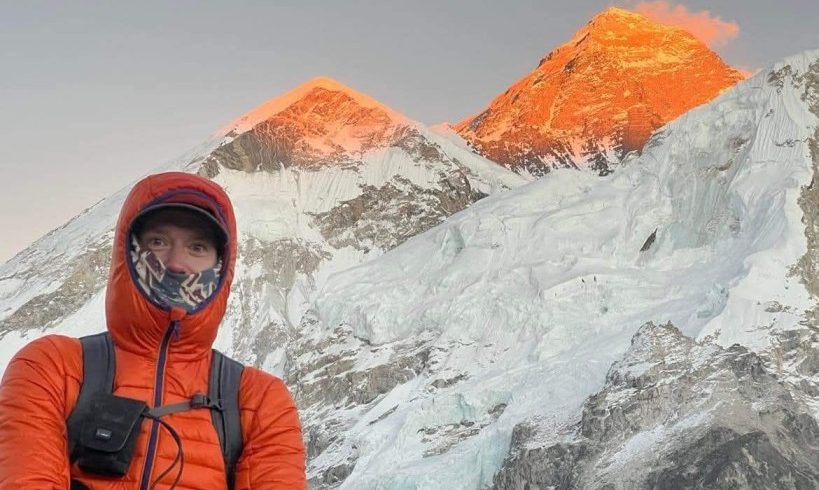
- Everest Revealed Slowly, Meaningfully Witness Mt. Everest and her neighboring giants unfold gradually before your eyes—not in an instant from a window seat, but through a journey that makes every glimpse earned and unforgettable.
- Immerse in Local Life and Culture Walk through remote villages untouched by mass tourism. Share stories with locals, taste traditional Sherpa cuisine, and sleep in teahouses that feel like home.
- No Flights, No Delays, No Worries Say goodbye to unpredictable Lukla flights and hello to a more grounded, reliable adventure. Your journey begins and ends on your terms.
- A Soulful Himalayan Experience This is more than just a trek. It’s a spiritual passage that invites you to slow down, breathe deeper, and connect—to the mountains, to the people, and to yourself.
- Eco-Friendly & Sustainable Adventure By choosing the road, you're choosing a more sustainable way to travel—supporting local communities and reducing carbon emissions from mountain flights.
- Expertly Curated by Igloo Himalaya Treks With decades of experience and heartfelt passion, our team ensures a seamless, safe, and enriching journey from the first step to Everest Base Camp and back.