
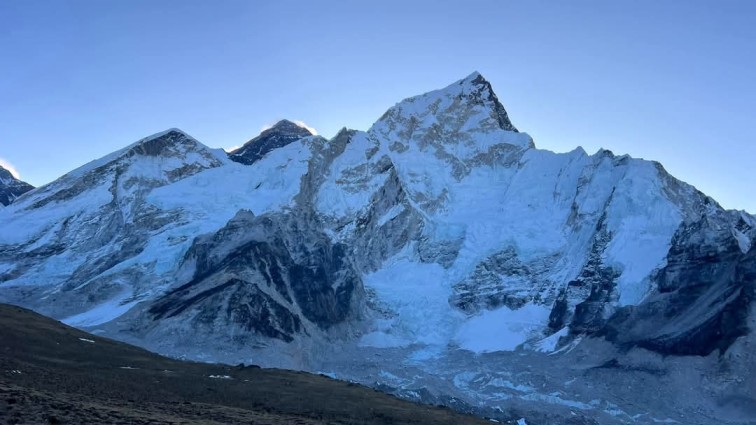
How long is the hike to Everest Base Camp? If you are planning the Everest Base Camp Trek, this is probably one of the first questions you have. How many hours do you walk each day? How many kilometers do you cover? Is the hike to Everest Base Camp harder than you expect? And how long does it actually take to walk from Lukla to Everest Base Camp?
The honest answer is that there is no single number.
The Everest Base Camp hike is a journey of several days through the Khumbu Valley, and every day is different. Some days are around 3 to 4 hours of walking, most trekking days are approximately 5 to 7 hours, and the longer high-altitude days can take 7 to 9 hours. Your actual Everest Base Camp walking time depends on your pace, altitude, weather, trail conditions, breaks, and the itinerary you follow.
But there is something more important to understand.
The Everest Base Camp Trek is not about how fast you can walk.
It is about gradually gaining altitude, allowing your body to acclimatize, enjoying the villages and mountain scenery, and continuing one step at a time until you reach Everest Base Camp at approximately 5,364 meters.
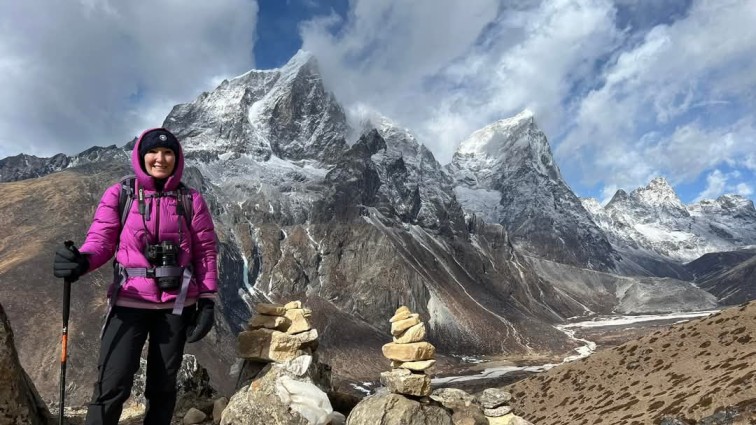
How Long Does It Take to Hike to Everest Base Camp?
A typical Everest Base Camp Trek takes around 12 to 14 days when acclimatization and the return journey are included. The exact number of days depends on the itinerary, flights, acclimatization schedule, weather, and whether you include additional hikes such as Everest View Hotel, Nangkartshang Peak, or Kala Patthar.
The classic Everest Base Camp route begins with a flight from Kathmandu to Lukla and then continues through the famous Khumbu settlements.
You walk through places such as Lukla, Chaurikharka, Cheplung, Thalsaro, Nurling, Ghat, Phakding, Toktok, Benkar, Chhamuwa, Monjo, Jorsale, Namche Bazaar, Kyangjuma, Sanasa, Phunki Tenga, Tengboche, Deboche, Pangboche, Shomare, Orsho, Dingboche, Duglha, Thukla, Lobuche, Gorak Shep, and finally Everest Base Camp.
Every place is part of the story.
And every increase in altitude changes the way the hike feels.
Starting the Everest Base Camp Hike in Lukla
The Everest Base Camp Trek normally begins after a flight from Kathmandu to Lukla.
Lukla is not simply the starting point on a map. For many trekkers, landing at Tenzing-Hillary Airport is the moment the Everest Base Camp adventure truly begins.
Once you leave Lukla, the trail passes through Chaurikharka and continues toward Cheplung. From Cheplung, the route gradually descends and follows the Dudh Koshi River through the beautiful lower Khumbu landscape.
You pass small settlements such as Thalsaro and Nurning before reaching Ghat. From Ghat, the trail continues beside the Dudh Koshi River toward Phakding.
This first section of the Lukla to Everest Base Camp trek usually takes around 3 to 4 hours of walking.
It is a relatively short first day, and that is intentional.
You have just arrived in the mountains.
There is no reason to rush.
The first day is about getting comfortable with the trail, your backpack, your walking shoes, and the rhythm of trekking in Nepal.
Walking Through Phakding and the Lower Khumbu
After spending the night in Phakding, the Everest Base Camp hike continues deeper into the Khumbu Valley.
The trail follows the Dudh Koshi River and passes through Toktok, Benkar, and Chhamuwa. Along the way, you cross suspension bridges and walk through forests filled with pine, rhododendron, and other Himalayan vegetation.
Eventually, you reach Monjo, where you enter Sagarmatha National Park.
From Monjo, the trail continues to Jorsale before following the river toward the famous suspension bridges.
The higher you go, the more you begin to notice the mountains.
The trail then starts climbing toward Namche Bazaar.
This is where many trekkers begin to understand that the Everest Base Camp hike is not going to be an ordinary walk.
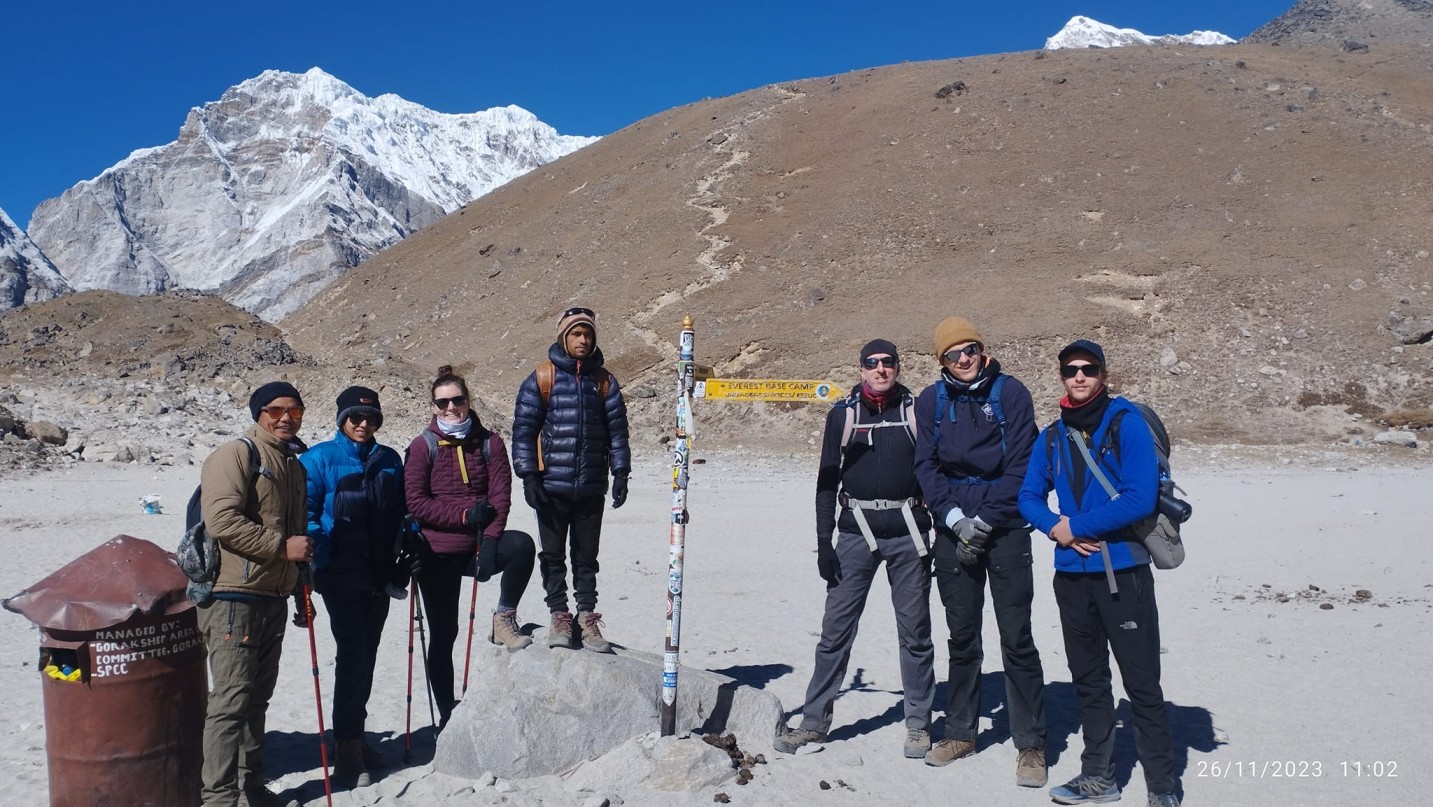
How Long Does It Take to Reach Namche Bazaar?
The walking time from Phakding to Namche Bazaar is normally around 5 to 7 hours.
The distance is not the only challenge.
You are gaining altitude.
The trail climbs steadily.
There are ups and downs.
And the final climb toward Namche can feel long after several hours on your feet.
As you approach Namche Bazaar, you may catch your first impressive views of mountains such as Thamserku, Kongde Ri, and Everest depending on weather and your exact viewpoint.
Then suddenly, the trail opens and you see Namche Bazaar built into the mountainside.
For many trekkers, this is one of the first unforgettable moments of the Everest Base Camp Trek.
Namche Bazaar: More Than a Stop on the Everest Base Camp Route
Namche Bazaar is one of the most important places on the Everest Base Camp route.
It is a mountain trading center, a meeting point for trekkers, guides, porters, and local Sherpa communities, and an important acclimatization stop.
Most good Everest Base Camp itineraries include an extra night here.
During the acclimatization day, you may walk toward Syangboche, the Everest View Hotel, Khumjung, or Khunde.
These shorter hikes are important because the purpose of acclimatization is to help your body adjust before you continue to higher elevations.
You may walk only 3 to 5 hours on this day, but it is one of the most valuable days of the entire Everest Base Camp Trek itinerary.
From Namche Bazaar Toward Tengboche
After Namche Bazaar, the Everest Base Camp trail follows the hillside toward Kyangjuma.
From Kyangjuma, the trail continues toward Sanasa, where several routes meet.
The trail then descends through beautiful forests toward Phunki Tenga, beside the Dudh Koshi River.
From Phunki Tenga, the trail climbs steadily through rhododendron and pine forests toward Tengboche.
This climb can feel demanding, but the mountain scenery makes it one of the most beautiful sections of the Everest Base Camp hike.
As you approach Tengboche, Ama Dablam dominates the landscape.
On clear days, you can also see Everest, Lhotse, Nuptse, Thamserku, and Kangtega.
Then you reach Tengboche Monastery, one of the most famous Buddhist monasteries in the Everest region.
The walking time from Namche Bazaar to Tengboche is generally around 5 to 6 hours.
Tengboche, Deboche and Pangboche
Leaving Tengboche, the Everest Base Camp route descends through the forest toward Deboche.
Deboche is quieter than Tengboche and is home to the beautiful Deboche Nunnery.
From Deboche, you cross the Imja Khola and continue toward Pangboche, one of the oldest and most important Sherpa settlements in the Khumbu region.
The landscape begins to change as you move higher.
The forests become thinner.
The valley becomes wider.
The mountains become more dramatic.
From Pangboche, the trail continues through Shomare and Orsho before reaching Dingboche.
The Tengboche to Dingboche section normally takes around 5 to 6 hours of walking.
Dingboche and the Importance of Acclimatization
Dingboche sits at approximately 4,400 meters, and this is where altitude becomes a serious part of the Everest Base Camp Trek.
A good Everest Base Camp itinerary normally includes another acclimatization day here.
You may hike toward Nangkartshang Peak or explore the surrounding valley.
From the higher viewpoints around Dingboche, you can see Ama Dablam, Island Peak, Lhotse, and many other Himalayan peaks.
You might only walk for 3 to 4 hours during the acclimatization hike, but the altitude makes those hours feel very different from walking at lower elevations.
This is one of the most important things to understand about Everest Base Camp walking time.
Five kilometers at 4,400 meters is not the same experience as five kilometers at sea level.
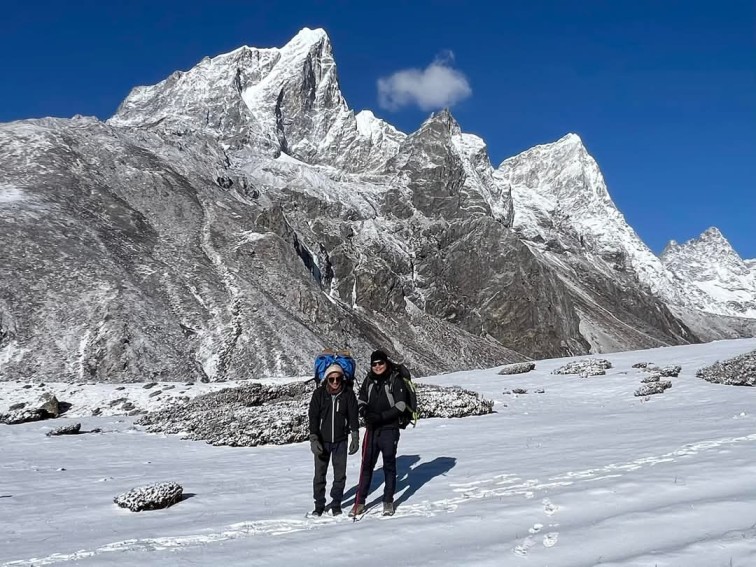
Dingboche to Lobuche: Entering the High Himalayas
After acclimatizing in Dingboche, the Everest Base Camp Trek continues toward Duglha.
The landscape is now much more rugged.
You are surrounded by enormous mountains and high alpine terrain.
From Duglha, the trail climbs toward Thukla Pass.
This is one of the most emotional sections of the Everest Base Camp route because you will see memorials dedicated to climbers and Sherpas who lost their lives in the Himalayas.
From Thukla, the trail continues toward Lobuche.
The walking time from Dingboche to Lobuche is usually around 5 to 6 hours.
By the time you reach Lobuche, you are close to 5,000 meters.
The air is thin.
The temperature can be very cold.
And your walking pace naturally becomes slower.
Lobuche to Gorak Shep
The next section of the Everest Base Camp hike takes you from Lobuche to Gorak Shep.
You continue through the high-altitude landscape toward the Khumbu Glacier.
The trail is rocky and uneven, and the surrounding mountains seem enormous.
You can see Pumori, Nuptse, Khumbu Glacier, and other dramatic Himalayan landscapes along the way.
The walking time from Lobuche to Gorak Shep is normally around 2 to 4 hours.
It is not necessarily the longest day in terms of distance.
But because you are walking close to 5,000 meters, it can be one of the slowest sections of the entire Everest Base Camp Trek.
Gorak Shep to Everest Base Camp
Then comes the section everyone has been waiting for.
Gorak Shep to Everest Base Camp.
The distance is only a few kilometers, but this is high-altitude walking.
The trail follows the rocky landscape beside the Khumbu Glacier.
You walk slowly.
You stop for photographs.
You take breaks.
You look toward the mountains.
And gradually, Everest Base Camp comes closer.
The Gorak Shep to Everest Base Camp hike generally takes around 2 to 3 hours one way, depending on your walking pace, weather, trail conditions, and breaks.
When you finally reach Everest Base Camp, you are standing at approximately 5,364 meters.
This is the moment many trekkers have dreamed about for months or even years.
But there is an important detail many people do not know.
You cannot see the summit of Mount Everest directly from Everest Base Camp in the way you might expect.
That is one reason many trekkers also include Kala Patthar in their Everest Base Camp itinerary.
Kala Patthar: The High Point of the Everest Base Camp Trek
After reaching Everest Base Camp, many trekkers climb Kala Patthar.
At approximately 5,545 meters, Kala Patthar is actually higher than Everest Base Camp.
The climb can be difficult because of the altitude.
But from Kala Patthar, you can enjoy incredible views of Mount Everest, Nuptse, Pumori, Lhotse, and the surrounding Himalayan peaks.
For many people, the Kala Patthar hike becomes one of the highlights of their entire Everest Base Camp Trek.
It is not simply about reaching a higher point.
It is about standing above the Khumbu Valley and seeing the enormous Himalayan landscape that you have been walking toward for days.
So, How Many Hours Do You Actually Walk?
If you are planning an Everest Base Camp Trek, you should generally prepare for around 5 to 7 hours of walking on most trekking days.
Some days are shorter.
Your acclimatization days may involve around 3 to 5 hours of hiking.
The higher sections can take longer because altitude slows your pace.
The Gorak Shep to Everest Base Camp hike itself usually takes around 2 to 3 hours one way.
The full day involving Lobuche, Gorak Shep, Everest Base Camp, and the return to Gorak Shep can take approximately 7 to 9 hours depending on the itinerary and conditions.
This is why the question “How long is the hike to Everest Base Camp?” cannot be answered by distance alone.
The altitude matters.
Your pace matters.
The weather matters.
Your acclimatization matters.
And your itinerary matters.
How Many Kilometers Is the Everest Base Camp Trek?
The total Everest Base Camp distance varies depending on the itinerary, side hikes, route, and how distances are measured.
A commonly used estimate for the standard round trip between Lukla and Everest Base Camp is around 130 kilometers, 208 miles,but your actual distance may be higher if you include acclimatization hikes, Everest View Hotel, Nangkartshang Peak, Kala Patthar, and other side trips.
That is why it is better to think about the Everest Base Camp route as a series of manageable days rather than worrying about the entire distance at once.
You do not wake up in Lukla thinking:
“I have to walk 130 kilometers.”
You wake up thinking:
“Today I am walking to Phakding.”
Then:
“Today I am going to Namche.”
Then Tengboche.
Then Dingboche.
Then Lobuche.
Then Gorak Shep.
And finally:
Everest Base Camp.
That is how the journey becomes achievable.
Is the Hike to Everest Base Camp Difficult?
The Everest Base Camp hike is physically demanding, but it is a trekking journey rather than a technical mountain climb.
You do not need advanced mountaineering skills for the standard Everest Base Camp route.
What you need is endurance, preparation, patience, and respect for altitude.
The biggest challenge is not necessarily the distance.
It is the combination of long walking days and increasing altitude.
At Lukla, you may feel energetic.
At Namche Bazaar, you start noticing the altitude.
At Dingboche, the air is much thinner.
At Lobuche, you are close to 5,000 meters.
At Gorak Shep, you are above 5,000 meters.
And then you walk toward Everest Base Camp.
This gradual increase is why acclimatization is such an important part of a good Everest Base Camp itinerary.
What Makes the Everest Base Camp Hike Different?
The Everest Base Camp Trek is not just about reaching a famous destination.
It is the journey through the places between Lukla and Everest Base Camp.
You remember the first morning in Lukla.
You remember walking through Chaurikharka and Cheplung.
You remember the river around Ghat and Phakding.
You remember the suspension bridges near Toktok, Benkar, and Monjo.
You remember entering Sagarmatha National Park.
You remember the climb toward Namche Bazaar.
You remember the views from Syangboche and Everest View Hotel.
You remember the trail through Kyangjuma and Sanasa.
You remember the climb from Phunki Tenga to Tengboche.
You remember the monastery at Tengboche.
You remember Deboche and Pangboche.
You remember seeing Ama Dablam becoming larger every day.
You remember reaching Dingboche.
You remember the quiet trail toward Duglha and Thukla Pass.
You remember the memorials above Thukla.
You remember Lobuche.
You remember the cold morning around Gorak Shep.
And then you remember walking beside the Khumbu Glacier toward Everest Base Camp.
That is the real Everest Base Camp experience.
The Everest Base Camp Trek Is Not a Race
One of the biggest mistakes people make before the Everest Base Camp Trek is thinking they need to walk quickly.
You don’t.
At high altitude, slow walking is normal.
Taking breaks is normal.
Breathing heavily after an uphill section is normal.
Stopping to drink water is normal.
Looking around at the mountains is normal.
The goal is not to finish the Everest Base Camp hike as quickly as possible.
The goal is to reach Everest Base Camp safely while enjoying the journey.
A good trekker is not necessarily the fastest trekker.
Sometimes the person walking slowly is the person who is enjoying the Himalayas the most.
How Long Is the Hike to Everest Base Camp? The Simple Answer
So, how long is the hike to Everest Base Camp?
From Lukla to Phakding, the first day is generally around 3 to 4 hours.
As you continue through Phakding, Toktok, Benkar, Chhamuwa, Monjo, and Jorsale toward Namche Bazaar, expect around 5 to 7 hours.
From Namche Bazaar through Kyangjuma, Sanasa, and Phunki Tenga to Tengboche, expect around 5 to 6 hours.
From Tengboche through Deboche, Pangboche, Shomare, and Orsho to Dingboche, expect around 5 to 6 hours.
From Dingboche through Duglha and Thukla Pass to Lobuche, expect around 5 to 6 hours.
From Lobuche to Gorak Shep, expect around 2 to 4 hours.
And from Gorak Shep to Everest Base Camp, expect around 2 to 3 hours one way.
But remember:
These are approximate Everest Base Camp walking times, not fixed promises.
Your actual Everest Base Camp hike can be shorter or longer depending on your pace, weather, trail conditions, acclimatization, health, and the itinerary you follow.
Every Step Is Part of the Everest Base Camp Journey
The question “How long is the hike to Everest Base Camp?” sounds like a question about hours and kilometers.
But after completing the trek, many people realize that the number was never the most important part.
The important part was the journey.
From Lukla to Phakding.
From the rivers and bridges around Monjo and Jorsale.
Into the busy mountain streets of Namche Bazaar.
Through Kyangjuma, Sanasa, and Phunki Tenga.
Past Tengboche Monastery.
Through Deboche and Pangboche.
Into the high valley of Dingboche.
Past Duglha and Thukla Pass.
Toward Lobuche.
Through the thin air of Gorak Shep.
And finally beside the Khumbu Glacier to Everest Base Camp.
That is the Everest Base Camp Trek.
It is not one long walk.
It is hundreds of small moments connected by one trail.
And when you finally stand at Everest Base Camp, you understand something that a map can never show you:
The destination matters, but the journey is what makes Everest Base Camp unforgettable.
Trek to Everest Base Camp With Igloo Himalaya Treks
At Igloo Himalaya Treks, we believe the Everest Base Camp Trek should be about experiencing the entire journey, not simply checking Everest Base Camp off a list.
From Lukla, Phakding, Namche Bazaar, Tengboche, Dingboche, Lobuche, Gorak Shep, and Everest Base Camp, our focus is on a carefully planned journey with proper acclimatization, realistic walking days, and time to experience the Khumbu.
Because you are not coming to Nepal just to walk a certain number of kilometers.
You are coming to experience Everest.
And every step from Lukla to Everest Base Camp is part of that story.


