Planning the Upper Mustang Trek? One of the first things most trekkers want to know is the Upper Mustang Trek cost and itinerary. Unlike many other trekking routes in Nepal, Upper Mustang has special permit rules that make planning a little bit different. The region remained closed to foreign visitors until 1992, and today, entry is still controlled through a restricted area permit, which is one of the biggest factors affecting the overall cost.
But don’t let that discourage you. In return, you’ll experience one of Nepal’s most unique trekking destinations, with dramatic desert-like landscapes, ancient Tibetan culture, centuries-old monasteries, and the walled city of Lo Manthang.
In this guide, we will explain everything you need to know about the Upper Mustang Trek cost and itinerary for 2026, including permit fees, the day-by-day route, package prices, and the key expenses to budget for before you go.
Upper Mustang Trek Cost and Itinerary at a Glance
Before going through each expense and route stage in detail, here’s a quick summary of the three main ways to experience Upper Mustang, since the region offers more than one type of trip.
| Package | Duration | Cost (Per Person) | Max Altitude | Style |
|---|---|---|---|---|
| Upper Mustang Trek | 16 Days | US$1,899–2,005 | 3,840 m | Teahouse trekking |
| Upper Mustang Jeep Tour | 12 Days | US$1,500–3,000 | 3,800 m | 4WD road journey |
| Upper Mustang Tiji Festival Trek | 17 Days | Priced on request | 4,210 m | Trekking + festival |
Looking for a personalized Upper Mustang itinerary? Contact Igloo Himalaya Treks for a customized trekking plan.
Upper Mustang Trek Itinerary: Route Breakdown
The classic Upper Mustang Trek follows an ancient trading route through the Kali Gandaki Valley, leading from Jomsom to the historic walled city of Lo Manthang and back. Breaking the journey into stages makes it easier to understand how the trek progresses, rather than just following a day-by-day itinerary.
Here is how the route unfolds across four main stages.
Kathmandu to Kagbeni
The trip begins with two travel days: a scenic drive from Kathmandu to Pokhara along the Trishuli River, followed by an early morning flight to Jomsom (2,720 m) that offers close aerial views of the Annapurna and Dhaulagiri ranges. From Jomsom, the trail follows the windy Kali Gandaki riverbed for around 3 to 4 hours into Kagbeni (2,810 m), the official gateway to Upper Mustang, where a permit checkpoint confirms your Restricted Area Permit before you continue north.
Kagbeni to Lo Manthang
From Kagbeni, the trail climbs north through a string of villages that become increasingly Tibetan in character. It passes through Chele, crosses several high mountain passes, and reaches Syangboche before continuing toward Ghami, home to one of Nepal’s longest mani walls covered in Buddhist prayers. From there, the route continues to Charang, known for its historic red gompa, before crossing Lo La Pass for the first breathtaking view of the walled city of Lo Manthang, where most trekkers arrive around day eight.
Exploring Lo Manthang and Chhoser
A full exploration day is built in at Lo Manthang, covering the Jampa, Thubchen, and Chode monasteries, each known for centuries-old murals and Buddhist artwork, along with the old Royal Palace. Many trekkers also take a short hike or horseback ride out to Chhoser village to see its sky caves, sandstone chambers carved high into the cliffs that are believed to have served as burial chambers, meditation retreats, and later as monasteries.
Return Route to Jomsom
The return journey doesn’t simply retrace the same path. From Lo Manthang, the trail heads toward Drakmar (3,810 m), passing Ghar Gompa, an ancient monastery linked to Guru Rinpoche where locals believe wishes are granted. From there, the route continues through Ghiling (3,570 m) and descends through Chhusang (2,980 m), where the barren Mustang landscape gradually gives way to greener terrain, before rejoining Jomsom. From Jomsom, trekkers fly back to Pokhara and then travel on to Kathmandu for a farewell dinner.
The full itinerary, including exact daily distances and walking times, is listed on our Upper Mustang Trek page.
Upper Mustang Trek Cost: Permit Fees Explained
Permit costs make up a bigger share of the Upper Mustang Trek cost than on almost any other route in Nepal, since the Restricted Area Permit is charged per day rather than as a one-time fee.
Here’s exactly how the permit structure works.
-
Restricted Area Permit (RAP)
The Restricted Area Permit costs USD 50 per person, per day, not per night, which totals USD 500 per person for the standard first 10 days, with each additional day charged at the same daily rate. This permit is issued through the Department of Immigration, Nepal, and can only be arranged by a licensed trekking agency, since independent trekking in Upper Mustang is not permitted.
-
Annapurna Conservation Area Permit (ACAP)
Alongside the RAP, every trekker also needs an ACAP, priced at USD 30 per person, since the trail runs through the Annapurna Conservation Area for its full length.
Why This Makes Upper Mustang More Expensive
Between the RAP and ACAP alone, permit costs run to roughly USD 530 or more per person before accounting for flights, guides, meals, or accommodation, which is why Upper Mustang packages carry a higher price tag than treks like Ghorepani Poon Hill or Langtang Valley. It is also worth noting that trekkers who extend their stay in the restricted area beyond 10 days pay an additional USD 50 per day, so building extra rest days into your itinerary has a direct effect on the final Upper Mustang Trek cost.
How the Permit Process Actually Works
Since independent trekking is not allowed in Upper Mustang, permits are not something you can apply for on your own at a counter the way ACAP works in the rest of the Annapurna region. A licensed trekking agency submits your passport copy and valid Nepal visa to the Department of Immigration on your behalf, usually a few days before departure, and the RAP is then processed as a group document covering everyone on that specific trek date.
This is also why solo trekkers, while technically permitted to apply for a RAP under updated regulations, still need to travel with a registered guide from a licensed agency rather than walking the route alone.
Upper Mustang Trek Cost Breakdown: What You Will Actually Spend
The package price covers most of the major expenses, but it’s not the only cost you’ll need to plan for. Travel insurance, meals before and after the trek, tips, and a few personal expenses should also be included in your budget. Looking at all these costs together gives a clearer picture of what you’ll actually spend on the Upper Mustang Trek.
Here’s a realistic breakdown for the standard 16-day Upper Mustang Trek.
-
Package Cost
For a group of 2 to 4 trekkers, the package costs approximately US$1,965 per person. This includes the Restricted Area Permit (RAP) and Annapurna Conservation Area Permit (ACAP), domestic flights, guide and porter services, accommodation during the trek, meals on the trail, and hotel stays in Kathmandu and Pokhara. Since the permits alone cost over US$530, a large portion of the total package price is already accounted for before other trekking services are included.
-
Additional Costs
There are a few expenses that are usually not included in the package. Travel insurance with high-altitude and emergency evacuation coverage typically costs US$50 to US$100. Lunch and dinner in Kathmandu and Pokhara usually add another US$60 to US$100 over the course of the trip. Most trekkers also budget US$100 to US$150 for tips, which are shared among the guide, porter, and driver.
You may also spend extra on drinks, snacks, charging electronic devices, Wi-Fi, hot showers, or souvenirs. These costs depend on your personal spending habits, so carrying a small amount of additional cash is recommended.
-
Estimated Total Cost
For most trekkers in a small group, the total cost comes to around US$2,150 to US$2,300 per person after adding insurance, personal expenses, and tips to the package price. Planning your budget in advance makes it easier to manage your expenses and enjoy the trek without unexpected costs along the way.
Culture and Landscape Along the Trail
Beyond the cost and route logistics, Upper Mustang offers a version of the Himalaya that looks and feels different from anywhere else in Nepal, and this is a big part of why trekkers are willing to pay the higher permit fees.
Here is what sets the region apart.
A Trans-Himalayan Desert Landscape
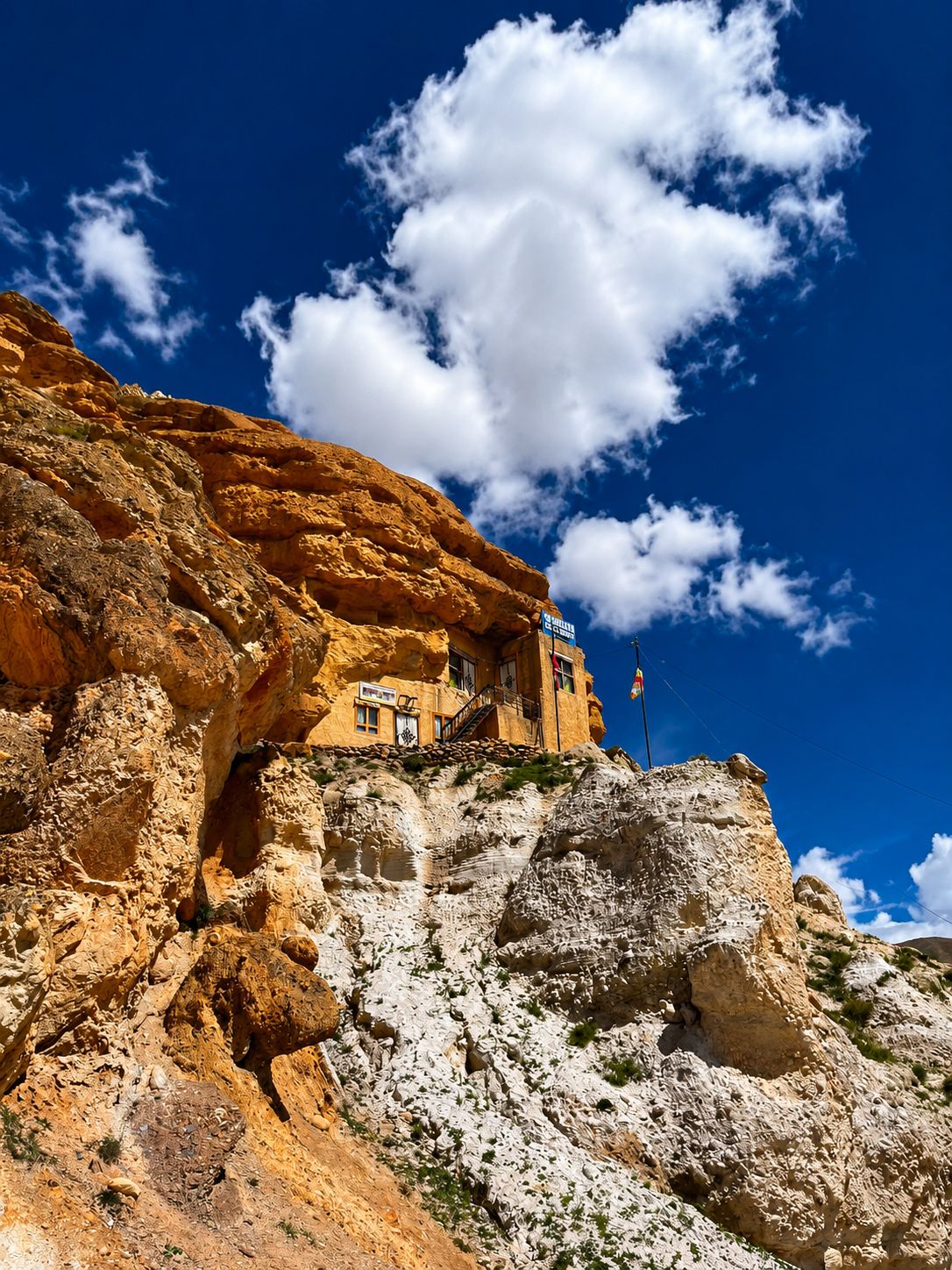
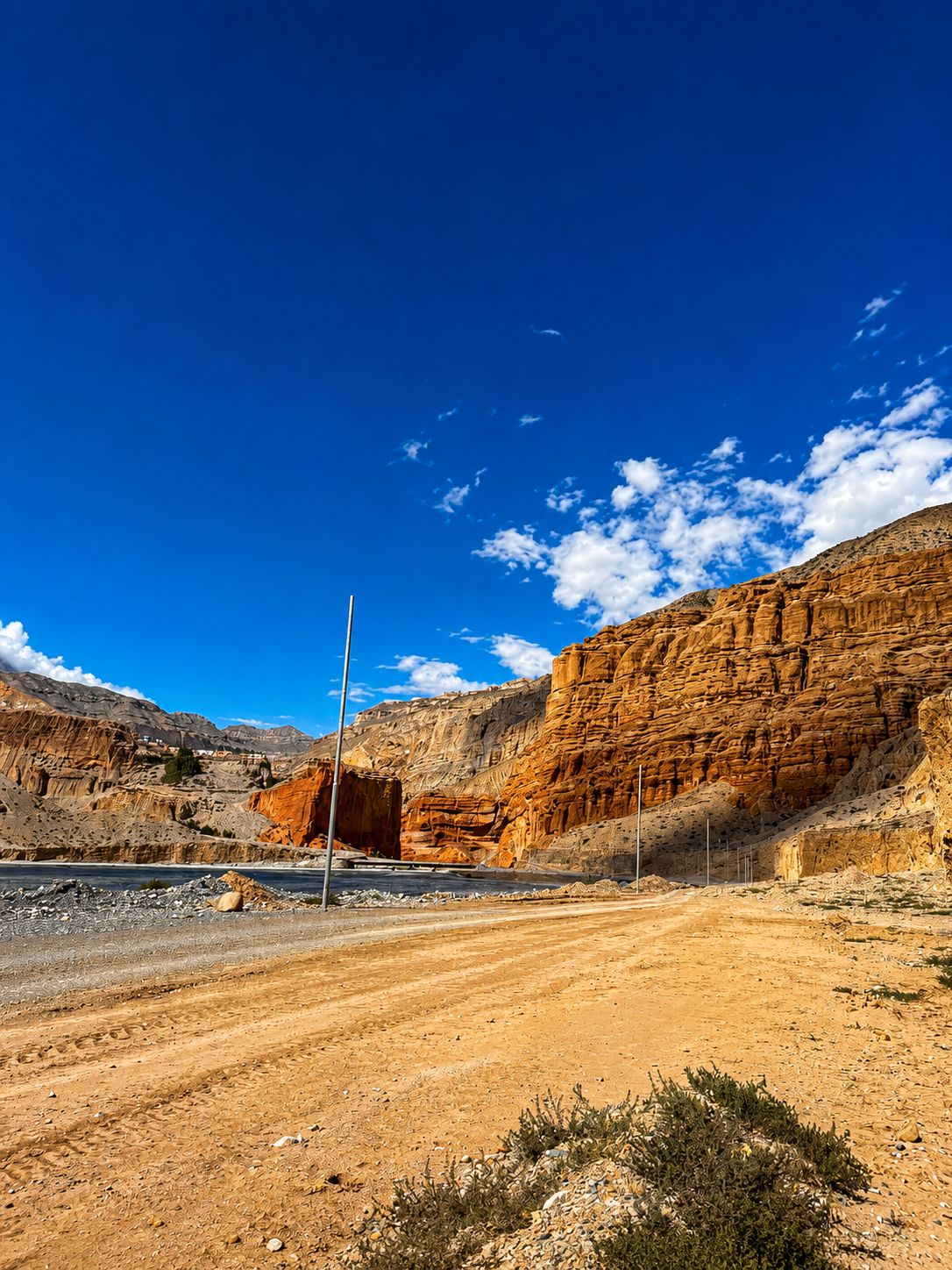
Because Upper Mustang sits in the rain shadow of the Annapurna and Dhaulagiri massifs, the terrain looks closer to the Tibetan plateau than to Nepal’s greener trekking regions, with wind-carved canyons, red and ochre cliffs, and barren ridgelines replacing the forested trails found further south.
Tibetan Buddhist Heritage
Lo Manthang was the walled capital of the once-independent Kingdom of Lo, and its narrow streets, royal palace ruins, and centuries-old monasteries still reflect that history. Villages like Charang and Ghami are built around active gompas, mani walls, and chortens that continue to be part of daily religious life rather than preserved as museum pieces.
The Sky Caves of Chhoser
Thousands of hand-carved caves are cut into the cliffs around Chhoser and elsewhere in the region, some dating back over 2,000 years. Archaeologists have found evidence they were used as burial chambers, meditation retreats, and shelter during conflict, and many remain largely unexplored today.
What to Pack for the Upper Mustang Trek
Upper Mustang’s dry, high-altitude desert climate calls for slightly different packing choices than a forested trek like Annapurna Base Camp or Langtang Valley.
Here’s what matters most for this specific route.
Wind and Sun Protection
Afternoon winds in the Kali Gandaki corridor can be strong and constant, so a windproof outer layer, sunglasses, and a wide-brim hat or buff for dust protection are more important here than on most other Nepal treks.
Layered Clothing for Temperature Swings
Daytime temperatures in the sun can feel mild even at 3,800 meters, but nights drop well below freezing for most of the year, so a proper down jacket and a four-season sleeping bag are essential, both of which are included as rental gear in most Igloo Himalaya Treks packages.
Basic Water and Health Precautions
Since teahouses become more spread out past Kagbeni, carrying a water bottle with purification tablets or a filter, along with any personal medication, is worth planning for in advance.
Upper Mustang Trek Package Cost by Group Size
Beyond permits, the total Upper Mustang Trek cost depends on group size, since guide fees, jeep transport, and hotel arrangements are shared costs.
Here’s how per-person pricing changes with group size.
-
Solo Trekker Cost
A solo trekker on the standard 16-day Upper Mustang Trek pays around US$2,005 per person, the highest rate since fixed costs aren’t split with anyone else.
-
Small Group Cost (2–4 People)
Groups of two to four trekkers bring the per-person cost down to roughly US$1,965.
-
Standard Group Cost (5–9 People)
Larger groups of five to nine trekkers see the lowest standard rate, at around US$1,899 per person.
What’s Included and Excluded
Standard packages include airport transfers, hotel stays in Kathmandu and Pokhara, all trek meals, a guide and insured porters, a duffel bag, down jacket and sleeping bag for the trek, and both required permits. International flights, the Nepal visa fee, travel insurance, and tips are not included and should be budgeted separately.
Best Season for the Upper Mustang Trek
Because Upper Mustang lies in a rain shadow behind the Annapurna and Dhaulagiri ranges, its trekking calendar looks different from most of Nepal’s other mountain regions.
Here’s how the seasons compare.
Spring and Autumn
Spring (March–May) and autumn (September–November) offer the clearest skies and most stable trail conditions, and both are considered the ideal windows for this trek.
Summer and Monsoon
Since Mustang receives far less rainfall than the rest of Nepal, it’s one of the few regions where trekking through the June–August monsoon is genuinely possible, making it a good backup option when other routes are washed out.
Winter
Winter (December–February) brings freezing temperatures and occasional road closures at higher points on the route, so most trekkers avoid this window unless specifically prepared for harsh conditions.
Upper Mustang Trek Weather and Temperature Overview
Weather conditions vary by season and elevation. The table below shows the typical daytime and nighttime temperatures during the main trekking seasons.
| Season | Months | Daytime Temperature | Nighttime Temperature | Trekking Conditions |
| Spring | March–May | 10°C to 20°C | -2°C to 5°C | Clear skies, blooming landscapes |
| Summer/Monsoon | June–August | 15°C to 25°C | 5°C to 10°C | Dry compared to most of Nepal, occasional showers |
| Autumn | September–November | 10°C to 18°C | -5°C to 5°C | Stable weather, excellent mountain views |
| Winter | December–February | 0°C to 10°C | -15°C to -5°C | Cold with possible snow and road closures |
Upper Mustang Trek Difficulty
The Upper Mustang Trek is rated moderate, involving 5 to 7 hours of walking a day on dry, windy trails, with a maximum altitude of 3,840 meters at Lo Manthang. Good general fitness and some prior trekking experience are recommended, though this trek doesn’t demand the technical skill or extreme altitude of routes like Kanchenjunga or the Everest Three High Passes Trek.
What makes it demanding is not steep climbing so much as sustained exposure: long, open stretches with little shade, strong afternoon winds funneling through the Kali Gandaki corridor, and several consecutive days spent above 3,500 meters. Starting each day’s walk early, before the wind picks up in early afternoon, is standard practice on this route and makes a noticeable difference to how the day feels.
Other Ways to Experience Upper Mustang
Trekking on foot isn’t the only way to see this region, and two other packages are worth knowing about before you book.
-
Upper Mustang Jeep Tour
For travelers who want to see Lo Manthang, Muktinath, and the Chhoser sky caves without multiple trekking days, the Upper Mustang Jeep Tour covers the same core sites over 12 days by 4WD, generally costing between US$1,500 and US$3,000 per person depending on group size and accommodation choice.
-
Upper Mustang Tiji Festival Trek
Trekkers visiting in May can time their trip around the three-day Tiji Festival at Lo Manthang, a 300-year-old Buddhist celebration of masked dances marking the legend of Dorje Jono’s victory over evil. This 17-day version follows a similar trekking route with festival days built in. Details are on our Upper Mustang Tiji Festival Trek page.
These are some of our most popular Upper Mustang packages, carefully designed by our experienced local team. If you’d like a different route, duration, or travel style, we can also customize the itinerary to match your schedule, budget, and preferences.
Conclusion
The Upper Mustang Trek cost and itinerary come down to one key factor most other Nepal treks don’t have: a daily-rate restricted area permit that adds roughly US$530 per person before any other expense. Once that’s factored in, the standard 16-day package runs from about US$1,899 to US$2,005 per person, covering flights, permits, guide, porter, meals, and teahouse accommodation along the route from Jomsom to Lo Manthang and back.
If you are planning a trip to this remote corner of Nepal, Igloo Himalaya Treks can help with permits, guides, and logistics from the moment you land in Kathmandu. As one of the best trekking companies in Nepal, our team has firsthand experience organizing restricted-area treks like this one. Visit our Upper Mustang Trek page to check current departure dates and get a personalized quote.
FAQs
How much does the Upper Mustang Trek cost?
The standard 16-day Upper Mustang Trek costs between US$1,899 and US$2,005 per person, depending on group size, plus the restricted area and conservation area permits.
What permits do I need for Upper Mustang?
You need a Restricted Area Permit (US$50 per person, per day) and an Annapurna Conservation Area Permit (US$30 per person), both arranged through a licensed trekking agency.
How many days does the Upper Mustang Trek take?
The standard itinerary runs 16 days total, including travel days in Kathmandu and Pokhara, with around 8 to 9 actual trekking days between Jomsom and Lo Manthang.
What is the maximum altitude on the Upper Mustang Trek?
The trek reaches a maximum altitude of 3,840 meters at Lo Manthang, with some optional side trips and pass crossings reaching just over 4,000 meters.
Can I trek Upper Mustang during the monsoon season?
Yes, since Upper Mustang lies in a rain shadow, trekking during June to August is possible, though spring and autumn remain the most popular seasons.
Is the Upper Mustang Trek suitable for beginners?
The trek is rated moderate rather than easy, so some prior trekking experience and reasonable fitness are recommended, though it doesn’t require technical climbing skills.
Do I need to hire a guide for Upper Mustang, or can I trek independently?
A guide is mandatory. Since Upper Mustang is a restricted area, independent trekking is not permitted, and permits can only be issued through a licensed trekking agency travelling with a registered guide.


