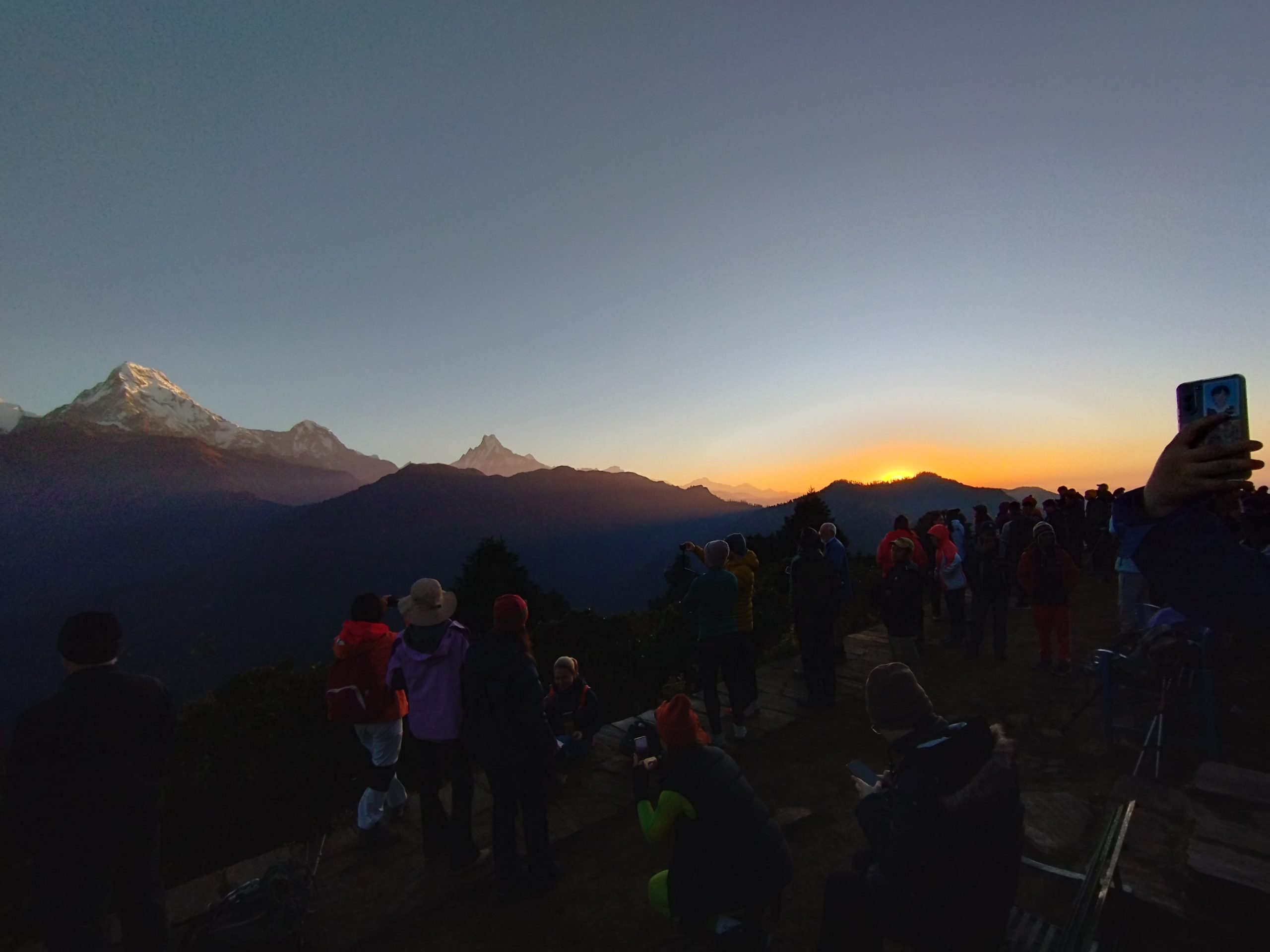
What Nobody Tells You About Annapurna Base Camp Trek is that reaching Annapurna Base Camp is only one part of the journey. Before you stand at 4,130 meters surrounded by the Annapurna mountains, there are stone staircases, quiet villages, changing weather, tired legs, warm cups of tea, early mornings and many small moments that become part of your story. The Annapurna Base Camp Trek is not simply about reaching a destination. It is about everything you experience along the trail.
When people talk about the Annapurna Base Camp Trek, they usually talk about the mountains.
They talk about the Annapurna range, Machhapuchhre, beautiful villages, rhododendron forests, hot springs and the feeling of standing at Annapurna Base Camp at 4,130 meters.
All of that is true. But there is another side of the trek that you don’t always see in photographs. Nobody tells you how many times you will stop on a staircase and pretend you are only stopping to take a photo.
Nobody tells you that a small cup of hot tea in a mountain village can sometimes feel better than an expensive meal in the city.
Nobody tells you that your legs may feel tired, but your mind can feel strangely peaceful. And nobody really explains what it feels like when you finally walk into the Annapurna Sanctuary and look around at mountains rising above you from almost every direction.
That is the part of the Annapurna Base Camp Trek we want to talk about.
Not just the distance.
Not just the itinerary.
Not just the price.
But what the journey actually feels like.
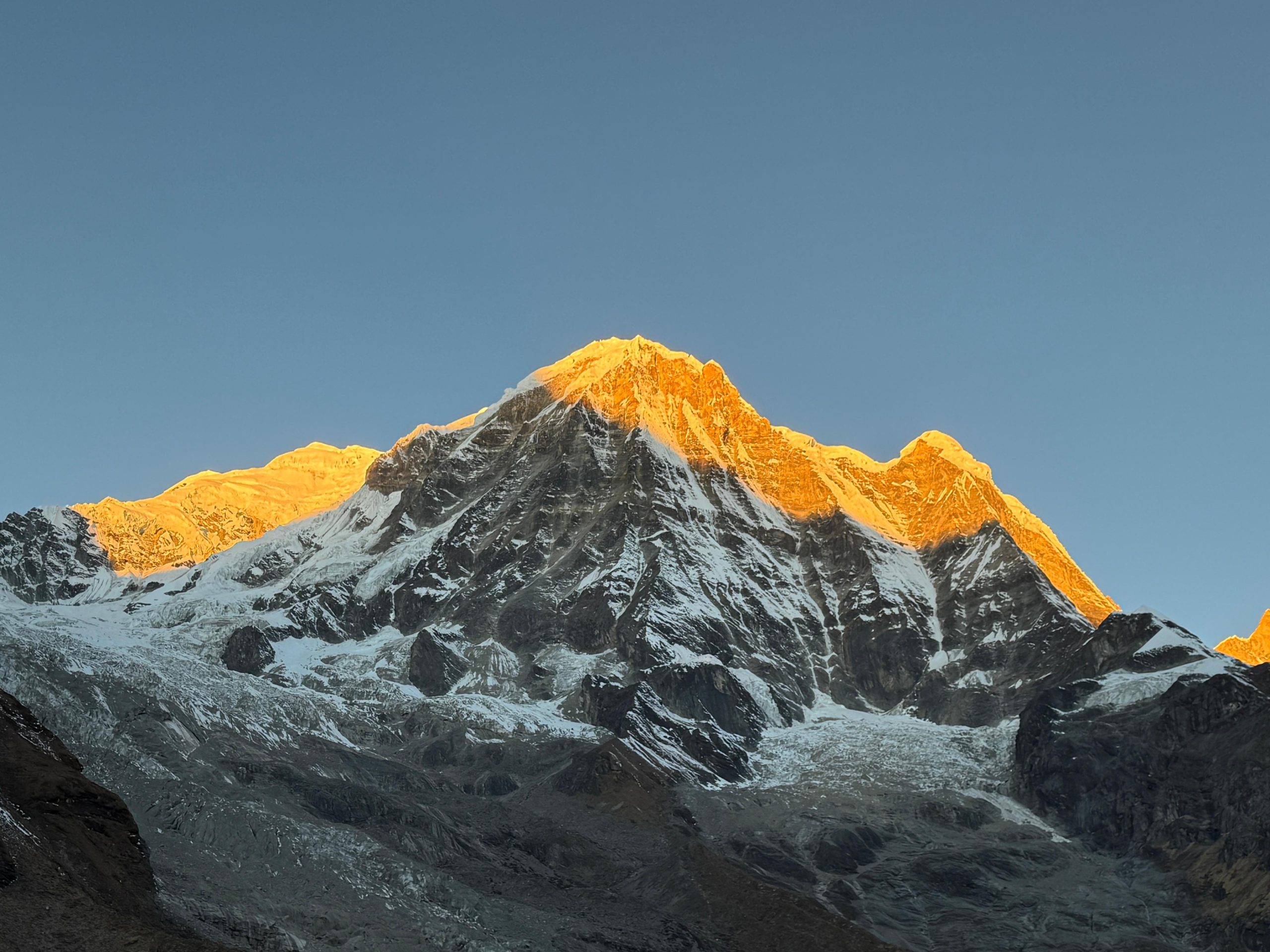
The Annapurna Base Camp Trek Is More Than Reaching Base Camp
The name makes it sound like the main goal is simple. Walk to Annapurna Base Camp, take some photographs, and walk back. But after doing the trek, many people realize that reaching base camp is only one part of the experience. The journey starts much earlier.
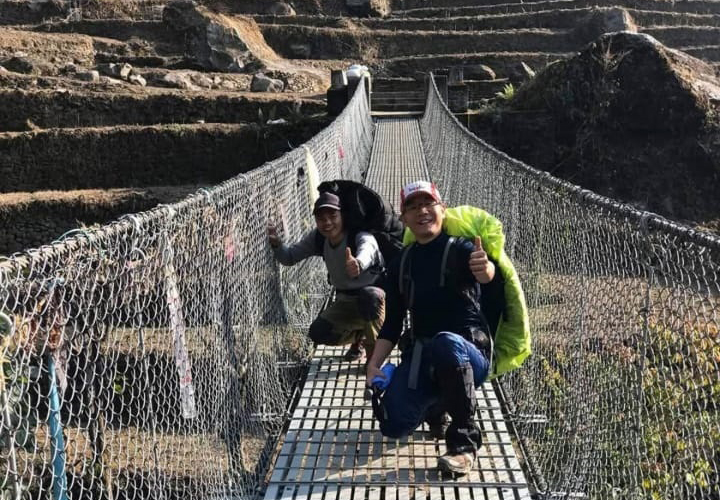
It starts when you leave Pokhara and the roads slowly become smaller.It starts when the city disappears behind you and the landscape begins to change. It starts when you walk through villages where people are going about their daily lives while you are carrying everything you need for the next several days. And it continues through forests, stone staircases, suspension bridges, rivers and mountain settlements. By the time you reach Annapurna Base Camp, you have already experienced a lot.
That is why the moment feels different.You are not simply looking at a mountain. You are remembering the steps you took to get there.
Nobody Tells You About the Stairs
Let’s be honest.
There are stairs.
A lot of them.
The Annapurna region is famous for its stone steps, especially around the lower sections of the trail.
You may look at a staircase and think:
“That doesn’t look too difficult.”
Then you walk up.
And another staircase appears.
Then another.
And another.
At some point you may wonder who built all these stairs.
But these steps are also part of what makes the trek special.
You pass through villages, forests and terraced hillsides while climbing gradually higher.
You learn very quickly that trekking is not about walking fast.
It is about finding your own rhythm.
Some people walk quickly in the beginning and become tired later.
Others take their time from the start and arrive at the destination feeling much better.
There is no prize for reaching the lodge first.
The mountains are not going anywhere.
Walk at a comfortable pace.
Take a breath.
Drink some water.
Look around.
Then continue.
That simple approach can make a big difference.
Your First Few Days May Feel Different From What You Expected
Before arriving in Nepal, you may imagine the ABC trek as a constant mountain panorama.
But the lower sections of the Annapurna trail are not only about huge snowy peaks.
You walk through green hills, forests, farmland and villages.
Depending on the season, the trail can look completely different.
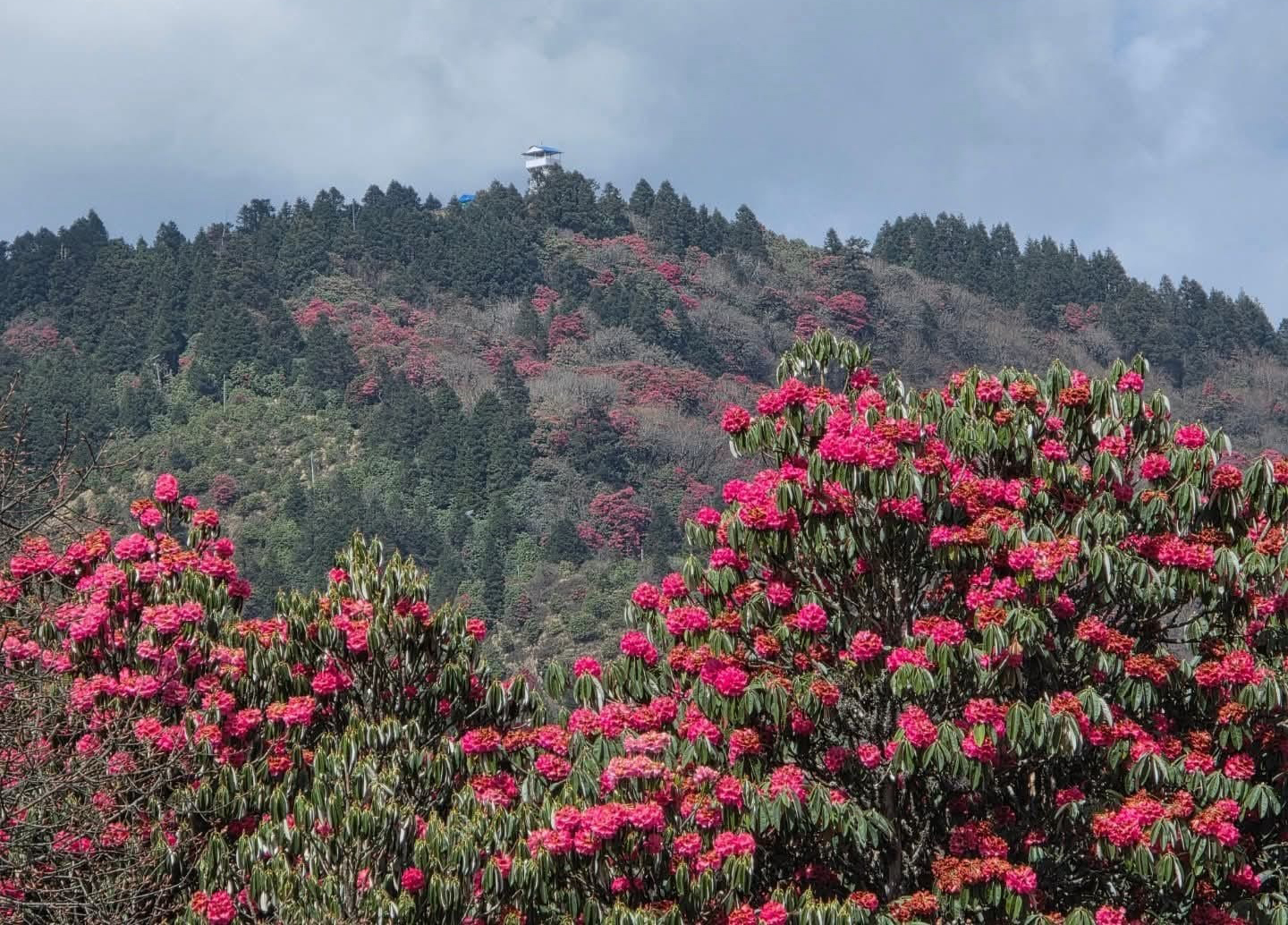
In spring, rhododendrons can add colour to the forests.
During the monsoon period, the landscape becomes very green, although rain and trail conditions can make trekking more challenging.
In autumn, clearer skies often create beautiful mountain views.
In winter, the higher sections can become cold and snowy.
The changing landscape is one of the reasons the trek never feels exactly the same from one hour to the next.
You start among green hills.
Then the valley becomes deeper.
The forest changes.
The air becomes cooler.
The mountains become larger.
And eventually, you realize that you are surrounded by the Himalayas.
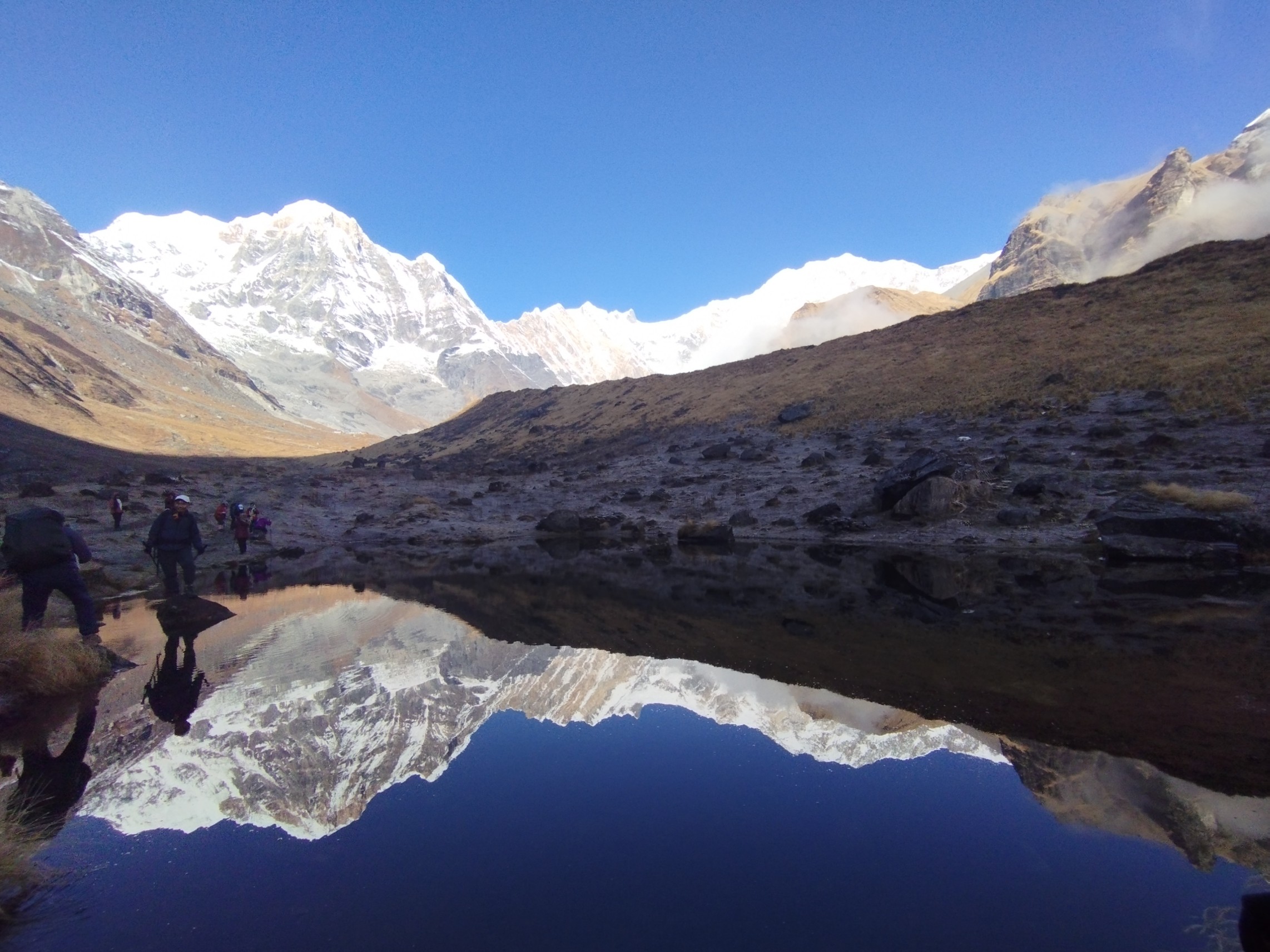
You May Become Friends With People You Didn’t Know Before
One of the unexpected things about trekking in Nepal is how quickly strangers can become familiar.
You may meet another trekker on the trail.
You pass them.
They pass you.
You meet again at a tea house.
Someone asks where you are from.
Another person asks where you are going tomorrow.
Before you know it, you are sharing stories over dinner.
Sometimes the people you meet for only a few days become part of your best memories from Nepal.
There is something about walking in the mountains that makes conversations easier.
Nobody is rushing to a meeting.
Nobody is sitting behind a desk.
Everyone is moving toward the same general destination.
And somehow, the mountain trail makes people more open.
Your Guide May Become More Important Than You Expected
Before a trek, many people think a guide is simply someone who shows them the way.
In reality, a good trekking guide can be much more than that.
Your guide knows the trail.
But more importantly, your guide understands the rhythm of trekking.
They can notice when you are walking too fast.
They can remind you to drink water.
They can explain what you are seeing.
They can tell you the name of a village, mountain or local tradition.
They can help communicate with tea houses.
And when the weather changes or something unexpected happens, having someone with local experience can make the situation much easier to manage.
For an international visitor, this local connection can be one of the most valuable parts of trekking in Nepal.
You are not only following a line on a map.
You are experiencing the Himalayas with someone who knows the place.
The Weather Can Change Your Mood Quickly
One minute you can be walking comfortably under sunshine.
A few hours later, clouds can arrive.
The temperature can drop.
Wind can pick up.
At higher elevations, weather deserves respect.
This is one reason you should not plan your trek around photographs you have seen online.
The Himalayas do not promise perfect weather every day.
Sometimes the mountain disappears behind clouds.
Sometimes you wake up and cannot see much.
And then, perhaps an hour later, the clouds move and the mountains appear.
Those moments can be more memorable than a perfectly planned photograph.
Because you did not know when the mountain would appear.
You simply waited.
You Will Probably Take Too Many Photos
There is always that one moment when you say:
“Okay, this is the last photo.”
Then you walk another hundred meters.
Another view appears.
You take another photo.
Then another.
The Annapurna region gives you plenty of reasons to stop.
But after a while, something interesting happens.
You stop taking photographs of everything.
You start watching.
You start listening.
The sound of a river below the trail.
Wind moving through the trees.
Prayer flags moving above a village.
A porter walking up the trail.
A local family having tea outside their home.
These small moments often become stronger memories than the photographs.
The Food Is Part of the Trekking Experience
Mountain food is simple.
And that is exactly why it can taste so good.
After several hours of walking, a warm meal in a mountain lodge feels different.
Dal bhat is a favourite for many trekkers because it is filling and comforting.
You may also find noodles, pasta, soups, fried rice, potatoes, eggs, momos and other simple meals depending on the lodge.
Do not expect a city restaurant at high altitude.
The food has travelled there.
The people working in the lodge are working in difficult mountain conditions.
And somehow, after walking for hours, a hot bowl of soup can become one of the best things you have eaten all day.
Nights in the Mountains Are Different
During the day, you are usually busy walking.
At night, everything slows down.
You finish dinner.
You talk with other trekkers.
You check your phone, if you have a connection.
Then eventually you go to your room.
And suddenly you notice how quiet the mountains can be.
There may be no traffic.
No city noise.
No constant notifications.
Just the sound of wind, people talking quietly in the dining room and sometimes a river somewhere below.
For people coming from busy cities, this silence can be surprisingly powerful.
You may realize how much noise you normally live with.
A Hot Shower Becomes a Luxury
This is something experienced trekkers already know.
A hot shower feels different after a long day of walking.
Depending on the lodge and location, hot showers may be available for an additional cost.
But at higher elevations, facilities can become more basic.
You may have to accept that not everything will be available exactly when you want it.
That is part of mountain travel.
The same goes for charging your phone and using Wi-Fi.
Facilities can vary from one village to another.
Instead of expecting the mountains to operate like Kathmandu or your home country, it is better to enjoy the simplicity.
You May Have a Day When You Don’t Feel Like Walking
This is completely normal.
Even if you are physically prepared, there may be a morning when your body says:
“Can we stay here today?”
Maybe your legs are tired.
Maybe you did not sleep well.
Maybe the weather is cold.
Maybe you simply miss home.
A multi-day trek is not only a physical journey.
It is also a mental journey.
You learn to keep going when things are not perfect.
You learn to slow down when you need to.
And you learn that you do not have to feel strong every minute to finish a trek.
Altitude Changes the Way You Trek
One of the biggest differences between a normal hike and a Himalayan trek is altitude.
As you climb higher, the air becomes thinner.
That means you need to pay attention to your body.
You may notice that you breathe more heavily while walking uphill.
You may feel that the same staircase that was easy at lower altitude requires more effort higher up.
This is why a sensible itinerary matters.
Acclimatization, gradual ascent, hydration, rest and listening to your guide are important parts of a safe trek.
You should never try to prove that you are stronger than altitude.
The mountain does not care how fast you walked yesterday.
Respect the altitude.
Walk slowly.
Listen to your body.
And communicate with your guide if you do not feel well.
Then Comes the Annapurna Sanctuary
And finally, the landscape begins to change dramatically.
The valley opens.
The mountains appear closer.
The feeling of being surrounded by enormous peaks becomes stronger.
You are moving toward the Annapurna Sanctuary.
This is the part many trekkers have imagined before coming to Nepal.
But seeing it in real life is different.
Photographs cannot completely explain the scale.
The mountains feel enormous.
The landscape feels quiet.
And you begin to understand why people from around the world make the journey here.
Annapurna Base Camp Is Not Just a Sign
Eventually, you arrive.
The elevation is about 4,130 meters.
You may take the famous photograph.
You may stand quietly.
You may laugh.
You may feel tired.
You may feel emotional.
Or you may simply look around and think:
“I actually made it.”
Everyone reacts differently.
There is no correct reaction.
Some people celebrate.
Some people become quiet.
Some immediately start taking photographs.
Others simply sit and look at the mountains.
For many trekkers, the most powerful part is not the sign saying Annapurna Base Camp.
It is turning around and realizing how far you have walked.
The Cold Can Be Serious
The mountains can look beautiful while still being very cold.
At higher elevations, temperatures can drop significantly, especially at night and early in the morning.
A good sleeping bag, warm layers, gloves, hat and proper trekking clothing are important.
Do not pack only for the weather you expect in Pokhara.
Pokhara and ABC can feel like two completely different worlds.
Your trekking company should also explain what equipment is available, what you need to bring and what can be arranged locally.
Good preparation makes the trek more comfortable.
The Descent Is Not Always Easy
There is a common assumption:
“Going down must be easy.”
Not always.
After several days of trekking, your legs are already tired.
Descending long stone staircases can put a lot of pressure on your knees.
Sometimes you may actually miss climbing uphill.
The descent teaches another lesson:
Take your time.
Use trekking poles if they help you.
Watch your footing.
And don’t rush simply because you are going downhill.
You Will Start Looking at Time Differently
At home, you may think in terms of minutes.
“How long until the meeting?”
“How long until the bus arrives?”
“How long until dinner?”
On the trail, you start thinking differently.
You may walk for an hour and stop for tea.
You may sit beside a river for ten minutes.
You may stop because the view is beautiful.
You begin to realize that not every moment needs to be productive.
Sometimes walking is enough.
Sometimes sitting is enough.
That is one of the quiet lessons of trekking.
You May Discover That You Don’t Need As Much As You Thought
Before a trek, it is easy to overpack.
You think you need everything.
Extra clothes.
Extra shoes.
Extra equipment.
Too many gadgets.
Then you spend several days carrying your belongings and suddenly understand something:
You don’t actually need that much.
You need warm clothes.
Good trekking shoes.
Water.
A comfortable backpack or duffel.
Basic personal items.
And a few things that make you comfortable.
The mountains have a way of teaching you what is necessary and what is not.
The People You Meet May Become Part of Your Story
Ask a trekker what they remember years later.
They may remember the mountains.
But many will also remember people.
The guide who encouraged them when they were tired.
The porter who smiled every morning.
The lodge owner who served them tea.
The traveller from another country they met at dinner.
The local child they met on the trail.
The person who took their photograph at a viewpoint.
These moments are difficult to put into an itinerary.
But they are often what make a trek personal.
What Makes Annapurna Base Camp Special?
Maybe it is the scenery.
Maybe it is the villages.
Maybe it is the mountains.
Maybe it is the challenge.
Maybe it is the people.
Probably it is all of them together.
The Annapurna Base Camp Trek gives you a changing landscape without requiring you to spend your entire journey at extreme altitude.
You move through forests and villages before entering a high mountain environment.
You experience different landscapes in a relatively short Himalayan journey.
And that combination is difficult to explain until you experience it yourself.
What We Want You to Know Before You Come
At Igloo Himalaya Treks, we don’t want to tell you that every day will be easy.
It won’t.
We don’t want to promise perfect weather.
The mountains don’t work that way.
We don’t want to tell you that you will never feel tired.
You probably will.
And we don’t want you to think the trek is only about taking a photograph at Annapurna Base Camp.
It is much more than that.
The real experience is the trail between the places.
The early mornings.
The tired legs.
The tea breaks.
The conversations.
The changing landscapes.
The quiet evenings.
The unexpected weather.
The people you meet.
And finally, the feeling of looking back and knowing that you walked there.
Why Trek With a Local Company?
When you trek with a local Nepal-based company, you are not only buying an itinerary.
You are working with people who live here.
A local team understands the trails, villages, weather patterns, local culture and practical realities of trekking in Nepal.
At Igloo Himalaya Treks, our approach is simple.
We want to know the person behind the booking.
What kind of trek are you looking for?
Is this your first Himalayan trek?
Are you travelling alone?
Do you prefer a slower pace?
Do you have limited time?
Do you want a private trek?
These questions matter because there is no single perfect Annapurna Base Camp experience for everyone.
You Don’t Need to Be a Professional Trekker
Another common misunderstanding is that you need to be an experienced mountaineer to trek to Annapurna Base Camp.
You don’t need to be a mountaineer.
But you do need to prepare yourself for several days of walking, stairs and changing elevation.
Regular walking, hiking and cardiovascular exercise before the trip can help.
The most important thing is not being the strongest person in the group.
It is being prepared, patient and willing to walk at a sensible pace.
The Trek Will Probably Change You in Small Ways
Don’t expect to come back from Annapurna Base Camp as a completely different person.
Real life doesn’t work like that.
But you may notice small changes.
You may appreciate a hot shower more.
You may complain less about walking ten minutes.
You may miss the quiet.
You may look at mountains differently.
You may remember the people you met.
And sometimes, when life becomes busy again, you may suddenly think:
“I want to go back to Nepal.”
That happens more often than you might expect.
The Part Nobody Tells You
Here is the biggest thing nobody tells you about the Annapurna Base Camp Trek:
You may arrive for the mountains, but you will remember the journey.
You will remember the staircase where you thought you could not take another step.
You will remember the tea that warmed you after a cold morning.
You will remember walking through the forest.
You will remember the sound of the river.
You will remember laughing with people you had only met a few days earlier.
You will remember waking up early and stepping outside into cold mountain air.
And yes, you will remember standing at Annapurna Base Camp surrounded by some of the most impressive mountains in the Himalayas.
But the photograph will only show one moment.
The journey will give you hundreds.
That is the real Annapurna Base Camp Trek.
And that is the story we believe is worth telling.
Ready to Experience Annapurna Base Camp?
If you are planning your Annapurna Base Camp Trek and want honest advice about the route, preparation, trekking days, accommodation, equipment or the right itinerary for your time in Nepal, you are welcome to talk with us.
At Igloo Himalaya Treks, we are happy to help you plan the trek around your own pace, interests and travel dates.
You don’t have to know everything before contacting us.
Tell us what you are looking for.
We will help you understand the journey before you decide.
Because for us, Annapurna Base Camp is not simply another trekking package.
It is a journey that you should understand, enjoy and remember long after you have left the mountains.


