
Nirmal “Nims” Purja, widely known as Nims Dai, has died following a devastating avalanche on Broad Peak in Pakistan in late July 2026. The news has shocked Nepal and the international mountaineering community. Nims Dai was not an ordinary climber. He was one of the most recognizable high-altitude mountaineers of his generation, a former Gurkha and British special forces soldier, a record-setting climber, expedition leader, and the central figure in the famous Project Possible.
His greatest achievement came in 2019, when he climbed all 14 of the world’s mountains above 8,000 meters in just 6 months and 6 days, completing a project that had previously seemed almost impossible. Guinness World Records records his 2019 achievement as the fastest ascent of all 14 eight-thousanders at the time.
But Nims Dai’s story did not end with the 14 peaks.
He continued climbing, leading expeditions, attempting new challenges, and pushing the boundaries of high-altitude mountaineering. In 2025, Guinness World Records recorded him with 49 true-summit ascents of the world’s 14 eight-thousanders, including 25 ascents without supplementary oxygen.
In 2026, Broad Peak became the mountain where his extraordinary life came to an end.
This is the story of Nims Dai: his childhood, military career, transition into mountaineering, Project Possible, the 14 Peaks achievement, K2, his global fame, his final expedition, his death on Broad Peak, and the legacy he leaves behind.
Who Was Nims Dai?
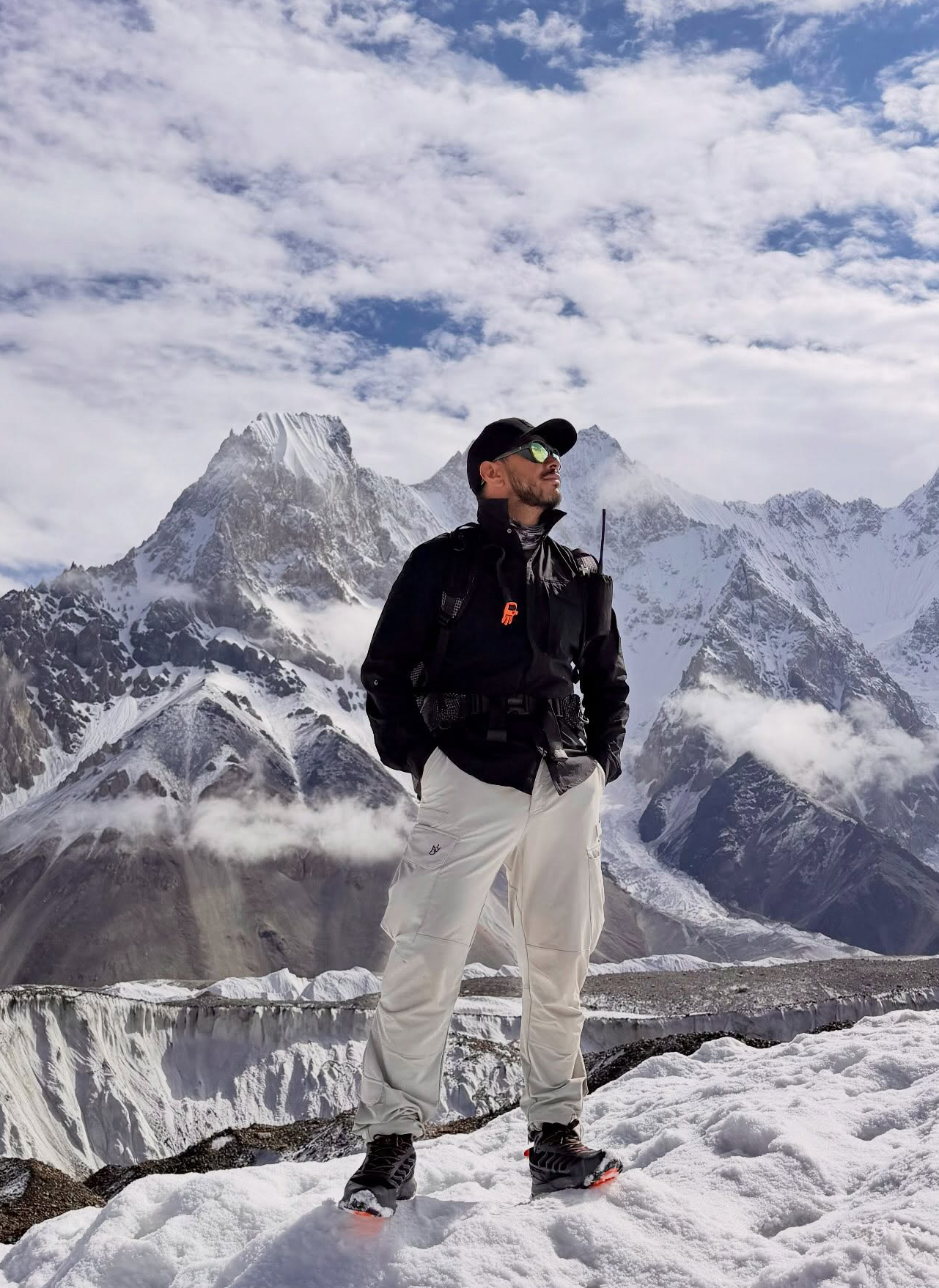
Nirmal Purja, popularly known as Nims Dai or simply Nims, was a Nepal-born mountaineer who became internationally famous for his extraordinary speed and endurance on the world’s highest mountains.
He was also a former member of the Brigade of Gurkhas and later served in the United Kingdom’s elite Special Boat Service. His military background played an important role in shaping the discipline, resilience, teamwork and decision-making skills that later became central to his mountaineering career.
Nims Dai eventually moved from military service into professional high-altitude mountaineering. His name became globally recognized after Project Possible, the ambitious mission through which he climbed all 14 of the world’s 8,000-meter peaks in only six months and six days.
His official biography describes his transition from Britain’s Special Forces to mountaineering and later expedition leadership as part of a philosophy centered on pushing beyond what people believe is possible.
His story became even more widely known through the Netflix documentary 14 Peaks: Nothing Is Impossible, which introduced his remarkable journey to a worldwide audience.
For many people around the world, Nims Dai became a symbol of determination.
For Nepal, he became one of the country’s most internationally recognized modern mountaineers.
Nirmal Purja Nims Dai Death: What Happened on Broad Peak?
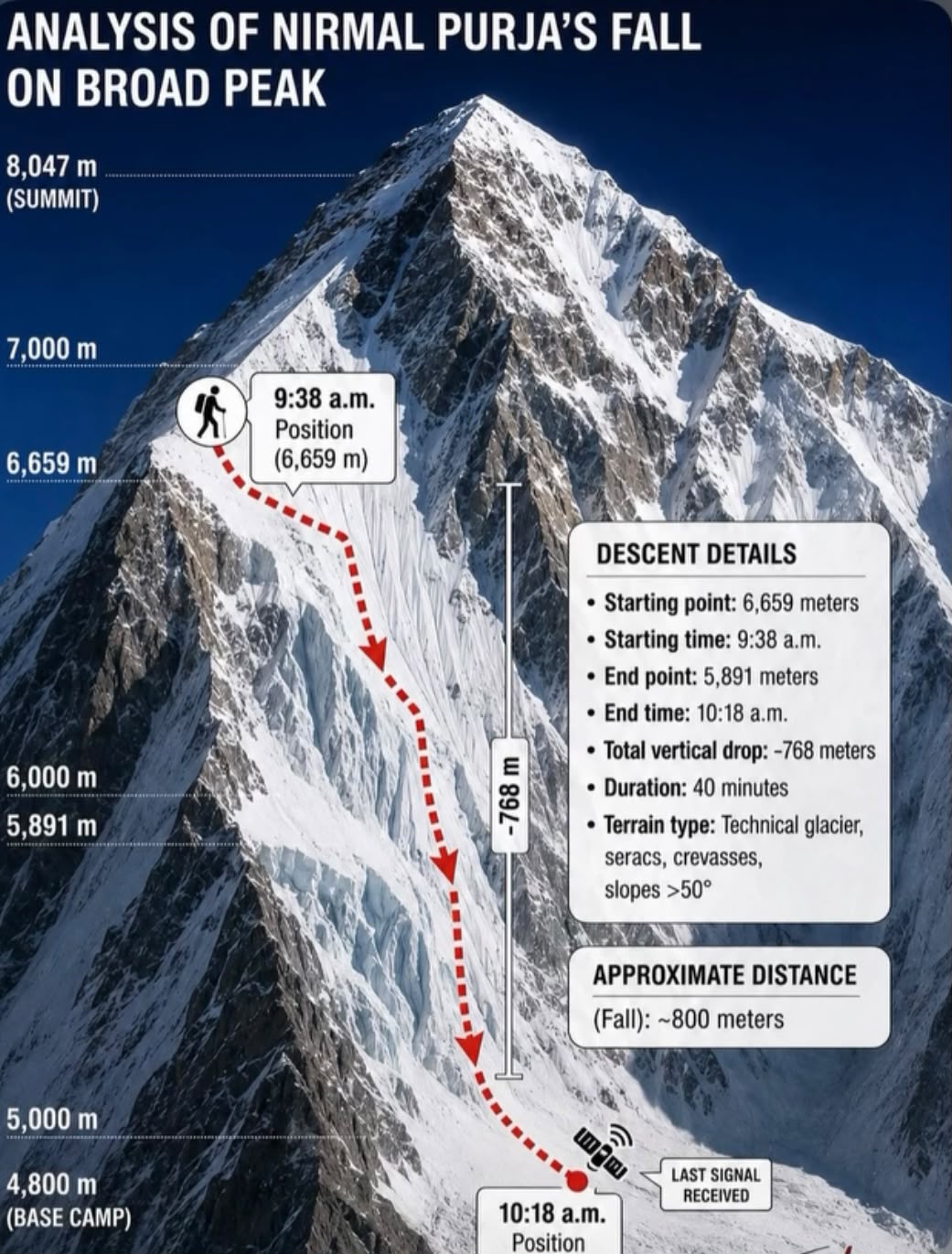
The death of Nims Dai occurred during an expedition on Broad Peak, one of the world’s 14 eight-thousanders.
Broad Peak rises to approximately 8,047 meters and is located in Pakistan’s Karakoram range near K2. It is the world’s 12th-highest mountain and is known for its difficult terrain, unpredictable weather, steep sections and serious avalanche hazards.
On July 30, 2026, an avalanche struck a 10-member international climbing expedition on Broad Peak. Initial reports said that the climbers, including Nirmal Purja, had lost communication following the avalanche. Rescue teams immediately began efforts to locate the missing climbers.
The conditions were extremely difficult.
Broad Peak is a remote high-altitude environment where rescue operations can be dangerous even under normal circumstances. Severe weather, unstable snow, steep terrain and limited access complicated the search.
Reports later confirmed that Nims Dai and other members of the expedition had died.
The Associated Press reported that Nirmal Purja and three other climbers were found dead on Broad Peak after the avalanche. Earlier, other bodies from the international expedition had also been recovered.
The recovery operation itself became a dangerous mountaineering mission.
Search teams had to work in difficult weather and terrain, and Pakistani military helicopters were involved in the recovery and transportation of bodies.
The tragedy was not only the loss of a famous climber.
It was the loss of multiple mountaineers from different countries who had gone into the mountains pursuing their own dreams and professional objectives.
Nims Dai was one of them.
When Did Nims Dai Die?
Nims Dai died during the Broad Peak avalanche in late July 2026.
Reports from the time of the accident described the avalanche as occurring around midday on July 30. Reuters subsequently reported that Nirmal Purja and nine other climbers died following the avalanche on Broad Peak.
Because initial reports were developing rapidly while rescue teams were still searching for survivors and recovering bodies, different reports used slightly different dates in describing the tragedy.
The important fact is clear:
Nirmal “Nims Dai” Purja lost his life during the Broad Peak avalanche in late July 2026.
His body was later located and recovered during the search operation.
The recovery was especially difficult because of the altitude, weather and dangerous mountain conditions. The Associated Press described the recovery effort as one of the most technically difficult operations carried out on the mountain.
How Did Nims Dai Die?
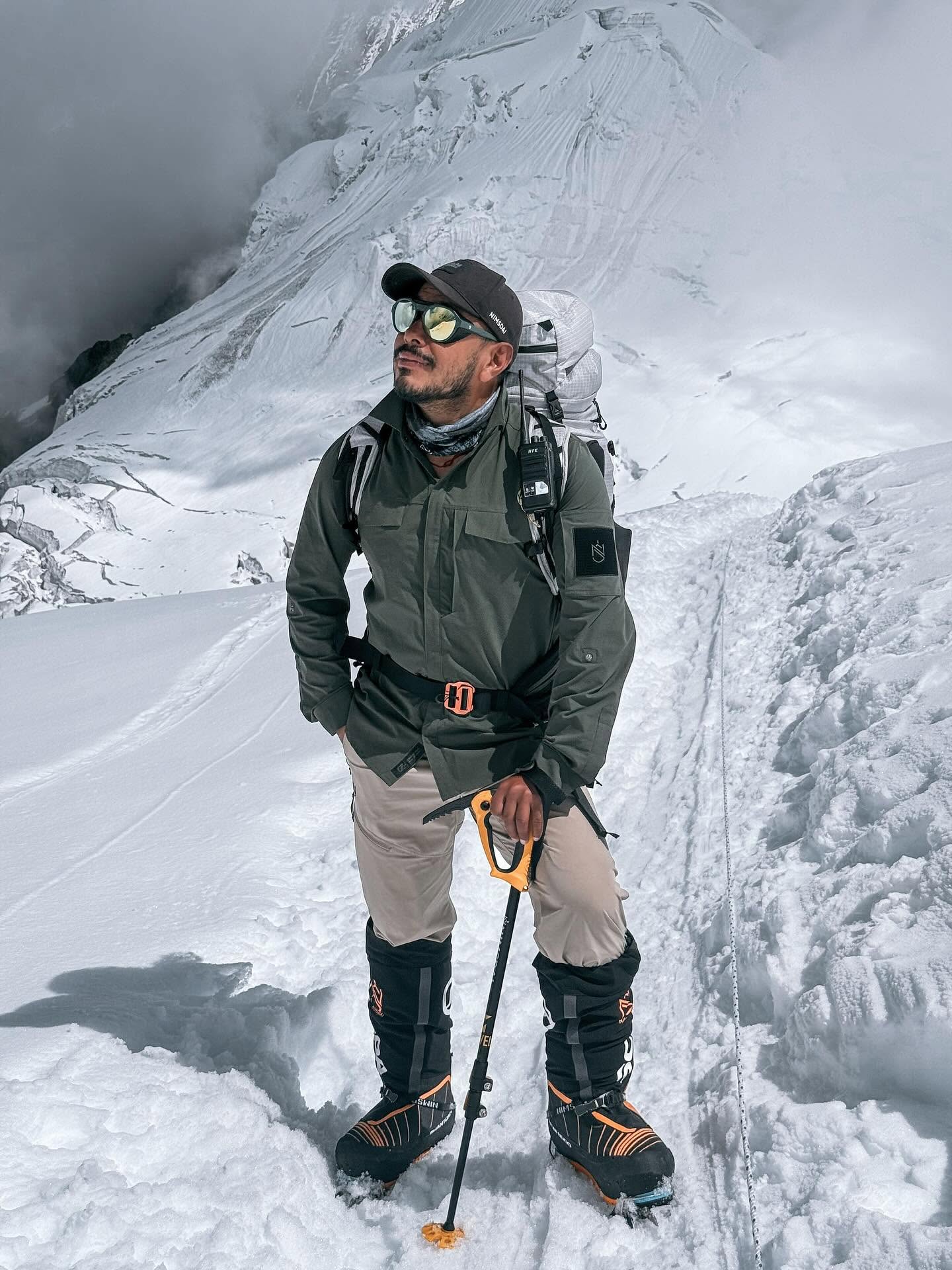
Nims Dai died after an avalanche struck his climbing expedition on Broad Peak.
Avalanches are among the most serious hazards in high-altitude mountaineering. A large avalanche can release enormous quantities of snow and ice and can sweep climbers down steep mountain terrain.
At elevations above 8,000 meters, survival and rescue become even more difficult.
Climbers operate in what is commonly known as the death zone, where the human body cannot acclimatize indefinitely because of the extremely low oxygen availability. Guinness World Records explains that the conditions above 8,000 meters are so extreme that climbers cannot remain there for extended periods.
The Broad Peak avalanche created exactly the kind of situation that demonstrates why even the world’s most experienced mountaineers remain vulnerable in the Himalayas and Karakoram.
Nims Dai had decades of military and climbing experience.
He had climbed the world’s highest mountains repeatedly.
He had survived some of the most dangerous environments on Earth.
But no amount of experience can completely eliminate the natural hazards of an 8,000-meter mountain.
That is one of the most important lessons from his death.
Nims Dai and Broad Peak
Broad Peak was not an unfamiliar mountain to Nims Dai.
During Project Possible in 2019, Broad Peak was among the 14 eight-thousanders that he climbed as part of his record-breaking campaign.
The mountain therefore represented an important chapter in his earlier career.
Returning to an 8,000-meter mountain after already achieving historic records demonstrates something important about Nims Dai’s personality.
He was not finished with mountaineering after climbing the 14 peaks.
Instead, he continued to pursue difficult objectives.
His career increasingly involved not only personal records but also expedition leadership, guiding, commercial high-altitude projects and challenging climbing objectives.
His official organization describes his later work as helping climbers pursue high-altitude objectives using his experience and the approach associated with “NIMSSTYLE.”
Broad Peak ultimately became the final mountain of his life.
Who Was Nims Dai Before He Became Famous?

Before becoming a global mountaineering celebrity, Nirmal Purja had already developed a remarkable career in the military.
He served with the Brigade of Gurkhas and later with the Special Boat Service, an elite British military special forces unit.
That background helped him develop qualities that would later define his climbing career:
- Discipline
- Physical endurance
- Mental resilience
- Teamwork
- Leadership
- Risk management
- Operating under pressure
- Ability to function in extreme environments
Mountaineering and military operations are obviously different professions, but many of the mental skills required for both are similar.
High-altitude climbing demands preparation and discipline.
A climber must make decisions when exhausted, cold, dehydrated and short of oxygen.
Nims Dai’s military experience gave him a foundation for dealing with difficult situations.
However, his transition into mountaineering was not simply a continuation of his military career.
It became a new chapter in his life.
Nims Dai’s Journey Into Mountaineering
Nims Dai did not begin his professional mountaineering career as one of the world’s most famous climbers.
Like many mountaineers, he developed his skills progressively.
His rise was particularly remarkable because he eventually entered the highest level of mountaineering and began challenging records held by climbers with decades of specialized experience.
His approach was different.
Rather than spending many years attempting the 14 eight-thousanders, he created an ambitious plan to climb all of them within a dramatically shorter period.
That project became known as Project Possible.
The idea sounded unrealistic.
The previous benchmark for climbing all 14 eight-thousanders was measured in years rather than months.
Nims Dai wanted to do it in seven months.
His philosophy was simple:
Impossible was a challenge, not a conclusion.
Project Possible: The Achievement That Changed Mountaineering
Project Possible was Nims Dai’s most famous mountaineering project.
The objective was extraordinary:
Climb all 14 mountains above 8,000 meters in seven months.
Before Nims Dai, the fastest recorded completion of all 14 eight-thousanders was 7 years and 310 days, according to Guinness World Records.
Nims Dai completed his project in only:
6 months and 6 days
He began with Annapurna I on April 23, 2019, and completed the project on Shishapangma on October 29, 2019.
The entire achievement took 189 days.
Guinness World Records recognizes the 6-month-6-day achievement as the fastest ascent of all mountains above 8,000 meters at the time.
The achievement shocked the mountaineering world.
The mountains themselves had not become easier.
The weather had not become predictable.
The altitude had not changed.
The risks remained enormous.
What changed was the strategy.
Nims Dai and his team approached the project with extraordinary logistics, preparation, speed and determination.
The 14 Eight-Thousanders Climbed by Nims Dai
The world’s 14 eight-thousanders are mountains rising above 8,000 meters.
Nims Dai climbed all 14 during Project Possible.
They were:
- Annapurna I – 8,091 m
- Dhaulagiri I – 8,167 m
- Kangchenjunga – 8,586 m
- Mount Everest – 8,849 m
- Lhotse – 8,516 m
- Makalu – 8,485 m
- Nanga Parbat – 8,126 m
- Gasherbrum I – 8,080 m
- Gasherbrum II – 8,035 m
- K2 – 8,611 m
- Broad Peak – 8,047 m
- Cho Oyu – 8,188 m
- Manaslu – 8,163 m
- Shishapangma – 8,027 m
Each mountain has its own geography, weather patterns, technical difficulties and climbing hazards.
Completing one of these peaks is a major achievement.
Completing all 14 is considered one of the greatest accomplishments in high-altitude mountaineering.
Doing it in six months and six days transformed Nims Dai into an international climbing icon.
Why Climbing 14 Peaks Above 8,000 Meters Is So Difficult
The 14 eight-thousanders are not simply 14 tall mountains.
They represent a collection of some of the most dangerous environments on Earth.
At extreme altitude, the human body is under enormous stress.
Oxygen levels are dramatically reduced.
Temperatures can fall far below freezing.
Weather can change rapidly.
Strong winds can make climbing impossible.
Avalanches can occur without warning.
Rockfall and icefall create additional hazards.
Crevasses can be hidden beneath snow.
Fatigue accumulates.
Even simple physical tasks become difficult.
At more than 8,000 meters, climbers enter the death zone, where the human body cannot acclimatize normally for prolonged periods.
This is why Nims Dai’s Project Possible was so remarkable.
He was not climbing 14 ordinary mountains.
He was repeatedly entering the most hostile environment available to a human being.
Nims Dai and Mount Everest
Mount Everest was an important part of Nims Dai’s climbing career.
At 8,849 meters, Everest is the highest mountain on Earth.
For millions of people, Everest represents the ultimate symbol of mountaineering.
For Nims Dai, it became one part of a much larger project.
During Project Possible, Everest was climbed as part of his rapid sequence of ascents.
He also became famous for a remarkable sequence involving Everest, Lhotse and Makalu.
According to Guinness World Records, he completed Everest, Lhotse and Makalu in an extremely short period, one of the major achievements associated with his 2019 project.
This demonstrated the extraordinary physical and logistical demands of his approach.
Nims Dai and K2
K2 is widely regarded as one of the most technically demanding and dangerous mountains in the world.
At 8,611 meters, it is the second-highest mountain on Earth.
For Nims Dai, K2 was not simply another summit.
It became part of his long-term relationship with extreme mountaineering.
In January 2021, Nims Dai led the team that achieved the first successful winter ascent of K2, one of the most important modern milestones in Himalayan and Karakoram mountaineering.
The team reached the summit under winter conditions that had defeated numerous previous attempts.
The image of the climbers reaching the summit together and singing Nepal’s national anthem became one of the most memorable moments in modern Himalayan climbing.
The achievement reinforced Nims Dai’s reputation as a climber willing to attempt objectives that many considered impossible.
Nims Dai’s 49 Ascents of the Eight-Thousanders
Nims Dai’s achievements did not stop after the 14 Peaks.
He continued returning to the highest mountains.
By September 25, 2025, Guinness World Records recorded Nims Dai with 49 true-summit ascents of the 14 mountains above 8,000 meters.
The record also states that 25 of those ascents were completed without supplementary oxygen.
This is an important part of his legacy.
Many people know Nims Dai primarily because of the six-month-6-day record.
But his later climbing career demonstrated that the 2019 project was not a single extraordinary moment.
He continued climbing at the highest level.
He repeatedly returned to the world’s most demanding peaks.
Nims Dai and the Death Zone
One of the most important concepts in understanding Nims Dai’s career is the death zone.
The death zone generally refers to elevations above approximately 8,000 meters.
At these altitudes, the atmosphere contains dramatically less available oxygen than at sea level.
The human body cannot fully adapt to such conditions.
As altitude increases, physical performance declines.
The body struggles to maintain normal functions.
This is why climbers try to spend as little time as possible at extreme altitude.
Nims Dai’s climbing philosophy often emphasized speed.
His military background, physical conditioning, climbing experience and expedition logistics allowed him to move quickly through dangerous terrain.
But speed does not remove risk.
The Broad Peak tragedy is a reminder that a climber can be extremely experienced and still be exposed to uncontrollable natural forces.
The Netflix Documentary 14 Peaks: Nothing Is Impossible
The documentary tells the story of Project Possible and follows the extraordinary challenge of climbing all 14 eight-thousanders in seven months.
The film helped transform Nims Dai from a famous mountaineer into a global public figure.
People who had never followed Himalayan climbing learned about:
- Nirmal Purja
- Project Possible
- The 14 eight-thousanders
- High-altitude mountaineering
- Nepalese climbers
- Sherpa support
- The dangers of the death zone
- The importance of teamwork
- The physical and mental demands of extreme climbing
The documentary’s central message reflected Nims Dai’s philosophy:
Nothing is impossible when people are willing to challenge their own limitations.
His story resonated far beyond mountaineering.
Entrepreneurs, athletes, soldiers, students and adventure enthusiasts all found inspiration in his journey.
Beyond Possible: Nims Dai’s Book
Nims Dai also shared his story in the book Beyond Possible: One Man, 14 Peaks, and the Mountaineering Achievement of a Lifetime.
The book provided additional insight into the challenges behind Project Possible.
The public often sees the summit photograph.
What it does not see is everything required to reach that summit.
There are months of preparation.
There are financial challenges.
There are permits.
There is equipment.
There are flights.
There are weather windows.
There are logistics.
There are injuries.
There is fatigue.
There are moments of doubt.
And there are countless people working behind the scenes.
Nims Dai’s story is therefore not simply a story about standing on 14 summits.
It is a story about building an entire system capable of making an extraordinary objective possible.
The Role of Nepalese Climbers in Nims Dai’s Success
One of the most important aspects of Nims Dai’s story is the role of Nepalese mountaineers.
High-altitude mountaineering in Nepal and the Himalayas is deeply connected to local mountain communities.
Sherpa climbers and other Nepalese high-altitude workers have supported expeditions for generations.
Nims Dai himself was part of a wider generation of Nepalese climbers who demonstrated that Nepalese mountaineers could lead major international expeditions and establish world records.
His Project Possible team included fellow Nepalese climbers who played important roles throughout the expedition.
The success of the project therefore represented more than one person’s achievement.
It highlighted the expertise and strength of Nepal’s mountaineering community.
Nims Dai as a Leader
Nims Dai was known not only as a climber but also as an expedition leader.
Leading an 8,000-meter expedition requires much more than physical strength.
A leader must make decisions about:
- Weather
- Route selection
- Acclimatization
- Team strength
- Oxygen
- Equipment
- Communication
- Rescue planning
- Camp logistics
- Summit timing
- Risk management
At extreme altitude, mistakes can have fatal consequences.
Nims Dai’s military background strongly influenced his leadership style.
He brought a disciplined approach to expedition planning and emphasized preparation and execution.
His later work through his own expedition organization also allowed him to share his experience with other climbers.
Why Nims Dai’s Death Has Shocked Nepal
Nims Dai’s death is particularly significant in Nepal because mountaineering is deeply connected to the country’s identity and tourism economy.
Nepal is home to Mount Everest and several other eight-thousanders.
Mountains attract trekkers, climbers, researchers, photographers and adventurers from around the world.
Nims Dai became one of the most internationally visible representatives of Nepal’s modern mountaineering culture.
His achievements helped place Nepalese climbers at the center of global discussions about high-altitude mountaineering.
His death therefore represents a major loss not only for his family and friends but also for Nepal’s climbing community.
Nims Dai’s Final Expedition
Nims Dai’s final expedition took him back to the high-altitude world that had defined much of his adult life.
He was leading an international climbing expedition on Broad Peak.
The expedition included climbers from several countries.
On the day of the disaster, an avalanche struck the group.
Communication was lost.
The international mountaineering community immediately began following the rescue effort.
The situation was made particularly difficult by weather and terrain.
Eventually, search teams located the bodies of several members of the expedition.
Nims Dai was among those confirmed dead.
The recovery process continued under extremely difficult conditions.
The Associated Press reported that Nims Dai and three other climbers were later found after the avalanche, while earlier recovery efforts had already located other members of the expedition.
The tragedy became one of the most serious mountaineering accidents in Pakistan in recent years.
Why Was Broad Peak So Dangerous?
Broad Peak is the 12th-highest mountain in the world.
Its elevation is approximately 8,047 meters.
The mountain sits in the Karakoram range of northern Pakistan.
Its high altitude alone makes it dangerous.
But altitude is only one part of the risk.
Broad Peak climbers must deal with:
Avalanche danger
Large quantities of snow and ice can become unstable.
Extreme weather
Storms can arrive rapidly and dramatically reduce visibility.
High winds
Strong winds can make movement difficult and increase exposure to cold.
Rock and ice fall
Climbers can be exposed to falling material from higher sections of the mountain.
Extreme cold
Hypothermia and frostbite are serious threats.
Low oxygen
Above 8,000 meters, the human body is operating under severe physiological stress.
Rescue difficulties
At high altitude, rescue operations can put rescuers themselves at significant risk.
The Broad Peak tragedy demonstrates that even world-class mountaineers cannot eliminate these hazards.
Nims Dai’s Legacy
How should Nims Dai be remembered?
Certainly as a record-breaking climber.
But that is only one part of his legacy.
His broader legacy includes:
A record-breaking mountaineer.
A former Gurkha and special forces soldier.
An expedition leader.
A high-altitude guide.
A global ambassador for Nepalese mountaineering.
A mentor and inspiration to climbers.
A person who challenged conventional ideas about what was possible.
His famous Project Possible changed public perceptions of high-altitude mountaineering.
Before 2019, climbing all 14 eight-thousanders in less than seven months appeared almost unimaginable.
Nims Dai did it.
His achievement demonstrated what could happen when physical preparation, logistics, technology, teamwork and determination were combined at an extraordinary level.
What Can We Learn From Nims Dai?
Nims Dai’s life provides several lessons that extend far beyond mountaineering.
- Think beyond conventional limits
Nims Dai did not accept that an existing record represented the ultimate limit.
He asked whether it could be done faster.
That question created Project Possible.
- Preparation matters
Extreme goals cannot be achieved through motivation alone.
Preparation, training, logistics and teamwork are essential.
- Teamwork creates extraordinary results
Although Nims Dai became the public face of Project Possible, he did not climb all 14 mountains alone.
A major high-altitude expedition depends on many people.
- Experience matters
His military and climbing experience helped him operate in extreme environments.
- Nature always has the final word
Perhaps the most important lesson comes from his death.
Even the world’s strongest and most experienced climbers remain vulnerable to mountains.
The Broad Peak avalanche is a reminder that humans can prepare extensively but cannot completely control nature.
Nims Dai and the Meaning of “Nothing Is Impossible”
The phrase “Nothing Is Impossible” became closely associated with Nims Dai.
It was not merely a marketing slogan.
It described the philosophy behind Project Possible.
He was told that climbing all 14 eight-thousanders in seven months was impossible.
Instead of accepting that conclusion, he attempted it.
And succeeded.
That philosophy inspired millions of people.
However, “nothing is impossible” should not be interpreted as ignoring danger.
The mountains teach a more complicated lesson.
Dreams require courage.
But courage must exist alongside preparation, judgment and respect for nature.
Nims Dai’s career demonstrated both sides of this equation.
He pushed limits further than most people thought possible.
His death demonstrated that some forces remain beyond human control.
Nims Dai’s Impact on Nepal’s Mountaineering Industry
Nims Dai helped change the global image of Nepalese mountaineers.
For many years, international climbing stories frequently focused on foreign expedition leaders and clients.
But Nepalese climbers have always been central to Himalayan expeditions.
Nims Dai became one of the most visible examples of a Nepal-born climber leading major international climbing projects.
His achievements helped demonstrate that Nepalese climbers could be:
- Expedition leaders
- Record holders
- International climbing personalities
- High-altitude guides
- Entrepreneurs
- Documentary subjects
- Authors
- Global ambassadors for mountaineering
His influence will likely continue through younger Nepalese climbers.
Nims Dai’s Most Important Mountaineering Achievements
Here is a summary of some of the major achievements associated with Nims Dai.
Climbing all 14 eight-thousanders
He climbed all 14 mountains above 8,000 meters in 6 months and 6 days during Project Possible. Guinness World Records recognized this as the fastest completion at the time.
Project Possible
His 2019 expedition became one of the most famous mountaineering projects of the modern era.
First winter ascent of K2
Nims Dai led the team that made the historic first winter ascent of K2 in January 2021.
Multiple eight-thousander ascents
His climbing career continued well beyond the original 14 Peaks project.
49 true-summit ascents
By September 2025, Guinness World Records recorded 49 true-summit ascents of the 14 eight-thousanders.
Global recognition
His achievements were documented in the Netflix film 14 Peaks: Nothing Is Impossible.
International influence
His story inspired people far beyond the mountaineering community.
Nims Dai’s 14 Peaks Record Explained
One of the most searched questions about Nims Dai is:
How long did Nims Dai take to climb all 14 peaks?
The answer is:
6 months and 6 days.
He started with Annapurna I on April 23, 2019.
He completed the project on Shishapangma on October 29, 2019.
That was only 189 days.
The previous fastest completion had taken years.
This dramatic difference is what made Project Possible so extraordinary.
It was not simply that Nims Dai climbed all 14.
He compressed an achievement that previously required years into less than seven months.
Did Nims Dai Climb All 14 Peaks Without Oxygen?
No.
Nims Dai used supplementary oxygen during his 2019 Project Possible ascents.
Guinness World Records specifically notes that his record for climbing all 14 eight-thousanders in 6 months and 6 days was achieved with supplementary oxygen.
However, his later career also included many ascents without supplementary oxygen.
Guinness records that by September 2025, he had completed 25 of his 49 true-summit ascents without supplementary oxygen.
This distinction is important because different mountaineering records use different criteria.
When discussing Nims Dai’s achievements, accurate wording is essential.
Did Nims Dai Climb Broad Peak Before His Death?
Yes.
Broad Peak was one of the 14 eight-thousanders he climbed during Project Possible in 2019.
His 2026 expedition therefore represented a return to a mountain he already knew.
But familiarity with a mountain does not eliminate risk.
Conditions can change from one expedition to another.
Snowpack, temperature, wind, weather patterns, route conditions and avalanche risk can all be different.
The 2026 Broad Peak tragedy illustrates this reality.
What Happened to the Other Climbers on Broad Peak?
Nims Dai was part of an international expedition.
Reports said the group included climbers from multiple countries.
Following the avalanche, search and rescue teams located and recovered multiple bodies.
The Associated Press reported that the victims included climbers from Nepal, China, Oman, the United States and other countries, while recovery operations continued for those still missing.
This was therefore not simply the death of one famous climber.
It was a major international mountaineering tragedy.
Every climber lost had a family, friends, colleagues and people who cared about them.
The Dangerous Reality of High-Altitude Mountaineering
The death of Nims Dai is also an opportunity to understand the reality of climbing above 8,000 meters.
Social media often shows beautiful summit photographs.
It does not always show:
- Frostbite
- Exhaustion
- Severe cold
- Dehydration
- Altitude sickness
- Avalanches
- Crevasse falls
- Rockfall
- Icefall
- Extreme winds
- Long nights
- Difficult rescue operations
The higher a climber goes, the smaller the margin for error becomes.
This is why mountaineering experience is so important.
But even experience has limits.
Mountains remain dynamic environments.
Nims Dai and the Future of Mountaineering
The influence of Nims Dai will likely continue long after his death.
His records may eventually be broken.
New climbers will attempt faster ascents.
Technology will improve.
Weather forecasting will become more advanced.
Climbing equipment will continue evolving.
But the story of Project Possible will remain important because it changed perceptions about what could be achieved.
Future climbers may look at Nims Dai’s career as part of the history of increasingly fast and professional high-altitude climbing.
His approach also contributed to a wider discussion about:
- Speed climbing
- Commercial expeditions
- Supplemental oxygen
- High-altitude logistics
- Risk management
- Record definitions
- The role of professional guides
- The future of 8,000-meter mountaineering
Remembering Nims Dai Beyond the Records
It is easy to reduce a mountaineer to numbers.
14 peaks.
6 months.
6 days.
49 true summits.
K2.
Everest.
Broad Peak.
But a human life cannot be summarized by statistics.
Behind those numbers was a person.
A son.
A husband.
A father.
A friend.
A soldier.
A climber.
A leader.
A colleague.
A mentor.
A Nepali who carried the country’s name onto the world’s highest mountains.
The Broad Peak tragedy reminds us that every record belongs to a human being who accepted extraordinary challenges.
Nims Dai’s Death and Nepal’s Mountaineering Community
The loss of Nims Dai has created deep sadness among Nepal’s mountaineering community.
Nepal has produced generations of legendary climbers and mountain workers.
From Sherpa guides to expedition leaders, Nepalese mountaineers have played a central role in the history of Himalayan climbing.
Nims Dai became one of the most internationally visible figures in that community.
His success helped attract global attention to Nepalese mountaineering talent.
His death therefore feels especially significant in a country whose economy, culture and international image are closely connected with the Himalayas.
What Is Nims Dai’s Greatest Achievement?
There is no single answer.
For many people, it is:
Climbing all 14 eight-thousanders in 6 months and 6 days.
For others, it is the first winter ascent of K2.
For others, it is the 49 true-summit ascents recorded by Guinness World Records.
But perhaps his greatest achievement was changing people’s understanding of what a Nepalese mountaineer could accomplish.
He showed that a climber from Nepal could lead a global expedition, break major records, become a bestselling author, appear in a major Netflix documentary and become one of the world’s most recognizable mountaineers.
That is a legacy much larger than a single record.
Frequently Asked Questions About Nims Dai
Is Nims Dai dead?
Yes. Nirmal “Nims Dai” Purja died following an avalanche on Broad Peak in Pakistan in late July 2026. His death was confirmed after search teams located and recovered his body.
How did Nims Dai die?
He died after an avalanche struck his international climbing expedition on Broad Peak. The accident occurred during the team’s high-altitude expedition, and rescue operations were severely complicated by mountain conditions and weather.
When did Nims Dai die?
The Broad Peak avalanche occurred in late July 2026. Initial reports described the accident on July 30, while later reporting used July 31 in describing the disaster.
Where did Nims Dai die?
Nims Dai died on Broad Peak in Pakistan’s Karakoram mountain range.
How high is Broad Peak?
Broad Peak is approximately 8,047 meters high and is the world’s 12th-highest mountain.
How many 8,000-meter mountains did Nims Dai climb?
Nims Dai climbed all 14 of the world’s eight-thousanders during Project Possible in 2019.
How fast did Nims Dai climb all 14 peaks?
He completed all 14 in 6 months and 6 days, or 189 days. Guinness World Records recognized this as the fastest completion at the time.
What is Project Possible?
Project Possible was Nims Dai’s 2019 mission to climb all 14 mountains above 8,000 meters in seven months.
Did Nims Dai climb Everest?
Yes. Mount Everest was one of the 14 eight-thousanders he climbed.
Did Nims Dai climb K2?
Yes. K2 was part of Project Possible. He also later led the historic first winter ascent of K2 in January 2021.
Did Nims Dai climb Broad Peak?
Yes. Broad Peak was one of the 14 eight-thousanders he climbed during Project Possible.
Did Nims Dai climb all 14 peaks without oxygen?
No. His 6-month-6-day Project Possible record was achieved with supplementary oxygen. However, Guinness World Records later recorded 25 of his 49 true-summit ascents without supplementary oxygen.
What was Nims Dai famous for?
He became famous for climbing all 14 of the world’s 8,000-meter peaks in 6 months and 6 days, leading the first winter ascent of K2, and appearing in the Netflix documentary 14 Peaks: Nothing Is Impossible.
What was Nims Dai’s real name?
His full name was Nirmal Purja. He was widely known as Nims, Nims Dai and Nimsdai.
Was Nims Dai a Gurkha?
Yes. Before becoming a professional mountaineer, he served with the Brigade of Gurkhas and later with the British Special Boat Service.
What documentary is about Nims Dai?
The Netflix documentary 14 Peaks: Nothing Is Impossible follows his Project Possible journey.
Did Nims Dai write a book?
Yes. His book is titled Beyond Possible: One Man, 14 Peaks, and the Mountaineering Achievement of a Lifetime.
How many times did Nims Dai climb the 8,000-meter peaks?
Guinness World Records recorded 49 true-summit ascents of the 14 eight-thousanders by September 25, 2025.
Nims Dai’s Legacy Will Live Beyond the Mountains
The mountains have taken many legendary climbers throughout history.
Nims Dai’s final journey on Broad Peak is now part of that history.
But his life should not be remembered only through the tragedy of his death.
He should be remembered for what he accomplished while he was alive.
He challenged records.
He inspired climbers.
He promoted Nepalese mountaineering.
He demonstrated extraordinary physical and mental endurance.
He led teams through some of the harshest environments on Earth.
He helped bring the world of high-altitude mountaineering to millions of people through film and storytelling.
Most importantly, he inspired people to question their own limits.
Project Possible began with an idea that many considered unrealistic.
Nims Dai turned that idea into reality.
His story showed that extraordinary achievements often begin with an ordinary question:
What if it is possible?
His life also leaves another lesson.
Mountains demand respect.
No matter how strong, experienced or famous a climber becomes, nature remains more powerful.
Broad Peak ultimately reminded the world of that reality.
Nirmal “Nims Dai” Purja died doing what had defined much of his life: challenging one of the world’s highest and most demanding mountains.
His records may eventually be broken.
New climbers will create new records.
But his story will remain.
From the hills of Nepal to the world’s highest summits, from military service to Project Possible, from Everest and K2 to the final expedition on Broad Peak, Nims Dai lived a life that changed modern mountaineering.
Nims Dai may no longer be climbing the mountains, but his legacy will continue to inspire those who look toward them.
May he rest in peace.


