Everest Base Camp vs Gokyo Lakes is one of the most common decisions trekkers face when planning an adventure in Nepal’s Everest region. Both routes begin with the famous flight to Lukla and follow the trail to Namche Bazaar before leading to two very different experiences. Everest Base Camp offers the achievement of reaching the foot of the world’s highest mountain, while Gokyo Lakes features peaceful trails, stunning turquoise lakes, and panoramic views from Gokyo Ri. This 2026 comparison explores the differences in cost, difficulty, scenery, altitude, and itinerary to help you choose the trek that’s right for you.
Everest Base Camp vs Gokyo Lakes: Quick Comparison
Before getting into the details, here’s how the two treks stack up on the numbers that matter most when planning a trip.
| Factor | Everest Base Camp Trek | Gokyo Lakes Trek |
|---|---|---|
| Duration | 14 Days | 12 Days |
| Maximum Altitude | 5,364 m (Kala Patthar) | 5,357 m (Gokyo Ri) |
| Trek Distance | Approx. 130 km (Lukla to EBC and back to Lukla) | Approx. 90–100 km (Lukla to Gokyo Ri and back to Lukla) |
| Difficulty Level | Strenuous | Medium |
| Estimated Cost | US$1,235–1,525 | US$1,165–1,399 |
| Crowd Levels | High, especially in peak season | Lower, quieter trails past Namche |
| Main Highlight | Standing at the base of Mount Everest | Sunrise over four 8,000m peaks from Gokyo Ri |
| Permits Required | Sagarmatha National Park + Khumbu Rural Municipality | Sagarmatha National Park + Khumbu Rural Municipality |
Overview of the Everest Base Camp Trek
The Everest Base Camp Trek is the more famous of the two routes, taking trekkers to the foot of the world’s highest mountain while passing through the heart of Sagarmatha National Park. Reaching Kala Patthar at 5,364 meters rewards you with one of the best close-up views of Mount Everest.
The Route
- Fly from Kathmandu (or Manthali during peak season) to Lukla.
- Trek through Phakding along the Dudh Kosi River.
- Climb to Namche Bazaar (3,440 m) for acclimatization.
- Continue through Tengboche, Dingboche, and Lobuche.
- Reach Everest Base Camp and hike to Kala Patthar (5,364 m) for sunrise views.
- Complete the journey in a standard 14-day itinerary.
Trek Highlights
- Stand at the legendary Everest Base Camp.
- Enjoy panoramic views of Everest, Lhotse, Nuptse, and Ama Dablam.
- Walk beside the impressive Khumbu Glacier and Khumbu Icefall.
- Visit the famous Tengboche Monastery, the largest monastery in the Khumbu region.
- Experience Sherpa culture, traditional villages, and Himalayan hospitality throughout the trek.
Who It Suits
Everest Base Camp suits trekkers whose main goal is standing at the literal base of the world’s highest mountain, and who don’t mind sharing the trail with the largest number of trekkers in the region during peak season.
Full details are on our Everest Base Camp Trek page.
Overview of the Gokyo Lakes Trek
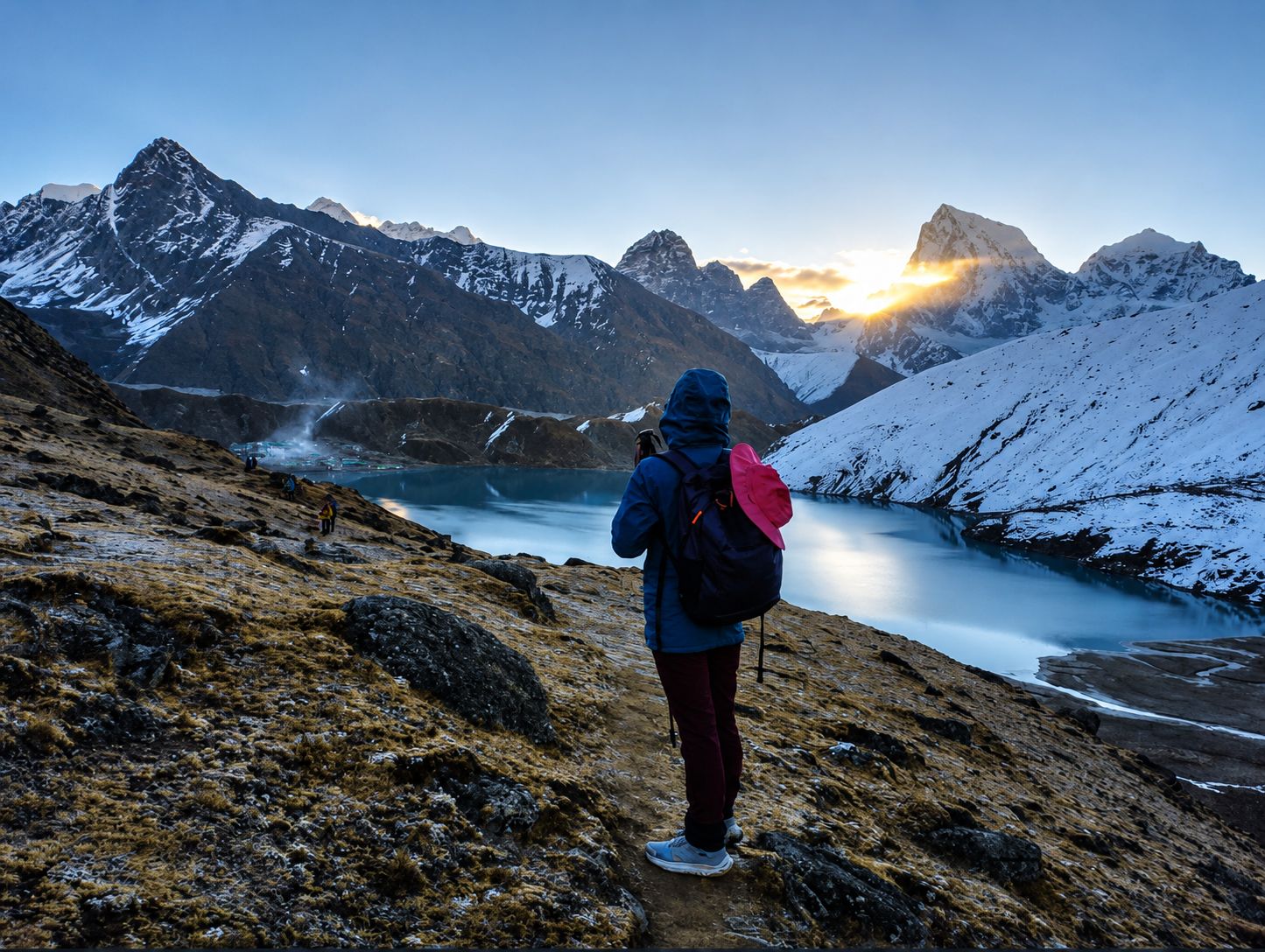
The Gokyo Lakes Trek follows the same route as the Everest Base Camp Trek until Namche Bazaar before branching into the quieter Gokyo Valley. This scenic trail is known for its chain of glacial lakes, peaceful atmosphere, and the spectacular viewpoint at Gokyo Ri.
The Route
- Follow the Everest Base Camp trail to Namche Bazaar.
- Branch off near Kyangjuma into the Gokyo Valley.
- Cross Mong La Pass (3,975 m).
- Trek through Phortse Tenga and Dole (4,200 m).
- Continue to Machhermo (4,470 m) before reaching Gokyo Village (4,750 m).
- Stay beside Dudh Pokhari, the largest of the Gokyo Lakes.
- Hike to Gokyo Ri (5,357 m) for panoramic sunrise views.
Trek Highlights
- Explore the stunning Gokyo Lakes, covering approximately 7,770 hectares.
- Visit a Ramsar Wetland Site recognized for its ecological importance.
- Enjoy sunrise from Gokyo Ri (5,357 m).
- See four 8,000-meter peaks—Everest, Lhotse, Makalu, and Cho Oyu—from a single viewpoint.
- Walk alongside the Ngozumpa Glacier, the longest glacier in Nepal.
- Experience quieter trails and a more peaceful trekking atmosphere than the Everest Base Camp route.
Who It Suits
Gokyo Lakes suits trekkers who want equally dramatic Everest-region views but prefer a quieter trail, glacial lake scenery, and a slightly shorter overall itinerary.
Full details are on our Gokyo Lakes Trek page.
Everest Base Camp vs Gokyo Lakes: Key Differences
Beyond the general overview, a few specific numbers separate these two treks in ways that genuinely affect trip planning.
Maximum Altitude
Everest Base Camp trekkers reach 5,364 meters at Kala Patthar, while Gokyo Lakes trekkers reach 5,357 meters at Gokyo Ri, a difference of just 7 meters.
In practical terms, both treks carry a similar altitude-related risk profile.
Trek Duration
The standard Everest Base Camp itinerary runs 14 days, while the standard Gokyo Lakes itinerary runs 12 days, making Gokyo the slightly shorter option for trekkers with tighter schedules.
Trail Traffic
Everest Base Camp is the single most popular trekking route in Nepal, meaning teahouses fill up quickly in peak season and the trail can feel crowded between Namche and Base Camp.
Gokyo Lakes splits off from this main trail after Namche, so trekkers see noticeably fewer people from Dole onward.
What You Actually Reach
-
Everest Base Camp
Many first-time trekkers expect Everest Base Camp to offer the best view of Mount Everest, but that’s not actually the case. Everest Base Camp is a rocky area on the Khumbu Glacier where climbers set up tents during the Everest climbing season. Outside the expedition season, it is simply an open stretch of glacial moraine with no permanent buildings or viewpoints.
Because of the surrounding mountains and ridgelines, you won’t get a clear, postcard-style view of Mount Everest from Base Camp itself. That’s why most trekkers continue to Kala Patthar (5,364 m), a nearby viewpoint that offers the famous panoramic views of Everest, Nuptse, Pumori, and the surrounding Himalayan peaks. For many visitors, Kala Patthar becomes the true highlight of the Everest Base Camp Trek.
-
Gokyo Lakes
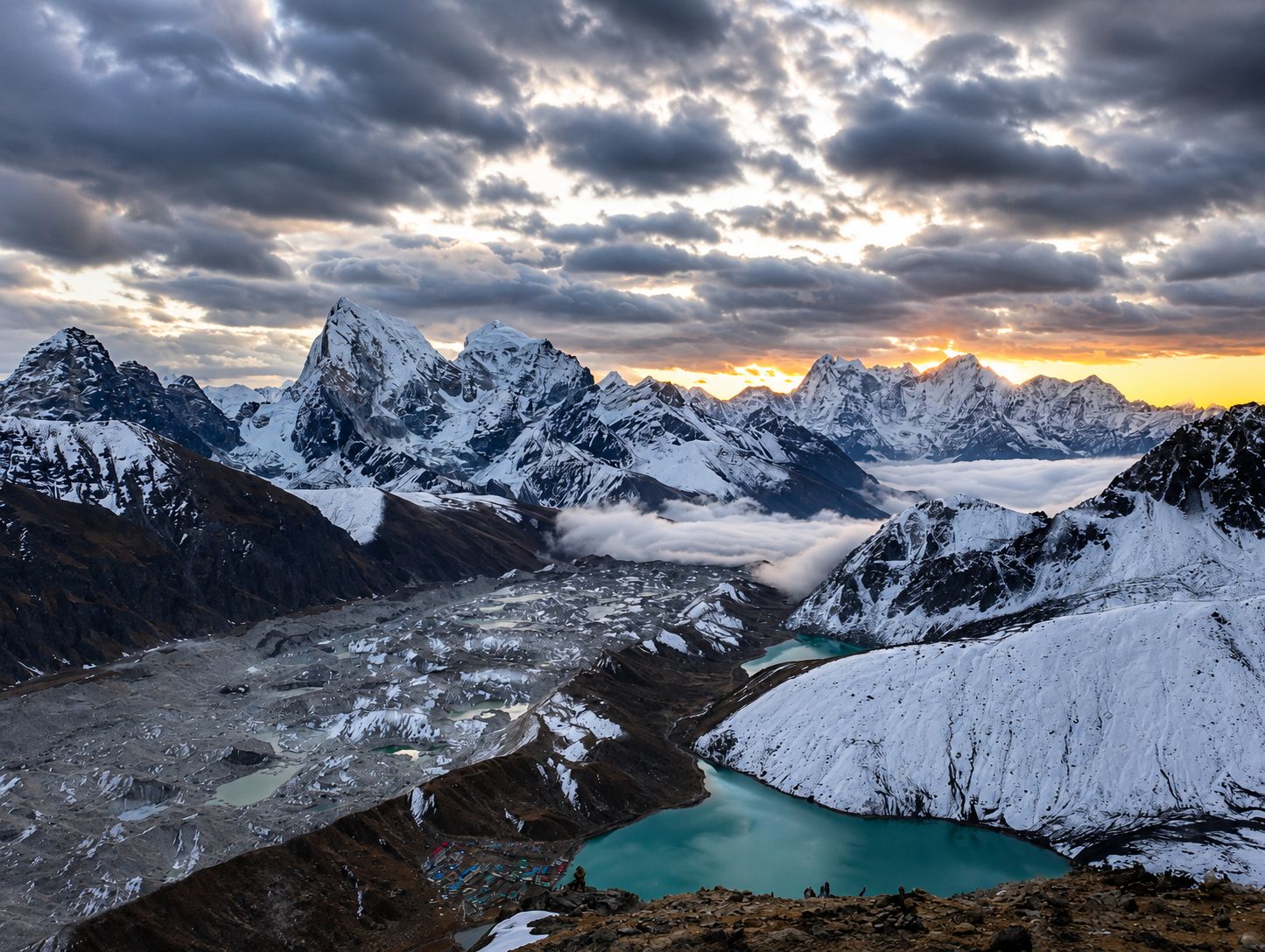
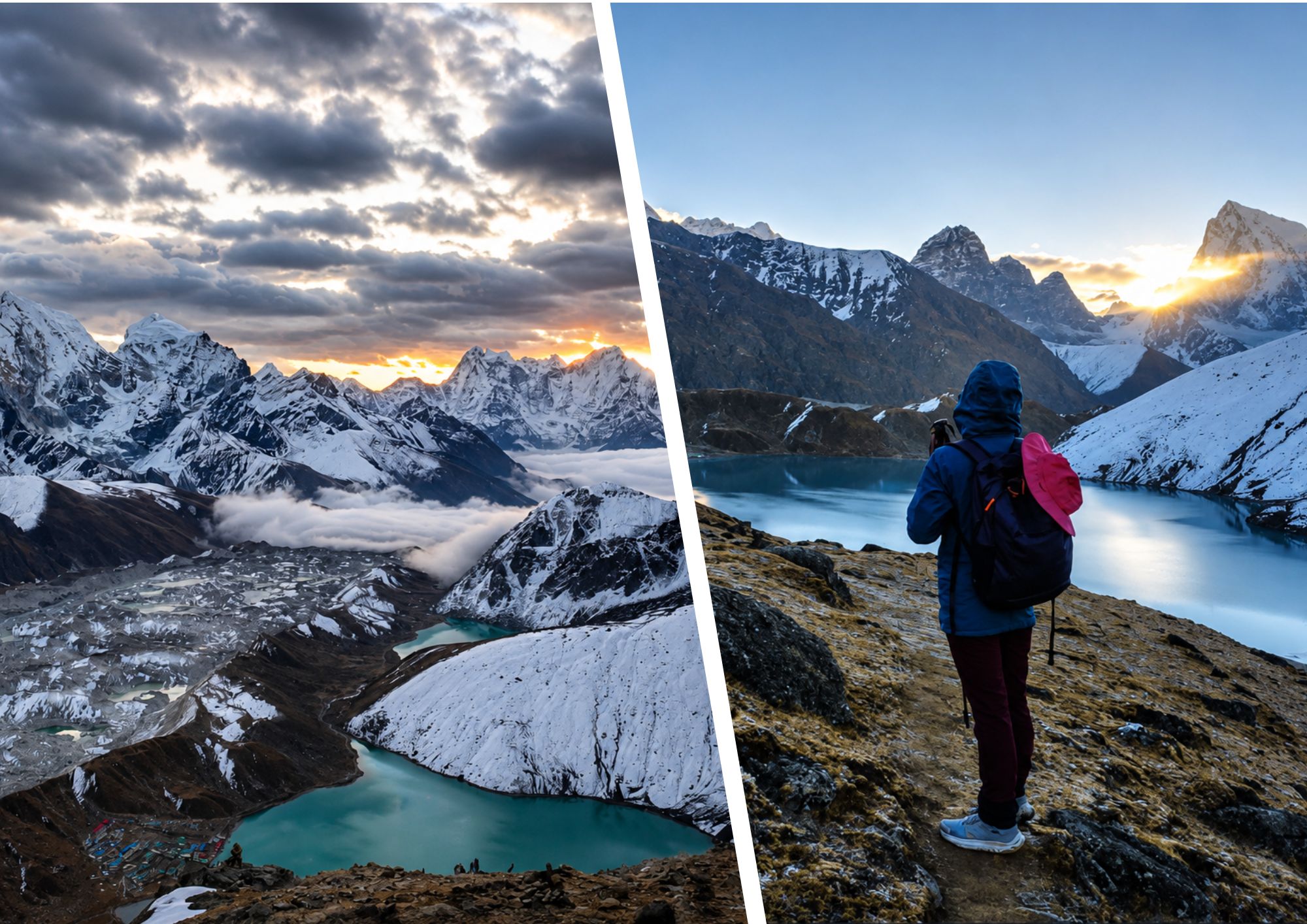
By contrast, Gokyo Ri (5,357 m) offers one of the best panoramic viewpoints in the Everest region. From its summit, you get a wide, unobstructed view of Mount Everest, Lhotse, Makalu, and Cho Oyu—four of the world’s 8,000-meter peaks—all visible at the same time. Unlike Everest Base Camp, where mountain views are partly blocked, Gokyo Ri provides a clear 360-degree panorama, making it a favorite viewpoint for many trekkers and photographers.
Cost Comparison: Everest Base Camp vs Gokyo Lakes
Cost is one of the more measurable differences between these two treks, and Gokyo Lakes comes out slightly cheaper across every group size.
Everest Base Camp Trek Cost
The standard 14-day Everest Base Camp package costs between US$1,235 and US$1,525 per person depending on group size, covering flights, permits, guide, porter, meals, and teahouse accommodation.
Gokyo Lakes Trek Cost
The standard 12-day Gokyo Lakes package costs between US$1,165 and US$1,399 per person depending on group size, with the same core inclusions: flights, both required permits, guide, porter, meals, and teahouse accommodation.
Why Gokyo Costs Slightly Less
The main reason for the price gap is the shorter itinerary, 12 days instead of 14, which reduces the number of teahouse nights, meals, and guide-porter wage days factored into the total package cost. For a full breakdown of Everest region pricing, see our Everest Base Camp Trek cost guide.
Difficulty Comparison: Which Trek Is Harder?
Difficulty ratings differ slightly between the two routes, even though their maximum altitudes are almost identical.
Everest Base Camp Difficulty
Everest Base Camp is considered a strenuous trek. It involves several long trekking days above 4,000 meters, with steep ascents and a challenging pre-dawn hike to Kala Patthar (5,364 m), where temperatures can fall well below freezing. Good physical fitness and proper acclimatization are important for completing this trek comfortably.
Difficulty Level: ⭐⭐⭐⭐☆ (4/5 – Strenuous)
Gokyo Lakes Difficulty
The Gokyo Lakes Trek is generally considered moderately difficult. Daily walking distances are usually shorter, and the trail gains altitude more gradually through villages like Dole and Machhermo. While the early morning climb to Gokyo Ri (5,357 m) is still demanding, the overall trek is slightly easier than the Everest Base Camp route.|
Difficulty Level: ⭐⭐⭐☆☆ (3/5 – Moderate)
The Acclimatization Factor
Both treks build in a two-night stop at Namche Bazaar (3,440 m) for acclimatization, including the standard side hike to the Everest View Hotel (3,880 m) and Khumjung Village. From that point, Gokyo Lakes gains altitude more gradually across Dole, Machhermo, and Gokyo Village, while Everest Base Camp climbs more steeply through Dingboche and Lobuche toward Base Camp.
Scenery Comparison: Mountains, Glaciers, and Lakes
The visual experience is where these two treks genuinely diverge, even though they start on the same trail.
-
Everest Base Camp Scenery
This route is dominated by high alpine and glacial terrain: the Khumbu Glacier, the tangled ice towers of the Khumbu Icefall, and close-up views of Everest, Lhotse, Nuptse, and Ama Dablam from Kala Patthar.
Scenery Rating: ⭐⭐⭐⭐☆ (4.5/5)
-
Gokyo Lakes Scenery
Gokyo Lakes adds an element Everest Base Camp doesn’t have at all: a chain of glacial lakes, including Longpoga Lake, Taujung Lake, and the large Dudh Pokhari, with the option to walk alongside the Ngozumpa Glacier, Nepal’s longest glacier at roughly 36 kilometers.
Scenery Rating: ⭐⭐⭐⭐⭐ (5/5)
Which Trek Has Better Views
From a pure panorama standpoint, Gokyo Ri arguably wins, since its summit reveals Everest, Lhotse, Makalu, and Cho Oyu together in one sweep, compared to Kala Patthar’s view of Everest, Nuptse, and the surrounding Khumbu peaks.
Permits and Access: What’s Required for Both Treks
Since both routes run through the same national park and start from the same trailhead, the permit requirements are identical.
Shared Permit Requirements
Both treks require a Sagarmatha National Park Entry Permit and a Khumbu Pasang Lhamu Rural Municipality Permit, both of which are arranged by your trekking agency before you depart Kathmandu.
Shared Access Point
Both treks begin with a flight from Kathmandu (or Manthali during peak season, when Lukla flights are rerouted) to Lukla’s Tenzing-Hillary Airport, followed by the same first two trekking days to Namche Bazaar before the routes split.
Can You Do Both? The Combined Option
For trekkers who do not want to choose between the two, a combined itinerary exists that covers both destinations in a single trip.
EBC Chola Pass Gokyo Trek
This 17-day itinerary links both routes by crossing the Cho La Pass (5,420 m), taking trekkers to Everest Base Camp, Kala Patthar, Gokyo Village, and Gokyo Ri all in one journey. It’s a physically demanding option but solves the “which one should I pick” question entirely. Details are on our EBC Chola Pass Gokyo Trek page.
Gokyo Lake with Renjo La Pass Trek
Trekkers who want the Gokyo Valley experience with an added high-pass crossing can also consider the Gokyo Lake Renjo La Pass Trek, a 14-day route that adds the Renjo La (5,360 m) crossing toward the Bhote Koshi valley.
Gokyo Lake Trek with Helicopter Return
For trekkers short on time, the Gokyo Lake Trek with Helicopter Return compresses the standard itinerary into 11 days by flying back from Gokyo instead of walking the return route.
Best Season for Both Treks
Both the Everest Base Camp Trek and Gokyo Lakes Trek can be completed throughout the year, but each season offers a different experience. Your ideal trekking season depends on whether you prioritize clear mountain views, quieter trails, or snowy landscapes.
1. Spring (March – May)
Spring is one of the best seasons for both treks. The weather is generally stable, temperatures are comfortable, and the lower trails are decorated with blooming rhododendron forests. Clear skies provide excellent views of Everest and the surrounding Himalayan peaks.
Pros
- Stable weather and comfortable temperatures
- Clear mountain views
- Blooming rhododendron forests
- Excellent trekking conditions
Cons
- Popular season with busy trails
- Teahouses can fill up quickly during peak weeks
2. Summer / Monsoon (June – August)
Summer brings warmer temperatures along with monsoon rainfall. The hills become lush and green, but frequent clouds, slippery trails, and possible flight delays to Lukla can make trekking more challenging.
Pros
- Beautiful green landscapes
- Fewer trekkers on the trails
- Peaceful trekking experience
Cons
- Rain and slippery trails
- Limited mountain views due to clouds
- Possible Lukla flight delays or cancellations
3. Autumn (September – November)
Autumn is widely regarded as the best trekking season in the Everest region. The weather is dry, skies are crystal clear, and temperatures are ideal for long days of hiking, making it perfect for both Everest Base Camp and Gokyo Lakes.
Pros
- Crystal-clear mountain views
- Stable weather
- Comfortable trekking temperatures
- Best season for photography
Cons
- Crowded trails during peak season
- Advance booking is recommended for teahouses
4. Winter (December – February)
Winter offers a quieter trekking experience with snow-covered landscapes and fewer visitors. Temperatures can drop to -10°C to -20°C at higher elevations, and the Gokyo Lakes may partially freeze, creating spectacular scenery for well-prepared trekkers.
Pros
- Quiet trails and fewer trekkers
- Beautiful snow-covered scenery
- Frozen Gokyo Lakes create unique landscapes
Cons
- Extremely cold temperatures
- Snow and icy trail sections
- Some teahouses may offer limited services
Seasonal Weather in the Everest Region
| Season | Months | Average Day Temperature | Average Night Temperature |
| Spring | March – May | 8–15°C | -2 to 5°C |
| Summer / Monsoon | June – August | 10–18°C | 5–10°C |
| Autumn | September – November | 8–15°C | -5 to 5°C |
| Winter | December – February | -2 to 8°C | -10 to -20°C |
Accommodation and Food on the Trail
Since both treks share the same route up to Namche Bazaar, the teahouse experience is similar for the first few days before diverging based on which valley you continue into.
Teahouse Standards
Both routes offer twin-sharing teahouse rooms with shared bathrooms at higher elevations, and both include daily breakfast, lunch, and dinner with a cup of tea or coffee and seasonal fruit in standard packages. Namche Bazaar, common to both treks, offers the widest range of food options in the region, including bakeries and cafés not found further along either trail.
Menu and Comfort Differences
Meals on both treks typically include dal bhat, noodle soups, momos, pasta, and eggs, with fewer options available the higher you climb. Since Gokyo Lakes branches into a less-trafficked valley past Dole, teahouses there tend to be smaller and slightly more basic than the larger lodges found on the busier Everest Base Camp corridor through Dingboche and Lobuche.
Everest Base Camp vs Gokyo Lakes: Which Should You Choose?
The right choice comes down to a few specific priorities rather than one trek being objectively better than the other.
Choose Everest Base Camp If…
- Standing at the actual base of Mount Everest matters to you specifically
- You don’t mind a busier trail with more trekkers around
- You have 14 days available and prefer a slightly longer itinerary
- Walking through the Khumbu Icefall region and past active mountaineering base camps is part of the appeal
Choose Gokyo Lakes If…
- You want a quieter trail with fewer trekkers past Namche Bazaar
- Alpine lakes and glacier views matter as much as mountain peaks
- You have 12 days rather than 14 and want a slightly shorter trip
- A single clear 360° viewpoint covering four 8,000m peaks appeals to you more than reaching an unmarked patch of glacial moraine
Conclusion
Everest Base Camp vs Gokyo Lakes ultimately comes down to what you want to see, not which trek is “better.” Everest Base Camp gives you the historic and symbolic experience of reaching the mountain’s base camp itself, walking past the Khumbu Icefall used by mountaineering expeditions. Gokyo Lakes offers a quieter trail, a chain of Ramsar-listed glacial lakes, and arguably a stronger summit panorama from Gokyo Ri, all in two fewer days and at a slightly lower cost.
If you are still deciding between the two, or want to do both on a single trip via the Cho La Pass, Igloo Himalaya Treks can help plan the right itinerary for your fitness level, schedule, and budget. As one of the best trekking companies in Nepal, our guides have led trekkers across both routes and can recommend which one fits your trip best. Visit our Everest Base Camp Trek or Gokyo Lakes Trek pages to check current departure dates and get a personalized quote.
Other recommended blogs
FAQs
Which is harder, Everest Base Camp or Gokyo Lakes?
Everest Base Camp is rated strenuous, while Gokyo Lakes is generally rated medium, mainly due to shorter daily walking distances and a more gradual altitude gain past Namche Bazaar.
Which trek has better views, Everest Base Camp or Gokyo Lakes?
Gokyo Ri offers a wider panorama, showing Everest, Lhotse, Makalu, and Cho Oyu together, while Kala Patthar on the Everest Base Camp trek offers closer views of Everest, Nuptse, and the surrounding Khumbu peaks.
Is Gokyo Lakes cheaper than Everest Base Camp?
Yes, the Gokyo Lakes Trek costs between US$1,165 and US$1,399 per person, compared to US$1,235 to US$1,525 for Everest Base Camp, mainly due to its shorter 12-day itinerary.
Can I do both Everest Base Camp and Gokyo Lakes in one trip?
Yes, the EBC Chola Pass Gokyo Trek combines both destinations in a single 17-day itinerary by crossing the Cho La Pass between the two valleys.
Which trek has fewer crowds?
Gokyo Lakes sees noticeably fewer trekkers than Everest Base Camp, since the trail splits away from the main Everest Base Camp route after Namche Bazaar.
What is the maximum altitude on each trek?
Everest Base Camp reaches 5,364 meters at Kala Patthar, while Gokyo Lakes reaches 5,357 meters at Gokyo Ri, a difference of just 7 meters.
Do both treks require the same permits?
Yes, both treks require a Sagarmatha National Park Entry Permit and a Khumbu Pasang Lhamu Rural Municipality Permit, arranged by your trekking agency in advance.


