-
Kathmandu
-
Autumn, Spring, Winter
-
Breakfast, Lunch, Dinner
-
Private Car, flight
-
Hotel, Tea houses, Tent
Overview
Island Peak Climbing is not a simple walk in the hills. But it is not an expert-only climb either. With the right preparation, experienced guidance, and proper acclimatization, many fit and motivated trekkers can successfully reach the summit.
Island Peak, known locally as Imja Tse, stands at 6,189 meters in Nepal’s Khumbu region. It has been one of the most favorite trekking peaks among travelers in the Himalayas and for good reason. Surrounded by glaciers and famous peaks like Lhotse and Ama Dablam, Island Peak rewards climbers with a beautiful view from the summit..
In this guide, we have covered everything you need to know before you go to Island Peak Climbing, including the route, the preparation, the permits, the gear, and why choosing the right team makes more difference than most people expect.
About Island Peak Climbing
Island Peak got its name from the British mountaineers of the 1952 Everest
reconnaissance expedition. From Dingboche, the peak appears to rise like an
island above a sea of glacial moraines, and the name stuck. It was first summited in 1953 by a team that included Tenzing Norgay.
Today, it is Nepal’s most popular technical trekking peak. Around 2,000 climbers attempt it every year. The appeal is obvious; it combines the trekking magic of the Khumbu with a real summit push that involves crampons, fixed ropes, and a headlamp start. In this trek, you will get a genuine high-altitude climbing experience without needing an expedition-level background.
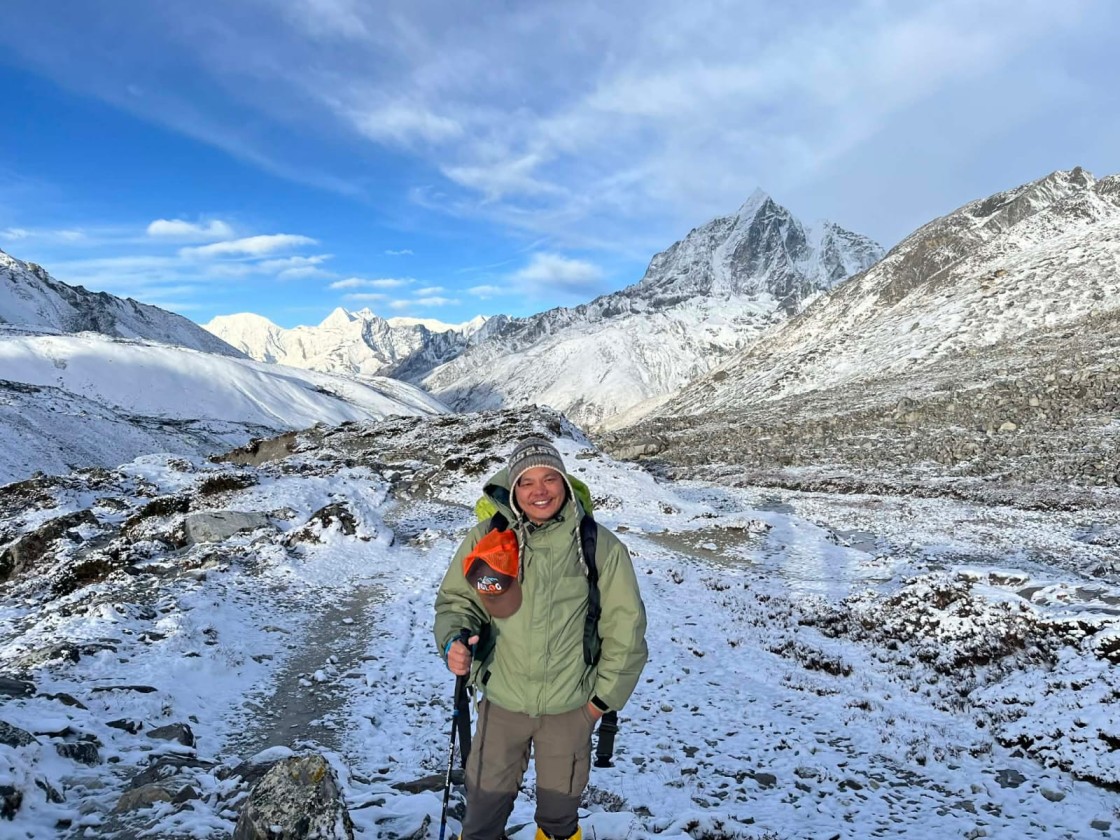
The summit sits at 6,189 meters, and altitude acclimatization is non-negotiable. Most trips run 16 to 20 days, starting from Kathmandu. You don’t go straight to Island Peak; instead, the route takes you through the Everest Base Camp trail first. This serves two purposes. You get to experience one of the most iconic trekking routes in the world, and at the same time, your body slowly adjusts to the increasing altitude day by day. By the time you reach Island Peak Base Camp, you’ve already spent several days at high elevation, which makes the summit push safer and more manageable.
Island Peak Climbing Route — Full Breakdown
The standard route to Island Peak Climbing begins in Kathmandu and follows its way through the heart of the Khumbu. Here’s what your journey looks like, step by step.
Kathmandu to Lukla (Flight)
Everything starts with the flight to Lukla’s Tenzing-Hillary Airport, one of the world’s most dramatic airstrips. The flight takes about 35 minutes from Kathmandu.Weather delays are common, so build buffer days into your itinerary. You don’t want to miss your summit window because a fog bank grounded you in Kathmandu for two days.
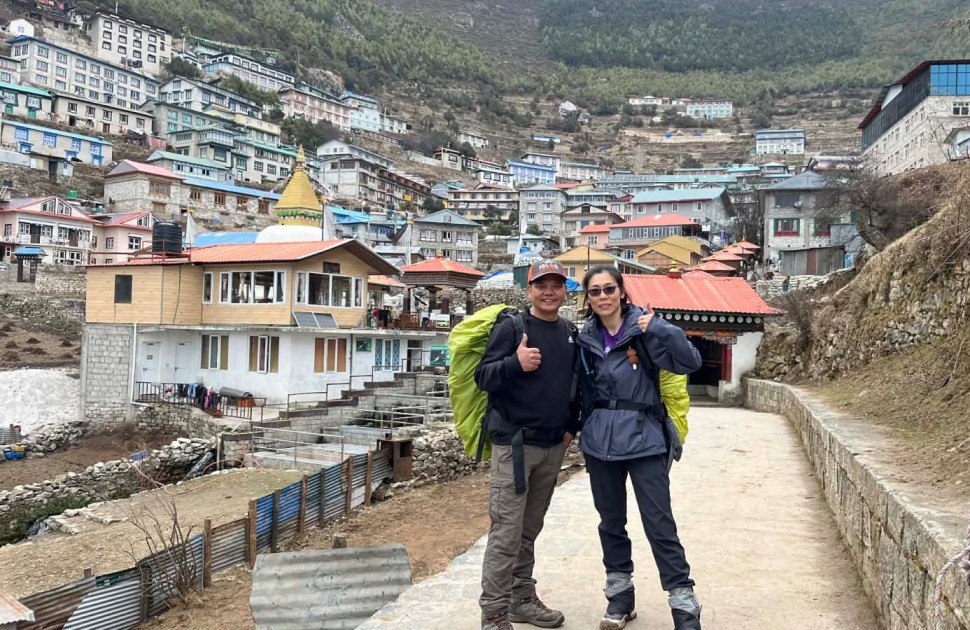
Lukla to Namche Bazaar (2 days)
The trail rises above Namche and rewards you with the first unobstructed views of Everest, Lhotse, Nuptse, and Ama Dablam. Tengboche (3,867m) sits beside one of the most photographed monasteries in Nepal. If your timing lines up with a puja ceremony, don’t skip it.
Tengboche to Dingboche (1–2 days)
The route passes through Pangboche, home to the oldest monastery in the
Khumbu, and drops into the wide Imja Valley. Dingboche (4,410m) sits at theconfluence of two valleys and offers clear sightlines to Island Peak itself. Another rest day here is standard and wise.
Dingboche to Chhukung (1 day)
A short, relatively easy walk brings you to Chhukung (4,730m), the last permanent settlement before base camp. Most teams do an acclimatization hike to Chhukung Ri (5,546m). From here, It is a tough half-day hike, but it helps your body adjust to the altitude and offers panoramic views of the Imja Glacier.
Chhukung to Island Peak Base Camp (Half day)
Base camp sits at approximately 5,100 meters, about a 3–4-hour walk from
Chhukung across moraines and glacial terrain. It is rough underfoot; you gotta watch your ankles. Camp here is basic but atmospheric. You will be surrounded by ice and rock, with the Lhotse wall rising above the camp. Get to bed early. Summit day starts around midnight.
Base Camp to High Camp (Optional — 5,600m)
Some teams add a high camp push to 5,600 meters the day before the summit. This cuts the summit day distance significantly and can be the difference between making it and turning back.
Summit Day – The Real Thing
This is what you came for.
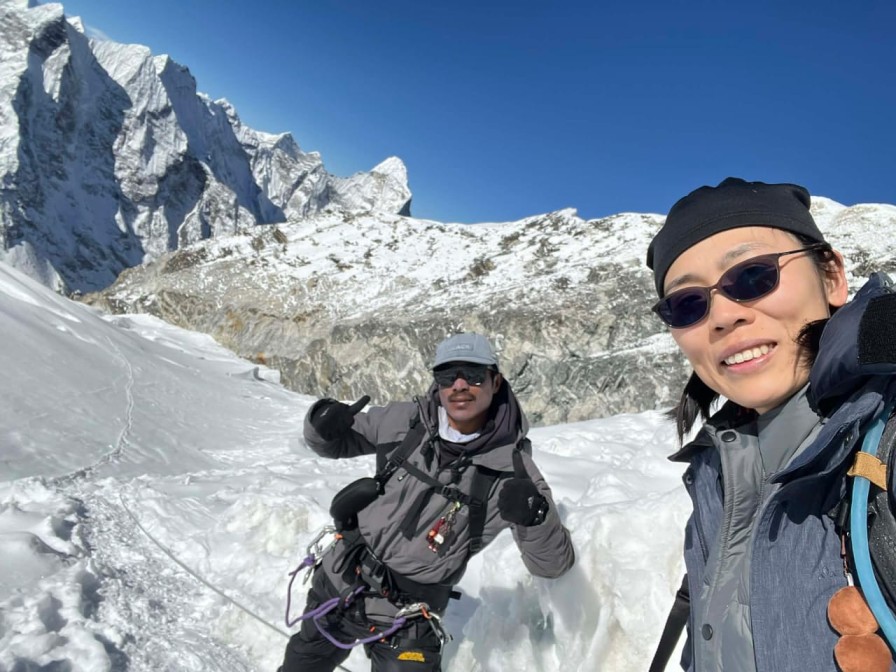
Departure is typically between midnight and 2 AM. The ascent begins in the early hours of the morning, with crampons fitted and headlamps illuminating the trail. The route crosses the Imja Glacier, navigates a steep rocky section, then hits the fixed ropes on the headwall, the crux of the climb.
The headwall gains roughly 150 meters of vertical at a steep angle. You will use jumars (ascenders) on fixed ropes. It demands upper body strength and
composure. This is where altitude fatigue hits hardest, usually around 5,900 to 6,000 meters.
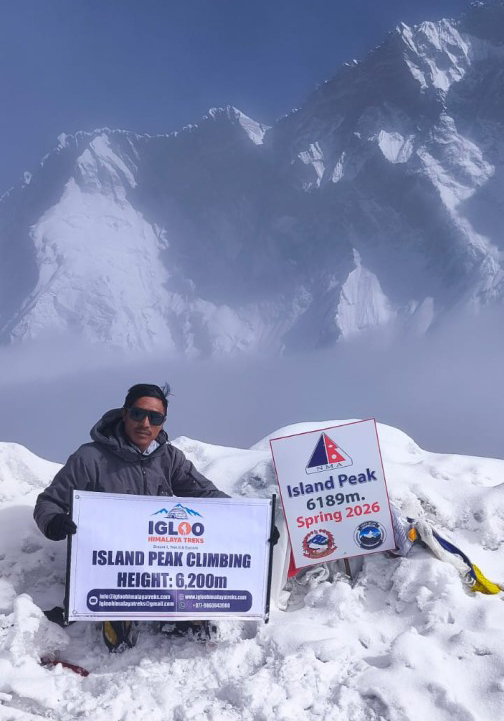
The summit ridge is narrow, a genuine knife-edge with exposure on both sides. Take your time and don’t rush for the final 30 meters. And when you get there? You will see Everest, Lhotse, Makalu, Ama Dablam, and the entire Khumbu glacier system laid out beneath you. Worth every early morning.
Descent
Descent follows the same route, but you should take it a bit seriously because most accidents in mountaineering happen on the way down when people are tired and mentally checked out. Return to base camp, then head back to Chhukung or Dingboche depending on your itinerary. The return to Lukla and the flight back to Kathmandu typically take 3–4 days.
Key Things to Know Before You Go
Best Time to Climbing
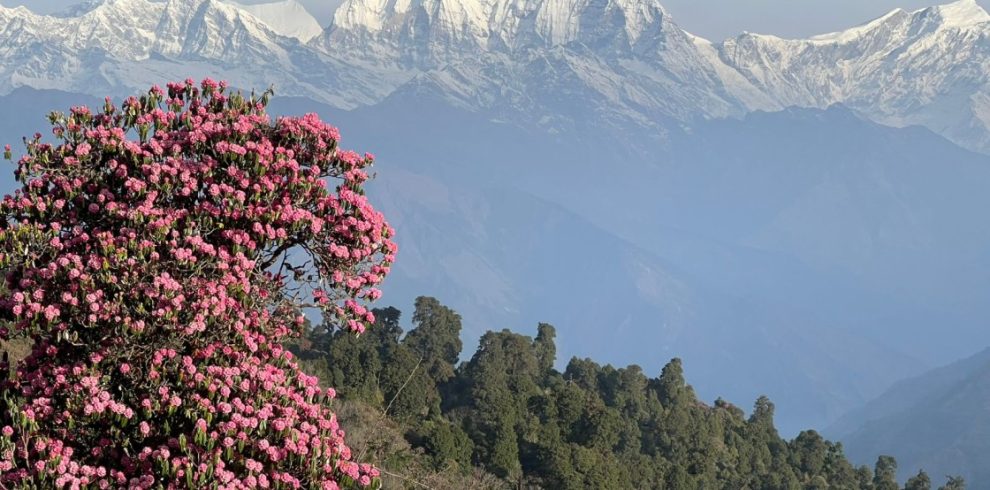
Island Peak is best climbed during two main seasons: spring (March to May) and autumn (September to November). Autumn, particularly October and November, offers stable weather, clear mountain views, and favorable climbing conditions. Spring is another excellent time to visit, with mild temperatures and blooming rhododendron forests, although the trails are generally busier due to Everest expeditions. Winter (December to February) brings extremely cold temperatures and challenging conditions, while the monsoon season (June to August) is marked by heavy rainfall, poor visibility, and unstable trail conditions.
Power and Charging
It is recommended not to expect reliable electricity above Namche. Tea houses at higher elevations Dingboche, Chhukung, base camp use solar power, and charging your devices usually costs extra (around NPR 200–500 per charge). It is recommended to bring a high-capacity power bank for yourself as well. Two if you rely heavily on your phone or camera. Cold temperatures drain batteries fast, so keep electronics close to your body overnight.
Accommodation
Namche and Tengboche have comfortable tea houses with private rooms and
attached bathrooms. Higher up, you can expect basic dormitory-style lodges —shared rooms, squat toilets, and limited hot water. At base camp, your team will set up tents. It’s not luxurious. It’s not meant to be. Pack a sleeping bag rated to at least -20°C.
Travel Insurance
Travel insurance forms a critical aspect of your Island Peak climbing preparation. Before leaving, it is important to ensure that your insurance will cover trekking above 6,000 meters, emergency care, and helicopter rescue. Rescue operations can cost a lot of money in the Himalayas, where a helicopter rescue may range from USD 3,000 to USD 6,000. Getting an adventure travel insurance plan will save you in case of any emergencies. You can get adventure travel insurance from World Nomads, IMG Global, and Ripcord, among others.
Physical Preparation
Start training at least 3–4 months before your departure date. Island Peak’s
summit push involves a 10–12-hour day at altitude carrying a pack. Your body needs to be ready for that.
Focus on cardio trail running, stair climbing with a weighted pack, and long hikes is more relevant than gym sessions. Build up to 4–5 hours of sustained hiking. Add strength training for your upper body and core, since you’ll be using fixed ropes on the headwall. If you can, get a few nights above 4,000 meters before arriving in Nepal — even a trip to a high-altitude location helps.
Gear and Equipment
The good news is that Igloo Himalaya Treks takes care of more than most
agencies do. Before packing, it helps to know exactly what’s covered and what you’re responsible for bringing yourself.
What’s provided for you:
● All technical climbing equipment — crampons, harness, carabiners, fixed
ropes, and ascenders
● A comprehensive medical kit at base camp
● Emergency oxygen bottles, mask, and regulator at base camp
● Full base camp setup — individual tent per member, dining tent, kitchen
tent, toilet tent, cooking gear, and lighting
● Boiled drinking water (2 liters per day in a thermos)
● A veteran, government-licensed climbing Sherpa with full equipment
What you should bring yourself:
Your personal gear is your responsibility. This is non-negotiable — don’t cut
corners here. The mountain doesn’t care how light your bag is if your boots aren’t rated for 6,000 meters.
Mountaineering boots — double boots, cold-rated, non-negotiable
● Down jacket rated to -20°C or below ( we will provide you but completing the trip you have to return)
● Layering system — moisture-wicking base, fleece mid-layer, hardshell
outer
● Insulated gloves and liner gloves
● UV-protective sunglasses or goggles
● Headlamp with spare lithium batteries
● Trekking poles with snow baskets
● Sleeping bag rated to -20°C minimum
● Personal toiletries — soaps, shampoo, tissue paper, toothpaste
● Personal first aid kit and any prescription medications, including Diamox
(consult your doctor beforehand)
Most mountaineering-specific gear can be rented affordably in Kathmandu’s
Thamel district if you don’t own it outright. Renting saves money and luggage weight — a smart move for first-time high-altitude climbers.
Note: Special filming equipment, drone permits, and camera gear are not covered and require separate permits from Nepal’s Civil Aviation Authority.
Fees, Permits, and Rules for Island Peak Climbing
Nepal’s permit structure is specific. Get everything sorted before you leave
Kathmandu.
Nepal Mountaineering Association (NMA) Peak Climbing Permit: Island Peak is classified as a trekking peak by the NMA. Permit fees are charged per person, per season:
● Spring (Feb–May): USD $350
● Autumn (Sep–Nov): USD $175
● Winter (Dec–Jan) / Monsoon (Jun–Aug): USD $175
Sagarmatha National Park Entry Permit Required for all trekkers and climbers entering the Khumbu. Cost: NPR 3,000 (approximately USD $23).
Pasang Lhamu Rural Municipality Ticket NPR 3,000 ((approximately USD $23).
(Note: SAARC Nationals receive a 50% discount on this fee.)
Rules to Follow
No waste above base camp. Every piece of garbage — including human waste —must be carried down. This is enforced. Drone flying requires a separate permit from the Civil Aviation Authority of Nepal. Acclimatization days are mandatory, not optional suggestions. Your guide will set the pace; trust them. Solo climbing without a licensed guide is prohibited on Island Peak.
All permits are arranged through a registered trekking agency. Your agency
handles NMA permits; you handle the national park and TIMS cards at the
checkpoints in Monjo (national park) and Kathmandu (TIMS).
Why Choose Island Peak Climbing with Igloo Himalaya Treks
There’s no shortage of agencies offering Island Peak packages. So why does it matter who you go with? But honestly, it matters more than most people realize. The difference between a transformative summit and a mismanaged, stressful experience often comes down to your team.
Here is what sets Igloo Himalaya Treks apart.
A Personal, Heartfelt Journey
This trek isn’t just about mountains — it’s about connecting. With expert local guides, you’ll go beyond the trail and into the stories, traditions, and lives of the Sherpa and Khumbu communities. You’ll sit with families in tea houses, hear about the 2015 earthquake and what came after, and understand the mountain through the eyes of people who’ve lived in its shadow for generations. That context changes how you experience everything — the prayer flags, the monasteries, the summit itself.
Small Groups, Big Experience
Groups are kept deliberately small. That means personal attention from your
guide, space to move at your own pace, and real moments of connection with the people and landscape around you, not the shuffled, rushed feeling of a large commercial expedition. When you’re on the fixed ropes at 6,000 meters at 4 AM, you want a guide who knows your name and your pace. Not just a number in a group of twenty.
Sustainability First
Every trek with Igloo Himalaya contributes directly to the communities you pass through, supporting rebuilding efforts, education programs, and health initiatives in the Khumbu region. Your permit fees, your tea house stays, and your choice of agency all have an impact. Traveling with a team that thinks about that impact means your journey leaves something good behind.
Deep Local Expertise
The guides aren’t just trained professionals; they are from this region. They know every turn of the trail, every prayer flag’s story, and every viewpoint worth stopping for. You won’t just see the Khumbu. You’ll feel it in a way that doesn’t happen when you’re following a stranger with a laminated itinerary.
Highlights of Island Peak Climbing
- Island Peak packs an extraordinary range of experiences into a single expedition. It is genuinely hard to summarize, but here are some of the main parts that most climbers say they remember most.
- Standing on a 6,189m summit with Everest, Lhotse, and Makalu visible from the ridge
- Crossing the Imja Glacier on summit day other worldly, vast, and humbling
- The knife-edge summit ridge: narrow, exposed, and utterly unforgettable
- Sunrise from the headwall as you ascend the fixed ropes, the valley 1,000 meters below still in darkness
- Acclimatization hike to Chhukung Ri: arguably the best panoramic viewpoint in the entire Khumbu
- Tengboche Monastery at golden hour, with Ama Dablam behind it
- First views of Everest from the Namche viewpoint on day two
- Tea house culture: the warmth, the butter tea, the conversation, the community
- The Khumbu Glacier and Everest Base Camp, included in most Island Peak itineraries
- Your summit photo and the feeling you'll carry home that doesn't need a caption