Trip Info
-
3 Star Hotels / Teahouses
-
Private Car / Airplane
-
Kathmandu Breakfast,Mountain Breakfast, Lunch and Dinner
-
6476
-
15
-
73
Overview of Mera Peak Climbing
Mera Peak, standing at 6,476 meters, holds the title of the highest trekking peak in Nepal and is located within Makalu Barun National Park in the Sagarmatha Zone. Known as the “practice peak,” it welcomes both first-time adventurers and seasoned mountaineers with a route that’s steep but refreshingly non-technical, a true classic mountaineering experience without the extreme technical demands of neighboring giants.
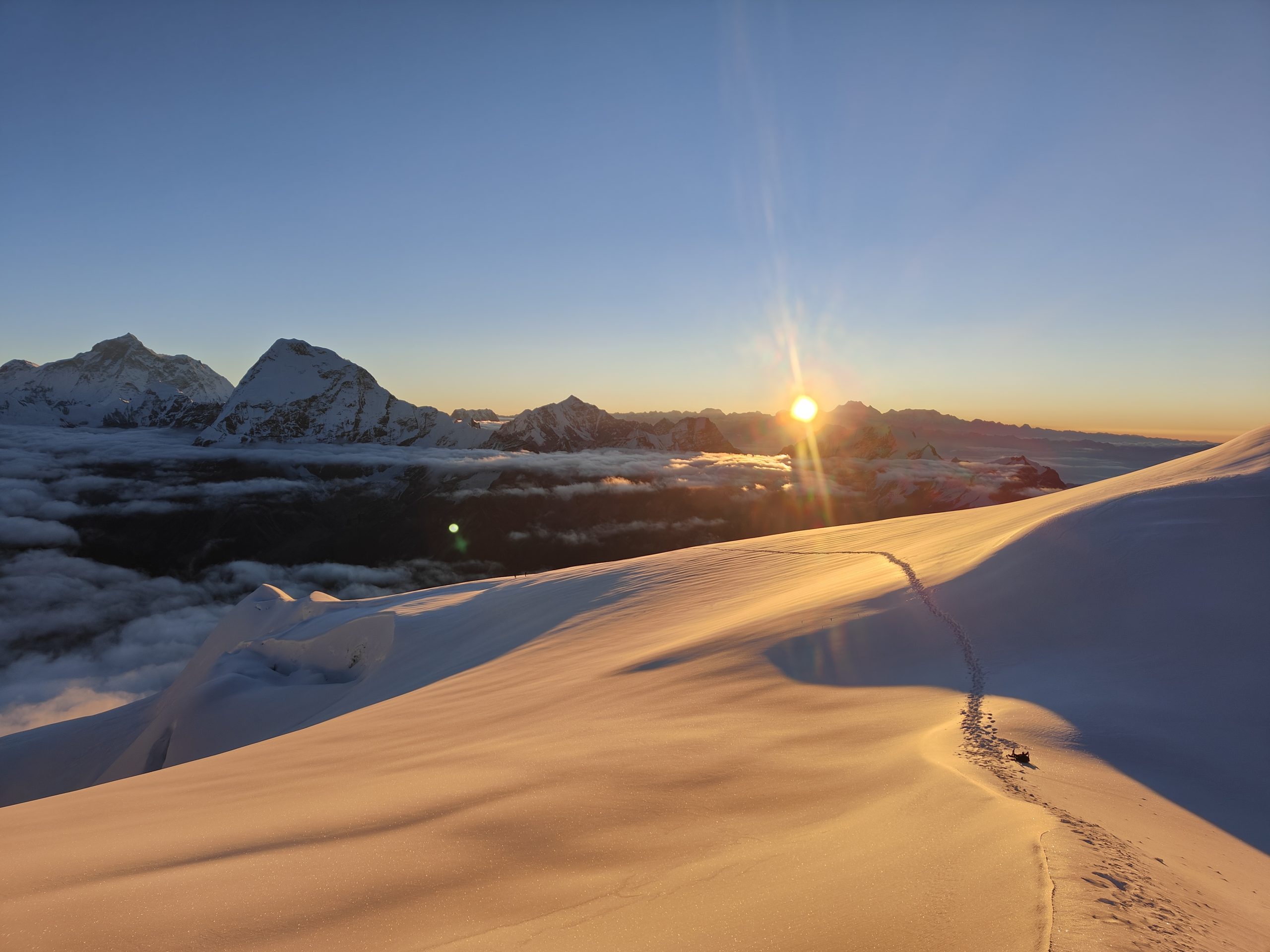
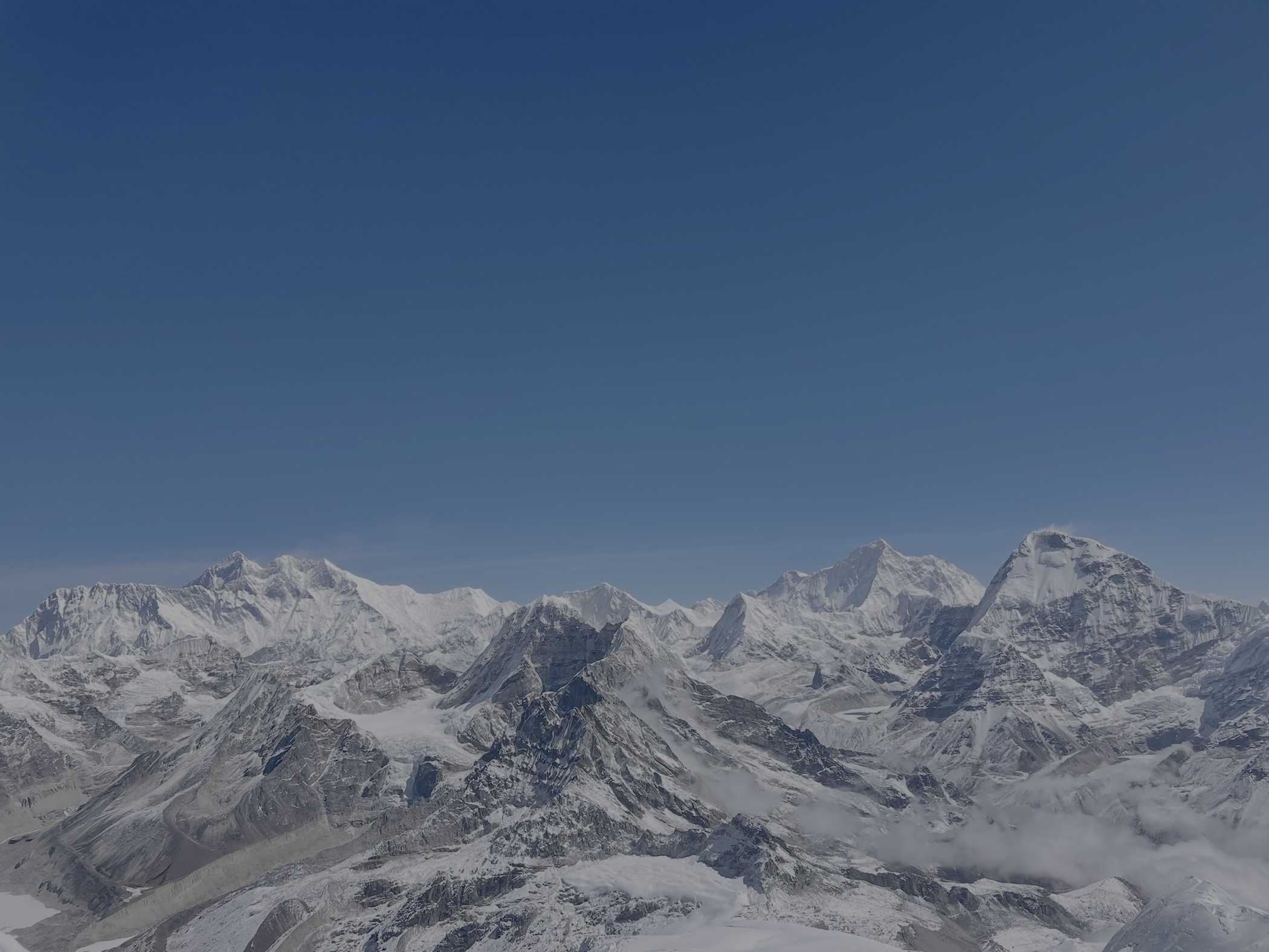
The peak actually comprises three summits Mera North (6,476m), Mera Central (6,461m), and Mera South (6,065m) with the climb involving a non-technical but steep ascent across ice and snow. What makes Mera Peak unforgettable is the view from the top. Standing on the summit, climbers are rewarded with panoramic sights of five of the world’s tallest peaks Everest, Lhotse, Makalu, Kanchenjunga, and Cho Oyu a vista unmatched anywhere else in the region.
Our itineraries are built for success to maximize your chances of reaching the summit safely. And if Mera Peak leaves you wanting more, we offer add-on options like Island Peak or a Three Peak Expedition just reach out, and our team will help craft the perfect climb for your ambitions.
About Mera Peak Climbing
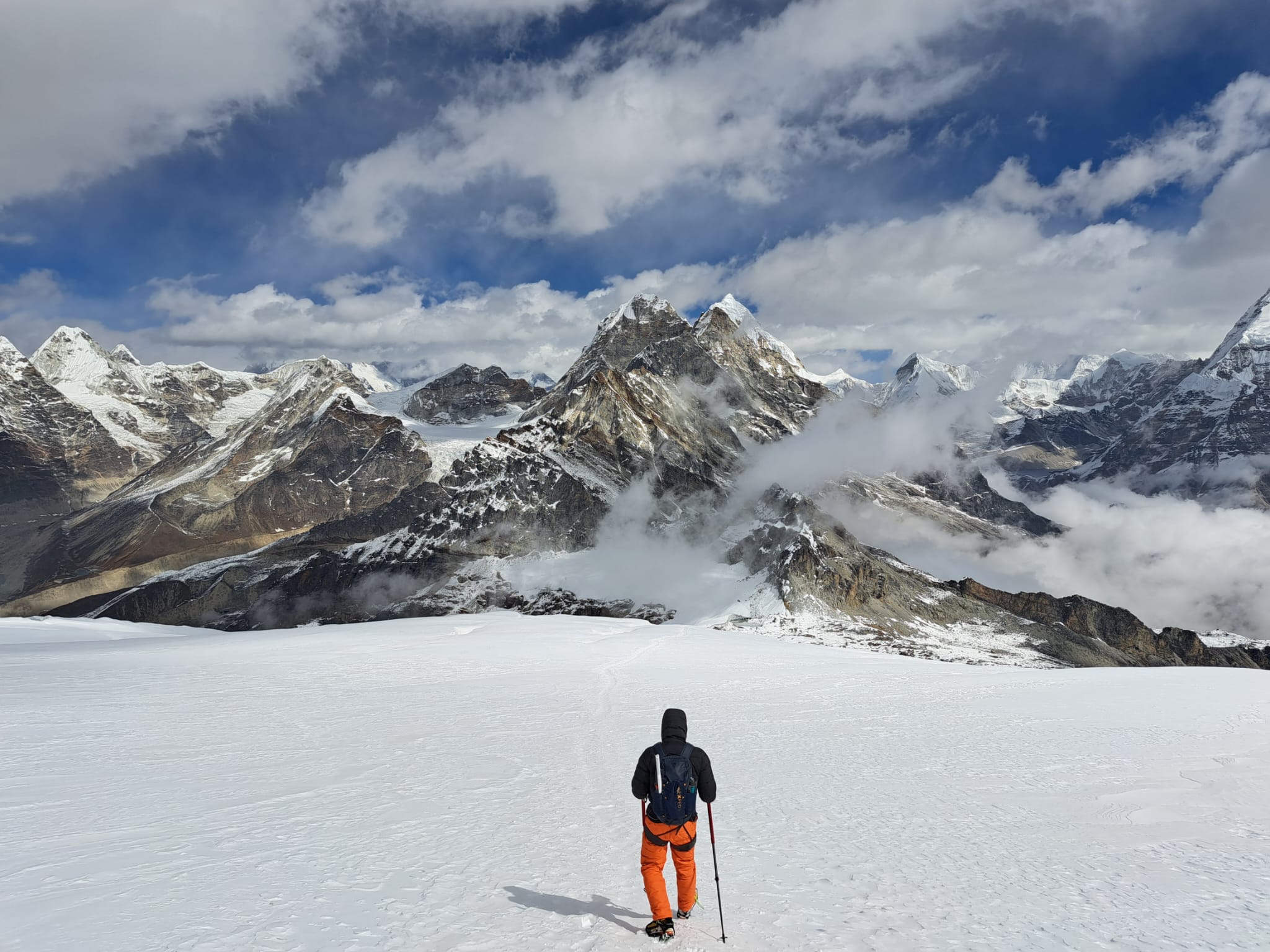
Mera Peak, standing at 6,476 meters (21,247 ft), is widely marketed as Nepal’s highest trekking peak, located in the Mahalangur section of the Himalayas within the Hinku Valley south of Everest. The mountain has three main summits Mera North (6,476m), Mera Central (6,461m), and Mera South (6,064m). Technically, it’s graded as non-technical, though it does require basic mountaineering skills like using crampons, ropes, harnesses, and ice axes, and the standard route involves glacier walking with some short steep sections. The ascent involves short steep climbs up to 40° steepness, and climbers benefit from being experienced crampon users who can handle 35-40º slopes without a rope safety device. Located in a remote part of the Himalayas, the route offers a quieter, more peaceful trail through remote landscapes compared to Nepal’s more crowded trekking paths.
Mera Peak’s summit includes five of the world’s 8,000-meter peaks Kangchenjunga, Makalu, Lhotse, Everest, and Cho Oyu. Most itineraries run around 21 days, beginning with arrival in Kathmandu, followed by trekking through remote villages like Puiya, Khola Kharka, Tagnang, and Khare before reaching Mera Base Camp at 5,780 meters. From there, climbers typically use a high camp before the final summit push. Success isn’t guaranteed, however Mera Peak’s overall success rate in 2022 was just above 50%, largely due to lack of fitness and proper acclimatization, though longer itineraries of over 18 days combined with proper training can push success rates to 80-90%.
Weather and altitude remain real risks even on a “non-technical” peak. In late March 2026, Nepal’s Mountaineering Association had to rescue four foreign climbers and a Nepali guide who were stranded while descending from the summit due to a sudden change in weather, a reminder that experienced guides and proper acclimatization are essential. For climbers seeking a bigger challenge afterward, Mera Peak is generally considered easier than Island Peak. Mera Peak is a popular stepping stone toward more advanced Himalayan climbs.
Mera Peak Climbing Route
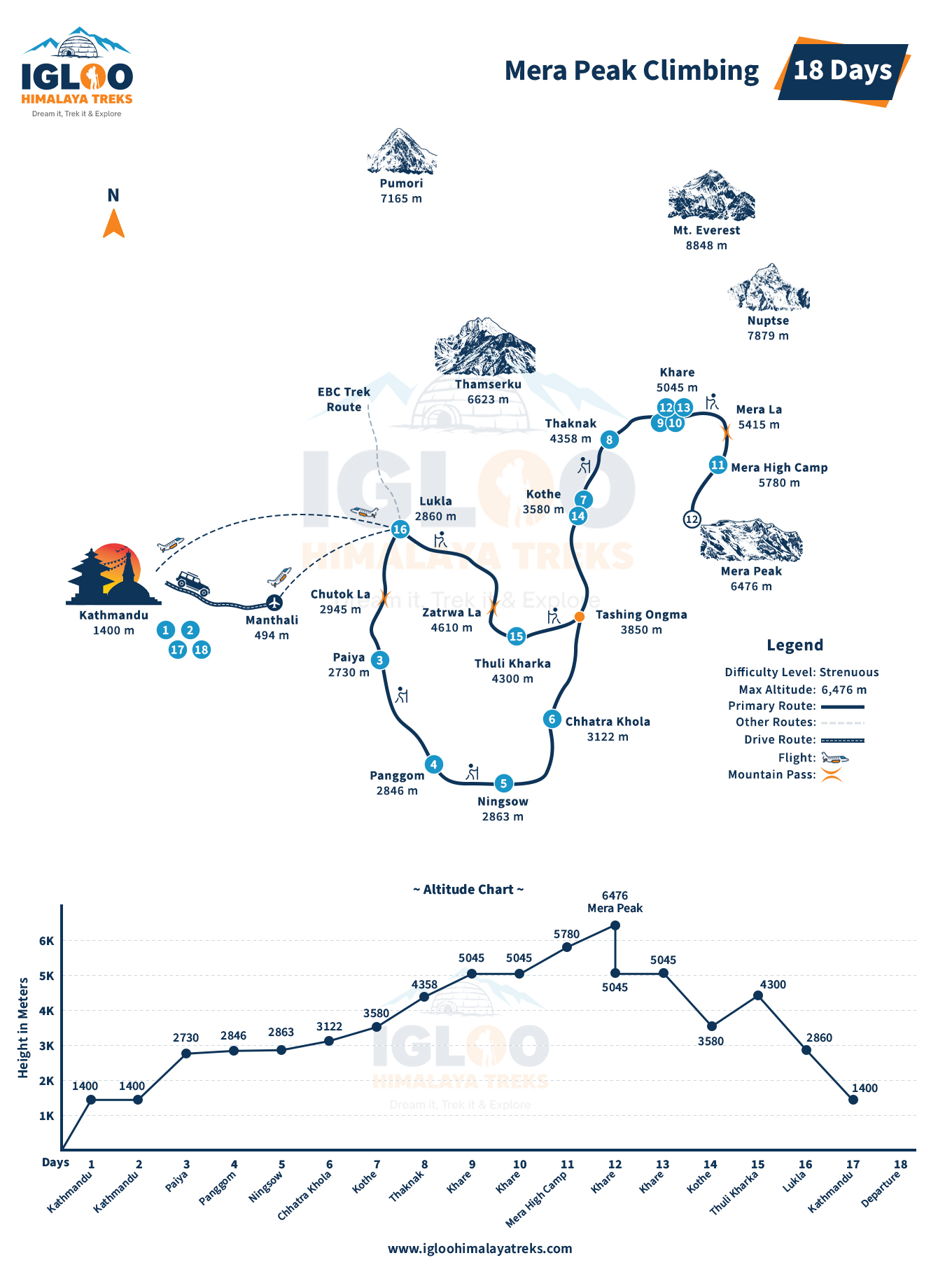
Mera Peak Climbing is no easy feat for a normal person but it is done by few. The route begins in Kathmandu, where climbers complete permit processing and gear checks before flying (or driving via Ramechhap) to Lukla. From there, the trail diverges from the busier Everest Base Camp route, heading instead toward Paiya over the Zatrwa La pass. The path continues through Panggom, Ningsow, and down into the remote Hinku Valley, winding through forests of rhododendron, pine, and juniper before reaching the villages of Kothe and Thangnak. This stretch is as much a cultural journey as a physical one, passing through small Sherpa settlements rarely visited by outside trekkers.
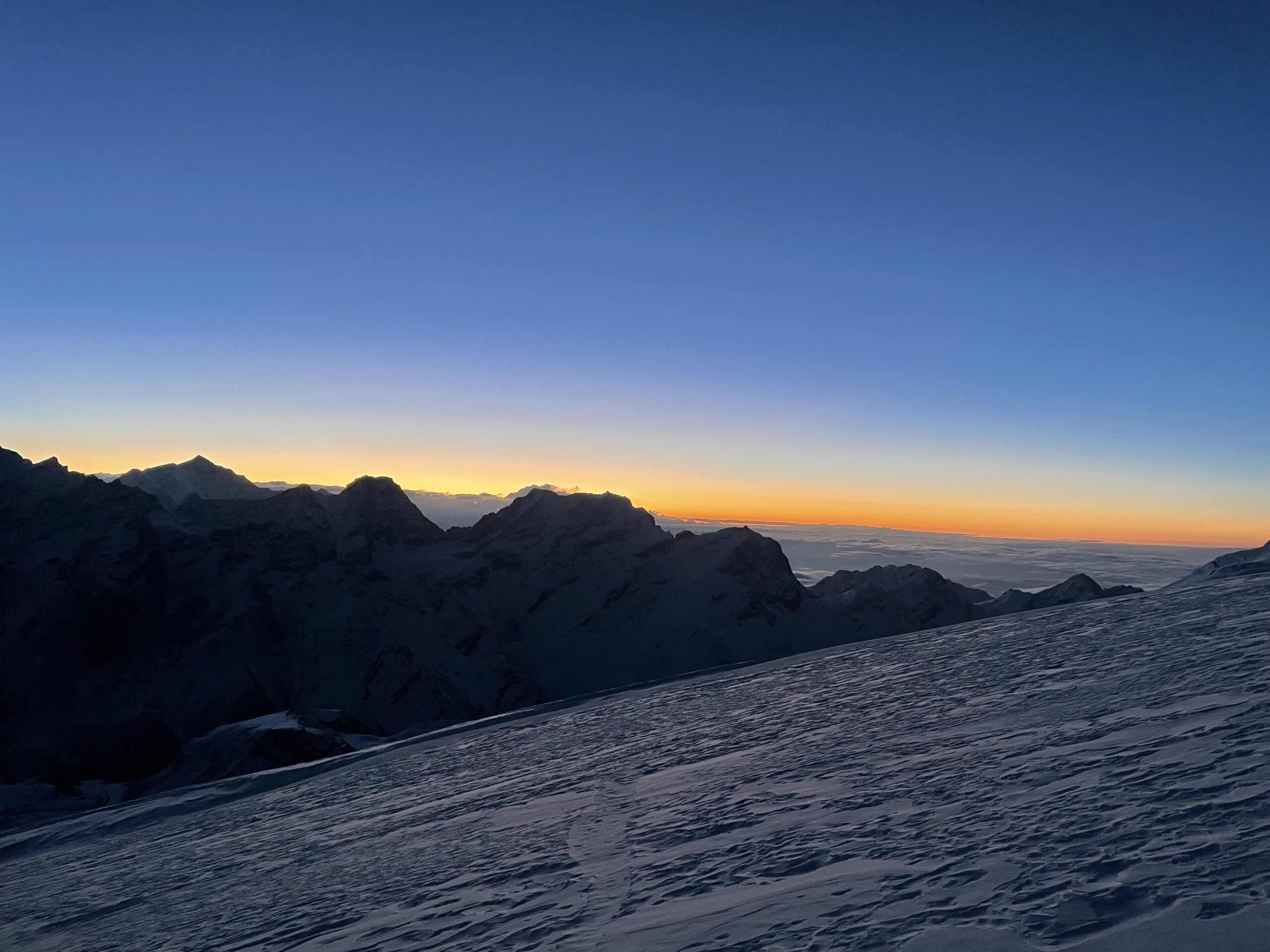
From Thangnak, the trail climbs to Khare (4,900m), a key acclimatization stop where climbers rest and prepare gear before the technical portion of the trip begins. The route then continues to Mera Base Camp (5,780m), where a mountain guide typically runs a training day covering crampon technique, ice axe use, and rope work. From base camp, climbers move up onto the glacier to High Camp (5,800m), a rocky outcrop where they spend the night before waking around 2 a.m. for the summit push. The final ascent follows the northern route, a steady glaciated climb with short sections up to 35-40° steepness culminating at the 6,476m summit, where climbers are rewarded with views of Everest, Lhotse, Makalu, Kanchenjunga, and Cho Oyu.
The full journey typically takes 18 to 21 days from Kathmandu to Kathmandu, depending on the operator and the number of acclimatization days built in, with longer itineraries generally producing higher summit success rates. The best windows for attempting the climb are spring (mid-March to May) and autumn (October to November), when weather is more stable and visibility of the surrounding peaks is at its clearest.
Key Things to Know Before You Go To Mera Peak Climbing
Best Time to Visit
- The Mera Peak Climbing falls in May the perfect excuse to plan your trip in spring
- Spring (mid-March to May) and Autumn (October to November) offer the best trekking conditions for Mera Peak Climbing like clear skies, warm days, and great visibility
Power & Charging
- Reliable electricity is not available along most of the trail
- Many teahouses run on solar panels helpful but not guaranteed
- Always carry extra batteries and a fully charged power bank for your camera
- Later on tents where there is no electricity powerbank and batteries is must
Accommodation
- Expect simple, no-frills teahouse stays for most of the trek twin bed sharing and common toilets are standard and it gets harder to sleep so try to most out of sleep time
- Proper rest is very necessary before heading deeper into the region so don’t be shy to ask if there is any requests our guide will help best way possible
Travel Insurance
- Travel insurance is a must .
- While emergencies are rare in Mera Peak Climbing, the remote nature of the region means that being unprepared is simply not an option
- Make sure your policy covers high-altitude trekking and emergency evacuation
Physical Preparation
- Start preparing a month in advance with stamina-building exercises, hiking, and running
- A strong body and a prepared mind will make huge contribution on surviving the trek and truly enjoying it
- Acquire and hone the necessary mountaineering skills and techniques required for Mera Peak Climbing. Watch videos of experienced guides to enhance your technical abilities.
Gear & Equipment
- Mera Peak Climbing requires all the specific gear which will be listed by us
- Essential items include trek/snow boots, thermals,windproof outwear, a down jacket, sunglasses, and sun protection
- You can easily purchase or rent all necessary gear duffel bag, down jacket, sleeping bag on Igloo Himalaya Treks before your departure at very reasonable prices
Fees, Permits and rules for Mera Peak Climbing
Permits and fees
1. NMA Climbing Permit
Issued by the Nepal Mountaineering Association, this is the main permit and its cost depends on season and group size:
- Spring (March–May): USD 350 per climber for groups of 1–4; each additional climber above 4 costs USD 40 more
- Autumn (September–November): USD 350 per climber as well, under the revised structure (previously autumn was roughly half the spring rate, so it’s worth confirming current rates with your operator)
- Winter/Monsoon: USD 200 per climber for groups of 1–4; USD 25 for each additional climber
This represents a jump from the older USD 250 (spring) / USD 125 (autumn) structure that was in place before September 2025.
2. Makalu Barun National Park Entry Permit
USD 30, required since the trek passes through this conservation area. Where all flora, fauna and animals are protected.
3. Pasang Lhamu Rural Municipality Entry Permit
A local area fee, around USD 20.
4. Garbage Deposit
The NMA requires a refundable garbage deposit, generally USD 250–500 per expedition, returned once your team brings its waste back down.
Key Rules
- Mandatory licensed guide: Solo climbing is not permitted on Mera Peak. A government-licensed climbing guide must accompany every team that has applied to peak climbing for years and was extended to general trekking in 2023 as well.
- Permits only through registered agencies: Only authorized Nepali trekking/climbing agencies can apply for and hold your NMA permit; you can’t get one independently as a foreign climber.
- Permits are non-refundable: If you don’t summit due to weather, health, or conditions, the permit fee itself isn’t refunded.
- Insurance requirement: You need travel insurance that specifically covers mountaineering above 6,000m, including helicopter rescue standard trekking insurance isn’t sufficient. Expect to pay USD 100–250 for adequate coverage.
- Summit certification: The NMA has recently installed official summit signage on Mera Peak, and teams are now asked to include this board in their summit photos for certification purposes.
How Difficult Is It to Reach Mera Summit?
This mera trek is considered moderately difficult, so well-experienced trekkers can climb to this peak. Even though it’s not a highly technical section, it does require:
- Walking on snow and ice while wearing crampons.
- Utilizing ropes to ensure safety on sections that are more steep.
- Adapting to high-altitude conditions exceeding 6,000 meters.
Good physical fitness, basic mountaineering skills, and proper acclimatization are crucial. With Igloo Himalaya’s expert guides, climbers with determination and preparation have a high chance of reaching the summit.
Why Choose Igloo Himalaya for Mera Peak Climbing?
You can experience difference in our service while exploring on the trek:
- Experienced mountaineering guides with successful summit records.
- Well-designed itinerary with proper acclimatization for higher success.
- Safety-first approach with quality equipment and contingency planning.
- Full support, including logistics, permits, accommodation, and meals.
- Personalized service and small group focus for an authentic Himalayan experience.
Highlights of Mera Peak Climbing
- Flight to Lukla with scenic views
- We get to the summit of Nepal’s highest trekking peak (6,476 m).
- Spectacular views of Everest, Lhotse, Makalu, Cho Oyu, and Kanchenjunga.
- Hiking through high-altitude glaciers, alpine forests, and unspoiled valleys.
- Explore various flora and fauna walking on deep forests
- Visiting isolated villages and monasteries to gain a deeper understanding of Sherpa culture.
- An exhilarating yet doable mountaineering adventure under knowledgeable supervision
- For safety and success, the schedule includes the appropriate acclimatization days.