
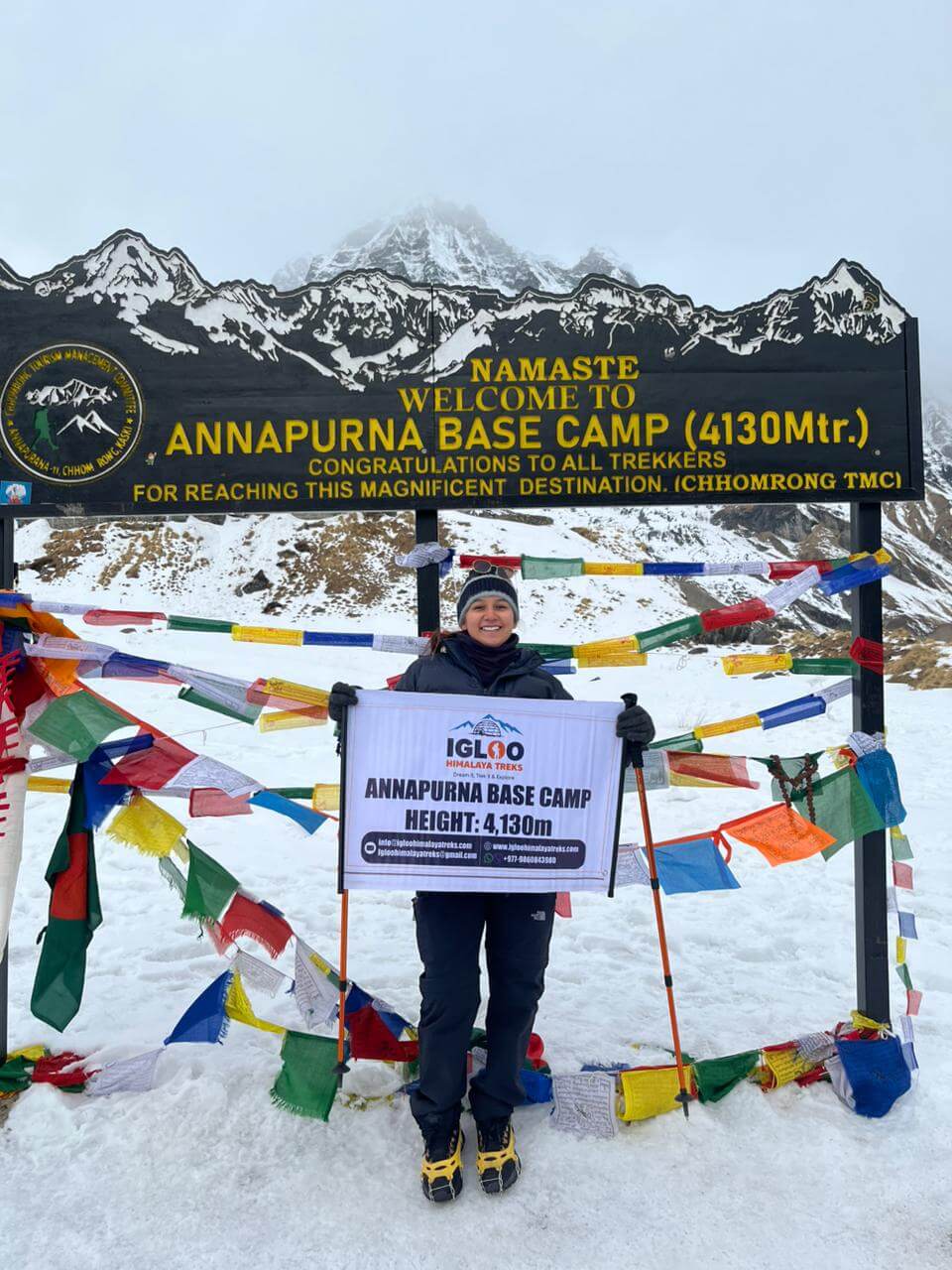
The Annapurna Base Camp (ABC) Trek is one of Nepal’s most breathtaking journeys, offering panoramic Himalayan views, diverse landscapes, and rich cultural experiences. But choosing the right season can make the difference between a good trek and an unforgettable one.
Annapurna Base Camp lies within the breathtaking Annapurna Sanctuary, a natural amphitheater surrounded by towering Himalayan giants. From the base camp, trekkers are rewarded with extraordinary 360-degree views of Annapurna I (8,091m), Annapurna South, Hiunchuli, and the sacred Machapuchare (Fishtail) mountain. The sunrise and sunset views from ABC are truly unforgettable, as the snow-covered peaks glow in golden and pink hues. Reaching the base camp is not only a physical achievement but also an emotional highlight of the journey, as trekkers stand face-to-face with some of the highest mountains in the world.
Just before reaching ABC, trekkers pass through Machhapuchare Base Camp (MBC), situated at approximately 3,700 meters. Machhapuchare, known as the “Fishtail Mountain,” is considered sacred and remains unclimbed. MBC serves as a vital acclimatization stop and offers incredibly close views of the dramatic Himalayan landscape. The terrain becomes more alpine and rugged from this point onward, and temperatures begin to drop significantly, especially during the night. Many trekkers spend the night at MBC before making an early morning ascent to Annapurna Base Camp, allowing them to experience the magical sunrise over the Annapurna range.
Another popular highlight of the trek is Jhinu Danda, famous for its natural hot springs. After descending from the high altitudes of ABC, relaxing in the warm natural pools beside the Modi Khola River feels incredibly rejuvenating. The hot springs are one of the most enjoyable rewards of the trek, helping to soothe tired muscles after several days of walking. Jhinu Danda offers a peaceful atmosphere and a comfortable place to rest before continuing or completing the journey.
Many itineraries also include Ghorepani and the famous Poon Hill viewpoint. Ghorepani, located at 2,874 meters, is especially beautiful during spring when rhododendron forests bloom in vibrant colors. A short early morning hike to Poon Hill rewards trekkers with one of the best panoramic sunrise views in Nepal. From here, you can witness spectacular views of Dhaulagiri, the Annapurna Massif, and Nilgiri Himal. This section of the trek is relatively moderate and offers excellent photography opportunities, making it a favorite among both beginner and experienced trekkers.
Chhomrong Village is another significant stop along the route. This beautiful Gurung village sits at around 2,170 meters and serves as the gateway to the Annapurna Sanctuary. Chhomrong provides stunning mountain views along with insight into traditional Himalayan culture and lifestyle. However, it is also known for its long stone staircases, which can be physically demanding. The steep descent to the Chhomrong River followed by a challenging uphill climb tests the stamina of many trekkers. Despite the effort required, the scenic beauty and welcoming teahouses make it a memorable stop.
In terms of difficulty, the Annapurna Base Camp Trek is generally considered moderate. It does not require technical climbing skills, making it accessible to trekkers with basic fitness levels. However, certain sections can be physically challenging. The stone staircases around Chhomrong are often described as one of the hardest parts due to the constant ascent and descent. The gradual climb from Deurali to Machhapuchare Base Camp and then to Annapurna Base Camp can also feel demanding because of the increasing altitude and thinner air. Trekkers may experience fatigue as oxygen levels decrease, particularly above 3,500 meters. Cold temperatures at higher elevations, especially in autumn and winter, add another layer of challenge.
On the other hand, there are many enjoyable and relatively easier sections of the trek. The forest trails between Bamboo and Dovan are peaceful and shaded, passing through lush greenery and waterfalls. The walk from Machhapuchare Base Camp to Annapurna Base Camp, though at high altitude, is gradual and incredibly scenic, making it feel less strenuous due to the dramatic mountain surroundings. Descending toward Jhinu Danda is also easier on the lungs, as the altitude decreases and the air becomes richer in oxygen.
So, when is the best time for the Annapurna Base Camp Trek? Let’s explore each season in detail to help you plan your perfect adventure with Igloo Himalaya Treks.
Spring (March – May): The Most Popular Season
Spring is widely considered the best time for the Annapurna Base Camp Trek.
Why Spring is Ideal:
Blooming rhododendron forests
Stable weather and mild temperatures
Crystal-clear mountain views
Perfect photography conditions
During this season, trekkers enjoy spectacular views of:
Annapurna I
Machapuchare
Hiunchuli
Annapurna South
Temperature Range:
Day: 10°C to 20°C
Night (Base Camp): -5°C to 5°C
Spring is perfect for both beginners and experienced trekkers. Expect lively trails and vibrant teahouse atmospheres.
Recommended by Igloo Himalaya Treks for the ultimate ABC experience.
Autumn (September – November): Clear Skies & Stunning Views
Autumn is another peak trekking season and arguably the most stable in terms of weather.
Why Choose Autumn?
Post-monsoon clear skies
Sharp and vivid mountain views
Comfortable temperatures
Festive local atmosphere (Dashain & Tihar)
Temperature Range:
Day: 10°C to 18°C
Night (Base Camp): -10°C to 5°C
The air is fresh after monsoon rains, making mountain views exceptionally crisp. If you want reliability in weather conditions, autumn is your safest choice.
Igloo Himalaya Treks highly recommends October for the clearest Himalayan panoramas.
Winter (December – February): Quiet & Snowy Adventure
Winter trekking offers a peaceful and less crowded experience.
Pros:
Snow-covered magical landscapes
Fewer trekkers
Off-season discounts
Challenges:
Freezing temperatures at higher altitudes
Possible snow-blocked sections
Limited teahouse availability
Temperature Range:
Day: 5°C to 12°C
Night (Base Camp): -15°C to -5°C
Winter is suitable for experienced trekkers who are well-prepared for cold conditions.
Igloo Himalaya Treks provides expert winter guides and proper gear advice.
Monsoon (June – August): Lush but Risky
Monsoon brings heavy rainfall to the Annapurna region.
Pros:
Lush green landscapes
Fewer tourists
Dramatic cloud formations
Cons:
Frequent rain
Leeches in lower regions
Limited mountain visibility
Slippery trails
This season is generally not recommended, unless you’re seeking solitude and don’t mind unpredictable weather.
So, What’s the Absolute Best Time?
Best Overall: March–May (Spring)
Best for Clear Views: October (Autumn)
Best for Fewer Crowds: Winter
Not Recommended: Peak Monsoon
For the perfect balance of weather, views, and experience, Spring and Autumn are the clear winners.
Why Trek with Igloo Himalaya Treks?
At Igloo Himalaya Treks, we specialize in crafting unforgettable Himalayan adventures. Our expert local guides, carefully designed itineraries, and commitment to safety ensure your Annapurna Base Camp trek is smooth, safe, and spectacular.
We Offer:
Experienced & licensed trekking guides
Customizable itineraries
Small group & private treks
24/7 support
Responsible and sustainable tourism
Whether you choose the colorful blooms of spring or the crystal skies of autumn, we ensure your journey to Annapurna Base Camp becomes a lifetime memory.
Ready to Plan Your Annapurna Base Camp Trek?
The mountains are calling — and the best season is waiting for you.
Contact Igloo Himalaya Treks today and let’s plan your perfect Himalayan adventure!


